My Italy Experience

Author: admin

  • Assisi Travel Guide: Basilica of Saint Francis, Sacred Sites, Parking and Practical Planning

    Assisi Travel Guide: Basilica of Saint Francis, Sacred Sites, Parking and Practical Planning

    Assisi is both a major art destination and a living pilgrimage city. That dual identity is the key to planning it well. The Basilica of Saint Francis contains some of the most important medieval painting cycles in Italy, but the visit is shaped by liturgy, prayer, security and large groups; elsewhere, steep streets connect Roman remains, medieval squares, Santa Chiara and the Rocca Maggiore.

    The best first visit is not a race between churches. Give the Basilica proper time, walk the town from one end to the other and decide in advance whether Santa Maria degli Angeli and the Porziuncola belong in the same day or deserve a separate stop below the hill.

    Essential visitBasilica of Saint Francis – admission free
    Good first visit lengthFull day; one night is better
    Historic-centre drivingRestricted; use designated parking
    Hill challengeSignificant gradients between lower Basilica and upper town
    Special context2026 marked the eighth centenary of Saint Francis’s death

    Basilica of Saint Francis: build the day around it

    The Basilica complex contains an Upper Church, Lower Church and the tomb of Saint Francis. Official Assisi tourism information publishes different hours for the Upper and Lower churches and notes that Sunday/holiday liturgical schedules can differ from weekdays. Admission is free for individuals, with a small charge applied to larger groups.

    Do not treat the Basilica as a 20-minute photo stop. Allow at least 90 minutes if you care about the frescoes, architecture and tomb, and more if services or crowds slow circulation.

    Upper Church versus Lower Church

    The Upper Church feels luminous and spacious, with famous fresco cycles traditionally associated with Giotto and his workshop. The Lower Church is darker, more layered and devotional, with major works by artists including Cimabue, Simone Martini and Pietro Lorenzetti. The contrast is part of the experience, so do not choose one simply because a tour schedule is tight.

    Assisi Italy Roman Gate

    Photography and visitor behaviour may be restricted. Treat posted rules as part of the sacred-site experience, not as museum inconvenience.

    Santa Chiara and the eastern side of town

    The Basilica of Santa Chiara anchors the opposite side of the historic centre and creates a natural walking axis across Assisi. The route between the two basilicas passes Via San Francesco, Piazza del Comune and many of the city’s smaller sights.

    This is the best way to understand Assisi as a town rather than a single pilgrimage monument. If mobility is limited, however, the gradients can be tiring; use local transport strategically instead of forcing a complete uphill walk.

    Piazza del Comune and Roman Assisi

    Piazza del Comune is where the Roman and medieval city overlap most visibly. The Temple of Minerva façade, civic buildings and surrounding streets show that Assisi’s importance predates Franciscan history. Spending even 30 minutes here prevents the town from becoming a single-theme destination.

    The Roman Forum below the square can be worthwhile for archaeology-focused visitors, but if you have only one day and religious art is the priority, keep it optional.

    Rocca Maggiore: views versus climbing

    Rocca Maggiore dominates the town and rewards visitors with a different understanding of Assisi’s position on the slopes of Monte Subasio. The climb adds both elevation and time, so it should be deliberate rather than automatic.

    Go if panoramas, fortifications or photography matter to you. Skip it without guilt if mobility, heat or limited time would force you to rush the basilicas below.

    Santa Maria degli Angeli and the Porziuncola

    The Basilica of Santa Maria degli Angeli sits on the plain below Assisi and encloses the tiny Porziuncola, deeply connected with Saint Francis. It is not a quick “extra” inside the hill town; reaching it requires descending to the lower settlement, often by bus, taxi or car.

    Add it if Franciscan history is central to your trip or if you arrive/depart via the nearby railway station. Otherwise, the upper historic centre can easily fill a first day.

    2026 centenary context and future travel

    Assisi’s official tourism site highlighted 2026 as the eighth centenary of the death of Saint Francis, with major celebrations and events. That year-specific programme should not be assumed to continue unchanged, but it demonstrates how strongly religious calendars can affect crowd levels and availability.

    For future trips, check both civic events and the Franciscan liturgical calendar. A day that looks ordinary on a hotel calendar may be significant locally.

    How to plan the visit without overloading the day

    Arrive early, start with the Basilica of Saint Francis and then walk gradually through the town toward Piazza del Comune and Santa Chiara. This direction lets you understand the city as a sequence rather than shuttling between distant car parks.

    Add Rocca Maggiore only if you still have time and energy. Add Santa Maria degli Angeli only if it matches your interests or transport route; doing both in a rushed first day can turn Assisi into logistics instead of experience.

    Common mistakes to avoid

    • Assuming cars can circulate freely in the historic centre.
    • Planning the Basilica around museum-style hours without considering services.
    • Trying to see every Franciscan site in one short day.
    • Underestimating the climb between the lower Basilica and upper town.
    • Treating Assisi as only a religious destination and missing its Roman/medieval civic history.

    When to go

    Spring and autumn are ideal for walking and views. Summer brings heat and pilgrimage/tour groups, so early starts are valuable. Winter is quieter and atmospheric, but shorter daylight reduces time for the Rocca and countryside.

    Major feast days and pilgrimage events can transform the town. Check the calendar before booking accommodation, especially if crowd avoidance matters more than participating in celebrations.

    Getting there and moving around

    The railway station is at Santa Maria degli Angeli, below the hill town. From there, use bus or taxi to the historic centre; walking uphill with luggage is not the best first impression.

    Drivers should use official parking outside/restricted edges of the centre and continue on foot or by local transport. Choose the car park based on your route rather than simply the first sign you see.

    Tours and bookable experiences

    Guided tours add real value in Assisi because the art and Franciscan history are dense, but tour quality varies. Check whether the itinerary includes both Upper and Lower Basilica, how it handles service times and whether the guide is licensed for the monuments you care about.

    Where to stay

    Staying overnight in the historic centre gives you Assisi after the largest day-trip groups leave and makes an early Basilica visit easy. The trade-off is more complicated luggage and parking access.

    Staying in Santa Maria degli Angeli is flatter and transport-friendly, especially with a car or train, but you will need a bus/taxi for evening time in the hill town. Choose according to mobility and trip structure.

    Official sources and last checks

    Opening hours, ticket prices, transport services and temporary access rules can change. Check the official source shortly before travel.

    A better way to prioritise your time

    The most useful way to plan Assisi Travel Guide is to rank experiences by how difficult they are to replace. A timed museum, a sacred-site schedule or a transport-dependent viewpoint should come before a generic coffee stop or shopping street. Build the day around the least flexible element, then keep nearby streets and viewpoints as movable pieces. This approach is especially important in Umbrian hill towns, where a short distance on a map can involve a climb, a bus connection or a parking transition.

    If the day starts running late, remove the least distinctive stop rather than cutting every visit in half. Travellers often remember one properly understood church, museum or archaeological site more clearly than four monuments seen at speed. Keep at least thirty minutes of unassigned time for views, photographs, an unexpected open doorway or simply sitting in a square; that margin is part of good trip design, not wasted time.

    Accessibility and comfort notes

    Historic Umbria rewards walking but is not uniformly easy. Cobblestones, steep gradients, old staircases and limited vehicle access can matter more than total distance. Travellers with reduced mobility should check the exact entrance route to museums and churches rather than relying only on a general accessibility label. Mechanical lifts, escalators, taxis and lower-city parking can remove some climbs, but the final approach may still include uneven paving.

    In warm weather, carry water and shift exposed climbs away from the hottest part of the day. In rain, stone paving can become slippery. Comfortable shoes with grip are more useful than formal footwear even in elegant historic centres, and a light layer is useful inside churches and climate-controlled museums.

    Final planning advice

    Assisi deserves a full day even if you are not travelling for religious reasons. The art, urban setting and landscape are strong enough to justify the time, while the living spiritual dimension explains why the city functions differently from a standard museum town.

    Protect the Basilica, accept the hills and leave one optional sight unplanned. Assisi is better when you have room to stop rather than when every church is assigned a 20-minute slot.
  • One Day in Perugia: Best Walking Itinerary for Rocca Paolina, Art, Etruscan History and Food

    One Day in Perugia: Best Walking Itinerary for Rocca Paolina, Art, Etruscan History and Food

    One day in Perugia is enough to understand the city if you resist the temptation to enter every museum. The strongest first-day route moves naturally from the underground Rocca Paolina to Corso Vannucci and Piazza IV Novembre, uses one major museum as an anchor, then finishes with Etruscan Perugia and a relaxed evening rather than another checklist.

    This itinerary assumes roughly 9:00 to 19:00 and average walking ability. Perugia is hilly, so the schedule uses escalators and keeps backtracking low. If you arrive later or travel with children, cut one paid attraction rather than shortening every stop.

    Ideal startRocca Paolina / Piazza Italia
    Main museumGalleria Nazionale dell’Umbria
    Archaeology choicePozzo Etrusco or Perugia Underground
    Walking styleCompact distances but frequent slopes
    Best finishAperitivo and dinner in the historic centre

    09:00 – Enter through Rocca Paolina

    Start below the upper city and use the escalators through Rocca Paolina. This immediately explains Perugia’s vertical structure and gives you a major historical sight before museum opening pressure begins. Pause at Porta Marzia and read the contrast between Etruscan stone and Renaissance brick.

    Allow 30–40 minutes rather than racing through. You are also saving energy by riding uphill instead of beginning the day with a steep street climb.

    09:45 – Corso Vannucci and Piazza IV Novembre

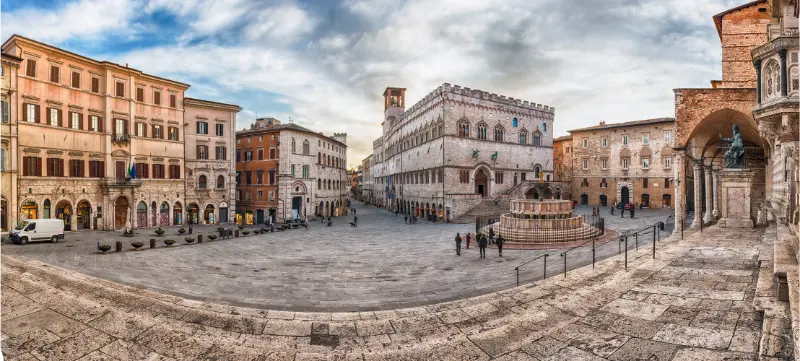
    Walk north along Corso Vannucci while the central streets are still relatively calm. In Piazza IV Novembre, circle the Fontana Maggiore, look at Palazzo dei Priori and the Cathedral of San Lorenzo, then step into the Sala dei Notari if access is available.

    Do not enter the National Gallery immediately if you have not looked at the square properly. The museum makes more sense once you understand the civic building that contains it.

    10:30 – Galleria Nazionale dell’Umbria

    Give the Gallery about two hours. At the latest 2026 check it opened daily from 8:30 to 19:30, so there is no need to rush for a narrow morning slot, but arriving before the afternoon crowds keeps the visit focused.

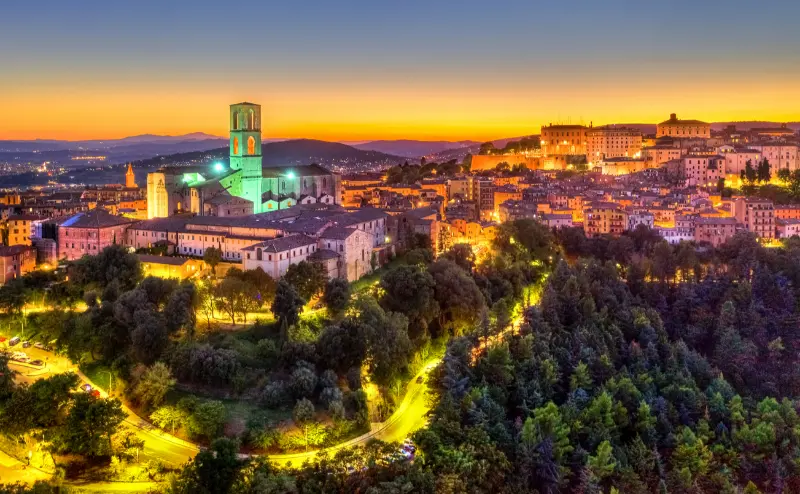
    Perugia Italy Aerial View Old Town Sunny Day

    Follow the artistic sequence rather than only searching for Perugino. The purpose of this stop is to understand Umbrian art well enough that later churches in Assisi and Spello feel connected.

    12:45 – Lunch without losing the afternoon

    Choose torta al testo for a fast regional lunch or sit down for umbricelli if you want a proper meal. Avoid a huge multi-course lunch if you plan underground archaeology afterward; Perugia’s climbs feel much steeper after a heavy meal.

    Keep lunch around 60–75 minutes. One day in Perugia should still feel Italian, so the goal is not speed but preventing lunch from consuming the entire archaeological block.

    14:15 – Arco Etrusco and the ancient city

    Walk toward the Arco Etrusco and approach it from outside the ancient wall if possible. The gate is much more impressive when you see its scale as an entrance rather than passing beneath it from the inside.

    From here, you can trace part of the ancient perimeter and understand why the acropolis occupies the highest ground around Piazza IV Novembre.

    15:00 – Choose one underground experience

    Pick the Pozzo Etrusco if engineering and compact archaeology appeal to you. Choose Perugia Underground beneath the cathedral if you prefer a broader stratigraphic story. Doing both is possible, but on a one-day itinerary it often pushes you into museum fatigue.

    The Pozzo reaches about 37 metres and can be visited in a relatively short stop. Check the current opening schedule and any timed-entry rules before committing your afternoon.

    16:15 – Views, aqueduct walk or a slow coffee

    The late afternoon should be flexible. Walk part of the medieval aqueduct, head toward Porta Sole for views or simply sit with coffee and watch the centre change as day visitors begin to leave. This unscheduled hour is what keeps the itinerary from feeling like a tour group timetable.

    If weather is poor, replace the viewpoint with another indoor site such as the archaeological museum. Do not add it automatically on a sunny day unless ancient history is your main interest.

    18:00 onward – Perugia after the day-trippers

    Return toward Corso Vannucci for aperitivo and dinner. Evening is when staying in Perugia pays off: university life continues, the Rocca remains accessible much later than museums and the central streets become less focused on daytime sightseeing.

    If you still have energy, walk back through Rocca Paolina after dark. Seeing the underground passages a second time with fewer commuters can be more atmospheric than adding another ticketed attraction.

    How to plan the visit without overloading the day

    Reserve or verify only the two stops that can constrain the schedule: the National Gallery if a major exhibition is running and your chosen archaeological site. Keep the free outdoor sections movable.

    If you travel in summer, shift the archaeological/indoor block into the hottest hours and use early morning plus evening for the steep outdoor streets.

    Common mistakes to avoid

    • Adding Assisi to the same day because it looks close.
    • Trying to visit both major art and archaeology museums plus every underground site.
    • Starting at the station and walking uphill with no plan for escalators/Minimetrò.
    • Scheduling a long lunch before the steepest walking block.
    • Leaving no free hour for viewpoints and street life.

    When to go

    Spring and autumn are ideal for this exact walking rhythm. In summer, begin earlier and use the Gallery/underground stops around midday. In winter, shorten the outdoor late-afternoon block as daylight fades.

    Event days can transform central streets. If a festival is the reason for your trip, reduce the museum plan; if it is not, check crowds and closures in advance.

    Getting there and moving around

    Arrive in the upper city using the escalator or Minimetrò system rather than driving to each sight. Once the itinerary begins, everything is walkable.

    From the railway station, allow extra transfer time to the historic centre. Do not schedule a 09:00 museum entry if your train arrives at 08:50.

    Tours and bookable experiences

    A guided first-morning walking tour can replace the self-guided Rocca/Piazza/Etruscan orientation and may be worth it for visitors who prefer narrative context. If you book one, reduce the number of afternoon museums rather than stacking the tour on top of the full schedule.

    Where to stay

    If you spend the night, stay high enough that dinner and the evening walk are easy. That is one of the main advantages of giving Perugia a full day instead of visiting only as a day trip.

    For a one-night road trip, a parking-friendly hotel near a mechanical connection can be the most efficient compromise between atmosphere and departure logistics.

    Official sources and last checks

    Opening hours, ticket prices, transport services and temporary access rules can change. Check the official source shortly before travel.

    A better way to prioritise your time

    The most useful way to plan One Day in Perugia is to rank experiences by how difficult they are to replace. A timed museum, a sacred-site schedule or a transport-dependent viewpoint should come before a generic coffee stop or shopping street. Build the day around the least flexible element, then keep nearby streets and viewpoints as movable pieces. This approach is especially important in Umbrian hill towns, where a short distance on a map can involve a climb, a bus connection or a parking transition.

    If the day starts running late, remove the least distinctive stop rather than cutting every visit in half. Travellers often remember one properly understood church, museum or archaeological site more clearly than four monuments seen at speed. Keep at least thirty minutes of unassigned time for views, photographs, an unexpected open doorway or simply sitting in a square; that margin is part of good trip design, not wasted time.

    Accessibility and comfort notes

    Historic Umbria rewards walking but is not uniformly easy. Cobblestones, steep gradients, old staircases and limited vehicle access can matter more than total distance. Travellers with reduced mobility should check the exact entrance route to museums and churches rather than relying only on a general accessibility label. Mechanical lifts, escalators, taxis and lower-city parking can remove some climbs, but the final approach may still include uneven paving.

    In warm weather, carry water and shift exposed climbs away from the hottest part of the day. In rain, stone paving can become slippery. Comfortable shoes with grip are more useful than formal footwear even in elegant historic centres, and a light layer is useful inside churches and climate-controlled museums.

    How to improve a short visit

    If you have less time than the full itinerary assumes, protect one experience that is unique to this destination and one flexible walk that helps you understand the setting. Drop secondary indoor stops before cutting the main sight to a rushed glance. This is especially useful in Umbria, where atmosphere, elevation and views are part of the visit and cannot be appreciated from a checklist.

    Check the final admission time, not only the closing time, and allow a buffer for parking or public transport. A fifteen-minute delay in a hill town can easily become thirty once you add walking from the car park, finding an entrance and dealing with stairs. Planning that margin makes the day feel slower even when you see the same number of places.

    Final planning advice

    One day is enough for Perugia if you choose one major museum, one archaeological experience and let the city itself fill the spaces between them. The worst one-day plan is the one that treats every attraction as compulsory.

    If Perugia surprises you, stay a second day and use it for slower neighbourhood walks or a day trip. The city rewards repetition because its layers are easy to miss on the first pass.

  • Where to Stay in Perugia: Best Areas for the Historic Centre, Station, Parking and Day Trips

    Where to Stay in Perugia: Best Areas for the Historic Centre, Station, Parking and Day Trips

    Choosing where to stay in Perugia is less about neighbourhood “vibe” than about vertical geography. A hotel can be only a kilometre from Piazza IV Novembre yet require a steep climb, while another farther away may have a direct Minimetrò or escalator connection. The right base depends on whether you prioritise evening walks, a car, rail day trips or quiet sleep.

    For most first-time visitors without a car, the historic centre is the easiest choice. Drivers should be more selective: a romantic address inside the walls can become inconvenient if parking is distant or the hotel sits inside a restricted traffic zone.

    Best for first-time visitorsHistoric centre around Corso Vannucci / Piazza IV Novembre
    Best for rail convenienceFontivegge / station area, with uphill connection
    Best for driversProperties with clearly documented parking and easy ring-road access
    Best for nightlifeCentral university-facing streets, with potential noise trade-off
    Best compromiseEdge of historic centre near escalator/Minimetrò access

    Historic centre: best for atmosphere and walking

    Staying near Corso Vannucci, Piazza IV Novembre or the upper city gives you the strongest sense of Perugia after day-trippers leave. Museums, restaurants and evening walks are immediate, and you can return to your room between sightseeing blocks.

    The trade-off is access. Historic buildings may have small lifts, stairs or no parking, and taxi drop-off points can be restricted. Read the arrival instructions before booking rather than after entering the ZTL.

    Near Piazza Italia and Rocca Paolina: a practical central edge

    The south side of the centre around Piazza Italia can be especially convenient because Rocca Paolina and its escalator connections link the upper city with lower parking and transport. You remain within an easy walk of Corso Vannucci but gain a clearer arrival route.

    For travellers with moderate mobility concerns, this can be better than a picturesque lane with multiple steep approaches. Still verify the exact final metres to the property; Perugia’s gradients change quickly.

    Perugia Italy Aerial View Old Town Sunny Day

    Fontivegge and the railway station: useful, not equivalent to the old town

    The main station is practical for Assisi and Spello, but it sits below the historic centre. Staying nearby can work for travellers making repeated train trips, yet it changes the evening experience because you will need public transport or a climb to reach the old town.

    Choose this area deliberately for transport, price or a specific hotel—not because a booking map makes the station look “central”. Read recent reviews about the immediate street and the connection you intend to use at night.

    Drivers: parking can matter more than postcode

    If you have a rental car, prioritise properties that describe parking type, cost and access clearly. “Parking nearby” can mean a public garage several steep streets away, while an agriturismo outside the core may offer effortless parking but require driving for dinner.

    A good compromise is the edge of the historic centre or a property connected to upper Perugia by escalator or Minimetrò. You can leave the car for city days and still escape easily for Gubbio or Lake Trasimeno.

    Families: reduce vertical friction

    Families with strollers or small children should think in terms of daily climbing. A central hotel can still be excellent, but check lifts, steps at the entrance and the route from parking or public transport. Mechanical links are helpful, yet they do not remove every cobbled gradient.

    Apartment-style accommodation can be useful for breakfast and laundry on a longer Umbria trip, but central apartments may be in buildings without lifts. The floor number matters as much as the address.

    Nightlife versus sleep

    Perugia’s university population gives the centre real evening life. That is an advantage if you want aperitivo and late streets, but a room directly above a busy bar can be less charming at midnight. Read room-specific noise comments and request an internal-facing room if needed.

    Travellers who prefer quiet evenings can stay a few minutes outside the busiest central lanes without losing access to monuments. The city is compact enough that one street can change the sound level significantly.

    Best base for day trips

    For Assisi and Spello by train, easy station access is valuable, but you do not need to sleep beside the tracks if a convenient public-transport connection links your hotel to Fontivegge. For Gubbio and rural Umbria, road access becomes more important.

    If you plan four consecutive day trips, Perugia may become a logistics base more than a city stay. In that case, choose transport efficiency. If you plan only one or two, stay centrally and enjoy Perugia itself.

    How to plan the visit without overloading the day

    Before booking, map three routes: arrival with luggage, evening return from dinner and departure for your most important day trip. The hotel that wins all three is usually better than the one with the shortest straight-line distance to Piazza IV Novembre.

    For drivers, contact the property if ZTL instructions are unclear. A five-minute message before arrival can prevent fines, wrong turns and stressful unloading.

    Common mistakes to avoid

    • Assuming the railway station is in the historic centre.
    • Booking inside the walls without understanding parking/ZTL rules.
    • Ignoring hills when travelling with strollers or heavy luggage.
    • Choosing the nightlife core while expecting silent evenings.
    • Using “distance from centre” without checking elevation and mechanical connections.

    When to go

    In summer, air conditioning and easy midday returns become more important. In winter, staying central reduces time spent waiting for transport in bad weather.

    Major event periods can sharply affect availability. Book earlier when Perugia hosts large cultural or food events, then check whether road closures change your arrival plan.

    Getting there and moving around

    The Minimetrò, buses and escalator systems make non-central accommodation more viable than the map alone suggests. Identify the nearest useful station or escalator entrance before booking.

    Taxis can solve luggage problems but should not be your only plan if the property lies in a pedestrian or restricted zone. Ask exactly where a taxi can drop you.

    Where to stay

    For a first trip, my default choice is the historic-centre edge near good mechanical access rather than the absolute centre or the station. It preserves evening atmosphere while reducing arrival friction.

    For a road trip through Umbria, a parking-friendly property outside the core can be smarter, especially if Perugia is only one stop among many and you expect early departures.

    Official sources and last checks

    Opening hours, ticket prices, transport services and temporary access rules can change. Check the official source shortly before travel.

    A better way to prioritise your time

    The most useful way to plan Where to Stay in Perugia is to rank experiences by how difficult they are to replace. A timed museum, a sacred-site schedule or a transport-dependent viewpoint should come before a generic coffee stop or shopping street. Build the day around the least flexible element, then keep nearby streets and viewpoints as movable pieces. This approach is especially important in Umbrian hill towns, where a short distance on a map can involve a climb, a bus connection or a parking transition.

    If the day starts running late, remove the least distinctive stop rather than cutting every visit in half. Travellers often remember one properly understood church, museum or archaeological site more clearly than four monuments seen at speed. Keep at least thirty minutes of unassigned time for views, photographs, an unexpected open doorway or simply sitting in a square; that margin is part of good trip design, not wasted time.

    Accessibility and comfort notes

    Historic Umbria rewards walking but is not uniformly easy. Cobblestones, steep gradients, old staircases and limited vehicle access can matter more than total distance. Travellers with reduced mobility should check the exact entrance route to museums and churches rather than relying only on a general accessibility label. Mechanical lifts, escalators, taxis and lower-city parking can remove some climbs, but the final approach may still include uneven paving.

    In warm weather, carry water and shift exposed climbs away from the hottest part of the day. In rain, stone paving can become slippery. Comfortable shoes with grip are more useful than formal footwear even in elegant historic centres, and a light layer is useful inside churches and climate-controlled museums.

    How to improve a short visit

    If you have less time than the full itinerary assumes, protect one experience that is unique to this destination and one flexible walk that helps you understand the setting. Drop secondary indoor stops before cutting the main sight to a rushed glance. This is especially useful in Umbria, where atmosphere, elevation and views are part of the visit and cannot be appreciated from a checklist.

    Check the final admission time, not only the closing time, and allow a buffer for parking or public transport. A fifteen-minute delay in a hill town can easily become thirty once you add walking from the car park, finding an entrance and dealing with stairs. Planning that margin makes the day feel slower even when you see the same number of places.

    Final planning advice

    The best area in Perugia is the one that removes the hardest part of your own trip: hills, parking, station access or late-night noise. Do not let a generic “central” label decide for you.

    For most first-time visitors, staying high in or near the historic centre is worth it. For drivers, clear parking instructions are worth more than an extra two minutes of walking distance.

  • Perugia Food Guide: Torta al Testo, Umbricelli, Truffles, Chocolate and What to Eat

    Perugia Food Guide: Torta al Testo, Umbricelli, Truffles, Chocolate and What to Eat

    Perugia’s food reputation is often reduced to chocolate, but the city belongs to a much broader Umbrian tradition built around bread, legumes, pork, olive oil, pasta, woodland products and simple cooking with strong flavours. Chocolate matters—especially as a craft, festival and souvenir—but a visitor who eats only pralines and generic pizza misses the region’s real identity.

    The most useful strategy is to divide food into occasions: a quick torta al testo lunch, one proper meal built around pasta or meat, a wine or cured-meat stop, and a separate chocolate tasting. That gives you variety without turning every hour into another reservation.

    Essential quick foodTorta al testo
    Pasta to look forUmbricelli / strangozzi-style fresh pasta
    Woodland flavoursBlack truffle and mushrooms in season
    Sweet identityPerugia chocolate and traditional pastries
    Best approachMix casual lunches with one or two serious regional meals

    Torta al testo: the practical lunch you should actually use

    Torta al testo is one of Umbria’s most useful travel foods: a flatbread cooked on a hot plate and filled with combinations such as cured meats, cheese, greens or sausage. It is quick enough for a museum day but still regionally specific, making it far better than defaulting to a generic sandwich.

    The best fillings are often simple. Let the bread, local salumi and greens do the work. If you are planning a large dinner, this is also a smart lunch because portions can be satisfying without occupying two hours.

    Umbricelli and the value of simple sauces

    Umbricelli are thick hand-rolled pasta strands that work particularly well with tomato, garlic, truffle or other robust Umbrian sauces. You may see related names and local variations, so focus less on terminology and more on whether the restaurant treats the pasta as a regional dish rather than a generic tourist menu item.

    Perugia Italy Aerial View Old Town Sunny Day

    Because the pasta itself has texture and weight, it does not need elaborate sauce. A simple preparation with local olive oil, tomato or truffle can be more revealing than a long ingredient list.

    Truffles: seasonal pleasure, not an automatic upgrade

    Umbria is important truffle country, but truffle quality varies by species, season and handling. A menu that adds “truffle” to everything is not necessarily better. Ask whether the dish uses fresh seasonal truffle, preserved product or flavoured oil if the distinction matters to you.

    Treat truffle as one meal rather than the region’s only luxury ingredient. The most satisfying food trip balances it with legumes, grilled meats, vegetables and olive oil.

    Pork, salumi and rustic meat dishes

    Central Umbria has a strong tradition of pork and cured meats, often associated with the broader norcineria culture. Mixed salumi platters can be excellent, but they are filling; ordering one as a starter for every meal quickly becomes repetitive.

    Use a platter when you can compare several local products, then choose different second courses elsewhere. Roast or grilled meats, sausage and game may appear depending on the restaurant and season.

    Legumes, soups and the dishes tourists overlook

    Beans, lentils, chickpeas and rustic soups are central to Umbrian home-style cooking. These dishes are especially rewarding in cooler months and provide a useful counterpoint to meat-heavy menus. They also reveal how the region traditionally built flavour from olive oil, herbs and slow cooking rather than expensive ingredients.

    If you are travelling for several days, seek them out early. After repeated restaurant meals, a simple legume soup can become one of the most memorable dishes precisely because it tastes local rather than performative.

    Chocolate: how to enjoy Perugia’s famous sweet side

    Perugia has a legitimate chocolate identity and hosts major chocolate culture, but not every chocolate shop represents local craft equally. Compare producers, look for fresh pralines and bars, and treat chocolate as a tasting experience rather than simply buying the largest branded package.

    If your trip overlaps a major chocolate event, expect accommodation prices and city-centre crowds to change. Decide whether the event is the purpose of your visit or whether you would prefer a quieter week with easier restaurant access.

    What to drink

    Umbrian wine is diverse enough that “house red” should not be your only reference. Around Perugia and nearby zones you will encounter Sangiovese-based reds, Grechetto and other central Italian varieties. Ask for a local glass that matches the dish rather than defaulting to a famous label from another region.

    Craft beer and amaro also appear increasingly, but wine remains the easiest way to connect a meal to the surrounding hills. If driving, build tastings around the person who is not driving or book transport.

    How to plan the visit without overloading the day

    For a food-focused day, make lunch casual and dinner deliberate. Use torta al testo or a market-style stop at midday, spend the afternoon sightseeing, then book one restaurant that clearly cooks Umbrian dishes rather than an international tourist menu.

    Do not schedule a large tasting immediately before a formal dinner. Umbrian food is rich, and the most common food-tour mistake is simply eating too much too early to appreciate the meal you actually reserved.

    Common mistakes to avoid

    • Reducing Perugia food to chocolate alone.
    • Ordering truffle dishes without considering season or product quality.
    • Eating a large salumi board before every meal.
    • Choosing restaurants only by proximity to Piazza IV Novembre.
    • Planning winery visits without solving the driving problem first.

    When to go

    Autumn is especially strong for mushrooms, truffles, new olive oil and food events. Winter suits soups, legumes and hearty pasta, while spring brings a fresher rhythm and excellent walking weather between meals.

    Summer is enjoyable but heavy dishes can feel less appealing at lunch. Shift the largest meal later, use lighter midday options and protect yourself from the heat before drinking wine.

    Getting there and moving around

    The historic centre is compact enough to build a food crawl on foot. Do not move the car between restaurants; park once and use walking, escalators or local transport.

    For wineries or rural producers outside Perugia, a car can be useful but creates alcohol limits. A guided tasting day or designated driver often improves the experience more than adding another winery.

    Where to stay

    Food-focused visitors benefit from staying in or near the historic centre because dinner does not require a drive afterward. Look beyond the most obvious central square and check residential streets a few minutes away for quieter evenings.

    If countryside dining and wineries are the priority, an agriturismo outside Perugia can work better, but you will trade spontaneous city evenings for driving or taxi planning.

    Official sources and last checks

    Opening hours, ticket prices, transport services and temporary access rules can change. Check the official source shortly before travel.

    A better way to prioritise your time

    The most useful way to plan Perugia Food Guide is to rank experiences by how difficult they are to replace. A timed museum, a sacred-site schedule or a transport-dependent viewpoint should come before a generic coffee stop or shopping street. Build the day around the least flexible element, then keep nearby streets and viewpoints as movable pieces. This approach is especially important in Umbrian hill towns, where a short distance on a map can involve a climb, a bus connection or a parking transition.

    If the day starts running late, remove the least distinctive stop rather than cutting every visit in half. Travellers often remember one properly understood church, museum or archaeological site more clearly than four monuments seen at speed. Keep at least thirty minutes of unassigned time for views, photographs, an unexpected open doorway or simply sitting in a square; that margin is part of good trip design, not wasted time.

    Accessibility and comfort notes

    Historic Umbria rewards walking but is not uniformly easy. Cobblestones, steep gradients, old staircases and limited vehicle access can matter more than total distance. Travellers with reduced mobility should check the exact entrance route to museums and churches rather than relying only on a general accessibility label. Mechanical lifts, escalators, taxis and lower-city parking can remove some climbs, but the final approach may still include uneven paving.

    In warm weather, carry water and shift exposed climbs away from the hottest part of the day. In rain, stone paving can become slippery. Comfortable shoes with grip are more useful than formal footwear even in elegant historic centres, and a light layer is useful inside churches and climate-controlled museums.

    How to improve a short visit

    If you have less time than the full itinerary assumes, protect one experience that is unique to this destination and one flexible walk that helps you understand the setting. Drop secondary indoor stops before cutting the main sight to a rushed glance. This is especially useful in Umbria, where atmosphere, elevation and views are part of the visit and cannot be appreciated from a checklist.

    Check the final admission time, not only the closing time, and allow a buffer for parking or public transport. A fifteen-minute delay in a hill town can easily become thirty once you add walking from the car park, finding an entrance and dealing with stairs. Planning that margin makes the day feel slower even when you see the same number of places.

    Final planning advice

    The best Perugia food day is not a marathon tasting. Eat one quick local specialty, one serious regional meal and one sweet or wine experience, then leave enough appetite to repeat the process the next day.

    Chocolate may bring people to Perugia, but torta al testo, pasta, olive oil, legumes, salumi and seasonal woodland flavours are what make the city feel connected to Umbria.

  • Perugia Travel Guide: Etruscan Streets, Art, Food, Transport and Practical Planning

    Perugia Travel Guide: Etruscan Streets, Art, Food, Transport and Practical Planning

    Perugia is one of the easiest Umbrian cities to underestimate. Many travellers use it as a transport base for Assisi or Lake Trasimeno, yet its own historic centre combines Etruscan gates, medieval civic architecture, Renaissance power politics, major Umbrian painting and a lively university atmosphere within a compact hilltop core. The challenge is not finding things to see; it is understanding the vertical city and planning your route so that steep streets, escalators and museum hours work in your favour.

    For a first visit, treat Perugia as a city of layers. Start below ground in the Rocca Paolina, move through Corso Vannucci and Piazza IV Novembre, then decide whether your main paid visit should be the Galleria Nazionale dell’Umbria, the Pozzo Etrusco or Perugia Underground. Trying to do every museum plus Assisi on the same day usually turns a rewarding city into a checklist.

    Best forArt, Etruscan history, food, urban walking and a central Umbria base
    Ideal stay2 nights for Perugia itself; 3–4 if using it for day trips
    Historic-centre challengeSteep gradients, limited car access and several different access levels
    Best first paid attractionGalleria Nazionale dell’Umbria for art; Pozzo Etrusco for archaeology
    Best planning trickUse the escalator/Minimetrò system instead of driving into the old town

    Start with the shape of Perugia, not with a list of sights

    Perugia sits on a hill rather than on a flat Roman grid, and the centre spreads across ridges and slopes. Two attractions that look close on a map can involve a surprising climb, while places that seem far apart can be connected by escalators or pedestrian shortcuts. Piazza IV Novembre, Corso Vannucci and Piazza Italia form the simplest spine for a first visit; use that spine to orient yourself before wandering into the medieval lanes.

    This geography is also why parking strategy matters. Visitors who insist on driving to the top often spend more time negotiating restricted streets than sightseeing. Parking lower down and using the city’s mechanical links is usually calmer, especially if you are staying outside the walls.

    Perugia Italy Aerial View Old Town Sunny Day

    Piazza IV Novembre: understand the city before entering a museum

    Piazza IV Novembre is the visual and historical heart of Perugia. The Fontana Maggiore, Palazzo dei Priori and the Cathedral of San Lorenzo show the city at the height of its medieval civic confidence. Give the square at least half an hour before entering anything: walk around the fountain, look back at the Palazzo from several angles and notice how narrow streets descend from the plateau.

    The square also helps you choose the next move. Art lovers can enter Palazzo dei Priori for the National Gallery; archaeology-focused visitors can walk a few minutes to the Pozzo Etrusco; travellers short on time can follow Corso Vannucci toward Rocca Paolina and get a strong impression of the city without committing to another museum.

    Rocca Paolina: the most useful free introduction to Perugia

    Rocca Paolina is not a conventional castle. The papal fortress built after the Salt War absorbed streets, towers and houses belonging to the Baglioni quarter, leaving a subterranean urban landscape that now doubles as a pedestrian route. Walking through it explains Perugia’s political history far better than simply viewing a surviving façade.

    The practical advantage is equally important. Official tourism information states that the underground passages are accessible during the operating hours of the escalators linking Piazza Partigiani and Piazza Italia, published in 2026 as roughly 6:15 to 1:45. That means the Rocca can fit at the beginning or end of a day when many museums are closed.

    The Galleria Nazionale dell’Umbria: when it deserves two hours

    The National Gallery occupies Palazzo dei Priori and is the strongest single museum choice in Perugia. The collection is especially valuable if you want to understand how Umbrian painting developed rather than seeing isolated masterpieces in churches. Works associated with Perugino, Pinturicchio, Beato Angelico and other central Italian masters make the museum a bridge between medieval and Renaissance Umbria.

    At the latest 2026 verification, the Gallery published daily opening from 8:30 to 19:30, with the ticket office closing earlier; the full price was €10 in periods with only the permanent collection and €12 during exhibitions. Because exhibitions can change both price and visitor flow, confirm the current situation before travel.

    Perugia’s Etruscan layer: choose depth over quantity

    Perugia was already a major Etruscan centre before the medieval city took shape. The Arco Etrusco is the easiest surviving monument to see, while the Pozzo Etrusco reveals the engineering hidden beneath the highest part of the city. The official regional itinerary also links the walls, Porta Marzia, underground archaeology and the National Archaeological Museum.

    If you have only one day, pick one paid archaeological experience rather than trying to collect every site. The well is compact but memorable; the archaeological museum is better for travellers who want context and objects; the underground route below the cathedral gives a stronger sense of urban stratification.

    Food: plan around meals instead of squeezing them in

    Perugia’s food identity is broader than chocolate. Look for torta al testo, umbricelli, strangozzi, legumes, truffle dishes, cured meats and local cheeses, then use chocolate as a dessert or specialty stop rather than the entire gastronomic plan. Traditional cooking tends to be hearty and works particularly well after a day of hill walking.

    Lunch is worth protecting in the schedule. If you book a museum at midday and another at 14:00, you will probably end up eating quickly near the most touristy streets. A better plan is one major morning visit, lunch, then a second cultural block in the afternoon.

    Perugia as a base for Assisi, Spello and Lake Trasimeno

    Perugia is strategically central, but “central” does not mean every day trip is equally easy. Assisi is straightforward by regional train to Santa Maria degli Angeli plus local bus or taxi uphill. Spello is also rail-friendly. Gubbio is more naturally reached by bus or car, while Lake Trasimeno becomes easier with a car if you want to combine several lakeside villages.

    The best reason to base here is evening atmosphere. Day-trippers leave, university life continues and the old centre feels like a real city rather than a preserved monument. That contrast is especially valuable if your itinerary includes smaller hill towns that become very quiet after dinner.

    How to plan the visit without overloading the day

    For a first full day, use one anchor museum and one archaeological experience. A strong sequence is Rocca Paolina early, Corso Vannucci and Piazza IV Novembre, the National Gallery before lunch, then the Etruscan Arch and Pozzo Etrusco in the afternoon. Save side streets and viewpoints for the gaps instead of turning every church into a timed stop.

    If you arrive after lunch, do not try to recreate a full-day itinerary. Use the free urban layer first—Rocca Paolina, Corso Vannucci, Piazza IV Novembre and viewpoints—then reserve the next morning for the museum that matters most.

    Common mistakes to avoid

    • Driving into the historic centre without checking ZTL and hotel access rules.
    • Assuming Perugia is flat because the old town looks compact on a map.
    • Treating chocolate as the city’s only food identity.
    • Trying to combine a full Perugia museum day with a complete Assisi visit.
    • Leaving the National Gallery until the final hour without checking last admission.

    When to go

    Spring and early autumn give the best balance for walking: long enough days without the hottest afternoon temperatures. Summer evenings are lively, but exposed climbs can be tiring in midday heat. Winter is quieter and often excellent for museums, although short daylight makes panoramic day trips less flexible.

    October can be especially atmospheric because of major events and food culture, but event periods also change hotel prices, traffic patterns and crowd levels. If your dates overlap a festival, book accommodation before building the rest of the itinerary.

    Getting there and moving around

    Perugia’s historic centre is best explored on foot once you reach the upper city. The Minimetrò and escalator systems are part of the practical transport network, not tourist novelties; use them to reduce steep climbs and avoid driving into restricted streets.

    Perugia railway station is below the historic core, so arriving by train still requires an uphill connection. Check the most convenient local bus or Minimetrò link for your accommodation rather than assuming you will simply walk with luggage.

    Tours and bookable experiences

    Guided walking tours can add value in Perugia because the city’s history is physically layered: Etruscan walls, medieval civic spaces and the papal fortress overlap in a small area. Before booking, check whether paid entrances such as the Pozzo Etrusco are included or only discussed from outside.

    Where to stay

    Stay inside or just beside the historic centre if evening atmosphere and easy access to monuments matter most. Choose the station/Fontivegge area only when rail convenience outweighs the need to step straight into the old town, and verify the exact uphill connection to your hotel.

    Drivers often do better with accommodation that clearly explains parking and access before arrival. A slightly less central hotel with reliable parking can save more time than a theoretically central room reached through confusing restricted streets.

    Official sources and last checks

    Opening hours, ticket prices, transport services and temporary access rules can change. Check the official source shortly before travel.

    Final planning advice

    Perugia works best when you let its vertical geography guide the day. Use the mechanical links to save energy, spend real time in one major museum and leave room for streets and viewpoints that do not appear in ticket bundles.

    For a first Umbria trip, two nights here create a strong balance: enough time to understand Perugia itself while keeping Assisi, Spello and the wider region within easy reach.