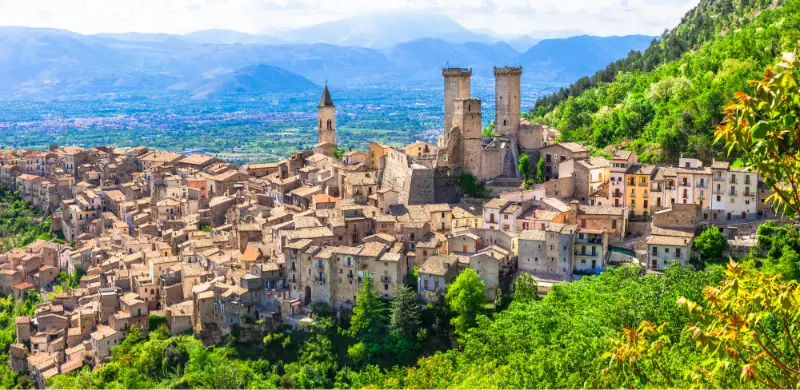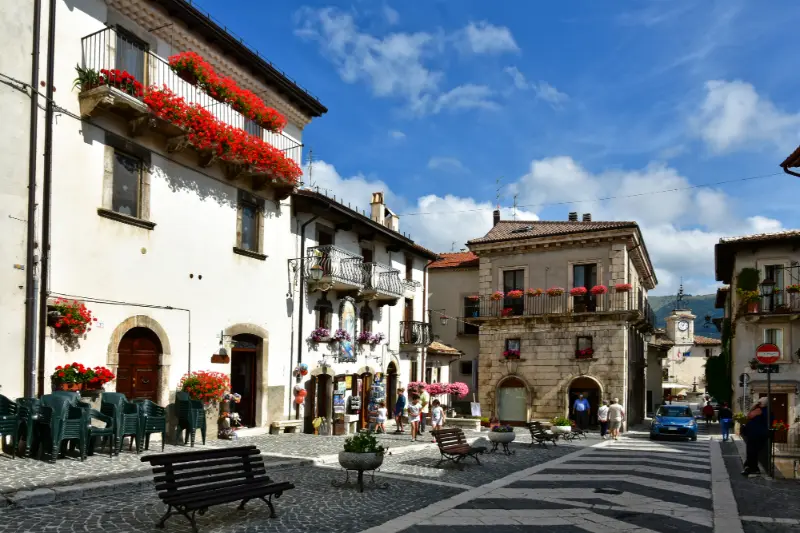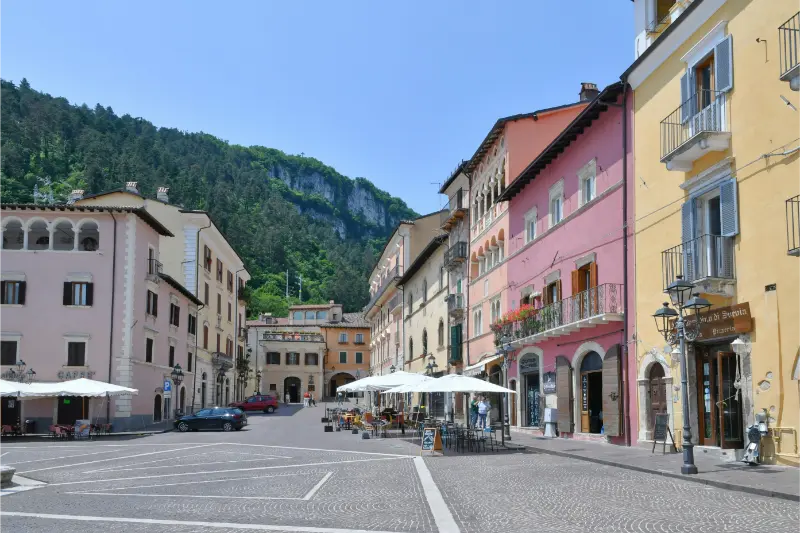
Tagliacozzo is a good western Abruzzo stop when you want a town you can enjoy at walking pace: a distinctive square, historic buildings, churches and streets that climb into the older settlement. Its railway connection also makes it more approachable for travelers without a car than many small mountain villages. A half-day covers the center, while an overnight stay allows dinner, a quieter morning and a separate outing into the Marsica.
Begin with Piazza dell'Obelisco and treat any interior visit as an addition to a street-based route. The Palazzo Ducale and Teatro Talia deserve attention, but their descriptions do not guarantee routine public admission. This Tagliacozzo travel guide sets out a day that works even when one building is unavailable, with practical choices for rail arrivals, accommodation and combining the town with Alba Fucens or Celano.
If Tagliacozzo Travel is part of a longer route through Abruzzo, our Abruzzo travel guide is a useful starting point for choosing the next stop.
Piazza dell'Obelisco is the natural starting point
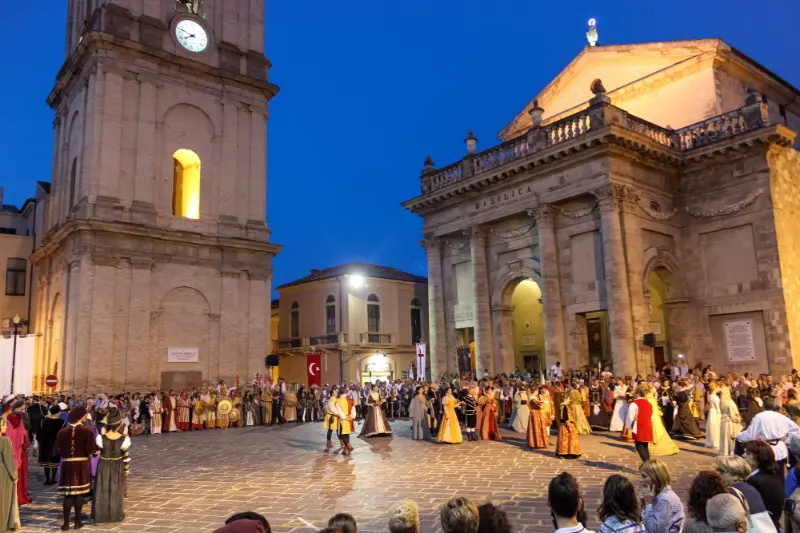
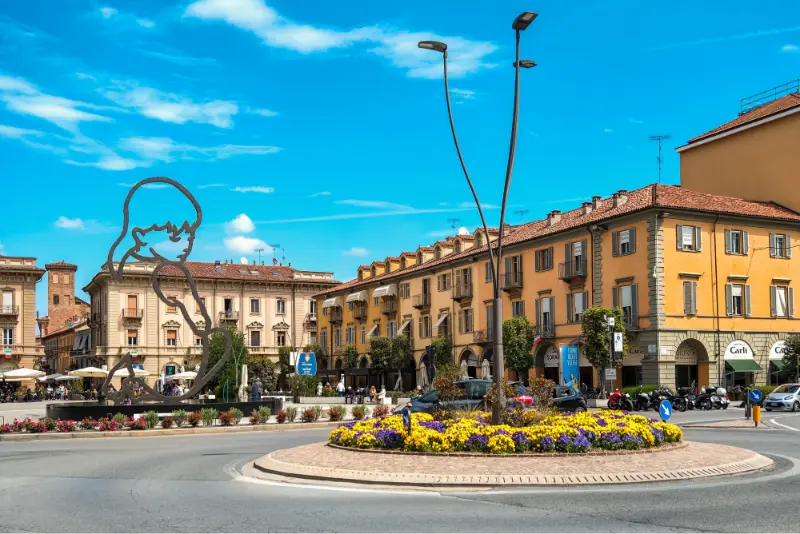
The main square is the place to pause before exploring. Its irregular outline, surrounding buildings and central fountain create a more interesting space than a simple symmetrical piazza. Walk around it slowly, noticing how the view changes as you move toward different corners. A coffee here can be part of the visit rather than an interruption to it.
The municipal tourism page dates the fountain and obelisk to the early nineteenth century, with the dedication connected to Saint Anthony of Padua. That provides a useful reminder that the square's appearance developed over time. It should not be described as an untouched medieval scene just because older buildings surround it.

Look up at windows and upper floors as well as the ground-level cafes. You can see architectural details without entering the buildings, and the square makes a good meeting point if your group separates briefly. For a photographer, allow room to move rather than taking the first image from beside the fountain and immediately leaving. Keep café access and any vehicle route clear while you stop.
Walk uphill toward the Palazzo Ducale
The Palazzo Ducale is the main secular monument to investigate. The municipal profile associates its development with the Orsini family and describes changes made over several periods. Its windows and entrances provide interest from the public approach even if you cannot enter. A guide can explain these features without needing a long recital of every owner.
Confirm interior access before treating the palace as the centerpiece of your day. Ask the local information service whether visits are available, where they meet and which spaces are included. Restoration, events or staffing can affect arrangements. If you want to see painted rooms, request that specifically instead of assuming a general visit reaches them.
The uphill walk belongs to the experience, but choose it according to your group's ability. A map can make the palace appear only a short distance from the square while hiding the gradient. With luggage, complete hotel check-in before sightseeing. For someone who struggles with slopes, ask about the most suitable approach and make the palace exterior optional rather than forcing a difficult climb.
San Francesco and its cloister
The Church of San Francesco offers a substantial religious stop. The municipal description explains that later alterations and restoration affected its appearance, so the interior should be understood as a building with several historical phases. Notice the broad space and structural lines before concentrating on individual furnishings.
Ask whether the cloister can be visited at the same time. A church door being open does not necessarily mean every adjacent part of the complex is accessible. If you have arranged a guide, establish whether the visit includes both. One clear explanation covering the church and its setting may be more rewarding than attempting several smaller interiors without context.
As in any active place of worship, check whether a service is underway and follow local photography rules. Families can keep this stop short and return to the streets afterward. If the interior is unavailable, look at the exterior and continue your loop; the town route does not need to collapse because a single door is closed.
Teatro Talia and the upper streets
Teatro Talia provides another reason to consult the town's cultural calendar. An evening performance can transform an overnight visit, giving the day a purpose beyond sightseeing. The municipal portal lists the theater and local event programs, but a theater description is not the same as a current box-office schedule.
If a performance interests you, verify the date, ticket, start time and language, then reserve accommodation and dinner accordingly. Ask whether the theater can be visited without attending a show if that is your intention. An interior opening may be tied to an event rather than offered every afternoon.
Continue through a manageable part of the upper streets, taking care with steps and sloping paving. Do not assume that the shortest line on a navigation app is the easiest pedestrian route. Return toward Piazza dell'Obelisco with time for a meal. That gives the walk a clear ending and prevents a pleasant exploration from turning into a tiring climb added simply to complete a list.
A half-day route that leaves room to look around
For a first visit, start at the square and choose San Francesco as the main interior when open. Continue toward the palace if the gradient suits your group, then return through another public street. Fit a confirmed guided visit into that route rather than crossing town repeatedly to satisfy several unrelated appointments.
Allow lunch or a proper café stop before leaving. A town with a strong square deserves time spent in it, particularly if you have arrived by rail and do not need to hurry to the next parking space. With children, plan a small reward at the end of the uphill section and keep the walk shorter than an adult architecture route.
If you have a full day, add a booked palace visit or more time in the historic streets before considering another destination. A full town day is also useful when the weather makes an outdoor archaeological visit less attractive. You do not have to leave Tagliacozzo merely because a map shows several famous places within the wider region.
Arriving by train
Tagliacozzo is served on the Rome-Avezzano-Pescara rail corridor. Check Trenitalia's current journey planner for your date, including the actual Rome departure station, changes and any replacement bus service. Not every regional train follows the same stopping pattern, and engineering work can alter an otherwise straightforward journey.
Save the return options before beginning sightseeing. A comfortable outward train does not establish that you can remain for a late dinner and still get back that evening. If the return timetable limits your day, place the uphill walk first and finish near the square and the route to the station. Keep a margin for reaching the platform without rushing.
Rail works especially well for a town-only visit or a stay within walking distance of the center. It is less convenient for adding remote accommodation, a woodland trailhead or several other Marsica villages unless you arrange onward transport. Ask a host about the station-to-room route with luggage, particularly if the building stands in the upper town.
Driving, parking and the mountain surroundings
With a car, use the route appropriate to your starting point and look for designated parking outside the tightest historic streets. Local traffic restrictions apply even where a navigation app suggests driving closer to your destination. Before arriving at a historic-center property, ask how unloading works and where you may park overnight.
Mountain outings around Tagliacozzo need their own planning. The municipal portal lists areas such as Marsia and caves in the wider territory, but they are not simply extensions of the central street walk. Check roads, opening arrangements and any guide requirement before choosing a detour. A cave description in a destination list does not imply unrestricted entry.
In winter, assess the journey to higher ground separately from the town visit. Snow, ice and daylight can affect roads and walking, even when the center is accessible. If the main purpose is a cultural day, keep that focus and leave the outdoor outing for better conditions. This also avoids carrying unsuitable footwear into a route chosen at the last moment.
Where to stay for a town break
A room near Piazza dell'Obelisco is convenient for meals and a relaxed evening. Check noise, the room's floor and the route from the station or parking area. Being near the square can mean atmosphere and easy access, but the property may face a busier evening space than you expect. Ask for a quieter room if that matters.
The upper historic area suits travelers who prefer a more secluded setting and do not mind slopes. Confirm stairs, luggage access and how you will return after dinner. A panoramic photograph is not enough to establish that the accommodation is practical for your family or mobility needs.
Rural properties make sense for a driving holiday with several outdoor days. Ask about breakfast, dinner and the condition of the entrance road. If you want to travel entirely by rail, stay where your regular meals and the station remain manageable on foot. Saving a little on a room farther away can cost more in transfers and reduce your freedom to move around.
Alba Fucens, Celano and choosing the right second stop
Alba Fucens is a strong companion for a driving itinerary because its outdoor archaeological setting differs from Tagliacozzo's streets and square. Give the ruins enough time, and check San Pietro separately if you want to enter. Ancient paving and sun exposure also make footwear and water more important than in a café-based town afternoon.
Celano adds a castle and museum collections, but its opening must be confirmed before arranging a two-town day around the interior. Read the separate Celano guide and let the actual visitor schedule determine the order. It is sensible to keep Tagliacozzo as the flexible street-based stop and place the timed museum first when necessary.
For an overnight stay, choose one of these outings the next morning rather than trying to see both before returning to Tagliacozzo for dinner. A slower Marsica trip gains from comparing different kinds of place: town, ancient site and castle. That comparison works best when each has enough time to make an impression.
Food, seasons and everyday costs
Choose a restaurant by its menu, opening hours and position on your route, rather than expecting every local dish in a single meal. Regional pasta, seasonal vegetables and meat dishes provide a useful starting point. Ask about portions and dietary requirements before ordering, especially if you are sharing with children or planning another substantial meal later.
Spring and fall suit the town walk. Summer rewards an earlier uphill section and a midday break; cultural events may make an evening stay particularly worthwhile. Winter favors a compact route with confirmed interiors and time for lunch. Check current programs rather than assuming a recurring festival always uses the same dates.
Budget for travel, meals, parking where charged and any reserved interior or performance. The public square and streets can form a rewarding visit without a sightseeing package. The most practical plan is also one of the best: a train or parked car, a clear walking loop, one meaningful interior and time in Piazza dell'Obelisco before you leave.
Plan at a glance
| Stop or choice | Why choose it | Before you go |
|---|---|---|
| Piazza dell’Obelisco | Town orientation and a meal | Natural start and finish for your loop |
| Palazzo Ducale | Historic architecture | Confirm interior access in advance |
| San Francesco | Church and possible cloister visit | Ask about both parts separately |
| Rail arrival | A town break without a car | Save outward and return options |
Location map
Use this map to locate the main visiting area, then check the permitted approach, parking and the exact entrance for any reserved activity.
Open the location in Google Maps
Frequently asked questions
Is Tagliacozzo practical without a car?
A town visit can work well by train. Check the current service and the route from the station to your room or the center.
How long should I allow?
A half-day covers a focused walking loop and a meal. Staying overnight adds a quieter morning and time for a separate Marsica outing.
Can I enter the palace whenever I visit town?
Do not assume routine access. Confirm guided openings and available rooms with local visitor information.
Where to stay
More Abruzzo ideas
- Abruzzo Travel Guide: Mountains, Coast, Villages and Practical Planning
- Where to Stay in Abruzzo: Best Bases for Coast, Mountains and Towns
- L’Aquila Travel Guide: Collemaggio, Historic Center and Gran Sasso
- Alba Fucens Travel Guide: Roman Streets, Amphitheater and San Pietro
Visitor information
- Municipal Piazza dell’Obelisco profile
- Palazzo Ducale municipal information
- Church of San Francesco
- Municipal transport and arrival information
- Current train journey planning
Last updated: October 17, 2026