
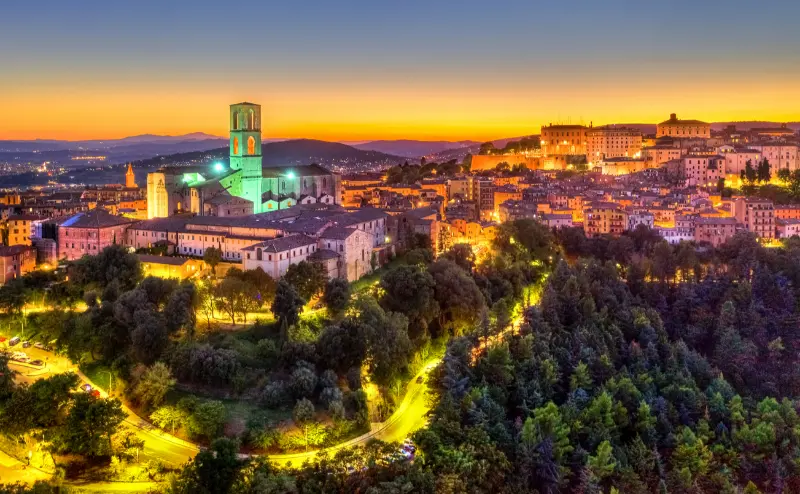
Choosing where to stay in Perugia is less about neighbourhood “vibe” than about vertical geography. A hotel can be only a kilometre from Piazza IV Novembre yet require a steep climb, while another farther away may have a direct Minimetrò or escalator connection. The right base depends on whether you prioritise evening walks, a car, rail day trips or quiet sleep.
For most first-time visitors without a car, the historic centre is the easiest choice. Drivers should be more selective: a romantic address inside the walls can become inconvenient if parking is distant or the hotel sits inside a restricted traffic zone.
| Best for first-time visitors | Historic centre around Corso Vannucci / Piazza IV Novembre |
|---|---|
| Best for rail convenience | Fontivegge / station area, with uphill connection |
| Best for drivers | Properties with clearly documented parking and easy ring-road access |
| Best for nightlife | Central university-facing streets, with potential noise trade-off |
| Best compromise | Edge of historic centre near escalator/Minimetrò access |
Historic centre: best for atmosphere and walking
Staying near Corso Vannucci, Piazza IV Novembre or the upper city gives you the strongest sense of Perugia after day-trippers leave. Museums, restaurants and evening walks are immediate, and you can return to your room between sightseeing blocks.
The trade-off is access. Historic buildings may have small lifts, stairs or no parking, and taxi drop-off points can be restricted. Read the arrival instructions before booking rather than after entering the ZTL.
Near Piazza Italia and Rocca Paolina: a practical central edge
The south side of the centre around Piazza Italia can be especially convenient because Rocca Paolina and its escalator connections link the upper city with lower parking and transport. You remain within an easy walk of Corso Vannucci but gain a clearer arrival route.
For travellers with moderate mobility concerns, this can be better than a picturesque lane with multiple steep approaches. Still verify the exact final metres to the property; Perugia’s gradients change quickly.
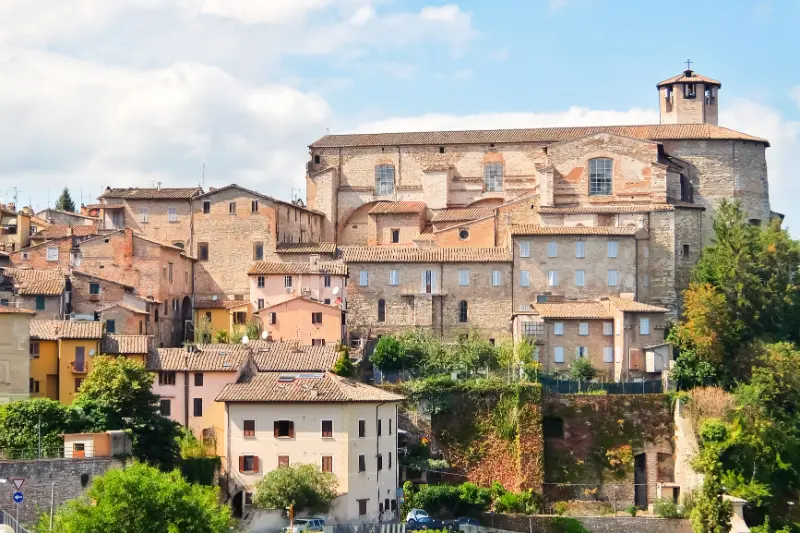
Fontivegge and the railway station: useful, not equivalent to the old town
The main station is practical for Assisi and Spello, but it sits below the historic centre. Staying nearby can work for travellers making repeated train trips, yet it changes the evening experience because you will need public transport or a climb to reach the old town.
Choose this area deliberately for transport, price or a specific hotel—not because a booking map makes the station look “central”. Read recent reviews about the immediate street and the connection you intend to use at night.
Drivers: parking can matter more than postcode
If you have a rental car, prioritise properties that describe parking type, cost and access clearly. “Parking nearby” can mean a public garage several steep streets away, while an agriturismo outside the core may offer effortless parking but require driving for dinner.
A good compromise is the edge of the historic centre or a property connected to upper Perugia by escalator or Minimetrò. You can leave the car for city days and still escape easily for Gubbio or Lake Trasimeno.
Families: reduce vertical friction
Families with strollers or small children should think in terms of daily climbing. A central hotel can still be excellent, but check lifts, steps at the entrance and the route from parking or public transport. Mechanical links are helpful, yet they do not remove every cobbled gradient.
Apartment-style accommodation can be useful for breakfast and laundry on a longer Umbria trip, but central apartments may be in buildings without lifts. The floor number matters as much as the address.
Nightlife versus sleep
Perugia’s university population gives the centre real evening life. That is an advantage if you want aperitivo and late streets, but a room directly above a busy bar can be less charming at midnight. Read room-specific noise comments and request an internal-facing room if needed.
Travellers who prefer quiet evenings can stay a few minutes outside the busiest central lanes without losing access to monuments. The city is compact enough that one street can change the sound level significantly.
Best base for day trips
For Assisi and Spello by train, easy station access is valuable, but you do not need to sleep beside the tracks if a convenient public-transport connection links your hotel to Fontivegge. For Gubbio and rural Umbria, road access becomes more important.
If you plan four consecutive day trips, Perugia may become a logistics base more than a city stay. In that case, choose transport efficiency. If you plan only one or two, stay centrally and enjoy Perugia itself.
How to plan the visit without overloading the day
Before booking, map three routes: arrival with luggage, evening return from dinner and departure for your most important day trip. The hotel that wins all three is usually better than the one with the shortest straight-line distance to Piazza IV Novembre.
For drivers, contact the property if ZTL instructions are unclear. A five-minute message before arrival can prevent fines, wrong turns and stressful unloading.
Common mistakes to avoid
- Assuming the railway station is in the historic centre.
- Booking inside the walls without understanding parking/ZTL rules.
- Ignoring hills when travelling with strollers or heavy luggage.
- Choosing the nightlife core while expecting silent evenings.
- Using “distance from centre” without checking elevation and mechanical connections.
When to go
In summer, air conditioning and easy midday returns become more important. In winter, staying central reduces time spent waiting for transport in bad weather.
Major event periods can sharply affect availability. Book earlier when Perugia hosts large cultural or food events, then check whether road closures change your arrival plan.
Getting there and moving around
The Minimetrò, buses and escalator systems make non-central accommodation more viable than the map alone suggests. Identify the nearest useful station or escalator entrance before booking.
Taxis can solve luggage problems but should not be your only plan if the property lies in a pedestrian or restricted zone. Ask exactly where a taxi can drop you.
Where to stay
For a first trip, my default choice is the historic-centre edge near good mechanical access rather than the absolute centre or the station. It preserves evening atmosphere while reducing arrival friction.
For a road trip through Umbria, a parking-friendly property outside the core can be smarter, especially if Perugia is only one stop among many and you expect early departures.
Official sources and last checks
- Comune di Perugia tourism portal
- Umbriatourism – Rocca Paolina and escalator context
- Galleria Nazionale dell’Umbria – how to arrive
Opening hours, ticket prices, transport services and temporary access rules can change. Check the official source shortly before travel.
A better way to prioritise your time
The most useful way to plan Where to Stay in Perugia is to rank experiences by how difficult they are to replace. A timed museum, a sacred-site schedule or a transport-dependent viewpoint should come before a generic coffee stop or shopping street. Build the day around the least flexible element, then keep nearby streets and viewpoints as movable pieces. This approach is especially important in Umbrian hill towns, where a short distance on a map can involve a climb, a bus connection or a parking transition.
If the day starts running late, remove the least distinctive stop rather than cutting every visit in half. Travellers often remember one properly understood church, museum or archaeological site more clearly than four monuments seen at speed. Keep at least thirty minutes of unassigned time for views, photographs, an unexpected open doorway or simply sitting in a square; that margin is part of good trip design, not wasted time.
Accessibility and comfort notes
Historic Umbria rewards walking but is not uniformly easy. Cobblestones, steep gradients, old staircases and limited vehicle access can matter more than total distance. Travellers with reduced mobility should check the exact entrance route to museums and churches rather than relying only on a general accessibility label. Mechanical lifts, escalators, taxis and lower-city parking can remove some climbs, but the final approach may still include uneven paving.
In warm weather, carry water and shift exposed climbs away from the hottest part of the day. In rain, stone paving can become slippery. Comfortable shoes with grip are more useful than formal footwear even in elegant historic centres, and a light layer is useful inside churches and climate-controlled museums.
How to improve a short visit
If you have less time than the full itinerary assumes, protect one experience that is unique to this destination and one flexible walk that helps you understand the setting. Drop secondary indoor stops before cutting the main sight to a rushed glance. This is especially useful in Umbria, where atmosphere, elevation and views are part of the visit and cannot be appreciated from a checklist.
Check the final admission time, not only the closing time, and allow a buffer for parking or public transport. A fifteen-minute delay in a hill town can easily become thirty once you add walking from the car park, finding an entrance and dealing with stairs. Planning that margin makes the day feel slower even when you see the same number of places.
Final planning advice
The best area in Perugia is the one that removes the hardest part of your own trip: hills, parking, station access or late-night noise. Do not let a generic “central” label decide for you.
For most first-time visitors, staying high in or near the historic centre is worth it. For drivers, clear parking instructions are worth more than an extra two minutes of walking distance.
Leave a Reply