My Italy Experience

Category: Marche

Travel guides to the Marche region, including Urbino, Ancona, Pesaro, Ascoli Piceno, Frasassi Caves and the Conero coast.

  • Portonovo Bay Guide: Conero Beaches, Trails and Practical Access

    Portonovo Bay Guide: Conero Beaches, Trails and Practical Access

    Portonovo is one of the most distinctive places to enjoy the sea on the Conero Riviera. A wooded slope runs down toward a bay of pebbly beaches, clear-looking water, historic buildings, and places to eat near the shore. Unlike a conventional resort town, Portonovo is a compact coastal environment whose limited road access and busy summer demand require advance planning. Its attraction is the relationship between mountain and sea, not a long promenade of shops. Visitors who prepare for beach surfaces, seasonal transport, and protected natural surroundings often enjoy it more than those who arrive expecting limitless parking and an uninterrupted strip of soft sand.

    In this guide

    Understand Portonovo's coastal setting

    Portonovo sits below Monte Conero, where the headland changes the feel of the Adriatic coast. The wooded hillside appears unusually close to the beach, creating a strong contrast between the green slope and pale stones at the waterline. This setting also limits space for roads, parking, and development. It is why the bay can feel atmospheric outside peak hours yet crowded on busy summer days. Decide before arriving whether you primarily want a beach day, a short cultural walk, or a meal beside the water. Combining everything is possible when conditions are favorable, but the logistics differ from a larger seaside town.

    For travel beyond Portonovo Bay, consult our Marche travel guide; it explains how to choose a base and link nearby destinations.

    The bay is part of the wider Conero landscape and must be treated as a real coastal environment. Weather, wind, currents, and the state of the sea matter even when the water looks inviting in a photograph. The distinction between managed beach facilities and freely accessible sections can vary with the season. Check posted signs and do not assume that a quiet corner is safe for swimming or that you may walk across private or protected areas. Portonovo is most rewarding when visitors accept its physical limits instead of trying to force a resort-style itinerary onto a small bay.
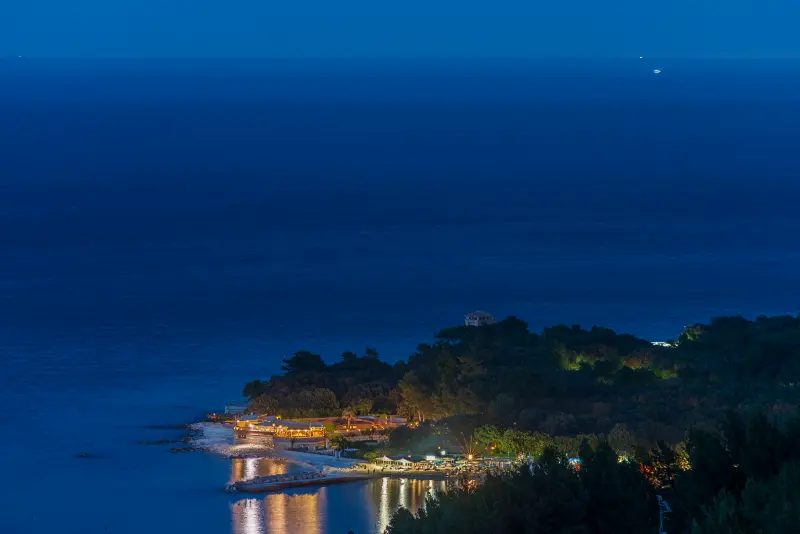
    Portonovo Village Night Illuminated Restaurants Beach Resort Reflection Blue Sea Italy

    Choose the right stretch of beach

    The beaches at Portonovo are generally characterized by pebbles and coarse stones rather than fine sand. That affects the entire day: footwear suitable for stones can help, and a thick beach mat may be more comfortable than a thin towel. The shore's composition and slope can change after storms, so do not rely on a picture from a different year to assess the exact water entry. Visitors who need very gradual access should investigate the specific managed section and its facilities before traveling. A generic claim that the beach is "family friendly" is not enough for every family.

    Arrive early in busy periods if you need a particular facility or a convenient place to settle. Paid beach establishments may offer loungers, shade, and services, while public stretches require more self-sufficiency. Ask about reservations and what is included rather than assuming that a booking covers everything. If traveling with children, establish an easily recognizable meeting point and keep a close eye on them near the water and at the edge of busier paths. The compact bay can feel relaxed, but a crowded shore changes how carefully a day must be managed.

    Visit Santa Maria di Portonovo

    The Romanesque Church of Santa Maria di Portonovo is a compelling reason to step away from the beach for a while. The building preserves a link to a Benedictine religious presence that developed in this coastal setting around the medieval period. Its stone form is particularly striking because it seems so close to the mountain and sea. Walking toward the church gives visitors a different view of Portonovo: once a remote place of religious life and coastal vulnerability, not a destination created primarily for swimming and restaurants.

    Check the church's official seasonal visiting arrangements before setting out. The Ancona tourism service publishes dates and access details, which can change from year to year; a timetable from 2026 should not be quoted as certain for 2028. If a service or religious activity is taking place, behave as a respectful visitor. Photography may be restricted inside. Even when access to the interior is unavailable, seeing the surrounding setting from permitted paths can add historical depth to the day. Avoid crossing private land or conservation boundaries to reach an unconventional viewpoint.

    Understand the Napoleonic Fort

    Portonovo also contains a fortified structure associated with the Napoleonic period. The Napoleonic Fort was built as part of the coastal defense system during the early nineteenth century. Its position illustrates why the bay was strategic: a landing place with access to water mattered in an era when naval conflict and shore defenses shaped life along the Adriatic. The building has since been restored and adapted to other uses. It should not be described as a conventional public military museum with unrestricted rooms and fixed admission.

    The most useful approach is to learn the history from official tourism information, then enjoy lawful views of the exterior. Where parts of a building are operated as accommodation or dining space, ordinary commercial and private-use rules apply. A visitor is not automatically entitled to enter because a guide mentions an important historic structure. Nearby, coastal defensive remains from different centuries help show that Portonovo's history extends beyond its beach appeal. A short cultural detour can make the bay more memorable without requiring a formal museum circuit.

    Locate the Clementine Tower and historic landmarks

    The Clementine Tower is another reminder of Portonovo's need for coastal observation and protection. It is generally associated with the eighteenth century, earlier than the Napoleonic fort. The relationship between the tower, church, and later fort tells a layered story: religious settlement, coastal security, and changing maritime strategy all left traces within a small area. Viewing them as one historical landscape is more meaningful than treating each as an isolated photo opportunity. Use established public routes and notice how the buildings occupy different positions relative to the beach and slope.

    Because Portonovo is compact, some visitors assume they can see every landmark in a few minutes. In practice, the terrain, weather, and access restrictions can slow a walk. Set aside enough time to enjoy the approach and to read any interpretation available. If you are mobility-limited, verify the surface and gradient of the desired paths before leaving the parking area. A coastal itinerary is not necessarily step-free merely because its overall distance is short. It is reasonable to choose one or two accessible viewpoints rather than attempt the entire historic circuit.

    Enjoy the bay's food culture responsibly

    One of Portonovo's gastronomic associations is the wild mussel known locally as mosciolo, connected with the waters of the Conero coast. This is a useful cultural detail, but it comes with an important distinction: wild marine resources are managed and subject to environmental conditions, regulations, and seasonal availability. Do not collect shellfish yourself because you have read that they are a local specialty. Choose reputable restaurants or authorized suppliers, and respect any posted restrictions on fishing and harvesting.

    If you want to try local seafood, book a table during high season and ask what is genuinely available that day. A menu featuring mussels does not mean that every portion comes from the same source or that the wild local product is offered year-round. Restaurants may have limited parking nearby, making arrival logistics part of the dining plan. A relaxed lunch can be an excellent way to divide a beach day, but avoid drinking and then taking a long swim or driving when impaired. The atmosphere is best enjoyed without turning the meal into another hurried attraction.

    Arrange parking and seasonal transport

    Portonovo's limited space means that transportation choices are central to a successful visit. Ancona tourism publishes information about seasonal buses and shuttle connections from the upper parking area to the bay, including route details that apply to particular travel periods. These services should be checked for the actual year, day of week, and time you plan to travel. A shuttle schedule from a previous summer cannot be treated as a guaranteed service in 2028. The final return time matters as much as the outbound trip.

    If driving, follow the designated signs and be prepared for parking to fill in popular periods. Do not park along roadsides where prohibited or obstruct emergency access. If a lower lot is full, use legal alternatives rather than expecting to find a hidden roadside space. Walking down to the bay is not the same as walking back up after hours in the heat, particularly with beach equipment and children. Assess the slope and available transit before committing. Coming by bus from Ancona may be convenient, but only when connections and service frequency support your intended schedule.

    Plan for safety in the sea and on paths

    Sea conditions at Portonovo can change quickly, and the rocky or pebbly shore requires attention underfoot. If lifeguards and warning flags are present, follow their instructions. Do not swim beyond designated areas or enter the water during unsafe conditions merely because it appears clear. Children need supervision close enough to respond immediately, not from a distant café table. If you are unfamiliar with the beach, enter cautiously and stay within your ability. Water shoes help with stones but do not replace safe judgment about waves or currents.

    The wooded slopes and coastal paths around Monte Conero have their own hazards. Some tracks can be steep or restricted for environmental reasons, and there may be rockfall or erosion concerns in coastal sections. Use official park information for trail status instead of following a random social-media route. Keep to marked paths and avoid closed descents. For an easy day, do not try to link the bay to multiple distant beaches on foot unless you know the approved route and its demands. A short authorized walk with good views is preferable to an improvised and potentially unsafe shortcut.

    Decide when to visit

    Late spring and early fall can offer a pleasant balance between manageable temperatures and a less intense beach atmosphere, though some services may operate only seasonally. Summer brings the fullest beach experience and the greatest demand for parking, dining, and loungers. Arriving early or on a weekday can help, but it does not guarantee solitude. If you primarily want to see the church and the landscape, cooler months may be appealing, provided visitor access and road conditions are confirmed. Swimming is not the only way to appreciate Portonovo.

    Weather is important in every season. A windy day may make the beach uncomfortable while leaving other cultural attractions in Ancona suitable for a visit. Rain can make wooded paths slippery, and storm damage may change which sections of the shore are accessible. Keep an alternative plan rather than treating any particular beach as mandatory. If the church or a restaurant has a separate seasonal calendar, verify those times alongside the transport schedule. The most common planning mistake is assuming every part of Portonovo operates according to the same hours.

    Combine Portonovo with Ancona or the wider Conero

    Portonovo fits naturally into a trip based in Ancona or along the Conero Riviera, but the best pairing depends on how long you intend to stay on the beach. A half-day visit may allow time for a short coastal walk and lunch; a full beach day deserves space without a second distant destination. Ancona provides museums, the cathedral, urban services, and transport connections for a complementary city experience. Travelers staying in Sirolo or Numana can also visit the bay, but should account for summer traffic and parking rather than comparing distances alone.

    Overnight accommodation in the immediate area can be limited or costly compared with broader options in Ancona and nearby settlements. Compare parking, access, and evening transport before booking. A hotel advertising the Conero Riviera may not be within walking distance of Portonovo's beach. For families, practical matters—shade, beach surface, restrooms, and the return journey—should carry more weight than a dramatic photo. Portonovo is at its best as a carefully planned encounter with an unusual stretch of coast, where landscape, history, and food all contribute to the experience.

    Quick planning reference

    Best use of timeTreat Portonovo Bay Guide as a focused day or overnight stop rather than adding it as a rushed detour.
    ArrivalConfirm the current road or transit options for Portonovo, Ancona, Italy before departure.
    ReservationsCheck official opening and reservation notices for interior visits, activities and special-access sites.
    Footwear and mobilityExpect uneven paving or terrain; confirm step-free routes with the relevant venue.
    WeatherKeep an indoor or shorter backup plan if conditions change.

    Continue planning your Marche trip

    Official resources and final checks

    Before departure, check the official sources below for the latest museum hours, access rules, trail notices and any seasonal services. Their current information should take precedence over older guides, especially for visits planned in 2028.

    If you prefer to stay overnight rather than return after a long drive, compare accommodations and read recent guest reviews before booking.

    Compare places to stay near Portonovo, Ancona, Italy

    Frequently asked questions

    Is Portonovo a sandy beach?

    Portonovo is known for pebble and stony beaches. Bring appropriate footwear and check the specific shore conditions where you plan to settle.

    Can I reach Portonovo by bus?

    Seasonal services and a shuttle have operated from the Ancona area, but exact routes and dates need checking for the year of travel.

    What historic sites can I see in the bay?

    The Church of Santa Maria, the Napoleonic Fort, and the Clementine Tower help explain the bay’s religious and maritime history.

    Are Portonovo restaurants open all year?

    Some services are seasonal. Check current opening days, table reservations, and whether parking or shuttle access affects arrival.

    Is swimming always safe at Portonovo?

    No. Follow lifeguard advice and warning flags; rocks, waves, and changing conditions require care even in clear-looking water.

    Last updated: October 17, 2026
  • Corinaldo Travel Guide: Medieval Walls, Piaggia and the Polenta Well

    Corinaldo Travel Guide: Medieval Walls, Piaggia and the Polenta Well

    Corinaldo is not a place where one monument explains everything. Its appeal comes from the relationship between a fortified hilltop, an unusually coherent circuit of walls, steep lanes and a lively local tradition built around the Piaggia staircase. In northern Marche, within reach of the Adriatic resorts around Senigallia, it offers a genuinely different day from the beach: an old town to explore at walking pace rather than a list of famous rooms to rush through. The recommended first visit is a loop of the walls followed by the staircase and central streets, with a stop for local food. Check museum access separately instead of assuming the whole heritage circuit uses one ticket.

    In this guide

    Start with the defensive geography

    Corinaldo's position matters as much as its buildings. Looking from the surrounding countryside, you can understand why a settlement on high ground needed a substantial belt of protection: approaching forces would have been visible across the rolling agricultural landscape long before reaching the gates. The town's fortifications still give a readable outline of that defensive purpose. Begin outside or near a surviving gateway, where the slope and relationship between wall and road are easier to appreciate, rather than immediately climbing to the busiest square. What seems like a picturesque brick boundary from one angle becomes a designed military barrier when viewed from below.

    For travel beyond Corinaldo Travel, consult our Marche travel guide; it explains how to choose a base and link nearby destinations.

    Walk the permitted stretches slowly and notice interruptions in the masonry, projecting towers and changing views between town and countryside. A medieval circuit was not intended as a continuous panoramic walkway for tourists, so do not assume every tower or parapet is open. A short circuit on public streets is usually more rewarding than hunting for a complete elevated loop that may not exist. For photography, the transition from a fortified gate to an ordinary residential lane captures Corinaldo better than a wide shot with no recognizable details. Keep respectful distance from private doors and driveways, particularly where homes back directly onto the historic walls.

    Corinaldo Medieval Walled Town Marche Italy

    Make the Piaggia staircase the centerpiece

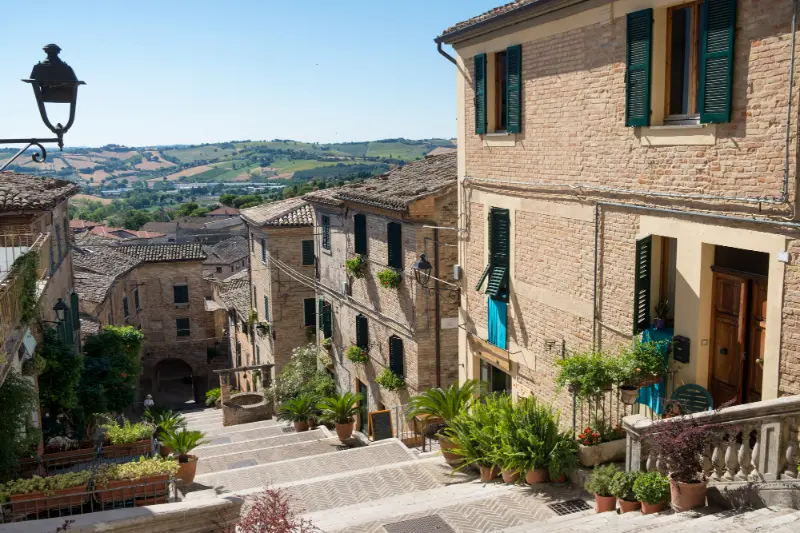
    The Piaggia is the scene most visitors remember: a long, sloping staircase lined with buildings and the well at its center. It is tempting to treat it as a photographic prop, but its importance is spatial. The climb connects different levels of Corinaldo and reveals how daily movement through the town depended on gradients, steps and small landings. Walk down once, then turn and climb back in stages. The change of perspective helps you see the houses, doorways and view lines that are almost invisible when concentrating on your footing. Comfortable shoes with traction are much more useful here than elegant but slippery soles.

    The well is commonly associated with the local legend of the Polenta Well. According to the story, a sack of cornmeal fell into the water and an implausible sequence of events produced jokes about someone eating polenta inside the well. The story is folklore, not a documented account of actual communal cooking. The tourist office explains that the well's historical predecessor was built in the late fifteenth century and that the present feature was reconstructed in the twentieth century. This distinction makes the stop more interesting: visitors see a physical place through which Corinaldo has chosen to remember and perform its local identity.

    Understand the walls rather than just counting towers

    Look for the differences between the older eastern defenses and later Renaissance extensions. The official town account distinguishes gateways and sections built or altered in different periods; the wall circuit was not created in one uninterrupted construction campaign. At certain points an angular approach or projecting tower makes sense only when you imagine a former entry road. You do not need specialist architectural vocabulary to read this landscape. Ask a simple question at each surviving entrance: how would someone have arrived here before the ring roads and car parks existed?

    The wall is also the best introduction to the town's modest scale. Corinaldo can be explored in a half day without sacrificing the places that make it distinctive. Rushing to add several more hill towns in the same morning usually reduces them to similar photographs. A better approach is to pair Corinaldo with a slower afternoon at Senigallia or another nearby stop. That contrast—brick fortification inland, flat sandy coast on the Adriatic—helps explain why northern Marche offers a varied itinerary even over a short stay.

    Add the central streets and churches

    Once you have seen the defensive ring, move inward. The town's small squares and parish buildings reveal a later layer of civic and religious life that is not always obvious from the walls. You may encounter churches that open only for worship, volunteer-led visits or limited hours. If interiors are important, check locally in advance; an attractive doorway does not guarantee access. Even when a church is closed, look at its placement along a route or at the edge of a square. Such buildings often mark the places where people met, traded and organized town life.

    Give some time to unplanned exploration between the staircase and central streets. Ordinary details—the width of a lane, an old lintel, a shop with seasonal produce, a small view over fields—allow Corinaldo to feel inhabited rather than staged. The town can be quiet on weekdays outside the summer season, and that quiet is a feature, not a defect. There is no need to fill every minute with scheduled attractions. If you are traveling with children, the changes in level and sightlines can become a game of spotting gates and towers; however, supervise them closely on steps, steep edges and road crossings.

    Build a half-day walking route

    For a first visit of three or four hours, park legally outside the most constrained old-town streets and approach through a recognizable gate. Spend the first part of the morning reading the defensive perimeter, then enter the center and walk the Piaggia with enough time to stop at the well. Continue to a small square for coffee or lunch and use the last portion for a church or museum whose opening has been confirmed. This sequence reduces unnecessary backtracking, although the exact entry gate will depend on where parking is available.

    A slower full day changes the emphasis. Rather than adding artificial checklist items, linger over lunch and take another wall-side stroll in different light. A visitor interested in fortifications may spend longer studying towers; someone drawn by folklore may arrange a local guided visit that explains the historical reenactment tradition. In either case leave space for delays. Historic centers can have temporary works, market restrictions or festivals that change pedestrian routes. Save the official town map offline when possible and treat online driving directions through old lanes with skepticism.

    Arrive from the coast or inland

    A car generally makes Corinaldo easier to combine with rural viewpoints, vineyards or another small hill town. The town is inland from Senigallia rather than on the railway, so the last leg requires road transport. Public bus connections may exist, but services on weekends, public holidays and school-free days can differ considerably. Check the current operator timetable both ways, especially the return trip; do not rely on an app's estimate that ignores a midday gap. For a car journey, navigate to a confirmed visitor car park or city entrance rather than typing the name of a staircase into the satnav.

    Those staying in Urbino or Ancona should think of the visit as one part of a longer regional route and not assume that a rail journey to the coast puts them within walking distance. Allow time for winding approaches through the hills and for finding a legal parking space. If you have limited mobility, ask the tourism office which entry point minimizes steps. Corinaldo's layout includes slopes and stairs, and there is no truthful way to promise a completely step-free experience across the historic center.

    Food, festivals and the season that suits you

    The Polenta Well story makes local food part of the town's visitor identity, but it would be a mistake to assume every restaurant serves the same special dish year-round. Regional menus may feature fresh pasta, seasonal vegetables, cured meats and wines from the surrounding hills. Choose a restaurant by its current menu and opening day rather than by a list published years earlier. If you plan to visit during a town festival, reserve food and lodging earlier and be prepared for road restrictions, noise and crowds around the staircase.

    Spring and early fall are often comfortable for walking because the sun is less punishing on open paving. High summer brings a lively holiday atmosphere, but the climb up the Piaggia can feel more strenuous in midday heat. In winter, cold wind and wet stone make footwear and daylight more important. Families may enjoy a festive reenactment if the dates align, while travelers seeking architectural details and quiet photographs may prefer an ordinary weekday. Before fixing plans, verify the official event calendar rather than assuming an annual celebration always falls on the same weekend.

    Decide whether to sleep in Corinaldo

    A night in town works especially well for couples, slow-travel photographers and travelers following a route through the lesser-known Marche hills. After day visitors have left, the streets regain a very local rhythm, and an early-morning walk can be more memorable than an additional museum. Check whether your chosen accommodation is inside the walls and whether it provides practical luggage instructions. A room with character may involve stairs, limited vehicle access and no elevator; accessibility claims should be checked at the room level, not just the property's entrance.

    For a beach-based holiday, however, a Senigallia hotel may be the more efficient choice. You can spend the afternoon inland without moving suitcases, and the coast offers simpler rail connections. Corinaldo's value is not measured by whether it deserves a hotel reservation for everyone. It earns a place in an itinerary because it reveals a defended rural Marche that feels different from the region's better-known seaside towns. Use it as a purposeful contrast, not an interchangeable stop added to an overstuffed road trip.

    Small mistakes that change the visit

    The most common mistake is underestimating the slope. A traveler who arrives in sandals, hurries straight up the Piaggia and immediately leaves may find the town tiring rather than interesting. Another is treating the Polenta Well story as literal medieval history. Distinguish the surviving fortifications, the rebuilt feature and the folklore around it, and the visit becomes richer. A third mistake is expecting a timetable-driven museum experience in a small town where some sites operate only on designated days or during events.

    Finally, do not confuse proximity on the map with effortless travel by public transportation. A town only a short distance inland can require careful planning if your itinerary relies on infrequent buses. Confirm opening days and transport first; once those constraints are solved, Corinaldo is one of the easiest hill towns in northern Marche to enjoy without an elaborate schedule. Leave with a memory of the walls, the stairs and the surrounding countryside rather than the feeling that you missed a long list of attractions.

    Quick planning reference

    Best use of timeTreat Corinaldo Travel Guide as a focused day or overnight stop rather than adding it as a rushed detour.
    ArrivalConfirm the current road or transit options for Corinaldo, Marche, Italy before departure.
    ReservationsCheck official opening and reservation notices for interior visits, activities and special-access sites.
    Footwear and mobilityExpect uneven paving or terrain; confirm step-free routes with the relevant venue.
    WeatherKeep an indoor or shorter backup plan if conditions change.

    Continue planning your Marche trip

    Official resources and final checks

    Before departure, check the official sources below for the latest museum hours, access rules, trail notices and any seasonal services. Their current information should take precedence over older guides, especially for visits planned in 2028.

    If you prefer to stay overnight rather than return after a long drive, compare accommodations and read recent guest reviews before booking.

    Compare places to stay near Corinaldo, Marche, Italy

    Frequently asked questions

    How much time should I allow for Corinaldo?

    A relaxed half day is usually enough for the walls, the Piaggia staircase, and an unhurried meal. Allow longer if you have confirmed a museum or guided visit.

    Can I walk on all of Corinaldo’s walls?

    Do not assume the entire medieval wall circuit is open at parapet level. Follow designated public routes and current local access information.

    What is the Polenta Well?

    The well by the Piaggia staircase is associated with a local story celebrated in Corinaldo. Learn the tradition, but distinguish folklore from verified history.

    Is Corinaldo a good trip from the Adriatic coast?

    Yes, it can be paired with a stay around Senigallia if you arrange road travel. Check parking and allow extra time for the hilltop approach.

    Is the town easy with a stroller?

    Some central streets are steep, stepped, or uneven. Choose a shorter route and check alternatives to the Piaggia staircase.

    Last updated: October 17, 2026
  • San Benedetto del Tronto Travel Guide: Riviera delle Palme and the Waterfront

    San Benedetto del Tronto Travel Guide: Riviera delle Palme and the Waterfront

    San Benedetto del Tronto is a major seaside destination in southern Marche, known for its long sandy shore, palm-lined promenade and strong fishing identity. The Riviera delle Palme attracts travelers who want conventional beach comforts, easy waterfront cycling and restaurants without committing to a remote coastal cove. Yet San Benedetto offers more than summer swimming: the harbor, historic upper town, maritime culture and nearby Grottammare add depth to a stay. It is important to choose your base carefully because the beachfront, railway district and elevated old streets provide different experiences. A good itinerary balances relaxed coastal time with a deliberate look at the city behind the resort.

    In this guide

    Understand what makes the Riviera delle Palme distinctive

    The Riviera delle Palme is named for the palms that help define the waterfront landscape. San Benedetto’s promenade is not a secluded wild coastline but an organized urban seaside environment with gardens, walking routes, beach facilities and cycling infrastructure. This is its strength for many families: food, accommodation and services can be close together. It is an especially practical choice if you prefer predictable beach logistics to scrambling down a cliff path with supplies. Expect a lively summer atmosphere rather than the solitude promised by descriptions of hidden coves.

    Extend a visit to San Benedetto del Tronto Travel with the suggestions in our Marche travel guide, which covers regional transport and where to base yourself.

    The promenade’s character changes along its length, so the address of your accommodation matters. Compare pedestrian access, cycle routes, children-friendly facilities and the distance to the nearest suitable bathing area. Some sections may be more convenient for older travelers; others are better for families seeking wide beach establishments and play spaces. Treat the waterfront as a collection of neighborhoods rather than one indistinguishable strip. Walk a section on your first day before deciding which beach establishment or restaurant suits the rest of your stay.

    High Angle View Monastery San Benedetto Subiaco Italy

    Choose a beach based on practical needs

    San Benedetto is primarily a sandy beach destination. Managed beach establishments offer seasonal services, while public access arrangements depend on local rules and designated areas. Confirm current entry conditions, lifeguard coverage, accessible facilities and whether equipment must be reserved. The availability of a beach umbrella does not automatically include parking, towels or every recreational service. Families with young children should look closely at the route from lodging to beach and whether busy roads interrupt it. A short distance on an accommodation listing can feel much longer when carrying bags and helping children.

    Pay attention to the day’s official bathing advisories and weather. Wind, storms and changing sea conditions can make swimming unsuitable, even on a beach that appears gentle from a photograph. Seek current information at local sources rather than trusting an old article’s blanket description of safe shallow water. Protect against sun exposure and heat, particularly during the brightest hours. If you visit outside the main bathing season, expect some establishments to be closed while the promenade remains attractive for walking and cycling. San Benedetto works in different seasons, but not all services are year-round.

    Cycle along the waterfront at a comfortable pace

    One of the most appealing ways to experience the area is by bicycle. Official tourism routes describe a largely flat coastal cycling itinerary connecting San Benedetto with Grottammare and toward Cupra Marittima. This gives travelers a chance to explore the seafront without moving a car between neighboring places. The scenery is more urban and garden-like than remote, but the rhythm of a slow ride, with breaks for coffee or sea views, is rewarding. Check the current state of individual path segments, especially after roadworks or severe weather.

    Cyclists should respect signs, pedestrians and shared sections rather than treating a promenade as a high-speed training route. Families can plan a shorter ride and turn around when children tire, without needing to complete the full regional itinerary. Renting a bicycle or e-bike may be possible through local operators, but verify the size, helmet policy, security deposit and opening hours in advance. If you travel in high summer, early morning or late afternoon can be much more comfortable than the midday heat. Bring water and remember that even a flat route requires attention at intersections.

    Explore the harbor and maritime history

    The port is essential to San Benedetto’s identity, which has long been shaped by fishing and maritime work. A walk near publicly accessible harbor areas introduces a different side of the town from the carefully maintained beach promenade. You may see fishing vessels, commercial activity and facilities serving the industry. Observe the port as a working place: do not enter operational quays, cross safety barriers or obstruct people handling equipment. The harbor’s value as a visitor experience comes from understanding how the sea sustains an economy as well as leisure.

    Look into any museums or interpretive spaces dedicated to the maritime tradition and check their current opening arrangements. Exhibits associated with fishing, vessels and regional sea life can be particularly engaging for families, providing context for the seafood served in nearby restaurants. Not every part of the port will be appropriate for sightseeing at all times, and a boat trip should never be assumed available without checking operators and weather. A short, informed harbor walk is often more rewarding than an unstructured search for a famous viewpoint among active industrial facilities.

    Visit the historic upper town for a different perspective

    San Benedetto’s old town, often associated with the Paese Alto district, is elevated above the seafront and provides a quieter cultural contrast. Its streets and landmarks tell a story older than the modern beach resort. Visit at a pace that allows you to notice the shift from broad promenades to narrower streets, older buildings and views over the coastal plain. The Torre dei Gualtieri is among the historic features that help orient an old-town walk, though access to any interior or tower should be checked rather than assumed.

    Because the upper town is on higher ground, evaluate walking distance and slope before heading there from the beach with children or in midday heat. Public transport or a taxi may be useful depending on mobility. Keep in mind that the old center is a residential environment, not a theme park: use public viewpoints and respect private entrances. A late afternoon visit followed by dinner can be pleasant, especially after a morning devoted to the water. It is the simplest way to experience San Benedetto as a layered city rather than solely a hotel-and-beach destination.

    Try local seafood and learn about brodetto alla sambenedettese

    Food provides another way to connect the waterfront with the town’s fishing history. Brodetto alla sambenedettese is a regional fish-stew tradition associated with San Benedetto, with a character distinct from versions served elsewhere along the Adriatic. Recipes and ingredients differ between cooks and restaurants, so ask what the kitchen prepares and whether the dish requires advance notice. Fresh fish menus vary with catches and seasons. The best experience need not be expensive: a well-made regional dish in an unpretentious restaurant can communicate more about local culture than a generic seafood platter.

    Discuss allergies carefully, since fish stews and mixed seafood preparations may contain shellfish or other ingredients not obvious from a short menu description. For non-fish eaters, restaurants may offer pasta, vegetables and other Marche dishes, but check choices in advance if you have strict dietary requirements. Summer evenings can be crowded near the waterfront, making dinner reservations sensible at popular venues. Explore at least one restaurant away from the most intensely visited promenade to compare atmosphere, especially if you are staying for several nights.

    Add Grottammare as an easy cultural and beach excursion

    Grottammare lies just north of San Benedetto and makes a natural nearby excursion. Its coastal district offers additional seaside opportunities, while the elevated historic borgo provides an entirely different atmosphere, with lanes and views across the Adriatic. This pairing works especially well for travelers who want to alternate flat waterfront activity with hilltop village scenery. Depending on local transport and weather, visitors can choose a train, road transfer or carefully planned bicycle route for part of the journey.

    Do not underestimate the climb from Grottammare’s coast to its historic center. If you are visiting with children, carrying heavy beach bags or traveling with limited mobility, plan a suitable way to reach the upper settlement rather than assuming it is an easy extension of a flat cycle path. A good afternoon could combine a seaside lunch with a separate old-town walk and time for a view, but avoid forcing every activity into a short stop. The value of the excursion lies in the contrast between two linked coastal environments.

    Arrive by rail and understand the accommodation areas

    San Benedetto del Tronto is served by the Adriatic railway, giving it practical connections for travelers who do not want to rent a car. The town still stretches along the coast, however, and a hotel advertised under the city name may be some distance from the station. Investigate local transport or the realistic luggage walk before booking. A stay near the central waterfront favors restaurants and evening strolls, while a quieter property farther south may suit a family beach holiday. Neither is automatically the best choice for everyone.

    Drivers should check parking carefully, especially in summer. A hotel room near the beach does not guarantee a reserved parking space, and street regulations can be more restrictive during busy periods or events. If your priority is daily beach relaxation, you may be able to leave the car parked most of the week. If you hope to explore inland hill towns, choose a base from which road access is convenient and budget time for the excursions. For mobility-sensitive travelers, ask about elevators, promenade crossings and the accessibility of the precise beach establishment you intend to use.

    Plan activities for families, couples and active visitors

    For families, a practical day begins with an early swim, continues with a break during the strongest heat and ends with a short promenade walk or a relaxed bicycle ride. Older children may enjoy maritime heritage displays if available, while younger ones often benefit more from a simple routine and facilities close to the accommodation. Couples can focus on evening waterfront atmosphere, seafood and a visit to nearby Grottammare. Active travelers may prefer a longer coastal ride, but should investigate current route continuity instead of relying on a single distance figure from an old itinerary.

    A day trip can include a walk along the palm-lined seafront, the publicly accessible harbor area and a short visit to the old town, but the full appeal becomes clearer over two or three nights. San Benedetto is not the best destination for a traveler seeking an isolated wilderness beach; its strengths are comfort, services and continuity of coastal activity. Recognizing that distinction helps you choose the right Marche base. When you balance sea time with an understanding of local maritime history, it becomes a satisfying destination in its own right.

    Practical information

    Main appealSandy beaches and palm-lined promenade
    ActivityCoastal cycling toward Grottammare
    Cultural optionHarbor and historic Paese Alto
    TransportAdriatic railway; compare neighborhood locations

    Continue planning your Marche trip

    To build a wider trip without repeating the same route, compare the Ascoli Piceno guide, the Conero coast guide, our Marche travel guide, the seven-day Marche road trip. These are published guides already present in this database.

    For accommodation, compare the exact location, legal parking access, cancellation conditions and distance to the sights before booking. Compare accommodation on Booking.com.

    Frequently asked questions

    Is San Benedetto a beach town?

    Yes. It is a major southern Marche resort with a long sandy waterfront.

    Can I cycle along the coast?

    Yes on suitable coastal cycle sections, subject to current local works and route conditions.

    What is the Riviera delle Palme?

    A palm-lined stretch of Adriatic coast centered on San Benedetto and nearby towns.

    What else can I visit?

    The working harbor, Paese Alto and nearby Grottammare.

    Can I arrive without a car?

    Yes by rail, but check the specific hotel’s distance from the station.

    Official sources and current visitor information

    Last updated: October 17, 2026
  • Fabriano Travel Guide: Paper Museum, Historic Streets and Frasassi Day Trips

    Fabriano Travel Guide: Paper Museum, Historic Streets and Frasassi Day Trips

    Fabriano sits in the inland Marche landscape where paper-making developed into a source of international recognition. The town is associated with handcrafted sheets and watermarks, but it also offers churches, civic squares, art collections and convenient access to the hills and caves of the surrounding region. For travelers who like living craft traditions, it is more distinctive than an itinerary based only on picturesque facades. A full day lets you understand the paper museum and see the historic center; staying longer makes excursions to Frasassi or other nearby natural and cultural sites easier. Plan museum admission carefully because demonstrations and workshops may require reservations.

    In this guide

    Begin with the Museo della Carta e della Filigrana

    The Museum of Paper and Watermarks is the essential Fabriano experience. Housed in a historic former Dominican complex, it explains the techniques and tools behind a craft that shaped the town for centuries. Rather than treating paper as a simple stationery product, look for the entire process: fiber preparation, the vat, formation of a sheet, pressing, drying and finishing. The museum’s reconstructed medieval equipment makes these steps easier to grasp. It is particularly worthwhile for visitors who enjoy seeing how practical inventions influence the spread of writing, commerce and artistic production.

    For a broader Marche itinerary, see the Marche travel guide before deciding which destinations to combine with Fabriano Travel.

    Check the museum’s official booking page for guided visits and demonstrations. At times a guided tour may be included within the ticket, while specialist workshops can have different conditions and require advance reservations. Do not assume that a workshop offered during one event runs daily throughout the year. If you have children, a hands-on activity may be the most memorable part of the visit, but choose a suitable session and allow enough time afterward. Photography, accessibility and group policies should also be confirmed. A museum devoted to craft rewards attention to movement and process, not just objects displayed in cases.

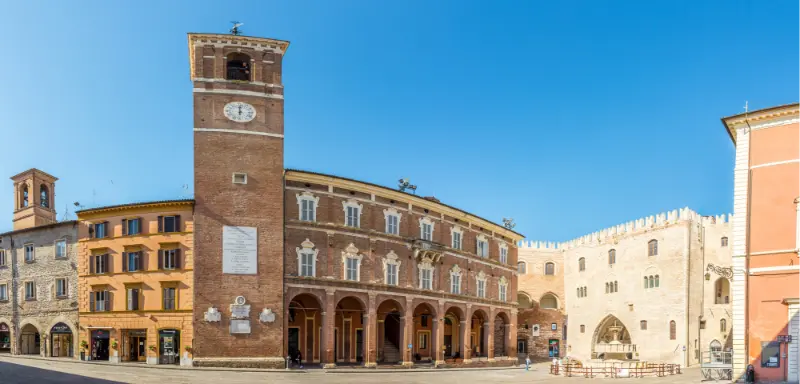
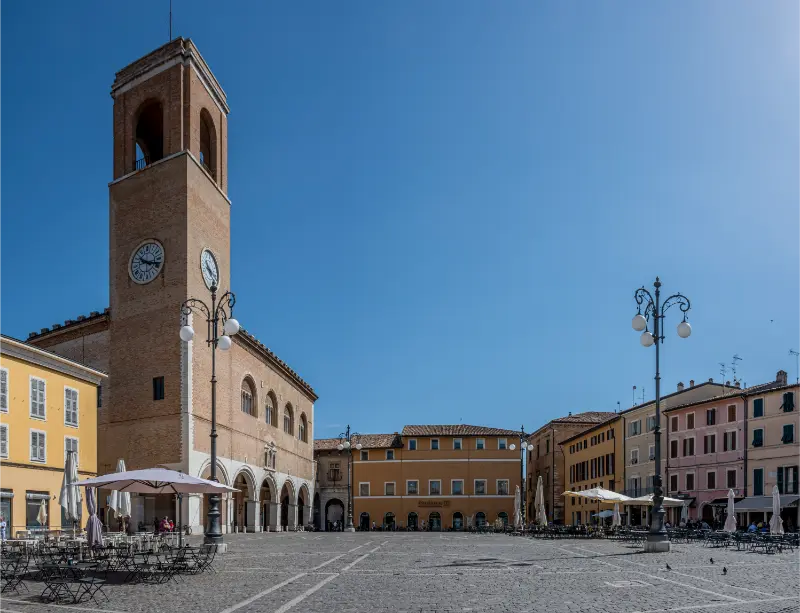
    Fabriano Italy Piazza del Comune With Sturinalto Fountain

    Understand what a watermark really does

    Watermarks are one of the most fascinating aspects of Fabriano’s identity. They are created by differences in the thickness of paper fibers that become visible when a sheet is held against the light. Historically, watermarks could communicate origin, workshop identity or other information, and they developed into important features of high-quality papers. Watching a demonstration makes the principle clearer than merely seeing finished paper behind glass. Ask how the mould is constructed and why the design emerges within the material rather than being printed on top.

    The role of Fabriano in the history of Western paper-making is substantial, but avoid simplifying a long, geographically diverse craft into a story in which one town invented every technique. The region became known for refinements in production and a durable network of specialized work. Historical context matters because paper circulated far beyond the town and helped many kinds of cultural activity. Travelers interested in books, art, archives or printing will find the museum especially rewarding when they connect the physical sheet with the texts and drawings eventually placed on it.

    Explore the paper-making process step by step

    A traditional handmade sheet begins with prepared fibers suspended in water and a skilled maker lifting the material on a framed mould. The wet sheet then undergoes further treatment before it is ready for use. Watching a demonstration helps explain why achieving even thickness and consistent quality requires experience. Historic paper production also depended on water, equipment, specialized labor and trade connections. The town’s geography was therefore part of its industrial story, not just a scenic setting for a famous product.

    Ask whether you can view the reconstructed equipment in operation on the day of your visit. Not every process may be demonstrated continuously. If a tour is unavailable, look carefully at explanatory material and the relation between the machinery, tools and stages of manufacture. For those who make art or keep journals, the distinctions between handmade and industrial paper can be especially engaging. The museum can provide an unusually concrete way to understand what an artistic material actually is, long before it reaches a painter’s studio or a stationery shop.

    Walk Piazza del Comune and the old center

    Fabriano’s cultural story does not end at the museum door. Piazza del Comune and the surrounding historic streets provide another reason to spend time in town. The central public space, arcades and civic buildings speak to the city’s economic and political development. Explore at walking pace and look for the contrasts between monumental architecture and ordinary shops. Fabriano has modern commercial life as well as a heritage identity, and that balance is part of what makes it attractive for an independent traveler who dislikes overly curated tourist villages.

    An unhurried circuit through the center can include churches and smaller lanes where public access is permitted. Keep expectations flexible: some interiors open only during certain hours or religious services, while restoration may affect facades and buildings. A guided old-town tour can be useful if it is offered on your date, especially for visitors interested in medieval and Renaissance urban history. If not, a well-chosen walking route with one main museum is still enough for a substantial day. Bring comfortable shoes and leave time for an outdoor coffee break.

    Visit the Pinacoteca and churches selectively

    Fabriano has a wider artistic heritage represented in religious buildings and civic collections, including the Pinacoteca Civica Bruno Molajoli. The museum can provide an illuminating counterpoint to the story of paper, particularly for visitors interested in painting and regional patronage. The important practical detail is that cultural venues may offer different entry or combined ticket arrangements. Consult the official museum site and current local tourism information before assuming the same opening hours apply across all buildings.

    If you plan the art collection after the paper museum, consider how much time you have left rather than automatically adding every available room. A few carefully studied works can be more satisfying than a rapid tour through unfamiliar paintings. Travelers with children might prefer to pair a short art visit with a walk in the center, while serious art enthusiasts can allocate a full second half-day. Check accessibility for each building individually: an accessible approach to one museum does not mean all historic interiors in the district have lifts or step-free routes.

    Understand Fabriano as a UNESCO Creative City

    Fabriano belongs to the UNESCO Creative Cities Network in the field of crafts and folk art, recognition that reflects living skills and creative development rather than classification of the entire center as a World Heritage Site. This is a distinction worth explaining accurately: Urbino’s historic center is UNESCO World Heritage, while Fabriano’s recognition belongs to a different UNESCO program. Both are meaningful, but they are not interchangeable stamps of authenticity or visitor access. For a traveler, Fabriano’s network status invites attention to contemporary makers as well as historic collections.

    Look for genuine craft shops, demonstrations and cultural events, checking that activities are active rather than assuming every workshop has public visiting hours. Buying a locally made item can be a way to support living skills, but ask questions about the product’s origin and the techniques used. Some paper goods sold in tourist shops may be commercially manufactured, which is not inherently a problem if the description is clear. The most interesting encounter is one that teaches you why materials and methods matter rather than encouraging a generic souvenir purchase.

    Add the Frasassi Caves as a separate excursion

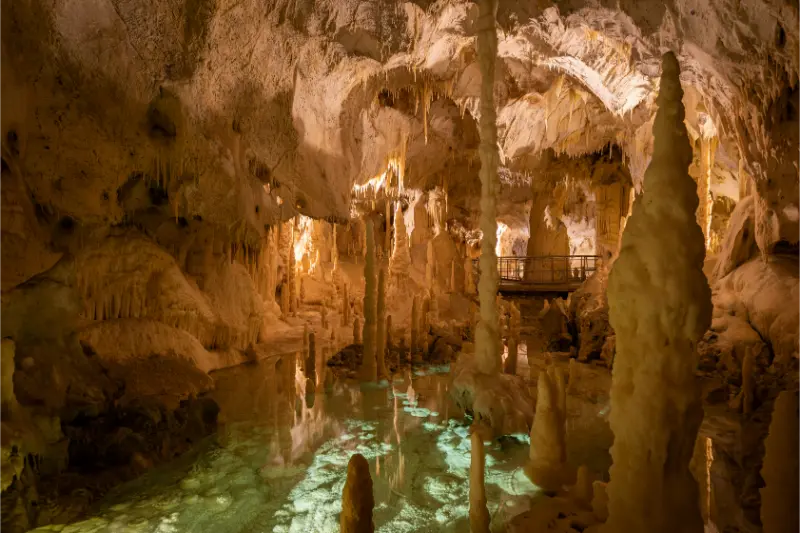
    The Frasassi Caves near Genga are a natural complement to Fabriano because they reveal a very different aspect of the inland Marche. The caves require a structured visit and appropriate clothing rather than a spontaneous hike into an open entrance. Check the official ticketing and meeting arrangements, guided-tour duration and current access instructions before leaving Fabriano. The cave complex is cool compared with a summer town center, and steps and damp walkways can affect comfort. Leave sufficient travel time so a delayed train or parking search does not make you miss a booked entrance.

    Fabriano and Frasassi can fit into a single day with good planning, but visitors interested in both the museum’s demonstrations and a full cave experience may prefer to spread them across two. If you are traveling with children, the combination can be engaging because it contrasts human craft with geological formation. However, a crowded timetable can turn two excellent visits into a rushed sequence. Consider where you are coming from and what time your return connection leaves. The cave and paper museum have different operating arrangements, and neither should be treated as a guaranteed walk-in attraction.

    Arrive by railway or car and plan the final walk

    Fabriano lies on an inland railway corridor connecting the Adriatic side of the region with routes toward central Italy. This makes a car-free visit possible for some travelers, but actual schedules and changes should be checked carefully. The train station is not identical to the entrance of the paper museum, so identify the walk or local connection to Largo Fratelli Spacca before setting off with luggage. If you need to reach the Frasassi cave ticketing area on the same day, investigate the onward journey separately rather than relying on a general train-to-Genga estimate.

    Drivers can approach on the main roads, but legal parking and access to the historic center should be planned in advance. As with other Italian towns, navigation apps may not correctly account for local restrictions. Ask the museum or your accommodation for the nearest appropriate parking and walking route. If you have reduced mobility, verify the museum’s actual accessible entrance and workshop arrangements. The town’s central areas can be explored at a relaxed pace, but the extra transport involved in countryside excursions may be the decisive factor in choosing where to stay.

    Choose your base and enjoy inland Marche food

    Fabriano is a sensible overnight stop if your priorities include the paper museum, Frasassi, regional art or slow exploration of inland valleys. A central room makes evening streets and restaurants convenient, while a rural property can be attractive if you are driving between several small towns. Check the exact distance to transport and whether late dinners are available outside weekends. Travelers expecting a typical beach-resort environment should look elsewhere: Fabriano’s value comes from culture, craft and inland scenery, not immediate seaside access.

    Local dining may include regional pasta, seasonal meats, cheese and produce from the surrounding countryside. Ask about specialties and ingredients rather than presuming every restaurant offers the same dishes. Before leaving, consider buying a small paper product with a clear account of its maker or manufacture. It is a memorable souvenir because you have seen the process that gives the material its character. Fabriano stands out when visited with enough time to connect a sheet of paper, a working town and the broader landscape that sustained this craft tradition.

    Practical information

    Essential attractionMuseo della Carta e della Filigrana
    AddressLargo Fratelli Spacca, 2
    Add-onFrasassi Caves near Genga
    ArrivalFabriano railway; plan museum transfer

    Continue planning your Marche trip

    To build a wider trip without repeating the same route, compare the Frasassi Caves guide, our Marche travel guide, the Marche highlights guide, the seven-day Marche road trip. These are published guides already present in this database.

    For accommodation, compare the exact location, legal parking access, cancellation conditions and distance to the sights before booking. Compare accommodation on Booking.com.

    Frequently asked questions

    Why is Fabriano famous?

    For its long paper-making tradition and historic watermarking expertise.

    What can I do at the paper museum?

    Explore equipment, the making process and possible guided demonstrations or workshops, subject to booking.

    Is Fabriano a UNESCO World Heritage Site?

    It belongs to the UNESCO Creative Cities Network; that is distinct from World Heritage inscription.

    Can I combine Fabriano and Frasassi?

    Yes, if you allow enough travel time and reserve any timed cave tour.

    Can I arrive by train?

    Yes, but check your railway service and the station-to-museum route.

    Official sources and current visitor information

    Last updated: October 17, 2026

  • Fano Travel Guide: Roman Gate, Malatesta Heritage and Adriatic Beaches

    Fano Travel Guide: Roman Gate, Malatesta Heritage and Adriatic Beaches

    Fano is an appealing northern Marche city because its historic streets preserve traces of Roman Fanum Fortunae while the contemporary town remains closely tied to fishing, the Adriatic and a long carnival tradition. Visitors can move between the Arch of Augustus, Piazza XX Settembre, churches, museums and the waterfront without treating the town solely as a summer resort. Its railway connection makes an independent cultural stop feasible, and beaches provide a good reason to stay longer. The most rewarding visit begins in the old center, where the Roman street pattern helps orient an itinerary, then allows time to discover how the modern seaside city developed around it.

    In this guide

    Enter the old town at the Arch of Augustus

    The so-called Arch of Augustus was originally a monumental city gate, not an isolated triumphal arch set in a ceremonial field. It marks a major entry into Roman Fano, where the Via Flaminia reached the settlement’s principal urban route. Dating to the Augustan period, the surviving structure offers a clear starting point for understanding the city’s layout. Take time to examine its position in relation to the walls and adjacent streets. The monument’s partly altered appearance tells a story of later military and urban changes as well as imperial construction.

    Our Marche travel guide places Fano Travel in the context of the wider region, including travel times and alternative bases.

    This is a public urban monument, so it can be experienced without a lengthy museum appointment, but you should still respect traffic and pedestrian safety around it. Use marked crossings rather than stepping into the roadway for a symmetrical photograph. Nearby historical interpretation, where available, can explain the gate’s design and missing upper elements. Standing here before walking toward the center makes the grid of streets more meaningful: you are following a route that connects layers of Roman planning with medieval and modern daily life.

    Fano Central Square Historic Palace Reason Italy

    Trace Roman Fanum Fortunae beyond the gate

    Fano’s Roman heritage extends beyond its famous gateway. The surviving sections of city walls and the orientation of certain streets help reveal the ancient settlement. You do not need to be a professional archaeologist to look for how buildings and streets relate to one another, but it is wise to distinguish securely identified remains from modern reconstructions or speculative attributions. Where archaeological displays are open, use museum labels and local official materials to understand what has been excavated and how scholars interpret it.

    The name Fanum Fortunae refers to the city’s ancient association with Fortuna, yet the modern streets cannot be reduced to one surviving shrine. Roman urban centers changed considerably over centuries, and some evidence lies beneath later buildings. A practical walking route moves from the Arch of Augustus toward the main civic center, stopping at publicly accessible fragments and explanatory panels. Families can turn this into an exercise in seeing historical layers, but avoid entering construction or fenced excavation areas. The best discoveries often arise from careful looking at an ordinary streetscape.

    Pause in Piazza XX Settembre and see the civic center

    Piazza XX Settembre is an important public space for understanding Fano after the Roman era. Its proportions, monuments and adjacent buildings show how civic life continued to evolve in the historical center. It is a natural place to stop for coffee and orient the next part of your walk. Look beyond the most photographed angle: observe how surrounding streets bring local residents into the square and how the setting changes between market hours, quiet afternoons and cultural events. Such everyday use is part of the town’s appeal.

    Teatro della Fortuna is associated with the square and illustrates Fano’s cultural ambitions. An evening performance may be available during your visit, but do not assume the theater is open for unscheduled daytime sightseeing. Check the calendar, available tours and accessibility directly with the operator. If art or architecture is your priority, allow enough time for a museum or church rather than committing to every site on a list. The historic center is compact enough to encourage wandering, and it is worth letting that freedom shape the day.

    Explore the Malatesta legacy and later town history

    Fano’s relationship with the Malatesta family forms an important chapter in its medieval and Renaissance story. Historical buildings and museum collections preserve aspects of this period, although individual works and interiors may be temporarily unavailable. Read the interpretation on site and distinguish architectural remains from displays assembled to explain them. The point is not to find a single building that explains the entire dynasty. Instead, the combination of urban defenses, civic palaces and collections shows how authority was expressed across the city.

    If you are particularly interested in this period, consider pairing Fano with another northern Marche fortified town on a separate day. Gradara provides a dramatically different castle environment, while Fano illustrates a larger urban setting where Roman and later layers overlap. Do not attempt to squeeze both into a short afternoon if you have a museum reservation in Fano. Allow time for the transitions between historical periods; these are what distinguish Fano from coastal resort towns whose older centers are less prominent in the visitor experience.

    Visit churches and museums selectively

    Fano has churches, civic collections and historical interiors that reward curious visitors, but their access may vary by season and institution. A good approach is to identify one museum or collection and one religious building before arriving, then check which are open. This is more reliable than relying on a dated checklist of attractions. Religious services take priority in active churches, and artworks can be removed temporarily for conservation. Ask about current displays when a specific painting or chapel is the reason for your trip.

    For travelers interested in architecture, the contrast between ecclesiastical spaces, the Roman gate and the civic square provides enough variety for a full day. Families can combine a short museum visit with a longer outdoor walk. Visitors with mobility needs should ask about stairs and entrances for each interior, since a flat city center does not guarantee step-free access inside historic buildings. The goal is not to maximize the number of admission tickets; it is to gain a rounded understanding of Fano’s evolving urban history.

    Understand the two main beach settings

    Fano’s coastal identity is distinct from its old town. Visitors often encounter the Lido and Sassonia areas, whose beach characteristics and settings are not identical. Compare the actual shoreline surface, promenade atmosphere, accommodation and family facilities before choosing where to spend time. One area may appeal more for nearby services, while another may be better suited to your particular preference for swimming, restaurants or a relaxed walk. Do not assume every stretch is fine sand or that all managed beach facilities operate outside the summer season.

    As elsewhere on the Adriatic, pay attention to current swimming conditions, lifeguard arrangements, beach concessions and accessible entrances. Travelers with children should confirm whether the route from their accommodation requires crossing busy roads. In summer, the waterfront may be crowded and parking limited, so a property within walking distance can simplify the day. A beach stay can be enjoyable without seeing much history, but Fano becomes far more rewarding when you reserve a morning for its Roman and Malatesta heritage rather than limiting the itinerary to the promenade.

    Discover Carnival traditions without assuming event dates

    Fano is known for its long carnival tradition, and the event contributes significantly to the city’s cultural identity. However, annual editions, parade routes, tickets and traffic arrangements can change. If carnival is the reason for your trip, consult current official announcements and book transport and accommodation accordingly. A historic connection with carnival does not mean that a parade takes place during an arbitrary winter weekend or that all festivities are suitable for every traveler.

    Even when no event is running, knowing about carnival can enrich a walk through the town. Public festivals reveal how urban streets and squares become shared performance spaces. For families, it may be worth investigating the event’s program and quieter viewing arrangements rather than simply choosing the busiest parade day. If you prefer a calm museum visit, avoid scheduling it during major street closures without first checking access. Fano is enjoyable year-round, and the event should be treated as a special possibility rather than the only reason to visit.

    Eat brodetto and enjoy the fishing culture

    Fano’s maritime tradition is expressed in its fish cuisine, particularly brodetto, a regional fish stew with many local interpretations. A good meal is an opportunity to learn about ingredients, cooking methods and the relationship between the port and restaurants. Do not expect every bowl of brodetto across Marche to follow one identical recipe. Ask restaurants how they prepare their version, whether it is available that day and whether an advance order is required. Seasonal fishing conditions and local availability can influence the menu.

    Another well-known local specialty is moretta, a layered coffee drink traditionally associated with Fano. Visitors interested in trying it should understand that its classic preparation includes alcohol; request a suitable alternative if that is not desired. Fish dishes also require care for allergies and dietary restrictions. A casual waterfront lunch and a meal in the historic center can offer different experiences, both valuable. Eating well in Fano does not require a luxury restaurant: thoughtful preparation and good local products are often the main attraction.

    Plan rail arrival, parking and accommodation

    Fano is on the Adriatic railway, which makes a car-free visit possible from other coastal cities. Check the actual train service and walking distance from the station to your accommodation. The historic center, Lido and Sassonia are different practical locations even within the same town. A hotel advertised as near the beach may be less convenient for an early train, while a central guesthouse can place cultural sights close at hand. Compare these details on a map before booking.

    Drivers should avoid restricted historic lanes and confirm where legal parking is available, especially in summer or around major events. If your accommodation is within the center, ask for specific unloading instructions and avoid assuming general permission to enter a ZTL. For families staying several nights, an apartment near the preferred beach may be most convenient. For a one-night cultural stop, the historic core or a location with easy station access may serve better. The right base depends on the type of trip, not on a single ‘best neighborhood’ claim.

    Build a satisfying one- or two-day Fano stay

    On a one-day visit, begin at the Arch of Augustus, trace the old streets to Piazza XX Settembre, choose one museum or historic interior and stop for lunch before walking to the water. This arrangement lets the layers of history unfold in a logical order. If you have two days, keep the first for culture and the second for beach time, cycling or a relaxed promenade. Visitors planning an onward trip to Pesaro or another coast town should confirm transport rather than assuming every short-distance journey operates at the same frequency.

    Fano is worth treating as a destination rather than merely a place to sleep along the Adriatic. Its Roman gateway, later civic heritage, active fishing culture and beaches create several possible trip styles within a manageable setting. It is also a useful example of why the Marche coast should not be regarded as one interchangeable line of resorts. Spend time in the old town, choose the beach area that fits you, and let the ordinary rhythm of the city connect the two.

    Practical information

    Roman landmarkArch of Augustus, originally a city gate
    Civic focusPiazza XX Settembre
    Coastal areasLido and Sassonia have different settings
    ArrivalAdriatic rail corridor

    Continue planning your Marche trip

    To build a wider trip without repeating the same route, compare our Pesaro travel guide, our Marche travel guide, the Marche highlights guide, the seven-day Marche road trip. These are published guides already present in this database.

    For accommodation, compare the exact location, legal parking access, cancellation conditions and distance to the sights before booking. Compare accommodation on Booking.com.

    Frequently asked questions

    What is the Arch of Augustus in Fano?

    It is a monumental Roman city gate associated with the Via Flaminia and Augustan urban fabric.

    Does Fano have beaches?

    Yes, including different settings around Lido and Sassonia; check the surface and services.

    Is Fano possible as a day trip?

    Yes. One day can cover the core and a waterfront walk.

    What is brodetto?

    A regional fish-stew tradition with a distinctive local version in Fano.

    When is Fano Carnival?

    Dates and program vary; check the official current-year schedule.

    Official sources and current visitor information

    Last updated: October 17, 2026

  • Gradara Castle Travel Guide: Medieval Walls, History and Practical Tips

    Gradara Castle Travel Guide: Medieval Walls, History and Practical Tips

    Gradara is one of the Marche’s most immediately recognizable fortified villages, with powerful walls, a hilltop castle and streets that draw visitors into the world of medieval dynasties. Its fame is also tied to the story of Paolo and Francesca, immortalized in Dante’s Divine Comedy, although the literary association should not be confused with a fully documented tour of every event in the tale. A thoughtful visit balances the Rocca’s architecture, the historical village and the surrounding landscape. Gradara is a particularly useful excursion from Pesaro and the northern Adriatic coast, but its popularity makes advance checks of castle access, parking and seasonal crowds important.

    In this guide

    Understand the Rocca before you enter

    The Rocca di Gradara is more than a scenic castle perched above a village. Its development reflects the rivalries and ambitions of powerful families in northern central Italy, including the Malatesta and Sforza. Defensive structures evolved, while later residential and decorative changes made the building more than a military outpost. Stand back far enough to see how the central stronghold relates to its outer walls and the settlement below. A building that looks seamless in photographs actually brings together different phases of construction and use.

    You can pair Gradara Castle Travel with other places in Marche; the Marche travel guide gives an overview of realistic connections and where to stay.

    When you tour the Rocca, seek out the official visitor route and interpretive material rather than expecting every room to preserve its original medieval furnishings. Historic interiors are often reconstructed or assembled to illustrate later periods. That does not make them inauthentic as heritage experiences; it means visitors should distinguish surviving architecture, works of art and the narrative chosen by a modern museum. Check whether entry is timed and whether special visits include areas unavailable on a standard ticket. It is sensible to reserve the castle before organizing lunch or a separate wall walk.

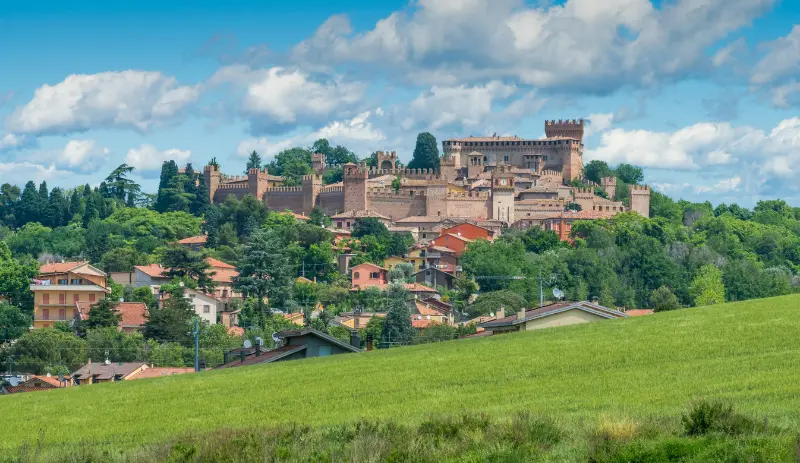
    View Gradara With Its Castle Marche Italy

    Approach the village through its fortified gates

    Gradara’s approach through the fortified enclosure sets the mood of the visit. The Porta dell’Orologio and the historic main street provide a clear route toward the inner defensive structures. Pause along the way to understand how the village was organized within protective walls. Shops and cafés now animate parts of the route, but the architecture still conveys the distinction between the outer settlement and the more heavily defended fortress. The town is compact, so racing directly to the castle misses much of what makes Gradara an appealing destination in its own right.

    Walk slowly and look for stonework, towers, changes in street level and views through gateways. Some shop fronts are aimed primarily at tourists, while side streets may preserve a quieter residential atmosphere. Be respectful when photographing doors and windows: the village is not an empty film set. In peak periods, the main route can feel crowded, especially near ticket offices and restaurants. An early visit often makes it easier to enjoy the fortified streets, while a later visit may provide more atmospheric light on the walls. Plan according to your interests rather than expecting a guaranteed quiet hour.

    Explore the Paolo and Francesca literary connection

    Dante’s account of Paolo and Francesca gave the Gradara story an afterlife far beyond its local medieval context. The lovers’ tragic relationship has become part of the castle’s popular identity, and guided interpretations often point out rooms linked by tradition to their story. It helps to read a short description of Canto V of the Inferno before arriving. The poem is a work of literature, and its emotional power does not depend on a visitor being able to verify the exact location of each episode inside the fortress.

    This distinction is important because the castle’s romantic image can overshadow its political and architectural history. Ask a guide how the legend and surviving evidence relate, instead of treating a single named chamber as the entire purpose of the visit. Travelers who are not interested in Dante can still enjoy the castle for its defenses, decorative details and commanding site. Families may introduce the literary story in age-appropriate terms, focusing on how legends become associated with real places rather than dwelling on its violent ending.

    Study the walls and wider defenses

    Gradara’s defensive walls are among the chief pleasures of the place. Their towers and crenellated lines are visible from several approaches, and where an authorized wall walk is available, it can reveal the structure of the village from a new angle. Do not assume that every parapet is open at all times. Maintenance, weather and ticket arrangements may affect access, and parts of the wall system are not ordinary pedestrian paths. Check the official guidance and observe barriers even if an open section looks like an attractive shortcut.

    The best views depend on what you hope to photograph. From outside, the walls form a strong composition against the hill; from a permitted elevated route, the relationship between the castle, village roofs and countryside becomes clear. Wind and strong sun can affect comfort, and narrow steps may not suit everyone. If you have small children, focus on safe public overlooks rather than seeking a difficult vantage point. Understanding the defenses adds substance to the visit: the walls were constructed to control approach and movement, not simply to produce beautiful silhouettes.

    Look for art and later residential layers inside

    The Rocca’s interiors can introduce artistic details that surprise visitors expecting bare military rooms. Works associated with later patrons and the broader artistic culture of the region help explain how a castle could function as a residence as well as a stronghold. The official site may describe paintings, decorated spaces and religious objects, but verify which remain on display. A guidebook illustration is not a guarantee that an artwork will be accessible on a given day, especially during conservation or exhibition changes.

    Observe changes in scale from stairways and defensive corridors to domestic rooms and chapels. That contrast is often more revealing than a list of famous names. Visitors who appreciate Renaissance art can relate the castle’s later decorative layers to the courtly world of Urbino and northern Marche, while keeping in mind that these places had different political histories. Allow time to read the labels and ask questions, particularly about restorations. A castle tour can feel disappointingly short when approached as a photo opportunity, but much richer when you investigate how people used its spaces.

    Build a half-day itinerary that actually works

    For most first-time travelers, Gradara fits comfortably into a half-day if the focus is the village and standard castle visit. Begin at legal parking outside the fortifications, walk through the gateway, explore the main village route and visit the Rocca at a confirmed time. Afterward, spend time on public viewpoints and stop for a meal or coffee. This order places the fixed ticket appointment at the center of the schedule rather than making you hurry through it because a restaurant reservation came first.

    A longer visit is worthwhile if you enjoy medieval architecture, guided interpretation and photography. You might consider special programming or a cultural event, but verify dates and any need for advance admission. It is less successful to combine Gradara with a demanding list of distant Marche towns in the same afternoon. Nearby Pesaro and Gabicce Mare can make sense geographically, yet each offers a different experience. Pick one secondary destination if you have transportation and time, not three stops merely because they appear close on a regional map.

    Reach Gradara from the northern Adriatic coast

    Gradara sits inland from the main coastal railway and should not be mistaken for a town with a station beside the castle. Visitors based in Pesaro, Gabicce or Cattolica may use road transport or check local bus options, but frequency and last departure times need confirmation. A taxi can be an alternative for a short excursion, particularly with children or limited time, but agree on the return arrangement. Walking uphill from a distant transport stop is not a sensible assumption for everyone.

    Drivers should follow signed parking directions and leave the vehicle outside restricted historic streets. Castle villages often have specific pedestrian access rules and seasonal parking arrangements that are not reflected accurately by basic map directions. If you stay overnight, ask your accommodation how luggage can be brought to the entrance. Accessibility can be a challenge because of slopes, cobblestones, towers and old staircases; contact the castle for a precise description of available routes rather than assuming the entire itinerary is step-free.

    Decide where to stay and what to eat

    A night in Gradara can be atmospheric after day-trip crowds have departed. It suits travelers who want an evening walk within or near the walls, though the small village may have fewer late-night services than a coastal city. Check where your hotel is actually located: a property advertised as Gradara may stand on the surrounding countryside rather than inside the fortifications. If you value beach access, Pesaro or another coastal base could be more flexible, with Gradara reserved for a cultural excursion.

    Local dining is an opportunity to sample northern Marche cooking, including handmade pasta and seasonal sauces, but menus change with the season and establishment. Ask about house specialties rather than expecting every restaurant to serve an identical ‘medieval’ banquet. Visitors with food allergies should verify ingredients in filled pasta, broths and desserts. After lunch, take another short walk outside the busy main lane. The village’s scenic character often emerges more clearly when you are no longer moving as part of the crowd approaching the ticket gate.

    Visit in the right season and manage expectations

    Gradara can be visited outside summer, but operating hours, guided tours and seasonal events should be verified. Hot summer days can make the climb exposed and uncomfortable, while winter weather may affect wall walks and open-air viewpoints. Special events can make the village lively but also bring temporary closures or parking restrictions. A calendar from a previous year is not reliable evidence that a particular activity will run on your travel dates. Use the castle’s official information and local tourism notices for tickets and practical details.

    The most satisfying Gradara visit avoids two extremes: treating it only as a romantic legend and reducing it to a checklist of fortification facts. It is both a historic place with layered political and artistic heritage and a compact village whose streets are still used daily. A steady pace, a carefully chosen castle ticket and a little time looking outward over the Marche hills will make the experience more substantial than a rushed photo stop during a seaside vacation.

    Practical information

    Main attractionRocca di Gradara
    Other drawWalled village and public viewpoints
    Typical stayHalf-day, longer for special tours
    Getting thereRoad or planned bus transfer from coastal base

    Continue planning your Marche trip

    To build a wider trip without repeating the same route, compare our Pesaro travel guide, the Urbino guide, our Marche travel guide, the Marche highlights guide. These are published guides already present in this database.

    For accommodation, compare the exact location, legal parking access, cancellation conditions and distance to the sights before booking. Compare accommodation on Booking.com.

    Frequently asked questions

    Is Gradara Castle linked to Paolo and Francesca?

    It is traditionally associated with the story immortalized by Dante; interpretation should distinguish literary tradition from evidence.

    Are the castle walls always walkable?

    No. Access and routes are subject to official opening and safety rules.

    How much time should I allow?

    A half-day normally works for the village and standard castle visit.

    Can I visit from Pesaro?

    Yes, with a car or a checked transport connection.

    Should I reserve castle admission?

    Check current ticketing, guided-tour availability and special event arrangements.

    Official sources and current visitor information

    Last updated: October 17, 2026
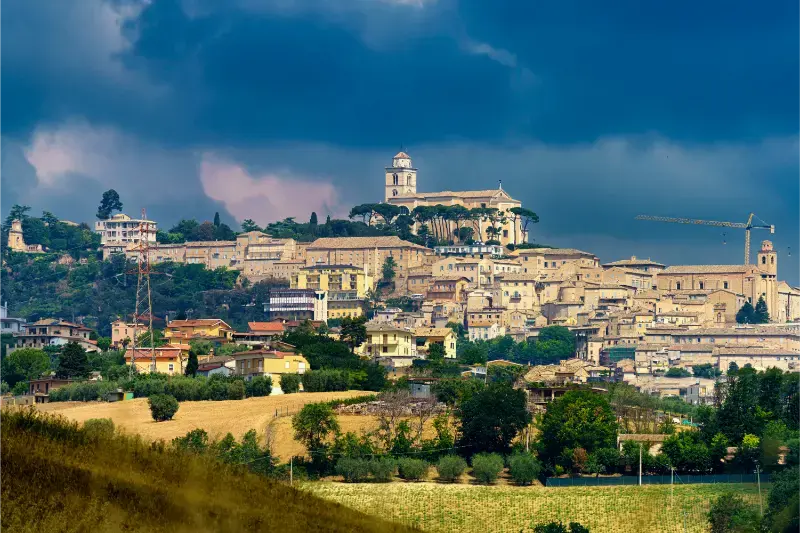
  • Loreto Travel Guide: Basilica della Santa Casa and Pilgrim Town

    Loreto Travel Guide: Basilica della Santa Casa and Pilgrim Town

    Loreto is one of Italy’s significant pilgrimage destinations, yet it also rewards visitors interested in Renaissance architecture, sacred art and the relationship between a hilltop town and the Adriatic landscape. Its monumental basilica was built around the Santa Casa, the Holy House venerated in Catholic tradition as connected with the life of Mary at Nazareth. Whether you approach as a pilgrim or as a curious cultural traveler, the key to a respectful visit is understanding that the complex is an active sanctuary, not simply a museum. Plan around services, allow time for the basilica’s art and square, and avoid treating religious tradition as an uncontested archaeological fact.

    In this guide

    Understand the tradition of the Santa Casa

    At the heart of the sanctuary stands the Santa Casa. The sanctuary’s own explanation presents the tradition that the house associated with Mary was transported from the Holy Land to the area of Loreto in the late thirteenth century. Visitors should distinguish this religious tradition and its devotional significance from historical conclusions that can be established by archaeology alone. Making that distinction does not diminish the site’s importance; rather, it respects the different questions a pilgrim and a historian may bring to the same monument.

    For travel beyond Loreto Travel, consult our Marche travel guide; it explains how to choose a base and link nearby destinations.

    The Holy House is surrounded by an elaborate marble enclosure that reflects later centuries of artistic patronage. Before entering the devotional area, observe posted instructions on silence, photography and circulation. During busy pilgrimage periods there may be queues and staff directing visitors. The room is not appropriate for an extended private photo session while others are praying. A thoughtful visit considers why the sanctuary drew travelers for centuries and how the surrounding basilica, streets and hospitality structures developed around that movement of people.

    Loreto Hilltop Basilica And Town Marche Italy

    Experience the basilica as a working place of worship

    The Basilica della Santa Casa is architecturally impressive, but the visitor experience differs from that of a secular gallery. Liturgical celebrations, special religious dates and organized pilgrimages take precedence over ordinary sightseeing. Check the sanctuary’s official calendar if you want to attend Mass or plan a quiet cultural visit outside particularly busy periods. Different areas can have different rules, and a building being open does not mean every chapel or collection is accessible for tourism at every moment.

    Look at the scale of the church, its chapels and decorative program without rushing directly to the central devotional focus. Details from different periods tell a layered story of changing tastes and commissions. The basilica is not an empty historical shell: candles, prayers and visitors moving with personal intentions are part of the atmosphere. Speak quietly, dress appropriately and let religious activities proceed without interruption. If you are traveling with children, explain these expectations before entering; even non-religious families can find the visit meaningful when framed as an encounter with living heritage.

    Explore Piazza della Madonna and the sanctuary setting

    Piazza della Madonna is much more than the space in front of a church. Its monumental urban composition shows how the pilgrimage site became the center of a larger town. The fountain, surrounding facades and open approach to the basilica create a ceremonial space that can feel very different depending on whether it is filled with organized groups or relatively quiet. Take time to look back from several points in the square. The relationship between the basilica and public space is one of Loreto’s most memorable architectural features.

    The square can become crowded during major religious occasions and summer travel periods. If you seek a reflective atmosphere, consider an early visit on a day without a large scheduled event; if witnessing a pilgrimage is your goal, prepare for queues and a very different pace. Be considerate around processions and entrances. Wheelchair users and anyone with mobility concerns should check the sanctuary’s designated routes and nearby parking because approaching the square from the wrong side of the hill can introduce unnecessary gradients and steps.

    Look beyond the Holy House to the artistic heritage

    The sanctuary’s long history attracted substantial artistic patronage, giving Loreto value for travelers fascinated by Renaissance and later art. Rather than attempting to attribute every painting or chapel from memory, consult the site’s official guide and focus on the works and spaces actually open during your visit. The marble decoration associated with the Santa Casa enclosure is especially significant as an example of sacred architecture built around a smaller revered space. Looking carefully at this relationship is more illuminating than viewing the complex only from a distance.

    Some of Loreto’s cultural holdings may be presented in museum spaces connected to the sanctuary, depending on arrangements and exhibitions. Check the current museum opening information and ticketing separately from access to the basilica. A church’s open doors do not guarantee that its treasury or museum is open. Travelers with strong art interests can allocate several hours, while a short pilgrimage stop may focus on the Holy House and prayer. Both are valid approaches, provided you plan honestly around how the site is used.

    Walk the historic streets after the main sanctuary visit

    Loreto’s identity extends into the streets around the basilica, where shops, cafés and accommodations developed to serve generations of visitors. Some businesses emphasize devotional items, while others supply the ordinary needs of residents and travelers. Rather than dismissing the town as a commercial setting for the sanctuary, look at how the pilgrimage economy has shaped its public spaces. Walk beyond the central square on permitted streets and you may find quieter corners and views toward the coastline and surrounding hills.

    Not every historic-looking lane is a convenient shortcut, particularly when the town is busy or a procession changes pedestrian flow. Keep your route flexible and respect barriers. If you want to buy religious objects or local crafts, compare quality and prices without assuming everything on display was made locally. A break for coffee or lunch can also help if you are visiting with a multigenerational group. The most enjoyable visit is rarely the fastest possible movement from parking lot to devotional chamber and straight back again.

    Plan for major feast days and pilgrimage crowds

    Loreto receives visitors year-round, but the experience changes considerably around religious feast days and large group pilgrimages. Transport, accommodation availability, pedestrian circulation and entry rules may all be affected. The official sanctuary website is the appropriate source for current liturgy and pilgrimage notices. Travel articles often repeat a single opening schedule as though it applied every day, a risky simplification for an active international sanctuary. Confirm whether a special event will change the part of the complex you hope to see.

    If your goal is a quiet architectural visit, a weekday outside major celebrations may be more suitable, though no date is guaranteed to be empty. If you are arriving with a faith group, coordinate the visit directly with the sanctuary rather than treating it like a general tourist reservation. Visitors with children or limited stamina should prepare for waiting, weather exposure in the square and the possibility that some indoor spaces are temporarily crowded. A thoughtful schedule allows room for the unexpected instead of turning every delay into a source of stress.

    Reach Loreto by road or train without confusing the final approach

    Loreto is situated inland above the Adriatic rail corridor. Depending on your route, rail travel may be practical, but you must check the exact connection from the station to the elevated sanctuary district. Do not assume a station name means you arrive immediately in the square. Local buses, taxis, slopes and walking distances deserve advance attention. If your trip includes Porto Recanati or Ancona, look for current connections and consider whether a half-day Loreto excursion fits your arrival or departure timetable.

    Drivers should aim for signed legal parking and follow pedestrian directions to the sanctuary. Avoid entering restricted streets on instructions from an automated map. On busy pilgrimage days, follow temporary traffic arrangements rather than the parking plan you saw months earlier. Travelers with limited mobility should ask about accessible approaches and the drop-off procedure through official visitor services. Loreto is relatively compact once you reach the central zone, but choosing the wrong starting point can complicate an otherwise easy visit.

    Combine Loreto with Recanati or the Conero coast wisely

    Recanati is an especially natural cultural pairing for Loreto, offering the literary world of Giacomo Leopardi as a counterpoint to religious and artistic heritage. With a car, the two can make a rewarding day if you check sanctuary schedules and Casa Leopardi tour times. Without a car, the sequence depends on local buses and should not be improvised from a tourist map. It is better to do one meaningful interior visit in each town than to reserve multiple time slots that are vulnerable to traffic or missed connections.

    The Conero coast and Porto Recanati provide different options for travelers also seeking sea air, but a beach afternoon should be treated as a separate logistical leg. Scenic beaches may have access restrictions, parking limitations or seasonal facilities. Choose one coastal stop rather than trying to see every viewpoint. If you are staying along the beach, Loreto can be the inland cultural excursion of the trip; if you are visiting primarily for pilgrimage, there is no need to squeeze a coastal tour into the same day.

    Eat, sleep and respect the atmosphere of the town

    Accommodation near the sanctuary suits pilgrims and travelers who value early or evening access to the central square. Rooms farther away may be easier for drivers, but always check the real walking route and parking arrangement. Accessibility, elevator availability and quiet hours are important in buildings adapted from older structures. If you are part of a large group, ask about arrangements and dining capacity in advance. A family that wants a beach holiday may be happier sleeping on the coast and visiting Loreto for a dedicated morning.

    Food options range from simple meals for travelers to restaurants serving regional Marche dishes. Seek out local pasta, seasonal vegetables and wines without assuming that a restaurant in a pilgrim town must provide a specifically religious or ceremonial menu. After lunch, return to the square for one final look rather than immediately leaving. Loreto’s significance comes from centuries of belief and travel expressed through buildings, rituals and ordinary urban life. Experiencing those layers with consideration is the best way to appreciate the sanctuary, whatever your own beliefs.

    Practical information

    Primary siteBasilica della Santa Casa
    TypeActive religious sanctuary and cultural landmark
    Visit timeHalf-day or longer for art and services
    CheckOfficial liturgy and pilgrimage calendar

    Continue planning your Marche trip

    To build a wider trip without repeating the same route, compare our Marche travel guide, the Marche highlights guide, the seven-day Marche road trip, the Conero coast guide. These are published guides already present in this database.

    For accommodation, compare the exact location, legal parking access, cancellation conditions and distance to the sights before booking. Compare accommodation on Booking.com.

    Frequently asked questions

    What is the Santa Casa?

    The Holy House revered in Catholic tradition as associated with Mary; the sanctuary explains the tradition and its history.

    Can nonreligious visitors enter?

    The basilica welcomes respectful visitors, subject to worship and site regulations.

    Is the entire sanctuary a museum?

    No. It is an active place of worship and separate museum areas may have their own access rules.

    Can I combine Loreto and Recanati?

    Yes, provided you check transport and timed visits.

    Is the basilica next to the train station?

    No. Verify the final approach to Loreto’s elevated central area.

    Official sources and current visitor information

    Last updated: October 17, 2026

  • Fermo Travel Guide: Roman Cisterns, Piazza del Popolo and Torre di Palme

    Fermo Travel Guide: Roman Cisterns, Piazza del Popolo and Torre di Palme

    Fermo is one of the most rewarding hilltop towns in southern Marche because it pairs an elegant civic center with a genuinely unexpected Roman underground monument. The town rises above the Adriatic plain, while its historic streets, museums and dramatic views reward travelers who venture inland from the beaches near Porto San Giorgio. A satisfying visit combines the Roman Cisterns, Piazza del Popolo, the cathedral area and one carefully chosen museum. With a car, Torre di Palme becomes a natural coastal extension. The important practical distinction is that Fermo’s old center is inland and elevated: a hotel on the waterfront does not mean that its main sights are a short, level walk away.

    In this guide

    Begin in Piazza del Popolo, the civic heart

    Piazza del Popolo is the best starting point for seeing how Fermo presents itself. The broad, harmonious square is framed by arcaded buildings and civic facades rather than the irregular waterfront development familiar from many Adriatic resort towns. Give yourself time to notice the proportions of the space, the architectural rhythm, and the way locals cross it during ordinary errands. When outdoor tables appear, the square becomes a particularly comfortable place to slow down. It is tempting to take a photograph and move on, but doing so loses the social and historical function that makes it important.

    Extend a visit to Fermo Travel with the suggestions in our Marche travel guide, which covers regional transport and where to base yourself.

    The Palazzo dei Priori and the surrounding historic buildings give the square much of its character. They also make it a practical orientation point for the walking route. Before entering any museum, check whether it is currently open and whether a combined ticket covers other attractions. Fermo’s collections and interior spaces can operate on a different timetable from cafés or religious buildings. Visitors with limited walking ability should study the gradients of streets leading away from the square and plan the order of their stops to minimize unnecessary changes in elevation.

    Fermo Italy June 23 Summer Day Utdoor Restaurant

    Descend into the Roman Cisterns with a guide

    The Roman Cisterns are Fermo’s essential attraction for anyone interested in ancient infrastructure. Built during the Roman imperial period, this complex of interconnected underground chambers was designed to hold and distribute water. The impressive effect comes not from a collection of statues but from repeated vaulted spaces and the engineering logic of a city managing its water supply. Walking through them helps bring the unseen systems of Roman urban life into focus. It is a powerful counterpoint to the open, sunlit Piazza del Popolo just above ground.

    Do not arrive expecting unrestricted access to every part of a fragile subterranean monument. Check how visits are organized, whether a guided group is required, and how tickets should be booked. Floors may be uneven or damp; enclosed spaces can feel cool and uncomfortable to visitors with certain health or mobility needs. The exact walking route and permitted areas can change with conservation work. Take a light jacket even on a hot day and plan sufficient time between the cistern visit and other timed activities. This is an attraction worth understanding, not a place to rush through for one dramatic photo.

    Explore Palazzo dei Priori and the art collections

    Once you return to daylight, consider the art collections associated with the Palazzo dei Priori. Fermo has a long cultural history, and the civic setting of its museums allows visitors to connect local identity with broader artistic movements. Look up the current permanent collection and any works on display before your visit; artworks can be lent, conserved or relocated. An especially meaningful way to approach the museum is to examine how religious, civic and private commissions shaped the town’s holdings. The galleries may be modest in scale compared with major national institutions, but that intimacy makes careful viewing possible.

    If a historic library or specialist room is accessible during your visit, treat it as an opportunity rather than an assumed part of a general museum ticket. Some heritage interiors have special rules and limited openings. A sensible plan is to reserve the cisterns as your fixed appointment, then use the art collections according to the day’s arrangements. Travelers visiting with children can set a short cultural focus and allow time for an outdoor break afterward. Museum fatigue is particularly easy to overlook when an itinerary combines stone staircases, subterranean chambers and multiple historical interiors.

    Reach the cathedral on the hill

    The Cathedral of Santa Maria Assunta occupies an elevated position that gives an immediate sense of Fermo’s relationship with the surrounding hills and coastline. The climb is part of the experience, but it should not be underestimated during a warm afternoon. From around the cathedral area and nearby public spaces, look across the landscape to understand why this location was strategically valuable. The church’s layered history, visible architecture and religious use are more interesting when approached as parts of a long-lived city rather than as a single stylistic label.

    Because the cathedral is an active religious site, access may be influenced by services, ceremonies and restoration. Check before arriving, wear suitable clothing and do not interrupt worshippers. If you have limited mobility, enquire locally about the most manageable route and the availability of vehicular access or nearby parking; a short distance on the map can contain significant climbs. Photographers should use public spaces and permitted viewpoints rather than trying to enter closed terraces or fenced areas. For many visitors, this elevated district is a peaceful finale to the morning’s historic sightseeing.

    Follow streets that reveal the medieval town

    Fermo’s smaller roads are not just connectors between monuments. Their changing widths, staircases, brick facades and occasional arches show how the town developed on steep ground. Set aside time to explore a few blocks without a rigid route, but keep an eye on how you will return to Piazza del Popolo or your parking area. Alleys that look like shortcuts can end in a lengthy climb. A good walking loop uses one direction for the descent and a different route for the return, producing a richer sense of the city than revisiting the same main road.

    Notice street-level businesses rather than assuming the entire center is preserved for visitors. Bakeries, bars, pharmacies and ordinary shops show how people continue to use the old buildings. If you travel in August, plan the more exposed sections early in the morning and reserve indoor stops for stronger midday sun. After rainfall, some stone paving can become slippery. These conditions should shape an itinerary that is comfortable and safe for everyone in your group, especially with a stroller or if you need frequent rests.

    Add Torre di Palme for a second historic atmosphere

    Torre di Palme is a small hilltop settlement associated with Fermo, positioned above the coast with expansive sea views. It makes an excellent separate stop because its appeal differs from Fermo’s larger civic center. Here, the interest is in a compact medieval fabric, quiet streets, churches and the experience of looking from a raised village toward the Adriatic. Allow time to walk at an unhurried pace rather than treating it as an overlook reached in a few minutes. Check whether local viewpoints and walking paths are open and respect residential property.

    Torre di Palme is not an extension of Fermo you should assume you can reach by a quick pedestrian walk. A car or carefully checked transport is more practical, and parking should be planned outside the most restricted historic lanes. If you are already staying on the coast near Porto San Giorgio, the village can be paired with a seaside meal. If you are in Fermo primarily for the Roman Cisterns, however, do not squeeze Torre di Palme between two fixed museum appointments. Give these very different places room to make an impression.

    Understand the relationship with Porto San Giorgio

    Porto San Giorgio is the nearby coastal town most visitors notice when considering a beach-based stay for Fermo. Its railway and waterfront can make it a useful base, especially if your itinerary alternates between cultural mornings and afternoons by the sea. Yet the separation between coast and hilltop center is fundamental. Check the actual journey and local bus services before assuming you can move back and forth spontaneously. In summer, beach traffic and parking demand can add friction; outside the season, beach amenities may be limited even when Fermo’s historic center is fully worth visiting.

    A combined Fermo–Porto San Giorgio day can work well with a car if you start early. Spend the morning in the historic center, visit the Roman Cisterns at the reserved time, have lunch, and move toward the coast later. Travelers without a car may prefer to give Fermo its own day and verify return bus schedules beforehand. The larger lesson is to avoid choosing accommodation from a regional map alone: the dramatic topography changes the experience, even when two destinations appear close together geographically.

    Arrive, park and choose accommodation carefully

    Fermo’s center is not a simple flat extension of the main coastal railway. If you arrive by train, examine onward bus and taxi options instead of expecting to walk to the central square with luggage. For drivers, the historic road network and restricted-traffic rules deserve attention. Use designated parking, read local signs and follow the host’s specific instructions if you are staying inside the old town. A navigation app may offer a route that is technically a street but legally unavailable to ordinary visitors.

    Stay in or near the center if you appreciate evening walks, city views and restaurants without additional journeys. Stay at the coast if your priority is swimming and the beach, accepting the need to travel inland for museums. Rural accommodation can suit families with a car but may be less convenient for a one-day visit and late dinners. Always ask about steps, air-conditioning or heating as relevant, and the actual distance between parking and the entrance. These details often matter more than the marketing description of a panoramic terrace.

    Eat well and give Fermo enough time

    Fermo is an appealing place to explore southern Marche cooking. Look for local pasta, seasonal vegetables, olive-based dishes and regional wines, but allow restaurants to show their own strengths rather than seeking an identical list of dishes everywhere. The coast may emphasize fish and brodetto preparations, while inland places offer a different balance. Ask about ingredients if you have allergies: sauces, filled pasta and fried foods can contain items not obvious from a short menu. A leisurely lunch in the old center fits particularly well after a guided visit beneath the city.

    Allow a full day if you want both the cisterns and a museum, with Torre di Palme or the coast as a separate afternoon or additional half-day. Fermo is a valuable counterweight to the Marche’s better-known beach towns and Urbino’s Renaissance fame. Its distinctive appeal is the connection between deep Roman infrastructure, elevated civic spaces and an Adriatic landscape close enough to influence the town without defining it entirely. Visit with curiosity about that relationship and it will feel like a destination, not simply a stop on the way to somewhere else.

    Practical information

    Main historic attractionRoman Cisterns
    OrientationPiazza del Popolo and cathedral hill
    Extra stopTorre di Palme by planned road transfer
    Near the seaPorto San Giorgio is a separate coastal town

    Continue planning your Marche trip

    To build a wider trip without repeating the same route, compare the Ascoli Piceno guide, our Marche travel guide, the Marche highlights guide, the seven-day Marche road trip. These are published guides already present in this database.

    For accommodation, compare the exact location, legal parking access, cancellation conditions and distance to the sights before booking. Compare accommodation on Booking.com.

    Frequently asked questions

    Why visit Fermo?

    For its vaulted Roman Cisterns, refined historic center and hilltop setting above the Adriatic plain.

    Do I need to book the Roman Cisterns?

    Check current guided-visit schedules and ticket requirements with the official operator.

    Can I walk from Porto San Giorgio?

    Do not treat the coastal town and elevated Fermo center as an ordinary short flat walk.

    Is Torre di Palme in the old center?

    No. It is a distinct historic village belonging to the Fermo area and requires a separate trip.

    Is one day enough?

    Yes for central Fermo; add more time for Torre di Palme and beach activities.

    Official sources and current visitor information

    Last updated: October 17, 2026
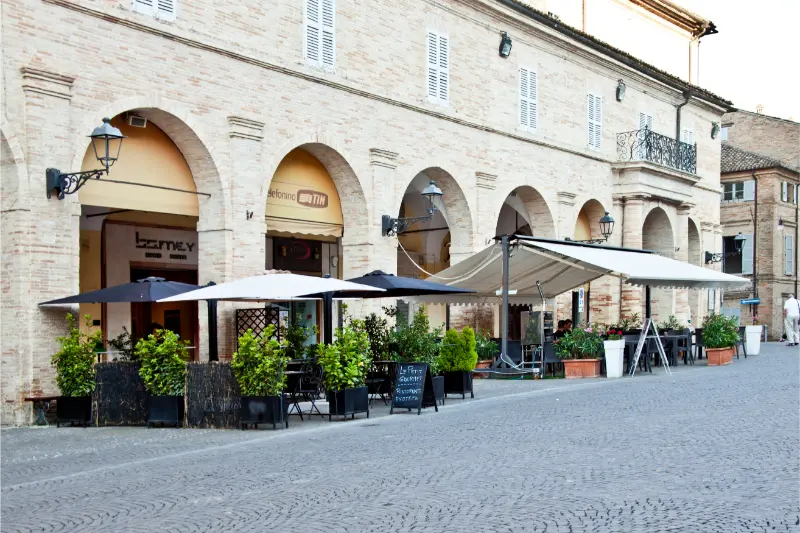
  • Macerata Travel Guide: Sferisterio, Art Museums and Hilltop Streets

    Macerata Travel Guide: Sferisterio, Art Museums and Hilltop Streets

    Macerata is a particularly rewarding stop in the Marche interior for travelers who want an Italian art town with real local life rather than a succession of famous photo stops. Its compact center occupies a ridge between green valleys, and the walk from the monumental Sferisterio to Piazza della Libertà reveals a city shaped by scholarship, theater, and civic ambition. The best plan is to spend a full day exploring its buildings and, if the opera calendar fits, reserve an evening performance. Macerata also works as a base for the surrounding countryside, but it is not a seaside resort: consider how you will reach both the hilltop center and any out-of-town destination before choosing accommodation.

    In this guide

    Understand why the Sferisterio is more than an opera backdrop

    The Sferisterio looks like an open-air theater, but its extraordinary curved wall and monumental arcades began with a different purpose. The arena was created for the traditional game of pallone col bracciale before becoming an internationally recognizable venue for opera. That history explains the unusual geometry: this is not a copy of a classical Roman amphitheater. Stand outside long enough to notice how the main facade relates to the surrounding streets and the town’s slope. Even a traveler who never attends a performance can appreciate the building as evidence of a city that invested in ambitious public architecture.

    For a broader Marche itinerary, see the Marche travel guide before deciding which destinations to combine with Macerata Travel.

    The opera festival has made the Sferisterio one of Macerata’s signature summer experiences. Nevertheless, a performance night requires planning beyond buying a ticket. Check the official program, any seat-specific visibility information, the start time, weather guidance, and the arrangements for arriving at and leaving the venue. An open-air cultural evening may end much later than an ordinary museum visit. If you are traveling by public transportation, verify the final connection rather than assuming you can return to another town after the curtain falls. An overnight stay near the center is often the calmer choice.

    Central Square Macerata Medieval Town Marche Italy

    Walk Piazza della Libertà and read the shape of the old city

    Piazza della Libertà is the natural hub of a first walking circuit. The civic buildings, university atmosphere, and Clock Tower make it a place to stop rather than a square to cross in a hurry. Notice how the public space gathers several periods of architecture in one small area. If the astronomical clock’s moving figures are an attraction for you, confirm its current display schedule with the tourist office; historic mechanisms may be stopped for maintenance, and a schedule quoted from an older guide is not a promise of a show on your date.

    The surrounding streets are best explored as a loop rather than a straight march from attraction to attraction. Pause in an ordinary café and watch how students and residents use the square. Move onto the smaller lanes and you will find sudden views beyond the built-up ridge, followed by stretches where the facades close in again. Macerata’s appeal is this alternation of formal urban rooms and intimate passages. Keep your route flexible: climbing and paving conditions can make a short-looking map distance more tiring than the mileage suggests, particularly in hot weather.

    Visit Palazzo Buonaccorsi for the city’s art heritage

    The Musei Civici of Palazzo Buonaccorsi deserve more time than a cursory stop for photographs. The palace brings together art and decorative interiors in a setting that helps explain Macerata’s civic and aristocratic history. In particular, the monumental Sala dell’Eneide is worth understanding as a coordinated decorative program rather than a single striking ceiling. Read the room labels and pay attention to the relationship between painting, architectural setting, and the stories chosen for display. It is exactly the type of museum that can get lost when visitors rush through four Marche towns in one day.

    Check the museum’s current exhibition arrangements before going: galleries can be temporarily closed, collections may be rearranged, and different ticket rules can apply for temporary exhibitions. If you enjoy painting, decide beforehand whether to concentrate on the principal collections or allow time for any special show. Families can make this a more engaging visit by choosing three objects to discuss instead of trying to read every label. Anyone with reduced mobility should ask the museum about entrance levels and lift access rather than relying on assumptions about a historic palace.

    Look inside the Basilica of Madonna della Misericordia

    The Basilica della Madonna della Misericordia is small enough to miss if you focus only on Macerata’s famous theater, yet it tells another side of the city’s artistic story. Its intimate interior is associated with the work of architect Luigi Vanvitelli, better known to many travelers for major eighteenth-century commissions elsewhere in Italy. Here the scale is entirely different: the visitor comes close to the surfaces, devotional details, and visual unity of a compact sanctuary. This makes the basilica an effective contrast with the broad, ceremonial spectacle of the Sferisterio.

    Religious access should be approached respectfully. A church may welcome visitors while a service is not in progress and ask tourists to wait at other times. Avoid treating a published opening schedule as guaranteed, especially around special observances or conservation work. Dress appropriately, silence your phone, and ask before photographing worshippers. The point of including this stop is not to add another building to a checklist. It helps visitors understand how the town’s cultural inheritance extends beyond its performance spaces and into everyday religious life.

    Follow the theaters, library and university atmosphere

    Teatro Lauro Rossi is another sign of Macerata’s unusually strong connection with the performing arts. Depending on the date, a visitor may be able to see the building through an event or special visit rather than on an ordinary drop-in tour. If a performance interests you, examine the seating plan and allow time to arrive, because old theaters are not always laid out like modern venues. The nearby university presence keeps the old town lively through much of the academic year and lends a very different rhythm to Macerata than a town dependent entirely on seasonal visitors.

    The historic Mozzi Borgetti Library and the broader university quarter provide further context for a slow cultural walk, although reading rooms and historic spaces may have their own visitor policies. Some attractions are working institutions, not conventional ticketed museums. Ask what can be visited and avoid entering restricted spaces. A thoughtful itinerary can pair a morning art museum with an afternoon walk past important civic buildings, leaving the evening free for a performance or dinner. This balance is more satisfying than racing to a distant beach between two indoor appointments.

    Plan a realistic first-day walking route

    A good one-day visit begins near the Sferisterio, then gradually enters the historic center and Piazza della Libertà. From there, choose the Palazzo Buonaccorsi museum as the main indoor stop and add the basilica or a theater exterior according to opening times. Stop for lunch in the center, taking care not to choose a restaurant solely because it has the nearest table to a major monument. In the afternoon, use the smaller roads and viewpoints to understand the town’s hilltop position. This sequence keeps the trip geographically concentrated while leaving enough time for a meaningful cultural visit.

    If you have only half a day, resist an itinerary promising every museum and church. Prioritize the Sferisterio exterior, the main square, and one interior attraction. If you have two days, extend the second morning to a nearby destination such as Recanati or a countryside village, provided your transport allows it. Never assume that inland bus schedules are equally frequent on a Sunday or public holiday. A short, well-timed visit can be excellent; a longer list of monuments is not necessarily a better experience.

    Get to Macerata and avoid parking mistakes

    Macerata has rail access, but journeys may involve connections and should be checked against the current timetable rather than approximated from coastal routes. The historic core sits above lower approaches, so look closely at where the station or bus actually deposits you. If you travel with rolling luggage, the last uphill section can matter more than the train ride itself. Check local buses or a legal taxi arrangement if stairs and gradients are a problem. Allow time for a connection, particularly if a timed theater or museum event is the reason for visiting.

    Drivers should plan a legal parking area outside restricted streets, not simply follow a navigation app toward the center of a medieval town. Ask accommodation providers for precise directions to the garage and whether a registered-guest arrangement exists; never presume a hotel booking grants general permission to drive in a ZTL. For opera nights, consider how crowds will affect parking and the walk back after the event. In bad weather, paving may become slippery and some panoramic detours lose their appeal. These are practical concerns, not reasons to skip the town.

    Choose where to sleep and what to eat

    A central room is most useful if you have evening tickets or want to enjoy restaurants after day visitors leave. Properties just beyond the core may offer easier parking, but check the actual walking route rather than measuring a straight line on a booking map. Rural accommodation near Macerata can be delightful for an itinerary linking several hill towns, yet it is not an ideal substitute for the city center if you intend to return late without a car. Families should ask about stairs, the distance from legal parking, and whether rooms face busy streets on event nights.

    At lunch, look for dishes rooted in the Macerata area, including vincisgrassi, an elaborate baked pasta dish associated with the Marche, or seasonal meats and vegetables. Ask what a restaurant actually prepares in-house rather than assuming every menu label guarantees a traditional method. Regional wines, including those from the Colli Maceratesi, provide another way to understand the landscape you have crossed. Vegetarian and allergy-sensitive diners should confirm ingredients in sauces and baked dishes. A good meal is part of the visit, but not a replacement for seeing the cultural spaces.

    Connect Macerata with the rest of Marche thoughtfully

    Macerata can connect naturally with Recanati, the Chienti valley, and selected inland places, but combining all these with Conero beach time in a single day usually means spending too much time in transit. Think in terms of geographic clusters. If art and poetry are your focus, plan Macerata and Recanati on consecutive days. If your principal interest is coastal scenery, keep a separate base near the Conero area. If you are crossing the region by car, the town makes a worthwhile stop between larger areas, provided you do not schedule a museum entry at the exact time you expect to arrive after a long drive.

    The best season depends on your priorities. Summer brings the possibility of major performances as well as heat and high demand for rooms around event dates; spring and fall can suit walking and museum visits. Winter still offers an appealing town atmosphere, but some visitor services and special events may be limited. Check events and opening arrangements shortly before travel. Macerata deserves to be experienced as a working university and arts city, not merely a quick detour to see an unusual arena.

    Practical information

    PlanOne cultural day; overnight for a performance
    Core landmarksSferisterio, Piazza della Libertà, Palazzo Buonaccorsi
    ArrivalCheck rail connections and uphill access
    ReserveOpera or museum tickets where required

    Continue planning your Marche trip

    To build a wider trip without repeating the same route, compare our Marche travel guide, the Marche highlights guide, the seven-day Marche road trip, the Frasassi Caves guide. These are published guides already present in this database.

    For accommodation, compare the exact location, legal parking access, cancellation conditions and distance to the sights before booking. Compare accommodation on Booking.com.

    Frequently asked questions

    Is Macerata worth visiting without an opera ticket?

    Yes. Palazzo Buonaccorsi, the main square, churches and historic streets make an excellent art-focused day.

    What is the Sferisterio?

    A monumental arena originally designed for a traditional ball game and later adapted to major opera performances.

    How long should I stay?

    A day suits the principal attractions; an overnight works best when attending an evening performance.

    Can I get there without a car?

    Yes, using current rail and onward connections. Account for the climb into the old center.

    When is best for opera?

    Consult the actual festival program before booking travel; performance dates vary by season.

    Official sources and current visitor information

    Last updated: October 17, 2026
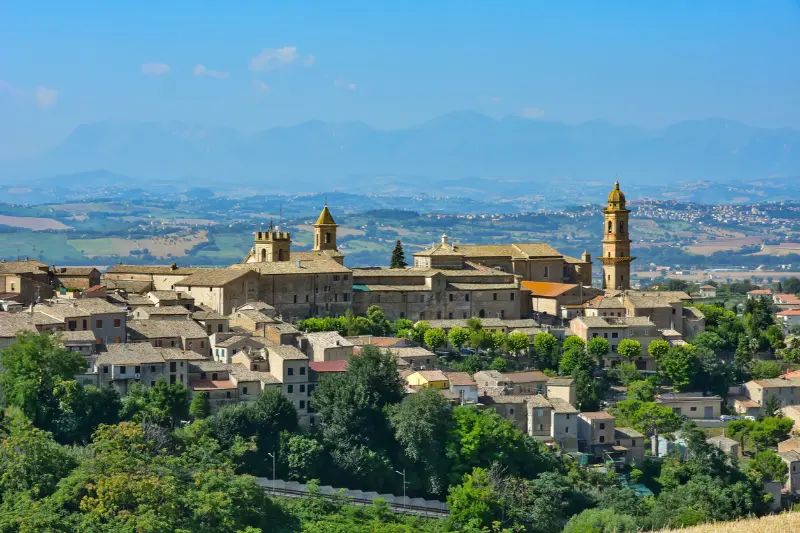
  • Frasassi Caves Travel Guide: Tickets, Guided Tour and Genga Day Trip

    Frasassi Caves Travel Guide: Tickets, Guided Tour and Genga Day Trip

    The Frasassi Caves are among the most memorable natural attractions in Marche, with immense underground chambers and mineral formations created over geological time. Located near Genga in the inland part of the region, they are visited on organized guided routes rather than as an independent wilderness walk. This distinction matters for planning: ticket arrangements, arrival time, clothing, mobility and the transfer from the parking area can shape the day. A cave tour can also be combined with the Romanesque church of San Vittore delle Chiuse and other local sights, making Frasassi a satisfying inland excursion from Ancona or a stop on a longer road trip through the region.

    In this guide

    What makes the Frasassi cave system special?

    Frasassi is a complex of limestone caves formed through long geological processes involving water, rock and mineral deposition. Visitors encounter monumental chambers, stalactites, stalagmites and other formations whose shapes can look almost architectural. The scale is one of the strongest impressions: some spaces are enormous, yet the environment remains delicate. Artificial lighting allows visitors to appreciate the formations while staying on designated paths, and guides provide the context that makes the experience more meaningful than simply walking from one photograph to the next.

    Our Marche travel guide places Frasassi Caves Travel in the context of the wider region, including travel times and alternative bases.

    The caves are not an attraction that benefits from touching formations or stepping off the route. Their mineral surfaces are vulnerable to disturbance, and the underground environment is carefully managed. Listen to instructions, avoid using prohibited equipment and keep children near you. Photographic rules may change, so ask before using flash, tripods or other gear. The best approach is to slow down and appreciate scale, texture and the contrast between chambers instead of treating the visit as a competition to capture the most images.

    Stalactites Stalagmites Famous Caves Italy Grotte di Frasassi Marche Italy

    Understand the standard tourist route

    According to the official cave operator, the regular guided visit lasts approximately 75 minutes and follows about 1,500 meters of equipped pathway, with several staircases. The interior temperature is around 14°C throughout the year. Those details are more useful for preparation than a generic description calling the site ‘easy’. A route may be manageable for many visitors but still involve damp, potentially slippery surfaces, steps and sustained walking. The cave environment is not comparable to a flat museum gallery.

    Bring shoes with good grip and a lightweight sweater or jacket, even during a hot Italian summer. Avoid sandals with smooth soles if possible. If you travel with children, explain in advance that the tour has a fixed pace, a guide and rules about remaining with the group. Visitors who are uneasy in enclosed spaces should consider the large chamber scale but also their own comfort; if unsure, ask the operator about the route before buying a ticket. The guides are part of the experience, not an optional extra you can skip.

    Buy tickets through the correct official channels

    The operator sells tickets through its official site, including online ticketing, and publishes detailed opening information at the Frasassi website. Tour times vary by season, and special closures can occur. Do not copy old prices into a future travel budget or assume that a winter weekday has the same schedule as an August afternoon. Choose a time you can reach comfortably, then build the rest of the day’s itinerary around it.

    Check cancellation rules before paying, especially if your arrival depends on a long train connection or traffic. The current operator information warns that tickets may be nonrefundable if unused or if the visitor arrives late. Book directly or through a clearly authorized channel, and keep the confirmation accessible offline. If a language-specific visit is important, verify whether it is provided on your date rather than relying on an assumption that all groups have the same narration.

    Find the ticket office and shuttle at San Vittore

    First-time visitors sometimes misunderstand where to drive. The official visitor parking and ticket office are in the San Vittore delle Chiuse area, and the operator provides a shuttle transfer toward the cave entrance. Follow the current instructions attached to your ticket instead of selecting an approximate cave pin in a navigation app. Arrival time should include parking, checking instructions and any required transfer, not merely the moment you reach the general Genga district.

    Drivers typically approach via the road network connecting the Ancona–Rome corridor with the Genga area; check the current route and any works. If you use the railway, Genga–San Vittore Terme station sits on the inland line, and the operator describes a walk of roughly 15 minutes to the ticketing area. Confirm service frequency and your return train before committing to a particular tour. An early afternoon cave booking can be problematic if your incoming train is delayed and the last convenient return service is limited.

    Accessibility requires specific questions

    The official operator provides detailed notes for reduced mobility, explaining that access for wheelchair users is limited to the first room and that other limitations apply farther along the route. This is more precise than a travel site claiming the caves are fully accessible. The standard tour has stairs and occasionally slippery surfaces. For travelers with mobility requirements, contact the operator about the actual accessible portion, assistance, parking and arrangements before buying tickets. Do not assume a generic disability discount indicates full access to the standard route.

    Strollers are also limited on the normal course; the official information advises alternatives such as a baby carrier beyond the first room. Families should consider both the physical route and whether a child is comfortable staying with a guided group for more than an hour. Visitors with relevant cardiac or medical concerns should consult the operator’s safety guidance and their medical professional where appropriate. Cave conditions can be pleasant in temperature but still physically demanding for some people.

    What to wear and bring underground

    Temperature is the easiest mistake to make. A warm August day near the Adriatic can be followed by a 14°C underground tour that feels cool if you are wearing beach clothes. Bring an extra layer and shoes with grip; clothing that allows you to walk and climb steps comfortably is more useful than dressing for photographs. A small bag with essentials is usually preferable to bulky luggage, though specific baggage rules should be checked in advance. Keep hands free when moving along damp paths and staircases.

    Plan to use restrooms before the visit, as the operator advises. Carry ticket confirmations in a format you can access without relying on a weak signal underground. Do not bring food or plan a picnic inside the cave. If your day also includes walking outdoors around Genga, keep a separate layer for the changing temperature between the cave and the valley. These small preparations prevent the most common avoidable discomforts.

    Combine the tour with San Vittore delle Chiuse

    San Vittore delle Chiuse provides an attractive cultural addition near the ticketing area. Its Romanesque abbey church is a particularly appealing contrast to the cave formations: the architecture is solid, ordered and made by human hands, while the underground chambers were shaped by natural processes. If access is permitted, take time to view the building and its surroundings rather than rushing immediately away after the tour. The valley setting also helps explain why this location has attracted visitors and religious communities over time.

    Nearby museum options may include local archaeological or natural-history collections, depending on opening arrangements and ticket inclusions. Check what is actually open on the day of your visit and how much time remains before closing. This is a good place for a relaxed lunch rather than another long highway journey. A combination of cave tour, church and one local museum can fill a substantial part of the day without becoming exhausting.

    Consider the Frasassi sanctuary and mountain setting

    In the broader Frasassi area, the sanctuary associated with the Gola di Frasassi and the small temple often called the Tempio del Valadier attract visitors interested in dramatic architecture set against rock faces. Access rules, ticketing and the uphill approach may change, and the official site has published maintenance closures at times. Do not assume that a striking photograph proves the sanctuary is open or that the walk is suitable for every mobility level. Check the operator’s current notice before adding it to your schedule.

    If available, this is best treated as a separate walking component rather than something squeezed into the ten minutes between shuttle and cave check-in. The site deserves time, water and appropriate footwear. Steep terrain, heat and seasonal conditions can transform a short-looking outing into a tiring one. Travelers who prefer a lower-effort day can enjoy the cave tour and San Vittore instead; neither experience requires collecting every possible landmark in the gorge.

    Reach Frasassi from Ancona, Fabriano or the coast

    Ancona makes a reasonable base for an inland excursion because the regional road and railway networks connect it with the Genga area. Fabriano is another interesting nearby town, known historically for paper production, and can become part of a longer inland stay. Travelers based at the Conero coast should consider the added time needed to reach their vehicle or public transport before starting the journey. A cave booking is a timed commitment, so allow more buffer than you would for an open-air village walk.

    Do not combine Frasassi casually with a full day in Urbino and an evening beach session. They are different locations with real travel time between them. On a longer regional road trip, the caves can be a useful inland stop between two bases; on a short holiday, treat them as the primary attraction of the day. The Italian train travel guide helps with connections, but always verify the operator’s actual departure board before travel.

    Guided tourist visit or specialist caving route?

    The standard guided tourist route is intended for a broad range of visitors who can handle its walking and stairs. Frasassi also offers specialist speleological experiences, with different equipment, physical requirements and booking procedures. These should not be confused with the usual cave admission. A more adventurous route may require advance phone or email arrangements and a greater degree of comfort with underground conditions. The official operator should provide the information needed to judge whether it is suitable.

    For a first-time visitor with a mixed-age group, the normal route is generally the logical choice. Travelers specifically interested in caving can investigate the specialist options separately, taking physical ability, safety instructions and availability seriously. Never improvise access to an unmarked passage or assume that a tourist cave ticket permits independent exploration. Managed access is central to preserving the environment and maintaining visitor safety.

    A practical Frasassi day and final checks

    Begin by confirming your tour time, ticketing location and transfer instructions. Arrive with a buffer, complete the guided cave circuit and take a break for lunch around San Vittore delle Chiuse. Add the abbey church or a local museum if actually open, or continue toward Fabriano if you have a car and sufficient time. This produces a strong day of natural history and culture without unnecessary pressure. If your trip is in the cooler months, check seasonal cave departures well in advance.

    Before traveling, verify the official website for closures, tour languages, accessibility and photography rules. Bring grip-friendly footwear and a layer for the consistent underground cool. Frasassi is more rewarding when you understand that it is an inhabited and managed natural environment, not a collection of stalactites to be consumed rapidly. With the right preparations, the caves form one of the region’s most distinctive experiences and an excellent counterpoint to beaches, Renaissance cities and hill villages.

    Practical information

    Tour durationAbout 75 minutes
    Standard distanceAbout 1.5 km with several stairs
    TemperatureAbout 14°C year-round
    Arrival pointTicketing and shuttle area at San Vittore delle Chiuse

    For connected questions about transport, timing and logistics, explore these published guides: How to Book Attractions in Italy, Italy with Kids, Accessible Travel in Italy, Train Travel in Italy.

    Frequently asked questions

    How long is the standard cave visit?

    The official tourist route lasts about 75 minutes and covers around 1.5 kilometers, with stairs and guided group movement.

    Is it cold inside Frasassi?

    The cave is roughly 14°C year-round. Bring a light layer even in summer.

    Are the caves fully wheelchair accessible?

    No. Official guidance limits wheelchair access to the first chamber; contact the operator for precise assistance.

    Where do I park for Frasassi?

    Use the ticketing and parking area near San Vittore delle Chiuse and follow current shuttle instructions.

    Can I explore the caves independently?

    No. Visits are managed and guided; specialist speleological experiences require separate booking and preparation.

    Official information and sources

    Last updated: October 17, 2026