My Italy Experience

Tag: Viterbo

Travel guides to Viterbo, Tuscia and northern Lazio.

  • Lake Bolsena Guide: Where to Stay, Swim and Explore the Villages of Northern Lazio

    Lake Bolsena Guide: Where to Stay, Swim and Explore the Villages of Northern Lazio

    Lake Bolsena is not a single resort but a broad volcanic lake surrounded by distinct towns, beaches, farmland and pilgrimage routes; choosing the right base matters more than trying to circle the entire shoreline in one hurried day.

    At a glance

    Best first basesBolsena for atmosphere and history; Capodimonte for a lakeside feel
    Best forSwimming, slow road trips, villages and northern Lazio scenery
    Time neededTwo nights minimum for a relaxed first visit
    Car needed?Highly useful for exploring multiple towns
    Good combinationsCivita di Bagnoregio, Viterbo, Montefiascone and the Via Francigena

    Why Lake Bolsena is worth a separate stop

    Northern Lazio is often treated as a corridor between Rome, Tuscany and Umbria, yet Lake Bolsena can anchor an itinerary of its own. The lake fills a volcanic basin and is the largest lake in Lazio. Its scale matters: opposite shores can feel like different destinations, and the road around the water passes through towns with distinct histories rather than one continuous tourist strip.

    For a fuller understanding of the surrounding area, use our Viterbo Travel Guide alongside these more focused recommendations.

    The regional tourism authority describes the lake as about 110 square kilometres and surrounded by communities including Bolsena, Montefiascone, Marta, Capodimonte, Valentano, Gradoli, Grotte di Castro, San Lorenzo Nuovo and Latera. That list is useful because it shows why a single ‘best place on Lake Bolsena‘ is too simple. The right base depends on whether you want a walkable old town, waterfront access, road-trip flexibility or quiet countryside.

    Bolsena town: the easiest first base

    Bolsena combines a historic centre, castle area, lakefront and strong connection with the Via Francigena. For a first stay, it is the most balanced option because you can spend part of the day walking old streets and part by the water without driving between every activity. The town is also close enough to Civita di Bagnoregio to make that famous village an easy half-day addition by car.
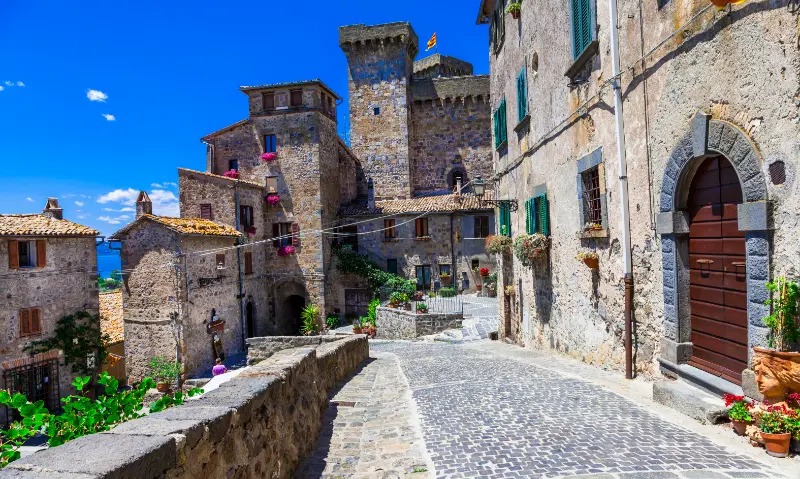
    Bolsena Village Castle Beautiful Medieval Borgo Italy

    The upper town and lakefront are not the same experience. Walk uphill for older streets and viewpoints, then return to the water for evening. If you book accommodation, check the elevation and exact address: a property that looks close on the map can involve a meaningful climb. You can compare current options through Bolsena on Booking.com.

    Montefiascone: views, wine and a different relationship with the lake

    Montefiascone sits high above the lake rather than directly on the main beach strip, which gives it expansive views and a stronger hill-town character. It is associated with the wine Est! Est!! Est!!! di Montefiascone, one of those names that can overshadow the place itself. Even if you are not interested in wine, the height and historic centre make Montefiascone a useful contrast with lower lakeside towns.

    The town also lies on the Via Francigena, so walkers and cyclists may experience the lake very differently from motorists. If you are driving, Montefiascone makes a good lunch or sunset stop on a route between Viterbo and Bolsena. If you stay there, understand that reaching the water may require a vehicle; choose it for views and town atmosphere rather than for stepping directly from hotel to beach.

    Marta and Capodimonte: for a slower waterfront experience

    Marta sits on the southern side of the lake and retains a strong fishing identity. Capodimonte occupies a small promontory farther west and has an appealing waterfront, harbour and views toward the lake islands. These towns feel less like sightseeing bases and more like places to spend time near the water.

    They are good choices for travellers who have already seen the famous hill towns and want a slower second or third night. With a car, you can stay in one and drive to Bolsena or Montefiascone when you want more monuments. Without a car, confirm bus connections carefully because public transport around the lake is not designed like an urban network.

    Swimming and beaches

    Lake Bolsena is popular for swimming in warm months, with a mix of developed bathing areas and more natural stretches. Volcanic shore material can be darker than the sand travellers imagine when they hear ‘Italian beach’, and water depth can change from one access point to another. Choose authorised, well-used bathing areas and check local water-quality information if swimming is central to your trip.

    Water shoes can be useful on stony or dark-sand sections, while shade becomes valuable in July and August. Families should choose a beach based on access, depth, services and parking rather than on a single beautiful photograph. The lake is large enough that wind and water conditions can vary across the day, particularly for sailing, windsurfing and paddling.

    The islands: Bisentina and Martana

    Isola Bisentina and Isola Martana rise from the lake and are among its defining visual features. Access is not equivalent to hopping on a municipal ferry in a large tourist city. Excursion schedules, landing permissions and seasonal services can change, and parts of the islands have specific ownership or conservation arrangements.

    If visiting an island is important, research current authorised boat excursions before arrival and confirm what the trip actually includes. A lake cruise without landing can still be worthwhile because it gives scale to the basin and views back toward the towns. Do not build a tight itinerary around an assumed boat timetable found in an old review.

    Food around Lake Bolsena

    Freshwater fish is part of the lake’s food culture, including species such as eel and coregone, alongside the inland cuisine of Tuscia. The regional tourism page notes the historic reputation of eel and even its appearance in Dantean tradition. Menus may also feature legumes, handmade pasta, local olive oil, cheeses and seasonal produce.

    Ask what is local and seasonal instead of assuming every fish on a menu comes from the lake. A restaurant with a waterfront terrace can be wonderful, but the view is not proof of cooking quality. In busy summer periods, reserve dinner in smaller towns because limited seating fills quickly.

    A two-day Lake Bolsena itinerary

    On day one, arrive in Bolsena, explore the historic centre, walk the lakefront and spend the afternoon swimming or relaxing. Stay for dinner rather than driving onward. On day two, choose one side of the lake: north toward San Lorenzo Nuovo and Gradoli, or south toward Montefiascone, Marta and Capodimonte. This keeps driving reasonable and gives each town more than a parking stop.

    If Civita di Bagnoregio is a priority, visit it early on the second morning and return to the lake for the afternoon. This pairing works because the landscapes contrast sharply. The detailed Civita di Bagnoregio guide explains why arriving outside peak hours improves that visit.

    A three- or four-day Tuscia road trip

    With three or four days, use Lake Bolsena as one component of a northern Lazio loop rather than driving back to Rome each night. A logical route can combine Viterbo, Civita di Bagnoregio, Lake Bolsena and either Tarquinia or another Etruscan site. This creates a sequence of medieval city, eroded landscape, volcanic lake and archaeology.

    The Viterbo travel guide works particularly well with the lake because Viterbo provides the stronger urban base and more evening services, while the lake supplies countryside and water. If your accommodation has parking, a split stay of one or two nights in each can be more enjoyable than commuting.

    Via Francigena and cycling

    The Via Francigena passes through the Lake Bolsena area, connecting the destination to one of Europe’s major historic pilgrimage routes. Even if you are not walking from Canterbury to Rome, a short section can add meaning to the landscape. You begin to see old towns as stages in a journey rather than isolated tourist attractions.

    Cycling is also appealing, but do not assume a complete lake circuit is a protected cycle path. Roads, surfaces and traffic conditions vary, and some stretches are more suitable for experienced riders. The regional tourism authority describes a route from Montefiascone toward Marta and Capodimonte with sections where the surface changes. Research the exact route and bike type before committing to a full circuit.

    Best time to visit

    Late May through September is best if swimming and water activities are central. July and August bring the liveliest lake atmosphere but also heat, busier roads and higher accommodation demand. June and September often balance warm water with more comfortable sightseeing. Spring is excellent for walking and countryside even when swimming is not yet appealing.

    Autumn suits food, quiet villages and road trips, while winter turns the lake into a scenic stop rather than a beach destination. Some seasonal restaurants and boat services reduce operations outside summer, so a winter itinerary should focus more on towns, viewpoints and nearby cultural sites.

    Common mistakes to avoid

    • Trying to drive the entire lake circumference while also “visiting” every town in one day.
    • Choosing accommodation by lake view alone without checking access to restaurants, parking and the old town.
    • Assuming island boat services run continuously year-round.
    • Planning to swim anywhere along the shoreline without checking access and local conditions.
    • Relying on buses for a multi-town circuit without studying the timetable in advance.

    Lake Bolsena is large enough to reward selectivity. Choose a base, pick one side of the lake for each day and use the water as part of the trip rather than a backdrop you repeatedly photograph through the car window. The official VisitLazio Lake Bolsena page is a useful starting point for regional orientation.

    Final thoughts

    Lake Bolsena is at its best when you stop thinking of it as a day-trip attraction and start treating it as a small region. Sleep by the water, explore one or two towns properly, swim or walk when the season allows and connect the lake to the wider Tuscia landscape instead of racing around its entire shore.

    Last updated: October 17, 2026

  • Civita di Bagnoregio: How to Visit Without Turning It into a Rushed Photo Stop

    Civita di Bagnoregio: How to Visit Without Turning It into a Rushed Photo Stop

    Civita di Bagnoregio is visually spectacular, but the most rewarding visit begins before you cross its famous footbridge: the wider landscape of the calanchi, the town of Bagnoregio and the fragile geology are part of the experience, not just the backdrop to a photograph.

    At a glance

    Best forLandscape, medieval atmosphere and a distinctive Tuscia day
    AccessOn foot via the pedestrian bridge
    Time needed3–4 hours for Civita and Bagnoregio; longer with nearby stops
    Car needed?Strongly recommended for a wider Tuscia itinerary
    Best planning ruleArrive early or stay late enough to experience the village between peak visitor waves

    Why Civita needs more context than a viewpoint photo

    Civita rises from a tuff plateau cut away by erosion, surrounded by the clay ridges and valleys known as calanchi. The bridge makes the village look isolated, but its story is really about the unstable relationship between settlement and geology. Erosion, landslides and human intervention have shaped the place for centuries. Once you understand that, the nickname often translated as ‘the dying town’ stops being a marketing slogan and becomes a description of a genuinely vulnerable landscape.

    That context matters because the modern visitor experience can otherwise become very thin: park, photograph, cross, buy something, leave. Slow down enough to look from Bagnoregio’s belvedere before the bridge, notice the layers of rock below the houses and use the visit as an introduction to northern Lazio rather than a self-contained social-media stop. It fits naturally with Viterbo and Lake Bolsena.

    How access works

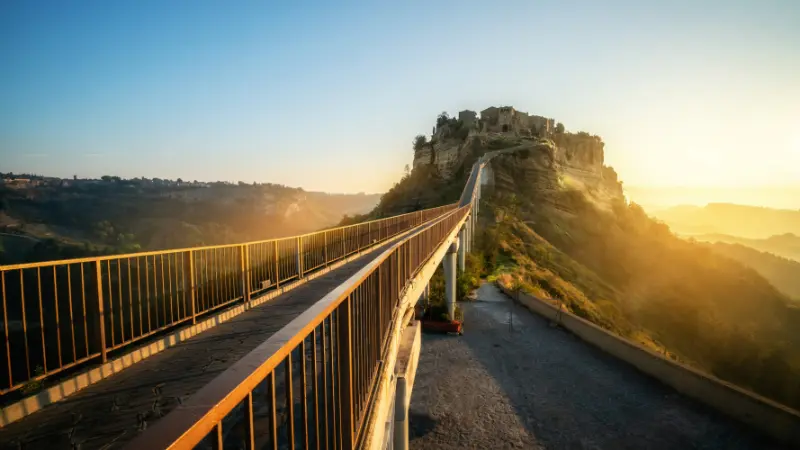
    Civita is reached on foot across the long pedestrian bridge from the Bagnoregio side. There is no normal visitor traffic driving into the village, which is part of what preserves the atmosphere but also makes the physical approach unavoidable. The bridge climbs toward the gate, and the gradient can feel demanding in heat, with luggage or for anyone with limited mobility.

    Civita di Bagnoregio Beautiful Old Town Italy

    Access is managed through a paid-entry system whose price and hours can change with season, events and local decisions. Check the official local information shortly before travelling rather than copying a number from an older article. The regional tourism page for Bagnoregio and Civita is useful for orientation, while local municipal or ticketing pages should be treated as the live source for access arrangements.

    Getting there from Rome, Viterbo or Orvieto

    Civita is not a simple direct-train day trip. From Rome, public transport normally means combining rail and bus connections, often through Viterbo or Orvieto depending on the route. Timetables can be sparse enough that a missed connection changes the entire day. For that reason, a rental car or organised transfer is far more practical when Civita is one stop in a larger Lazio itinerary.

    From Viterbo, driving is straightforward and lets you combine Civita with Lake Bolsena, Montefiascone or another Tuscia stop. From Orvieto, the road distance is also modest, which is why Civita sometimes appears in Umbria itineraries even though it lies in Lazio. If you use public transport, plan the return first: know the last realistic bus connection before you cross the bridge.

    Where to park and what the approach feels like

    Parking areas are on the Bagnoregio side, not at Civita itself. From parking, you walk through or around Bagnoregio toward the viewpoint and bridge. Depending on which lot you use, the total walking distance can be substantial before you even begin the final climb. Small shuttle services may operate under local arrangements, but availability should be checked rather than assumed.

    This is why comfortable footwear matters. The bridge is modern but exposed, the village streets are uneven and the approach includes slopes. In summer, carry water before starting. In rain or strong wind, slow down and treat the exposed crossing seriously. The walk is part of the visit; it should not be squeezed into a ten-minute gap between parking and a lunch reservation.

    What to see inside Civita

    Enter through Porta Santa Maria and resist the urge to race straight to the central square. The scale is small, so the interest lies in details: stone doorways, tiny lanes, gardens glimpsed through gates, views that open unexpectedly toward the valley and the way buildings sit directly on the tuff. The Church of San Donato anchors the main piazza, but the village is best understood by walking beyond it.

    Because the settlement is compact, two hours can feel generous on a quiet day and too short on a crowded one. The difference comes from pace. Sit for coffee, look from more than one edge of the plateau and let the streets empty slightly between groups. If you visit only to reproduce the famous bridge photograph, the experience can feel disproportionately expensive and crowded; if you engage with the landscape, it becomes much richer.

    Do not skip Bagnoregio

    Bagnoregio is the functional town next to Civita and deserves at least a short walk. The historic centre, cathedral and local streets help correct the impression that the area is only a single suspended village. San Bonaventura was born here, and the town maintains religious and civic traditions that continue independently of tourism to Civita.

    Spending lunch in Bagnoregio can also be more comfortable than insisting on eating inside Civita at the busiest hour. Restaurants and shops are more numerous, and you can return to the viewpoint later when visitor patterns change. A slow itinerary sees Bagnoregio and Civita as two connected places rather than treating one as a car park for the other.

    The calanchi landscape

    The clay gullies around Civita are not just scenic decoration. They are active geomorphological formations shaped by water, wind and slope instability. The contrast between the harder volcanic tuff supporting the settlement and softer surrounding materials helps explain why the plateau appears so dramatically isolated. This is also why preservation is complex and why visitors should remain on authorised paths and respect barriers.

    If you enjoy landscape photography, conditions change significantly across the day. Morning light can reveal texture in the valley, while late afternoon produces long shadows and a warmer colour on the rock. Mist and winter weather create an entirely different atmosphere. Do not climb onto unstable edges or leave marked viewpoints for a better photograph; erosion is not an abstract story here.

    Best time of day and season

    Early morning and later afternoon generally give the best chance of experiencing Civita with more space, especially in spring and autumn. Midday is often when organised groups and day-trippers overlap. In summer, the bridge and exposed viewpoints can be extremely hot, so early arrival improves comfort as well as atmosphere.

    Winter can be beautiful and quiet, but weather becomes more important. Rain, fog and wind can affect visibility and walking conditions. Spring brings green valleys; late summer and autumn change the colours of the calanchi. Weekdays outside holidays are usually calmer than weekends. If your schedule allows an overnight stay nearby, seeing the area outside peak hours is the strongest reason to sleep locally.

    Where to stay

    You can stay in Bagnoregio, in countryside accommodation nearby or use Viterbo as a larger base. Bagnoregio is best when Civita itself is the priority and you want to walk to the viewpoint early. Viterbo offers more restaurants, transport and evening activity. Rural agriturismi are attractive for a driving itinerary but can be isolating without a car.

    Compare current accommodation around Bagnoregio on Booking.com and read the map carefully. Properties may use Civita in their marketing even when they are several kilometres away. If you are carrying luggage, remember that visitor access to the historic village itself is pedestrian and may not suit a normal hotel-transfer routine.

    What to combine with Civita

    Lake Bolsena is one of the most natural additions because it gives the day a completely different landscape without requiring a return toward Rome. Bolsena town, Montefiascone, Marta and Capodimonte all work in wider itineraries, though not all belong in the same day. Viterbo is another strong pairing for an overnight base, while Orvieto can make sense geographically on a route toward Umbria.

    If you only have a single day from Rome, combining too much reduces the visit to logistics. Civita plus a relaxed lunch and one lake stop is enough. For a multi-day road trip, build a triangle around Viterbo, Civita and Lake Bolsena. The Lazio travel guide explains how these places fit into a broader regional route.

    Civita with children or limited mobility

    Children often enjoy the bridge and compact medieval streets, but the approach can be tiring in heat. Carry less than you think you need, schedule breaks and avoid the hottest part of the day. Strollers are possible on some surfaces but awkward on slopes and uneven paving; a carrier may be more practical for very young children.

    Visitors with limited mobility should research current access assistance before travelling. The final bridge is a real gradient, not a symbolic inconvenience, and historic streets add further unevenness. Do not assume that a short distance on a map means an easy physical visit. Local services and accessibility arrangements may evolve, so contact the destination directly if step-free access is essential.

    Common mistakes to avoid

    • Arriving at noon in July and underestimating the exposed uphill bridge.
    • Assuming a train takes you directly to Civita di Bagnoregio.
    • Visiting only for the bridge photograph and ignoring Bagnoregio and the calanchi.
    • Trying to combine Civita, Viterbo, Bolsena and Orvieto in one rushed day.
    • Booking a “Civita” accommodation without checking its actual location and luggage access.

    Civita is small, but the experience is not. The approach, geology, surrounding town and northern Lazio context are what prevent the visit from becoming a fifteen-minute photo stop. Treat the bridge as the beginning of the story, not the whole story.

    Final thoughts

    Civita di Bagnoregio is worth visiting when you give the landscape as much attention as the village. Arrive outside peak hours, walk the approach consciously, spend time in Bagnoregio and use the trip as a doorway into Tuscia rather than racing back to Rome as soon as the photograph is taken.

  • Viterbo Travel Guide: Medieval Streets, Papal History and Thermal Baths in Tuscia

    Viterbo Travel Guide: Medieval Streets, Papal History and Thermal Baths in Tuscia

    Viterbo is the kind of Lazio city that rewards an overnight stay: its medieval quarter, papal history, local food and thermal tradition are all worthwhile on a day trip, but the city becomes much more atmospheric once you are no longer counting the minutes to the return train.

    At a glance

    RegionNorthern Lazio, in the area commonly called Tuscia
    Best forMedieval architecture, history, food and thermal baths
    Time neededOne full day minimum; two nights for Viterbo plus nearby Tuscia
    Main sightsSan Pellegrino quarter and Palazzo dei Papi
    Car needed?No for Viterbo itself; useful for surrounding Tuscia

    Why Viterbo deserves more attention

    Viterbo is close enough to Rome to be visited independently yet far enough in mood that it feels like a regional city rather than an extension of the capital. Its strongest identity comes from the Middle Ages, when the papal court spent important years here, but the city is not frozen around one monument. Residential streets, local shops and daily routines continue through the historic fabric.

    For a wider trip through Lazio beyond Rome, Viterbo is one of the best bases because it sits near Civita di Bagnoregio, Lake Bolsena, Tuscania, Bomarzo and other northern Lazio destinations. The city itself works without a car; the surrounding region becomes much easier with one.

    Getting to Viterbo from Rome

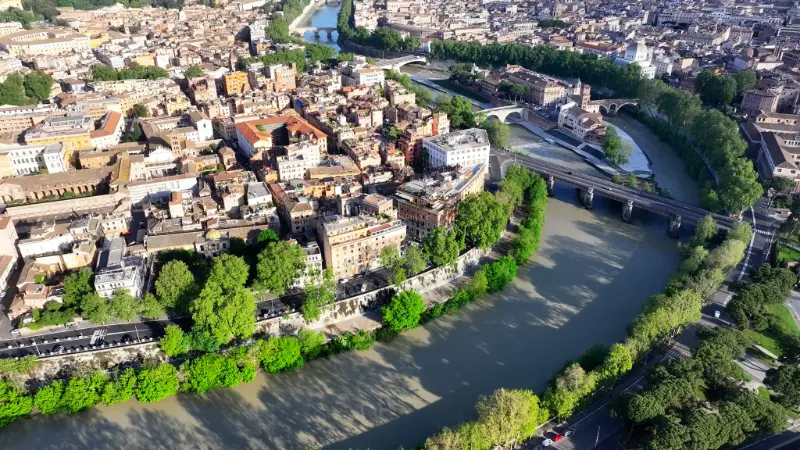
    Regional rail connects Rome with Viterbo, but the journey is not a high-speed hop. Depending on the service and departure station, the trip can take around two hours, which is why a same-day return is possible but not always elegant. Check the current Trenitalia timetable and station carefully: Viterbo has more than one rail stop, and the most convenient choice depends on your accommodation and planned route.

    Buses can also be useful from parts of Rome, while a car becomes attractive if Viterbo is only one stop in a Tuscia itinerary. If you drive, do not aim blindly for the medieval centre. Historic Italian cities often have limited-traffic zones, narrow streets and parking constraints. Use a signed car park outside the tightest core, then explore on foot.

    Tuscania Viterbo Italy Exterior San Pietro Church

    Start with San Pellegrino, but do not rush it

    The San Pellegrino quarter is Viterbo’s visual signature: stone houses, arches, external staircases known as profferli, small courtyards and narrow streets create one of the most coherent medieval urban environments in the region. The best visit is not a route from landmark A to landmark B. It is a slow walk in which you notice how domestic architecture works at street level.

    Visit early or later in the afternoon if you want quieter photographs, but do not imagine the quarter is a theatrical set. People live here. Keep voices down in residential lanes, avoid blocking doorways and resist the habit of treating every staircase as a photo prop. The atmosphere is strongest when you behave as if you are walking through a neighbourhood rather than consuming an attraction.

    Palazzo dei Papi and the papal city

    The Palazzo dei Papi is the historical anchor of Viterbo. In the thirteenth century, the city became a papal seat, and the palace is closely connected with the long election that helped give rise to the word conclave. The building’s loggia and setting beside the cathedral make Piazza San Lorenzo one of the city’s essential spaces even before you enter.

    Current municipal information lists a combined visit that begins at the Museo Colle del Duomo and includes the Cathedral of San Lorenzo and monumental sacristy, with published seasonal hours and ticket categories. Check the official Comune di Viterbo Palazzo dei Papi page before travelling. In 2026 the listed full ticket is €10, but hours and tariffs should always be treated as live information rather than permanent facts.

    A walking route through central Viterbo

    After San Lorenzo and the papal complex, move toward the civic centre around Piazza del Plebiscito and Palazzo dei Priori. From there, let the route loop rather than backtrack: connect commercial streets, smaller churches and San Pellegrino, then return through a different gate or street. Viterbo’s historic centre is large enough to feel like a city but compact enough to understand on foot over one day.

    Do not fill the schedule with every church. Choose a few spaces that illustrate different layers of the city and leave time for lunch, coffee and simply noticing the stone architecture. The regional tourism page describes Viterbo as the ‘City of the Popes’, but the most enjoyable visit balances that history with the living town around it.

    The thermal side of Viterbo

    Viterbo has a long association with thermal water, and this is one of the clearest ways to turn the city from a day trip into a short break. The area includes established spa facilities as well as natural or less formal thermal spots. Access conditions, maintenance, parking and rules can change, so do not rely on old social-media posts showing a pool that may now be closed or regulated differently.

    If you want a polished wellness experience, book a recognised thermal facility and check whether a day admission, treatment or hotel package fits your trip. If you are considering free outdoor pools, verify official local information and current conditions first. Thermal water is not a reason to ignore hygiene, weather, personal health needs or the rules of the site.

    Food in Viterbo and Tuscia

    Northern Lazio has a different food rhythm from central Rome. Menus can feature acquacotta-style soups, legumes, mushrooms, chestnuts, game, local cheeses, hazelnuts and handmade pasta depending on season and restaurant. The point is not to search for a rigid checklist of ‘must-eat’ dishes but to notice how ingredients reflect the inland landscape.

    For dinner, look a street or two away from the most photographed lanes and read recent reviews for consistency. An overnight stay lets you enjoy the city when day visitors have gone and gives dinner the time it deserves. If your next stops are Lake Bolsena or Civita di Bagnoregio, you will see similar ingredients reappear with different local emphasis.

    Viterbo as a base for northern Lazio

    If choosing a base is the next step, our Lake Bolsena Guide compares the options in more detail.

    With a car, Viterbo becomes a practical hub. Civita di Bagnoregio is to the northeast, Lake Bolsena farther north, Bomarzo and the Sacro Bosco to the east, while Tuscania and Tarquinia open the route toward Etruscan Lazio and the coast. Trying to see several of these as separate day trips from Rome wastes time that could be spent in the places themselves.

    A strong three-night plan is Viterbo on arrival day, Civita and the calanchi on day two, then either Lake Bolsena or an Etruscan route on day three. You can compare accommodation in Viterbo on Booking.com; for a car-free stay, prioritise the historic centre and station access over rural scenery.

    Viterbo with children

    Families often enjoy Viterbo because the city offers visual interest without the scale of Rome. Medieval towers, arches and external staircases can turn a walk into exploration, while the papal story gives older children a clear historical narrative. The challenge is the uneven paving and the fact that not every old building is stroller-friendly.

    Keep museum time focused and combine it with open-air walking. If thermal baths are part of the plan, check age restrictions and water temperatures directly with the facility. Some spa environments are designed for adults and quiet wellness rather than family bathing, so never assume children are admitted because a pool is visible in promotional images.

    Best time to visit Viterbo

    For a more detailed plan, our Civita di Bagnoregio develops this part of the journey step by step.

    Spring and autumn are the most flexible seasons for walking and regional excursions. Summer can be hot during the day, although evenings in the stone centre are atmospheric. September is particularly important because Viterbo celebrates Santa Rosa and the famous Macchina di Santa Rosa procession, an event that transforms the city and accommodation demand. If your visit coincides with it, plan intentionally rather than arriving by accident.

    Winter suits travellers who prefer quieter streets, hearty food and thermal experiences, but daylight is shorter and some countryside activities lose appeal. Rain does not ruin Viterbo because the city has museums, churches and cafés, yet wet stone requires care underfoot. For photography and calm, weekdays outside major events are usually easiest.

    A one-day itinerary from Rome

    If you are committed to a day trip, take an early train, begin with the papal quarter and Piazza San Lorenzo, then walk through San Pellegrino before lunch. Spend the afternoon around Piazza del Plebiscito and the historic centre, and choose either a museum or a thermal experience rather than trying to do both. Leave enough buffer for the return service because a missed regional train can add a long wait.

    This is a good day for travellers who want architecture and atmosphere more than a sequence of famous masterpieces. If you only have one spare day in Rome and want a blockbuster site, Tivoli or Ostia Antica may fit better. The day trips from Rome comparison helps match the destination to your interests.

    Common mistakes to avoid

    • Treating Viterbo as a two-hour stop on the way to Civita di Bagnoregio.
    • Assuming every thermal pool shown online is open, free and officially accessible.
    • Driving into the historic core without checking ZTL and parking rules.
    • Booking a rural Tuscia property without a car and then discovering there is no easy evening transport.
    • Planning a Rome day trip without checking the duration and frequency of the return train.

    Viterbo rewards travellers who let it function as a city rather than a backdrop. The papal palace gives historical weight, San Pellegrino gives visual character and the thermal landscape offers something Rome cannot. Add an evening and the place becomes easier to understand.

    Final thoughts

    If northern Lazio is more than a single photo stop on your itinerary, Viterbo is the natural place to slow down. Walk the medieval quarters without a checklist, give the papal history real time, use the thermal tradition thoughtfully and consider sleeping here before exploring deeper into Tuscia.

    Last updated: October 17, 2026

  • Lazio Travel Guide Beyond Rome: Ancient Sites, Hill Towns, Lakes, Coast and Slow Routes

    Lazio Travel Guide Beyond Rome: Ancient Sites, Hill Towns, Lakes, Coast and Slow Routes

    Lazio is often reduced to Rome plus an airport transfer, yet the region includes imperial villas, Etruscan necropolises, volcanic lakes, medieval towns, mountain valleys and a long Tyrrhenian coast. It deserves its own travel plan.

    At a glance

    Regional capitalRome
    Best first extensionTivoli or Ostia Antica
    Best base in the northViterbo
    Best lake optionsBracciano and Albano
    Car usefulnessModerate to high for rural combinations

    What you need to know

    • Use Rome as a base for one or two simple day trips, then change base only if you want deeper regional travel.
    • Northern Lazio and rural lake routes become easier with a car, but many headline destinations are possible by public transport.
    • Do not underestimate distances across the region simply because every place is labelled Lazio.
    • Plan around the experience you want—archaeology, food, lakes, medieval towns or coast—rather than trying to cover every province.

    Why travel beyond Rome?

    For a more detailed plan, our Cerveteri Travel Guide develops this part of the journey step by step.

    Rome contains enough history for weeks, so leaving the city should have a purpose. Lazio earns the detour when you want a different scale: walking through the streets of Ostia Antica, seeing Hadrian’s Villa spread across a landscape, eating in the Alban Hills, exploring medieval Viterbo or standing beside a volcanic lake. These experiences make the region feel coherent rather than treating Rome as an isolated museum city.

    For a first trip with only four days, stay in Rome. With five to seven days, add one or two outings from the best day trips from Rome. With eight to ten days, consider a second base in northern Lazio or the Castelli Romani. The decision is about pace, not collecting provinces.

    Rome as the transport hub

    For a closer look at this side of the destination, read our Santa Severa and Santa Marinella.

    Rome’s main stations connect the region by Trenitalia and other local services, while Cotral and local operators cover many bus routes. The network can reach a surprising number of destinations, but the final kilometres to villas, necropolises or lakeside spots may require another bus or taxi. Use the Italy train guide for national rail basics and check regional timetables close to travel.

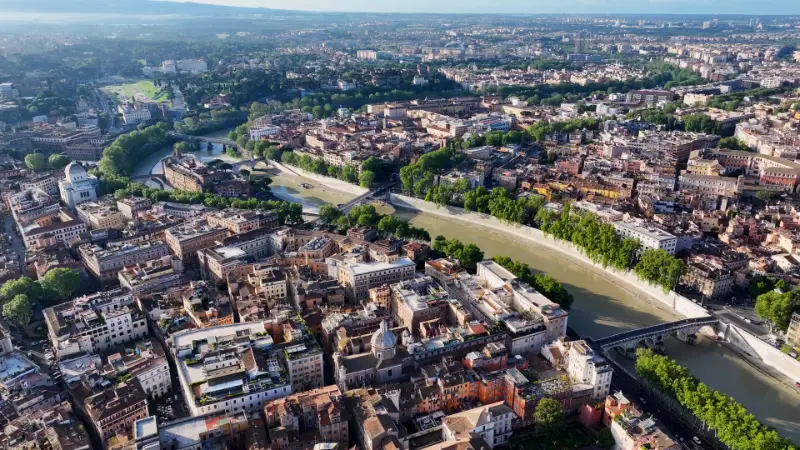
    Rome Skyline Rome Lazio Italy

    If you stay in central Rome, avoid renting a car days before you need it. Collect the car when leaving the city and return it before re-entering if possible. That avoids ZTLs, expensive parking and unnecessary urban driving. A regional road trip begins outside Rome, not at the Trevi Fountain.

    Tivoli: imperial ambition and Renaissance water

    Tivoli is the strongest first extension for travellers who enjoy architecture, gardens and archaeology. Hadrian’s Villa spreads across a large archaeological landscape; Villa d’Este transforms water into architecture and garden theatre. The town itself provides the practical link between them and deserves more than a rushed bus change.

    Use the official Villae site for current opening conditions. Hadrian’s Villa involves significant walking and gradients, while Villa d’Este involves stairs and wet, slippery surfaces around fountains. A full day lets you pace both rather than turning them into competing photo stops.

    Ostia Antica and the archaeology of everyday life

    Ostia Antica is one of Lazio’s most valuable sites because it preserves a city rather than a single monument. Apartment blocks, baths, shops, religious buildings and the theatre reveal how a complex port functioned. The official Ostia Antica site provides current visitor information and access rules.

    The archaeological park also includes other sites linked to the ancient ports and Fiumicino area. Serious archaeology travellers can turn a simple day trip into a two-day study of Ostia, Portus and the surrounding landscape, though opening patterns differ between sites.

    Castelli Romani: food, wine and volcanic landscape

    For a closer look at this side of the destination, read our Tuscania Travel Guide.

    For a closer look at this side of the destination, read our Ventotene Island Guide.

    Southeast of Rome, the Castelli Romani combine hill towns, villas, volcanic lakes and long food traditions. Frascati is a practical rail gateway, while Castel Gandolfo overlooks Lake Albano. Other towns such as Ariccia, Nemi and Grottaferrata reward a car-based or carefully planned bus itinerary.

    Do not reduce the area to wine tasting. The landscape, religious sites, towns, porchetta traditions and lakes are all part of the experience. If wine is central, arrange a safe non-driving return. A slow lunch and one or two towns are more satisfying than racing through the entire Alban Hills in a day.

    Bracciano and the northern lakes

    For more detail on the landscape and possible routes, see our Calcata and Valle del Treja.

    For more detail on the landscape and possible routes, see our Circeo and Sabaudia Guide.

    Lake Bracciano is a volcanic lake northwest of Rome, with the town of Bracciano and its imposing castle forming the easiest visitor base. The lake provides a natural reset after urban Rome, especially in spring and early autumn. Summer weekends can be busy, and beach or boat access varies by location.

    Nearby Lake Martignano is smaller and less urbanised but requires more transport planning. If lakes are the main theme, a car gives you more flexibility; if you simply want one easy lakeside day, stay focused on Bracciano and its historic centre.

    Viterbo and Tuscia: the best second base

    Viterbo is one of the strongest bases for northern Lazio because the medieval city has enough depth for an overnight stay and sits near gardens, Etruscan landscapes, volcanic lakes and villages. The San Pellegrino quarter, papal history and thermal traditions create a different rhythm from Rome.

    From Viterbo you can build routes toward Villa Lante, Caprarola, Lake Bolsena and other Tuscia destinations. Public transport exists but becomes less convenient when combining several rural stops. A small rental car can transform the itinerary, provided you read the driving in Italy guide and research parking for historic centres.

    Etruscan Lazio: Cerveteri and Tarquinia

    For a closer look at this side of the destination, read our Tarquinia Travel Guide.

    The Etruscans shaped central Italy before Roman dominance, and Lazio contains some of the most important surviving funerary landscapes. Cerveteri’s Banditaccia necropolis and Tarquinia’s painted tombs present different aspects of Etruscan culture. Pair the archaeological site with a museum whenever possible; objects and tomb context explain one another.

    These are not “Rome before Rome” theme parks. They belong to a distinct civilisation with its own language, art and urban traditions. Reading even a short introduction beforehand will make the sites dramatically more understandable.

    The Lazio coast: when it makes sense

    Lazio’s coast stretches far beyond Rome’s urban beach areas. Anzio and Nettuno combine seaside life with twentieth-century military history; farther south, the Circeo area and coastal towns lead toward more natural landscapes. Summer brings heat, beach demand and traffic, while shoulder seasons can be better for walks and historical visits.

    Choose the coast if sea time is genuinely part of your trip. Do not add a beach day simply because Italy is associated with the Mediterranean; Rome and inland Lazio already provide more than enough for a short visit. The coast works best as a deliberate contrast.

    Subiaco and the eastern mountain valleys

    For more detail on the landscape and possible routes, see our Rieti and Mount Terminillo.

    East of Rome, Subiaco introduces monasteries, the Aniene valley and the foothills of the Apennines. The Benedictine sites of Santa Scolastica and Sacro Speco combine sacred history with dramatic landscape. This is a rewarding direction for travellers who want religious heritage, hiking or cooler elevations.

    Transport is less straightforward than a rail day trip to Ostia or Bracciano. Check bus connections and monastery opening hours carefully, or use a car. In winter, weather can change road conditions at higher elevations, while summer can make the mountain air especially appealing.

    Two realistic Lazio itineraries

    For a more detailed plan, our Montecassino and Cassino Guide develops this part of the journey step by step.

    For a more detailed plan, our Sperlonga and Gaeta develops this part of the journey step by step.

    Five days based in Rome: four days in the city plus one day in Tivoli or Ostia Antica. This is ideal for first-time visitors. Eight days: five days Rome including one nearby day trip, then two nights in Viterbo or the Castelli Romani before departure. This gives the region a second centre of gravity.

    Ten days: four or five days Rome, two days Tivoli/Ostia/Alban Hills, then three nights in northern Lazio with a car for Viterbo, Etruscan sites, gardens or Lake Bolsena. Keep one flexible day because regional travel becomes vulnerable to weather and transport changes.

    Where to stay outside Rome

    If choosing a base is the next step, our Ponza Island Guide compares the options in more detail.

    Choose a base with a reason. Tivoli works for villas; Viterbo for Tuscia; Frascati or another Castelli town for food and hill-country atmosphere; Bracciano for lake access. Do not change hotels every night simply because towns look close on the map.

    Compare current accommodation through Booking.com and check parking, station distance and hill gradients. In smaller towns, a charming historic property may involve stairs and restricted vehicle access. Ask about luggage drop-off before arrival if you are driving.

    When to visit Lazio

    For a more detailed plan, our Lake Turano Guide develops this part of the journey step by step.

    Spring and autumn are excellent for archaeological sites, gardens and walking because temperatures are generally more comfortable than high summer. Summer suits lakes and coast but can make exposed ruins exhausting. Winter reduces crowds and works well for towns, food and museums, though daylight is shorter and some seasonal services contract.

    The best season also depends on the exact activity. Villa gardens change through the year, lake swimming is seasonal, mountain conditions vary, and archaeological sites can be exposed to both heat and rain. Build the trip around the experience you want rather than a generic “best month”.

    A regional planning principle that prevents rushed travel

    For a more detailed plan, our Viterbo Travel Guide develops this part of the journey step by step.

    Cluster Lazio by direction. East: Tivoli and Subiaco. Southeast: Castelli Romani. Northwest: Bracciano, Cerveteri and Viterbo/Tuscia. Southwest: Ostia, Fiumicino archaeological sites and the coast. This avoids wasting hours crossing Rome or the ring road between unrelated destinations.

    Use the Rome travel guide for the city and this article for the wider region. Lazio becomes much more satisfying when Rome is treated as its extraordinary capital, not as the only place that matters.

    Frequently asked questions

    How many days do I need for Lazio beyond Rome?

    For a more detailed plan, our Subiaco Travel Guide develops this part of the journey step by step.

    One extra day is enough for a first taste such as Tivoli or Ostia Antica. Three to five additional days let you add a second base and explore northern Lazio, lakes or the Castelli Romani at a better pace.

    Can I explore Lazio without a car?

    Yes for many major destinations including Ostia Antica, Tivoli, Frascati, Bracciano and Viterbo, but rural combinations and smaller archaeological sites become easier with a car.

    What is the best base outside Rome?

    Viterbo is excellent for northern Lazio and Tuscia, while Tivoli or the Castelli Romani make sense for shorter extensions closer to Rome. Choose according to the cluster you want to explore.

    Is Lazio worth visiting if I have already seen Rome?

    For a more detailed plan, our Garden of Ninfa and Sermoneta develops this part of the journey step by step.

    Yes. The region adds Etruscan history, Roman port cities, Renaissance villas, volcanic lakes, medieval towns, mountains and coast—experiences that are fundamentally different from central Rome.

    Practical details, opening times, transport rules and ticket conditions can change. Always confirm the latest information with the relevant official operator or attraction before travelling.

    Last updated: October 17, 2026

  • Best Day Trips from Rome in Lazio: Tivoli, Ostia Antica, Castelli Romani, Bracciano and More

    Best Day Trips from Rome in Lazio: Tivoli, Ostia Antica, Castelli Romani, Bracciano and More

    The best day trip from Rome is not necessarily the place with the biggest monument. It is the destination that gives you a different landscape or rhythm without spending most of the day in transit.

    At a glance

    Best for archaeologyOstia Antica
    Best for villas and gardensTivoli
    Best for food and hill townsCastelli Romani
    Best for lake sceneryBracciano
    Best for medieval urban atmosphereViterbo

    What you need to know

    • Choose one destination and give it time rather than combining distant Lazio highlights.
    • Use public transport when the destination has a simple rail link; rent a car only when it materially improves the route.
    • Check attraction closure days before leaving Rome, especially Monday patterns at archaeological sites.
    • Return before the final transport of the night unless you deliberately plan an overnight stay.

    1. Ostia Antica: the easiest deep dive into everyday ancient Rome

    Ostia Antica is my first choice for travellers who loved the Forum but want a more legible ancient city. Streets, apartment blocks, baths, warehouses, temples and the theatre create a sense of urban life that monumental central Rome cannot provide. The official park describes it as one of the best-preserved Roman cities in the world.

    Our Rome Travel Guide is helpful if you want to see how Best Day Trips from Rome in Lazio fits beside the main local sights and neighbourhoods.

    The archaeological area currently opens Tuesday to Sunday from 08:30 with seasonal closing times; it is closed on Mondays, December 25 and January 1. The current integrated ticket is €18. Check the official Ostia Antica visitor page before travel. Allow at least half a day, more if archaeology is a major interest.

    2. Tivoli: Villa d’Este and Hadrian’s Villa

    Tivoli offers two major UNESCO-level experiences with very different personalities: Renaissance water gardens at Villa d’Este and the vast archaeological landscape of Hadrian’s Villa. Trying to see both properly in a few hours is a mistake; give the day to Tivoli and decide how much energy you want to spend on each site.

    Hadrian’s Villa currently has around 40 hectares open to visitors and requires appropriate footwear because of paths and gradients. Check the official Villa Adriana page and the official Villae opening-times page for the exact seasonal schedule. Tivoli town itself deserves a coffee or meal between sites.

    Rome Skyline Rome Lazio Italy

    3. Castelli Romani: a regional day rather than one single attraction

    The Castelli Romani are a group of hill towns southeast of Rome, historically linked to volcanic landscapes, wine, food traditions and papal retreats. Frascati is one of the easiest introductions by train; Castel Gandolfo adds Lake Albano and the papal-palace context; other towns become easier with a car.

    This is the day trip for travellers who want to eat, walk and look at landscapes rather than move through a sequence of ticketed monuments. Do not attempt every town. Choose one or two connected places and leave space for lunch. Weekend popularity can change traffic and restaurant demand.

    4. Bracciano: castle and volcanic lake

    Bracciano combines a historic town, the large Orsini-Odescalchi castle and Lake Bracciano. It gives you a clear change of scene from Rome without requiring a long-distance train. The lake is used for recreation but rules and access vary by shore and season, so research your specific plan if swimming is important.

    The town works well for a relaxed day: castle visit, lunch, lake view and return. If you have a car, you can explore other lake settlements, but do not underestimate parking and weekend traffic. Without a car, keep the itinerary focused on Bracciano itself.

    5. Viterbo: medieval quarters and northern Lazio

    Viterbo is farther than the quick Rome escapes but rewards travellers interested in medieval urban fabric, papal history and the wider Tuscia area. The San Pellegrino quarter has stone lanes and houses that feel very different from central Rome. Thermal traditions also surround the city, though individual facilities require separate planning.

    A day trip is possible, but an overnight stay makes more sense if you want nearby gardens, Etruscan sites or villages. The broader Lazio travel guide explains how Viterbo can anchor a two- or three-day northern Lazio extension rather than a rushed out-and-back journey.

    6. Castel Gandolfo and Lake Albano

    Castel Gandolfo sits above Lake Albano and is closely associated with the papal summer residence. The town itself is compact, with views and restaurants, while the lake offers a contrasting recreational landscape below. It is one of the easiest ways to feel that you have left Rome without travelling far.

    Check the Vatican Museums’ current information if the Apostolic Palace or related garden visits are important because access arrangements and opening days can change. For a simple day, combine the town, a viewpoint, lunch and a lakeside walk rather than scheduling every possible attraction.

    7. Frascati: wine-country atmosphere close to Rome

    Frascati is close enough for a half-day but works better as a slow lunch-and-walk excursion. The town is associated with local wine and the villas of the Alban Hills. It suits travellers who have already seen Rome’s major monuments and want a softer regional contrast.

    Avoid booking an alcohol-focused experience that creates a difficult return journey. If you taste wine, plan transport first and do not drive. Families can enjoy the town without making wine the centre of the day.

    8. Anzio and Nettuno: coast, history and a different horizon

    South of Rome, Anzio and Nettuno offer seaside atmosphere as well as twentieth-century history connected with the Allied landings. The beaches are most appealing in warm weather, but the towns can still provide a change of pace outside summer. Military cemeteries and memorial sites require respectful behaviour and time for reflection.

    Rail connections make the coast possible without a car, though frequency and journey time should be checked on the date. Summer weekends can be busy. Choose this day trip for sea air and history, not because you expect a remote beach untouched by Rome’s population.

    9. Subiaco: monasteries and mountain foothills

    Subiaco lies east of Rome in the Aniene valley and is associated with Benedictine monastic history, including the monasteries of Santa Scolastica and Sacro Speco. The landscape is greener and more mountainous than the city, making this a meaningful cultural and nature shift.

    Public transport requires more planning than Ostia or Tivoli, so a car or organised excursion can simplify the day. Check monastery visiting hours and religious closures before departure. Dress respectfully and remember that these are active sacred places, not only historical monuments.

    10. Cerveteri or Tarquinia for Etruscan history

    Northern Lazio preserves major Etruscan sites that reveal a civilisation Rome eventually absorbed but did not originate. Cerveteri’s necropolis is closer to Rome, while Tarquinia offers painted tombs and a strong archaeological museum. Either deserves a dedicated history-focused day.

    Transport can be more complex than a single train to a city-centre station, especially for archaeological areas outside town. Check the current local bus or taxi leg before leaving Rome. For serious Etruscan interest, an overnight in northern Lazio can make the experience much calmer.

    How to choose your day trip

    Choose Ostia Antica if archaeology is the priority, Tivoli for villas and gardens, Castelli Romani for food and hill-town atmosphere, Bracciano for lake scenery, Viterbo for medieval character and northern Lazio depth, or the coast for sea air. The destination should contrast with what you have already done in Rome.

    If this is your first four-day Rome trip, I would usually stay in the city and follow the four-day Rome itinerary. Add a day trip when you have at least five days or when one Lazio destination is itself a major reason for travelling.

    Train, bus or car?

    Ostia Antica, Frascati, Bracciano and many other destinations are possible without a car. Tivoli also has public transport options, though moving between Villa d’Este and Hadrian’s Villa requires local planning. For car-free Italy basics, see the Italy without a car guide and train guide.

    A car becomes more useful when combining small towns, rural archaeological sites or lakeside stops. If you rent one, read the driving in Italy guide first and avoid collecting the car before you are ready to leave central Rome. ZTLs and parking complexity make city driving unnecessary.

    Should you stay overnight in Lazio?

    Yes when the destination opens a wider cluster. Viterbo can lead to Tuscia gardens and Etruscan areas; Castelli Romani can become a food-and-lake weekend; the coast can make sense in summer. The Lazio travel guide beyond Rome is designed for exactly this transition from day trip to short regional journey.

    For accommodation outside Rome, compare current options on Booking.com and check parking or station distance carefully. In smaller towns, a property that looks central may still be uphill or far from the rail stop.

    Frequently asked questions

    What is the easiest day trip from Rome?

    Ostia Antica is one of the easiest high-value choices for archaeology, while Frascati and Bracciano are also straightforward depending on current rail schedules. Tivoli is very rewarding but requires more local planning if you want both major villas.

    Can I visit Tivoli and Ostia Antica in one day?

    No sensible itinerary should combine them. They lie in different directions and each deserves its own substantial visit.

    Do I need a car for Lazio day trips?

    Not for many popular destinations. A car is most useful for combining small towns, rural sites or multiple lake and countryside stops.

    Which Lazio day trip is best with children?

    Ostia Antica can work well for children who enjoy ruins and open space, while lake or hill-town days may be easier for families who need fewer formal museum hours. Choose by age, heat and walking tolerance.

    Practical details, opening times, transport rules and ticket conditions can change. Always confirm the latest information with the relevant official operator or attraction before travelling.

    Last updated: October 17, 2026