

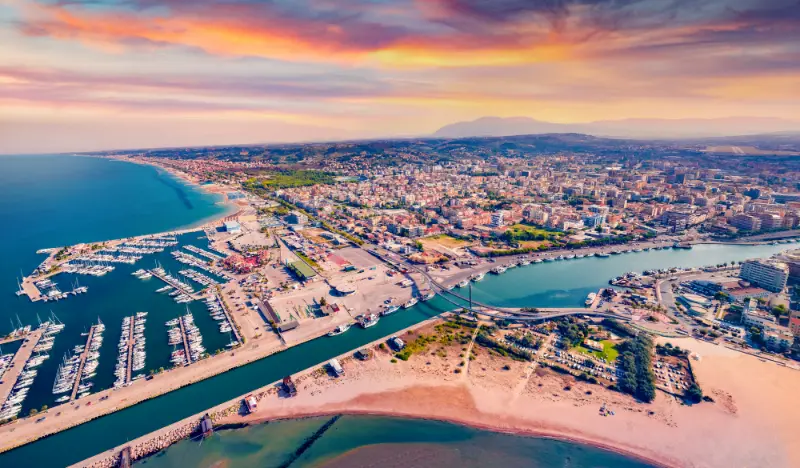
Pescara lies on the Adriatic around the mouth of the Pescara River. The beach neighborhoods, river crossing and historic district have different rhythms. It is a modern coastal city and transport hub, not a medieval hill town; arrive with expectations suited to a promenade-and-city break.
Walk the waterfront
The long seafront suits walking, cycling and beach time. Organized lidos and public sections may alternate; check seasonal arrangements and facilities at the specific access point. Morning is often easier for a relaxed walk before beach crowds build during summer.
Planning more than Pescara Travel? The Abruzzo travel guide compares the main areas and helps you put this stop into a manageable route.
See Ponte del Mare
The modern pedestrian and bicycle bridge offers views across the river and coastline. It connects areas that otherwise feel separated by the river mouth. Wind can be strong, and cyclists and pedestrians share space, so use the appropriate path and pause without blocking circulation.
Explore Pescara Vecchia
The area around Corso Manthoné offers a more intimate urban scale than the broad seafront. Explore streets and restaurants while remembering that opening patterns vary by season and day of the week. A compact historic-area walk pairs naturally with a river crossing and beach afternoon.
Visit the Gabriele d’Annunzio connection
Pescara is associated with writer Gabriele d’Annunzio. His birthplace museum is a focused cultural stop; verify current museum hours and any reservation rules. The city’s literary heritage makes a useful complement to its beaches, especially in poor weather.
Understand local food
Expect an Adriatic seafood culture alongside regional inland dishes. A beachside restaurant and a neighborhood trattoria offer different experiences and prices. If traveling on a tight budget, compare menus away from the busiest promenade rather than assuming all seaside dining is expensive.
Use the station and airport wisely
Pescara is a major rail stop on the Adriatic route and is served by Abruzzo Airport. Connections to the terminal and late-evening services need current checks. If arriving without a car, choose accommodation with a realistic walk or bus ride from the station.
Plan a coastal day trip
Francavilla al Mare, Montesilvano and the southern coast are possible excursions, but train and bus suitability differs by destination. For the Trabocchi Coast, plan exactly how you will reach beaches or cycle access points from a rail station rather than relying on the regional name alone.
Stay near the beach or near the station
Beachfront lodging is convenient for swimming, while station-adjacent rooms suit early departures and car-free travel. Assess noise, air conditioning and whether private beach access is included. A hotel described as central may still be some distance from the water.
Families and accessibility
Level promenades can make Pescara easier than many hill towns, but beach access facilities are site-specific. Ask lidos about ramps, adapted services and restrooms if needed. Families should also factor summer sun exposure into walking and cycling plans.
How much time to allow
One day can cover Ponte del Mare, a historic-area walk and part of the promenade. Two or three nights allow actual beach relaxation and excursions. Avoid overloading a Pescara city stay with distant mountain hikes unless a car and extra overnight stops are included.
Keep your itinerary flexible
Seasonal events, beach services and museum hours change. Confirm specific reservations before departure and build in an indoor option for rainy weather. Pescara works best when its practical convenience is treated as a strength, not compared unfavorably with ancient mountain villages.
### A walk linking the city districts
Plan a loop between the seafront, Ponte del Mare and Pescara Vecchia. This reveals how the river structures the city, and creates a satisfying walk even if you do not intend to swim. Check the distance to your lodging; Pescara is not limited to a single compact tourist street.
### Pescara for a first night in Abruzzo
Its airport and station make Pescara a useful starting point for a longer regional trip. A relaxed arrival evening near the waterfront is preferable to driving immediately toward a remote mountain hotel after a late flight. Collect a rental car the next morning if that works better with pickup hours.
### Summer beach logistics
In July and August, reserve accommodation and check the distinction between managed lidos and public beach access. A sea-view room does not guarantee a sunbed. Families may appreciate services such as restrooms and shade, but their availability changes across individual beach concessions.
### Pescara when it rains
A literary museum, a local cultural event or a long lunch can rescue a beach-focused day. Check exhibition schedules and actual opening days. It is better to have a realistic cultural fallback than to travel a long way toward the mountains during widespread bad weather.
The best way to read Pescara's two sides
Pescara is simultaneously a functioning Adriatic city and a beach destination. The seafront attracts people for swimming, cycling and evening walks, while the older streets south of the river reveal a more intimate townscape. Visitors who arrive expecting a medieval hilltop village will miss its strengths. It is instead a practical entry point to Abruzzo, with a railway hub and airport, cafés, restaurants and links along the coast. The pedestrian and road bridges over the Pescara River are part of the city's daily movement; understanding that geography helps you choose the right hotel and design a visit without needless crossings.
Use the seafront sensibly
The long waterfront is among Pescara's most convenient attractions, with stretches of organized beach establishments and areas where public access is available. In summer, check the difference between renting umbrellas at a lido and visiting a free beach section. The beach is pleasant for a slow morning, but high midday heat may make a late-afternoon walk more comfortable. Families should consider access points, toilets, shade and the sea conditions on the day. It is worth spending time away from the busiest restaurants if you want a quieter coastal experience rather than only a classic summer promenade.
Ponte del Mare and the river mouth
Ponte del Mare is a modern pedestrian and cycling bridge near the meeting of the river and Adriatic. It offers a revealing view of Pescara's coastal setting and a useful crossing for walkers exploring both banks. From the bridge you can appreciate the port installations, beaches and shifting relation between city and sea. Keep bicycles to the marked cycling portion and respect other users during busy periods. A short crossing can be woven into a relaxed seafront walk; there is little reason to make it a separate half-day attraction unless you particularly enjoy urban photography.
Pescara Vecchia and literary heritage
Pescara Vecchia offers a counterpoint to the modern waterfront. The streets around Corso Manthoné and Piazza Unione are associated with the older city and its restaurant scene. Gabriele d'Annunzio was born in Pescara; the museum dedicated to his birthplace gives the visit a cultural focus. Check museum opening days and combine it with an unhurried exploration of the district rather than attempting an indiscriminate museum marathon. This neighborhood becomes lively at certain evening hours, but it is not a substitute for the hill towns that lie farther inland.
Arrival logistics: rail and airport
Pescara Centrale is a practical station for Adriatic rail services and travel to other Italian cities. Abruzzo Airport serves the wider area, but flights and onward connections depend on the season and airline. If arriving late, compare taxi or other licensed transport with scheduled services before choosing where to sleep. A station-side hotel may be best for an early train departure, while a coastal address suits swimming and evening outings. Check walking distances with luggage: a room advertised as “central” might be convenient for shopping but less convenient for the sea.
Three easy day-trip directions
North along the Adriatic are beach towns such as Montesilvano and the Teramo coast. Southward, Francavilla al Mare and Ortona lead toward the Trabocchi Coast, where walking or cycling can be a good alternative to another urban day. Inland, Chieti offers churches and archaeological collections. Treat each as a distinct half- or full-day excursion and confirm train connections if traveling without a car. The Gran Sasso massif can be reached by road but is not a casual extension of a Pescara beach afternoon.
Eat well without chasing a landmark restaurant
Pescara's kitchens draw from both Adriatic fish traditions and the meat-based inland cuisine. Look for seasonal fish dishes or traditional Abruzzo pasta according to the restaurant, but avoid assuming a particular ingredient is available every day. If traveling with children, eat earlier than the late evening peak in summer and reserve somewhere convenient to your lodging. Travelers watching their budget may find better value in neighborhood establishments than in the most visible seafront addresses. The choice of place and timing matters more than checking off a single supposedly essential dish.
A one-day itinerary that holds together
Start with a morning seafront walk and the bridge, then move to the old-town area for lunch and, if open, a visit associated with d'Annunzio. Use the afternoon either for a beach break or for browsing the city, not both a remote village and a long museum list. At sunset, return to the waterfront for a more relaxed atmosphere. Visitors with only a few hours should concentrate near the station or seafront depending on their arrival point rather than trying to reach every neighborhood. Pescara works best when enjoyed as a comfortable coastal city, not rushed as an obligatory stop.
Why a beach city can work for a longer stay
Pescara is sometimes passed over by travelers searching for medieval towns, but its practicality is a genuine travel advantage. A base here can combine beach mornings with cultural excursions to Chieti or Ortona, and rail links can reduce the need to drive for every outing. The value is not that every attraction lies within walking distance, but that there are services, restaurants and transport choices when a plan changes. In peak summer, a room close to the station may be more useful for a sightseeing trip than a pricier seafront hotel. For a swimming holiday, the opposite may be true. Decide what most days will actually look like.
Plan beach time around conditions, not assumptions
A long sandy coast does not remove the need to assess wind, waves, safety flags and access facilities. Parents should identify an appropriate supervised area if available and keep track of children's comfort in sun and heat. Public beaches and rented beach-club spaces operate differently; ask what is included before paying. Early morning can be attractive for a quiet walk or swim where permitted, while evening often suits a family promenade. When weather is poor, Pescara Vecchia and cultural visits provide alternatives. A resort day should feel flexible rather than structured around maximizing hours under an umbrella.
At a glance
| Main sights | Seafront, Ponte del Mare, Pescara Vecchia |
|---|---|
| Best base for | Rail travel and coast-focused itineraries |
| Practical caution | Station, riverbanks and beach hotels are not all in one district |
Frequently asked questions
Is Pescara a good base for Abruzzo?
Yes for rail connections, beaches and coastal outings, though remote mountain villages require separate planning.
Where can I walk in Pescara?
The waterfront, Ponte del Mare and Pescara Vecchia form an enjoyable combination of seaside and urban experiences.
Does Pescara have cultural attractions?
The older district and places associated with Gabriele d’Annunzio add depth to a beach-focused visit.
Should I stay near the station or the sea?
Choose the station for frequent rail excursions and a waterfront address for swimming and evening promenade time.
Can I reach Ortona from Pescara?
It is a reasonable coastal excursion, but confirm rail times and the transfer between the station and upper town.
Related reading
- Abruzzo Travel Guide: Mountains, Coast, Villages and Practical Planning
- Where to Stay in Abruzzo: Best Bases for Coast, Mountains and Towns
- Costa dei Trabocchi: Beaches, Cycling and Fishing Platforms
- Sulmona Travel Guide: Medieval Aqueduct, Ovid and Maiella
Compare accommodations in Abruzzo (affiliate link).
Authorities and visitor resources
Last updated: October 17, 2026