
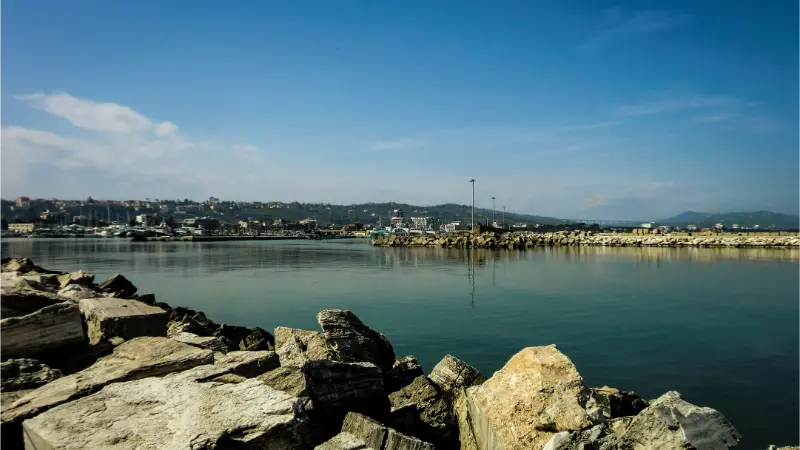
Giulianova offers more than a convenient stretch of Adriatic beach. Its lower town has the seafront, port and railway station, while the upper town brings a Renaissance plan, the dome of San Flaviano and views back toward the water. You can enjoy both in one holiday, but the climb between them matters when choosing a hotel. Stay near the shore for easy beach mornings or in the upper town for a more cultural evening setting. A two- or three-night visit gives you time to enjoy the contrast without rushing.
On this page
- Understand Giulianova Lido and Giulianova Alta
- Choose a beach for the services you need
- Walk the promenade at a comfortable time
- Visit the port and look for the caliscendi
- Start the upper town at Piazza Buozzi
- Look at San Flaviano's form and interior
- Add one civic museum rather than every collection
- Consider the Madonna dello Splendore sanctuary
- A manageable one-day itinerary
- Getting to Giulianova by train
- Arriving by car and using local transport
- Where to stay for different holidays
- Food and a flexible budget
- Seasons, families and accessibility
- Choose your part of town
- Frequently asked questions
Understand Giulianova Lido and Giulianova Alta
Giulianova Lido is the natural choice for a beach-oriented stay. Accommodation near the promenade puts swimming, seafront walks and seasonal services within an easy daily routine. The railway station also makes the lower town practical for visitors arriving without a car, although you should check the walking distance to your actual property.
Planning more than Giulianova Travel? The Abruzzo travel guide compares the main areas and helps you put this stop into a manageable route.
Giulianova Alta occupies the hill above. Its squares, churches and cultural stops offer a different atmosphere, particularly in the evening. The route between the two parts is not a flat continuation of the promenade. If you have a stroller, limited mobility or little enthusiasm for uphill walks in summer heat, plan the transfer using current local transport or a suitable drive. A sea view from the upper town does not mean immediate beach access.
Choose a beach for the services you need
Giulianova's sandy shore supports both equipped beach establishments and public beach areas. An equipped lido can simplify a family day by providing reserved shade and other services, but the exact facilities and price vary. Ask what a booking includes: umbrella position, loungers, toilets, changing facilities and any restaurant or play area.

For a public beach visit, bring what you need and identify the permitted access and facilities nearby. Follow posted bathing instructions and lifeguard signals where present. A gentle-looking shore does not establish safe conditions on a particular day. Children need supervision even in shallow water. Travelers with access needs should ask about the entire route from the promenade onto the sand and into the water, rather than relying on an accessible entrance label alone.
Walk the promenade at a comfortable time
The seafront is an easy way to enjoy the lower town without a complicated itinerary. A morning walk can fit before a beach day, while an evening stroll gives you a change of pace after dinner. Choose the length according to your group rather than assuming the whole waterfront must be covered.
Walking and cycling areas may sit near one another. Stay attentive at crossings, keep children close and avoid stopping in a cycle lane for a photograph. In warm weather, shade can be limited along some stretches, so carry water. If you rent bicycles, ask about the suitable route, locks and return time before leaving. A short seaside ride is a different plan from a longer journey to neighboring towns and should be prepared accordingly.
Visit the port and look for the caliscendi
The port adds a working waterfront to the seaside holiday. It is not simply a scenic marina: fishing activity is part of Giulianova's identity. From public access areas, notice how boats, quays and everyday work give the shore a different character from the beach establishments.
The traditional fishing structures known locally as caliscendi are a distinctive feature to look for along the harbor setting. Appreciate them from legal public routes without assuming they are visitor platforms or restaurants. Fishing operations and restricted port areas should be respected. A short port walk can fit into a lower-town afternoon, but follow local instructions if weather or operations limit access. Avoid walking onto an exposed structure just to obtain an unobstructed sea photograph.
Start the upper town at Piazza Buozzi
Piazza Bruno Buozzi is a useful starting point for Giulianova Alta. The relationship between the square, ducal palace and San Flaviano helps you understand the planned Renaissance settlement. Giulio Antonio Acquaviva founded the new town in the fifteenth century after the destruction of the earlier settlement, giving it the name Giulia.
You do not need a detailed urban-history lecture to appreciate the design. Stand in the square and notice the arrangement of the principal buildings, then walk into the surrounding streets. This setting contrasts with the linear beach town below. A café or meal here can make the visit feel like an evening in a different part of Giulianova rather than a brief sightseeing detour from the shore.
Look at San Flaviano's form and interior
The Duomo of San Flaviano is the upper town's central landmark. Its octagonal form and dome stand out in the townscape. Begin with the exterior proportions, then enter when the church is open and worship allows. The interior includes later artistic work as well as the architectural structure, so its story is not confined to the period of the town's foundation.
Take time to look at the way light enters the upper space and how the dome shapes the room. The lower church has a separate spatial character, and access should be checked rather than assumed. Travelers with limited mobility need information about the entrance and stairs for the specific area they want to visit. Keep the visit quiet and respectful, particularly if a service begins while you are there.
Add one civic museum rather than every collection
Giulianova's civic museum network includes the Vincenzo Bindi house-museum and art gallery, the archaeological museum in the La Rocca tower and a sculpture collection associated with Raffaello Pagliaccetti. These offer different interests, so select one that matches your group rather than scheduling them as an automatic circuit.
The Bindi collection is a natural choice for travelers interested in painting and local cultural history. The archaeological stop can help connect the town with its earlier past. Check the current opening schedule and ticket arrangements for the selected venue. A summer program may not apply to an October visit, and a listing for the whole museum network does not prove that every location is open simultaneously. Leave time to enjoy the surrounding streets afterward.
Consider the Madonna dello Splendore sanctuary
The Sanctuary of the Madonna dello Splendore adds another religious and cultural stop in the upper-town area. It is associated with a local apparition tradition, which should be understood as a religious belief and story rather than a documented claim of an event independently established by historians.
Visit with respect for worship and ask about opening if the interior is important to you. The sanctuary can fit into a quieter afternoon, but assess the route and gradients from your starting point. For a festival visit, use the current official program: events and traffic arrangements may change the usual pace of the town. If you have already seen San Flaviano and a museum, the sanctuary may be best saved for another day rather than added when everyone is tired.
A manageable one-day itinerary
Begin in the lower town with a seafront or port walk. After lunch or a beach break, transfer to Giulianova Alta for Piazza Buozzi, San Flaviano and one cultural stop. Finish with a meal in the upper town if you have a clear plan for returning to your accommodation.
On a very hot day, reverse the cultural portion so the hill walk happens earlier, then spend the afternoon near the shore. The plan should fit museum opening and your group's energy. Avoid crossing repeatedly between upper and lower town for single attractions. Keeping each part together reduces travel time and makes the day feel relaxed. If beach time is the main priority, give the upper town its own evening instead of compressing everything into one long day.
Getting to Giulianova by train
The station makes Giulianova a practical coastal option without a car. Search current services for your actual arrival city and check whether the chosen train stops here. Regional and longer-distance services have different patterns, so a train passing along the Adriatic line is not automatically a useful connection.
Choose accommodation within a comfortable distance of the station if you will walk with luggage. Include heat, bags and crossings in your assessment, not just the number of meters. For the upper town, check current urban transport and where the stop is relative to your hotel. A car-free beach stay can be straightforward when daily needs are close together, while inland excursions may require more planning or a reserved tour.
Arriving by car and using local transport
A car gives you flexibility for nearby towns, but parking should be part of the accommodation decision. Ask whether a space is included, reserved or available only subject to capacity. During busy beach periods, arriving without a plan may mean extra time looking for a legal place to leave the vehicle.
In the upper town, follow signs and avoid assuming every historic lane is open to traffic. Use a suitable parking area and continue on foot. Seasonal shuttles and tourist transport may be offered, but verify their current operation through the official visitor portal. An old summer schedule should not be used for a shoulder-season trip. If you will return after dinner, check the final service or arrange another option before going uphill.
Where to stay for different holidays
Choose the Lido for beach days, easier seafront walking and a lower-town routine. Families may appreciate a hotel that combines meals with confirmed beach services, but check the details rather than relying only on a family label. Ask how far the room is from the shore and whether a busy road lies between them.
Choose Alta for evenings around the historic squares and cultural visits. Confirm the room's access, stairs and parking, and accept that beach trips require a transfer or downhill and uphill walk. Near-station accommodation can work for a short rail-based visit, but compare it with the places you will spend most time. A room that saves five minutes on arrival may be less convenient for every beach day afterward.
Food and a flexible budget
The fishing port gives seafood a natural place in the town's dining scene. Look at current menus and ask about preparation and prices, particularly for dishes sold by weight or catches that vary. You can also balance restaurant meals with simpler options near your accommodation. Dietary needs are easier to manage when you identify suitable venues before a long beach day.
Budget separately for the room, beach services, meals, museum admission and local transport. An umbrella reservation can cost differently according to dates, position and duration, so obtain the actual quote. A public-beach day may reduce costs but requires your own equipment and an understanding of available facilities. Compare complete hotel packages rather than room prices alone when meals or beach services are included.
Seasons, families and accessibility
Summer offers the fullest beach routine and more seasonal activity, with busy periods that favor advance booking. Late spring and early fall can suit walking and culture, but beach establishments and tourist transport may follow reduced schedules. Winter should be planned around the town and cultural openings, not a promise of the summer resort experience.
For children, mix shore time with a short upper-town visit rather than a long museum sequence. For older travelers or reduced mobility, assess the gradient between town levels and the exact entrance to each attraction. Ask beach providers about suitable access and equipment where needed. Giulianova's two-part layout offers a varied holiday, provided your room and daily transfers match the way you want to travel.
Choose your part of town
| Area | Best fit | Main tradeoff |
|---|---|---|
| Lido and promenade | Beach holiday and easy seafront routine | Cultural upper town requires a transfer |
| Near the station | Short rail-based visit | Check distance to the beach you prefer |
| Giulianova Alta | Historic squares and evening atmosphere | Slopes and transport to the shore |
| Outlying accommodation | Space and a broader driving holiday | More dependence on a car for meals and visits |
Frequently asked questions
Can I visit Giulianova without a car?
Yes. The railway station supports a coastal stay, with separate planning needed for the upper town and inland outings.
Should I stay in Alta or Lido?
Choose Lido for daily beach convenience and Alta for cultural evenings. Check slopes and return transport.
Is there more to do than go to the beach?
Yes. The Renaissance upper town, San Flaviano, civic museums and port add cultural variety.
Are all museum locations open together?
Do not assume so. Check the current schedule for the particular collection you want to visit.
Can I use summer shuttle information in fall?
Only if the service confirms it still applies. Seasonal transport has its own operating dates.
Where to stay and useful location links
Compare accommodation locations carefully: check parking, steps and the journey to the places you want to visit before reserving.
More Abruzzo trips
- Abruzzo Travel Guide: Mountains, Coast, Villages and Practical Planning
- Where to Stay in Abruzzo: Best Bases for Coast, Mountains and Towns
- Teramo Travel Guide: Cathedral, Roman Ruins and a Lively Old Town
- Atri Travel Guide: Cathedral Frescoes, Calanchi and Hilltown Life
Official visitor information
Last updated: October 17, 2026