

Lanciano is a useful stop when you want more than a beach holiday on the Costa dei Trabocchi. Its old neighborhoods, churches and underground archaeological route give you a full day away from the shore, without committing to a mountain excursion. The best visit combines Piazza Plebiscito with a walk toward Santa Maria Maggiore, leaving enough time for lunch and the quieter streets between the main monuments.
This Lanciano travel guide focuses on that manageable first visit. A half-day works for the central square and two churches; a full day makes room for an underground tour and a longer neighborhood walk. Staying overnight is worth considering if you prefer dinner in town and several separate trips to the coast. Lanciano is inland: choose it for an urban base, rather than expecting to walk from your room to the beach.
You can pair Lanciano Travel with other places in Abruzzo; the Abruzzo travel guide gives an overview of realistic connections and where to stay.
Start at Piazza Plebiscito
Piazza Plebiscito provides the clearest starting point. The Cathedral of the Madonna del Ponte and its bell tower establish the scale of the town, while nearby streets lead into the older quarters. Stop here before following directions to individual sights. You will understand the relationship between the square, the cathedral and the underground route much more easily from above.
The cathedral stands over the structure traditionally known as the Ponte di Diocleziano. That unusual arrangement is central to Lanciano's story: buildings accumulated over a crossing, and later construction changed both the skyline and the spaces beneath it. The Ministry of Culture's monument profile explains how the underground museum interprets these phases. A visit above and below ground gives the architecture more meaning than a photograph of the facade alone.
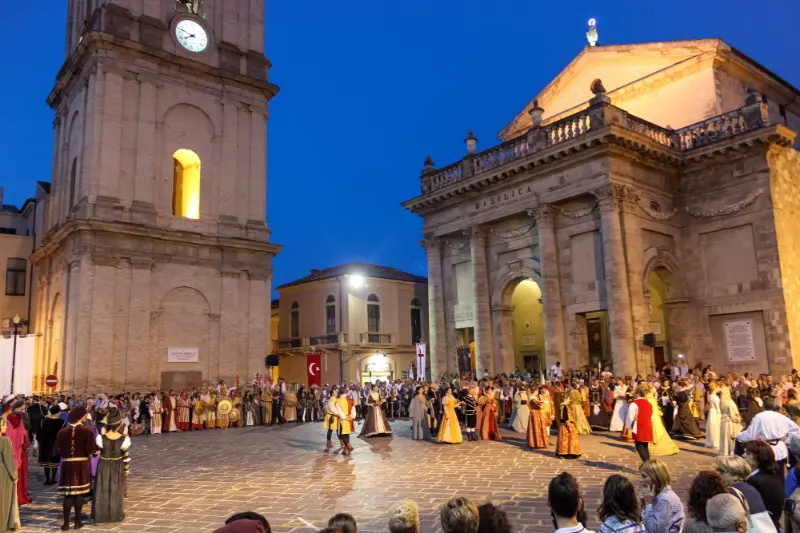
Treat the square as a place to return to, rather than a sight to finish and leave behind. It works well for a coffee before a reserved tour, a meeting point if your group splits up, and a final stop before walking back toward your parking area. Check where a guided visit actually meets; a general map pin for the cathedral may not identify the underground entrance.
Visit the Eucharistic Miracle sanctuary respectfully
The Church of San Francesco houses the sanctuary associated with Lanciano's Eucharistic Miracle. For Catholic pilgrims, it can be the main purpose of the journey. Other travelers can visit for its religious and historical significance, while recognizing that the miracle belongs to a tradition of faith. It should not be presented as an independently established scientific event.
Plan this stop around the sanctuary's current visiting arrangements and services. A quiet visit between celebrations is different from arriving with a pilgrimage group during worship. Modest clothing is appropriate, and any photography should follow the notices inside. If a service is underway, wait or return later rather than walking around people who are praying.
You do not have to organize the entire day around pilgrimage. San Francesco sits within a broader town itinerary, and can be followed by a secular walk through the streets or the archaeological route when available. Families may find a short explanation before entering more useful than a long account delivered inside. Explain what people come to venerate and why the sanctuary needs a quieter atmosphere than the surrounding square.
Book the underground route before building your day around it
Lanciano's underground archaeological itinerary connects the area of the Ponte di Diocleziano with the San Francesco complex. The church heritage portal BeWeb describes remains below Piazza Plebiscito, including structures from successive periods. Its interest lies in seeing how the town developed in layers, rather than in walking through a single preserved Roman building.
Arrange your visit through the tourist office or the contact shown on the local tourism listing. Ask about the next available departure, the entrance, the duration, the ticket and the language of the explanation. Opening a church door does not automatically mean the archaeological itinerary is operating. A reserved group departure may also require you to arrive earlier than a normal museum visit.
For anyone uncomfortable with enclosed spaces or steps, ask for an honest description before buying. An underground route can involve dim lighting, changes of level and areas where several people gather to hear a guide. Request information about the actual route used that day, particularly if you have mobility needs. If it is unsuitable, the cathedral, square and neighborhood walk still provide a worthwhile visit without forcing an uncomfortable experience.
Walk to Santa Maria Maggiore and Civitanova
Santa Maria Maggiore is the strongest reason to continue beyond the central square. The church stands in the Civitanova quarter, and its carved entrances reward a slower look. The local Sangro Aventino tourism page identifies the Gothic facade as a defining feature of this part of Lanciano. Start outside, where you can examine the portal without relying on an interior opening.
Once inside, look for the contrast between the church's structural lines and the individual objects displayed within it. Ask whether the processional cross associated with Nicola da Guardiagrele is currently visible. Liturgical works can move for restoration or exhibitions, so a description of a collection is not a guarantee that every item is on display on a particular day.
Walk here through the old streets rather than treating it as a separate car stop. The changing proportions of the lanes, entrances and small open spaces are part of the appeal. Return by another permitted pedestrian route if your legs allow. There is no need to turn the walk into a hunt for every named palace: choosing a few streets and noticing their details produces a more relaxed afternoon.
A realistic one-day itinerary
Begin with Piazza Plebiscito and the cathedral in the morning, then visit San Francesco when its schedule allows. If you have booked the underground route, put that appointment at the center of the morning and arrange the church visits around it. Allow a margin for finding the correct entrance and using the restroom before the tour.
Have lunch in town before heading toward Santa Maria Maggiore. Keep the afternoon for Civitanova and a gradual return to the center. This sequence reduces unnecessary backtracking and gives you a break between the underground visit and further walking. It also lets you adjust if a church closes for part of the day.
With only three hours, choose the square, San Francesco and the exterior of Santa Maria Maggiore. Attempting the underground route as well may leave little time to see the town itself. With children, replace one interior with a snack and a short street walk. The day does not need an additional coastal destination unless you are content to arrive there simply for an evening meal.
Getting to Lanciano and moving around
Driving makes it easier to combine Lanciano with coastal accommodation. Follow the route appropriate to your starting point, then look for a signed public parking area outside the tightest part of the old center. Do not follow a navigation shortcut through a restricted street just because the app regards it as the fastest approach. Local signs determine where you may drive.
For public transport, consult TUA's current journey information and identify the exact Lanciano stop. The station named San Vito-Lanciano is on the coast; it is not in the historic center of Lanciano. Check the onward connection rather than assuming the station name means you have arrived within walking distance of Piazza Plebiscito.
A town day can work without a car if the outward and return services fit your plans. The challenge is adding a remote coastal restaurant or several beaches afterward. Keep those for another day unless you have verified the connection. When booking a room, ask how to get from your arrival stop to the accommodation with luggage; a comfortable sightseeing walk can be inconvenient when pulling a suitcase.
Where to stay: center, outskirts or coast
Choose the historic center if you want to walk to dinner and begin sightseeing before driving anywhere. Ask about parking arrangements and the distance from the unloading point to your room. An attractive building on a small lane may have stairs at the entrance or several flights inside. These details matter more than a broad description such as central location.
Accommodation on the outskirts suits a trip with repeated coastal excursions. Look for easy road access, a clearly described parking space and an evening meal option within a practical distance. You will sacrifice some atmosphere in exchange for simpler departures. Make sure a property advertised as Lanciano is actually convenient for the town, rather than far out in the surrounding countryside.
Staying on the Costa dei Trabocchi is better if swimming and seaside evenings are your main priorities. Visit Lanciano as a dedicated day trip and return to your coastal base afterward. This avoids moving hotels for a single urban visit. Compare both approaches with the separate guide to where to stay in Abruzzo before reserving a room.
Food, costs and the best season
For lunch, read the menu before sitting down and check whether the kitchen serves at your intended time. Regional pasta, seasonal vegetables and meat dishes make sense here; a seafood dinner is an option rather than an obligation because the coast is nearby. Ask what is prepared that day and whether a smaller serving is possible for a child. A straightforward meal leaves more room in the budget for a guided visit.
Separate your spending into parking, the underground itinerary, meals and any optional museum entry. The public streets do not require a sightseeing pass. Prices for organized visits should come from the current operator, since different services can include different explanations or routes. Confirm whether a quoted amount is per person or for a private group.
Spring and fall suit a walking day, while summer works best with an earlier start and a shaded lunch break. Winter can still be worthwhile for churches and town life, but short daylight makes a late coastal detour less useful. Around religious celebrations, expect a different rhythm and check access before traveling. A focused Lanciano day, with one reserved visit and time left for the streets, is easier to enjoy than an itinerary that depends on every door being open.
Plan at a glance
| Stop or choice | Why choose it | Before you go |
|---|---|---|
| Piazza Plebiscito | Orientation and cathedral | Start here before a reserved tour |
| San Francesco | Religious sanctuary | Respect services and visitor instructions |
| Underground route | Archaeological layers | Confirm departure, entrance and ticket |
| Santa Maria Maggiore | Architecture and sacred art | Allow a walk into Civitanova |
Location map
Use this map to locate the main visiting area, then check the permitted approach, parking and the exact entrance for any reserved activity.
Open the location in Google Maps
Frequently asked questions
Can I visit Lanciano in half a day?
Yes. Choose the central square, San Francesco and Santa Maria Maggiore. A full day leaves more room for a booked underground visit and lunch.
Is San Vito-Lanciano station in the old town?
No. It is on the coast. Check the onward connection into Lanciano before selecting your train.
Should I stay in Lanciano or on the coast?
Choose Lanciano for town evenings and cultural visits, or the coast when beach time is the main purpose. Compare the actual journey to your planned sights.
Where to stay
More Abruzzo ideas
- Abruzzo Travel Guide: Mountains, Coast, Villages and Practical Planning
- Where to Stay in Abruzzo: Best Bases for Coast, Mountains and Towns
- Costa dei Trabocchi: Beaches, Cycling and Fishing Platforms
- Ortona Travel Guide: Aragonese Castle, Wartime History and Coast
Visitor information
- Lanciano underground route and visitor contact
- Santa Maria Maggiore local visitor information
- Church heritage explanation of the archaeological route
- Eucharistic Miracle sanctuary visitor information
- Current regional transport information
Last updated: October 17, 2026