
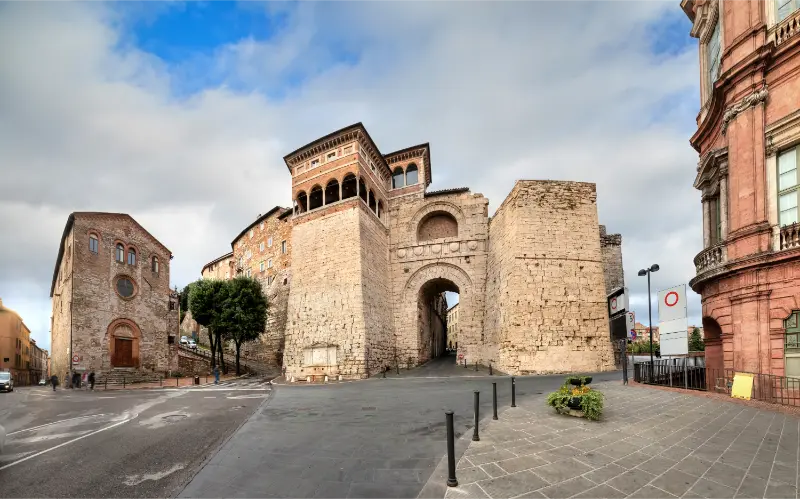
The Etruscan Coast stretches through a part of western Tuscany where beaches, pinewoods, wine estates, hill towns and archaeology sit unusually close together. Populonia was the Etruscans’ major coastal city, the Gulf of Baratti preserves an exceptional archaeological landscape, and inland villages such as Bolgheri and Castagneto Carducci connect the coast with celebrated wine country. This is a region to base yourself in, not race through on the way to a ferry.
At a glance
| Ideal time | 4–7 days |
|---|---|
| Best for | Beaches, Etruscan archaeology, wine, cycling, families and coastal road trips |
| Car needed? | Recommended for the full coast; trains serve several larger towns |
| Best base | San Vincenzo for central coast access, Castagneto Carducci/Bolgheri for wine country, or Piombino for Elba connections |
| Official planning | Visit Tuscany / official visitor information |
Why Etruscan Coast deserves time in your Tuscany itinerary
Divide the coast into themes instead of kilometres. Give one day to Baratti and Populonia, one to beaches and pinewoods, one to Bolgheri and inland villages, and one to Piombino or an Elba connection. A coastal holiday becomes richer when archaeology and countryside interrupt the beach routine.
If Etruscan Coast is part of a longer route through Tuscany, our Tuscany travel guide is a useful starting point for choosing the next stop.
The practical advantage is that you can shape the visit around your own travel style. Art-focused travellers can give more time to museums and historic buildings; food travellers can protect a long lunch; families can alternate culture with open space; road trippers can use the destination as an anchor rather than one more pin on a map. The goal is not to see everything. It is to leave with a clear sense of place and enough energy to enjoy the next day.
Baratti and Populonia
The Gulf of Baratti combines a sheltered beach landscape with the archaeological heritage of Populonia, the Etruscan city associated with metalworking and maritime trade. The upper village adds views over the coast.

Allow enough time for both archaeology and the landscape. Open-air sites require walking and sun protection, while parking demand can be high in beach season.
Bolgheri and the cypress avenue
Bolgheri is famous for its long avenue lined with cypress trees and for the wine estates of the surrounding area. The village itself is small, so the quality of the visit depends on what you add around it.
Reserve serious winery visits in advance and designate a driver. Photograph the avenue only from safe, legal positions; stopping in the road for the classic view is dangerous.
Castagneto Carducci and hill-country contrast
Castagneto Carducci sits inland above the coast and offers a more lived-in village atmosphere than many seaside resorts.
Use it for an evening meal or a cooler late-afternoon walk after the beach. Staying inland can also reduce the sense that every day must revolve around sand and parking.
San Vincenzo, Rimigliano and beach days
San Vincenzo is a practical seaside base with rail access, services and nearby stretches of coast where pinewoods meet the sea. The Rimigliano area is especially useful when you want a more natural beach setting.
Check local beach access and parking rules. Some stretches have facilities while others require carrying water, shade and everything you need for the day.
Piombino and connections to Elba
Piombino is more than a ferry terminal: its historic centre and promontory viewpoints make it worth time before or after an island crossing. The port is one of the main gateways to Elba.
If travelling with a car in summer, ferry reservations can be important. Build buffer time into the drive to the port and do not schedule a winery tasting immediately before a vehicle check-in.
How long should you stay?
4–7 days is the useful starting point, but the right answer depends on what comes before and after. If you are changing hotels every night, add less; if this is one of only two or three bases in Tuscany, stay longer. Parking, check-in, meals and slow roads consume more of a day than first-time itineraries usually allow.
Build one optional item into every day so the itinerary can contract without feeling like a failure. This matters in Tuscany because weather, museum access, beach traffic, mountain conditions and restaurant schedules can alter the pace. Margin is not wasted time: it is what allows an independent trip to adapt without becoming stressful.
Getting there and moving around
Regional trains serve towns including Cecina, San Vincenzo and Campiglia Marittima, and Piombino connects onward to ferries. A car is still the easiest way to combine beaches, hill towns, archaeological parks and wineries. Traffic near popular beaches and ferry ports can be much slower in summer than maps predict.
Before driving anywhere in Tuscany, review our driving in Italy guide, especially ZTL rules, parking signs and realistic rural-road timing. If you are travelling without a car, compare the plan with our Italy without a car guide and simplify the number of same-day stops instead of replacing every drive with a complicated bus chain.
Where to stay
San Vincenzo for central coast access, Castagneto Carducci/Bolgheri for wine country, or Piombino for Elba connections. The best accommodation is the one that removes the most annoying part of your itinerary: parking if you have a car, station access if you rely on public transport, or evening driving if food and wine matter. A beautiful rural property can be a poor fit when every dinner requires a dark mountain or country-road journey.
Compare current accommodation options on Booking.com. Check parking, air conditioning, stairs, breakfast times and the exact distance from the places you intend to visit rather than relying only on a property’s marketing description.
What and where to eat
Seafood, local olive oil and inland produce meet a major wine culture here. Bolgheri is internationally known for high-profile reds, while the coast offers fish soups, grilled seafood and simple beach meals. Wine tourism should be planned geographically: one or two estates in the same zone produce a better day than zigzagging between appointments.
Reserve only the meals that genuinely matter. Leaving one lunch flexible makes a road trip more resilient, while booking every meal can turn a relaxed region into a sequence of deadlines. In small towns or event periods, however, restaurant capacity may be limited, so ask your accommodation whether advance reservations are sensible.
A realistic first-day itinerary
Day one: Baratti and Populonia. Day two: San Vincenzo and a long beach session. Day three: Bolgheri, Castagneto Carducci and one pre-booked winery. Day four: Piombino or continue to Elba. With a week, add quieter coastal walks and inland villages rather than extending each day farther north or south.
Protect at least one unstructured hour. It can become a café stop, a longer museum, a swim, a rest in the hotel or simply time lost to parking without damaging the rest of the day. This buffer is one of the simplest ways to make a Tuscany itinerary feel independent rather than tour-like.
Best time to visit
Late May, June and September are excellent for a beach-and-culture balance without peak midsummer pressure. July and August bring the fullest seaside atmosphere and the greatest demand for parking, accommodation and ferries. Spring and autumn are particularly strong for cycling, archaeology and wine-country travel even when swimming is not the priority.
For the wider seasonal picture, use our guide to the best time to visit Italy. Always check attraction hours and local conditions close to your date: churches, museums, ferries, trails, thermal sites and small businesses can change seasonally, and an old timetable should never be treated as current.
How to avoid turning the visit into a checklist
Choose one “must-do,” two “would-like” experiences and let everything else remain optional. Distances often look short on a map while parking, hillside walking, mountain roads and meals expand the real day. If you have already completed the core experience, a bench with a view or an early dinner can be a better use of time than another rushed attraction.
Crowd strategy is usually simple: start earlier than day-trip groups, stay later than they do, or sleep in the destination. You do not need to discover a secret viewpoint to have a quieter experience; you often just need to be in a famous place at a less compressed time and avoid building your entire day around social-media photo locations.
Families, accessibility and slower travel
For families, alternate cultural stops with movement, food and open space. A castle, river walk, beach, park or short trail can reset the day after a museum. Do not assume a stroller will be comfortable on medieval paving, quarry terrain, steep lanes or natural paths; a carrier may be more practical for smaller children in some destinations.
Travellers with limited mobility should investigate gradients, stairs, parking and accessible entrances attraction by attraction. Historic Tuscany is not uniformly accessible, but many visits can be redesigned around viewpoints, lower-town routes, taxis and selected museums. Asking a hotel about the actual number of steps is more useful than relying on a general “central location” description.
How to connect this stop with the rest of Tuscany
Useful next reads are our Livorno guide, our Elba Island guide, our Volterra guide and our San Miniato guide. Build clusters geographically: pair places that share the same road or rail corridor and avoid crossing Florence, Siena or the Apennines repeatedly just to keep a hotel booking.
If this is your first trip to the region, compare the route with the larger Tuscany travel guide. A strong itinerary normally includes contrast—at least one art city, one smaller town and one landscape, mountain or coast experience—rather than ten variations of the same hill-town day.
What to book in advance
Book only capacity-limited experiences that matter: a specific museum slot, quarry tour, winery visit, ferry with a vehicle, guided cave, spa treatment, concert or restaurant during a major event. For everything else, preserve flexibility. Before paying a third-party seller, compare the offer with the official visitor page linked above and read cancellation terms.
Our broader guide to booking Italy attractions explains how to distinguish official tickets, timed-entry requirements and convenience products. Save confirmations offline because mobile reception can be unreliable in rural, coastal or mountain areas.
Practical planning notes that make a real difference
Carry water, a small amount of cash, a charged phone and footwear suitable for stone or uneven ground. In summer, move exposed walks to the morning; in shoulder seasons, carry a light waterproof layer. Do not let a sunny forecast in Florence convince you that a mountain ridge, exposed archaeological park or windy coast will feel identical.
Use offline maps but follow local signs when they disagree with navigation. ZTL cameras, market closures, ferry lanes, industrial access roads and temporary works are local realities that an app may not understand in real time. On rural or mountain roads, never stop around a blind bend for a photograph and never block farm, quarry or emergency access.
Finally, leave space for local information. A hotel owner, museum desk or tourist office may know that a path is muddy, a road is closed, a beach access has changed, a church has a special opening or a festival is affecting parking. Good independent travel is the ability to update the plan when better information appears.
If you are building a longer Tuscany itinerary
For a trip of one week or more, use this destination as part of a geographic block rather than an isolated day trip. Two or three nights in one area often produce more actual sightseeing time than changing hotel every evening. It also gives you a fallback day if rain, heat, traffic or a closure disrupts the original plan.
Think in travel zones: Florence and its close hills; Siena and central Tuscany; Val d’Orcia and Valdichiana; western Tuscany around Pisa and Lucca; the coast and islands; and mountain areas such as Garfagnana, Apuan Alps, Mugello or Casentino. Moving between zones every day creates unnecessary distance, while staying within one zone lets meals, viewpoints and spontaneous stops become part of the trip.
A longer stay also reduces dependence on perfect weather. Museums can move to rainy hours, walks can move to cool mornings and a beach day can shift when the sea is rough. Flexibility is not empty time; in Tuscany it is one of the most valuable parts of the itinerary.
Final thoughts
Etruscan Coast earns its place in a Tuscany itinerary when you let its strongest qualities determine the pace. Plan transport first, choose a small number of meaningful experiences, eat locally and leave enough margin for the landscape or street life that cannot be reserved. That approach produces a richer day than trying to prove how many Tuscan names you can fit on one route.
Last updated: October 17, 2026