
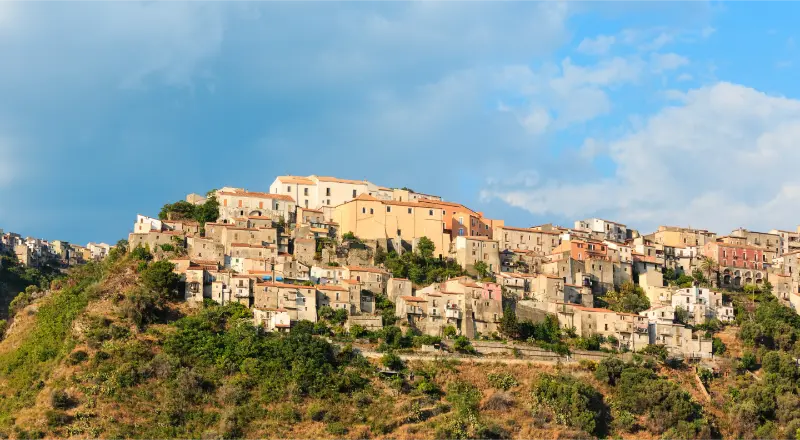
Calabrian food deserves a more careful introduction than the familiar equation of red chili, ‘nduja and everything ‘spicy.’ Calabria stretches from the Ionian to the Tyrrhenian Sea, from citrus-growing plains to mountain forests, and its food follows those different environments. Fish, legumes, pasta, wild greens, olive oil, cheeses and slow-cooked meat sit alongside bold preserved products. The region’s Greek, Byzantine, Albanian and wider Mediterranean cultural connections are reflected in recipes and celebrations, but no single dish can represent every town. This guide is for travelers who want to order with confidence, recognize specialties in markets and understand where to look for them. It also explains how to distinguish protected geographical products from loose marketing claims and how to experience local food without assuming every small kitchen serves the same menu.
In this guide
- Understanding Calabria through geography rather than stereotypes
- 'Nduja and other cured meats: how to taste them properly
- Red onions from Tropea: sweet, versatile and widely imitated
- Fileja, lagane and the diversity of Calabrian pasta
- Cheese, mountain products and the important role of pastoralism
- Fish traditions: swordfish, stockfish and coastal variety
- Citrus, bergamot, licorice and what to take home
- Chiles and condiments: bold flavor without flattening everything
- Desserts: tartufo di Pizzo, nougat and festival sweets
- Olive oil, wine and the agricultural foundation of meals
- A regional food route without racing between provinces
- Ordering respectfully, dietary needs and shopping tips
- Frequently asked questions
Understanding Calabria through geography rather than stereotypes
The simplest food map divides the region into coasts, agricultural plains and mountains. Along the Tyrrhenian and Ionian shores, menus often reflect fishing traditions and seasonal vegetables. In hill towns, preserved meat, beans, pasta and bread have historically played an important role, while mountain environments support cheeses, mushrooms and different meat preparations. These are tendencies, not rigid boundaries: ingredients move, families migrate and restaurants innovate. A coastal trattoria can offer a substantial meat dish, and a mountain town may serve fish. What matters is to ask what comes from the surrounding area and what is cooked well that day. If you only seek dishes labeled ‘very hot,’ you will miss sweetness from red onions, richness from olive oil, tang from citrus and the careful use of herbs. Calabria’s cuisine is vivid because ingredients contrast, not because every plate burns.

Extend a visit to What to Eat in Calabria with the suggestions in our Calabria travel guide, which covers regional transport and where to base yourself.
‘Nduja and other cured meats: how to taste them properly
‘Nduja is a soft, spreadable pork salume famous for its use of chili and its strong connection to Spilinga and the Vibo area. It is often spread sparingly on warm bread, added to sauces or used as an accent rather than eaten by the spoonful. Heat levels can vary by producer and recipe. Ask for a small taste if you are uncertain and pair it with bread or other food instead of judging it on an empty palate. Calabria also produces protected cured meats, including capocollo, soppressata, salsiccia and pancetta with recognized regional specifications. A tasting plate provides a useful comparison of textures and seasoning, but do not assume every cured meat labeled ‘Calabrese’ carries the same certification. Read the actual designation and producer information. The best way to appreciate these products is in moderation alongside vegetables, cheese and bread, not as a challenge to tolerate the highest possible spice level.
Red onions from Tropea: sweet, versatile and widely imitated
Cipolla Rossa di Tropea Calabria IGP is one of the region’s most recognizable ingredients. The protected designation relates to a defined product and geographical production area, not simply any red onion sold in the town of Tropea. Its characteristic sweetness makes it suitable for salads, slow cooking, preserves and accompaniments to meat or cheese. When shopping, look for appropriate product labeling rather than assuming that red color alone proves origin. Restaurant menus may use the name loosely, so ask how the onion is prepared if its flavor is central to your order. The growing landscape along the Costa degli Dei is part of the story; the product belongs to agriculture as much as tourism. A dish using onion well can be more revealing than a heavily spiced plate because it shows how regional cooks balance acidity, sweetness and savory flavors.
Fileja, lagane and the diversity of Calabrian pasta
Calabria has a strong tradition of handmade pasta, with local names and shapes changing from one area to another. Fileja, associated especially with the Vibo area, is often shaped by rolling dough around a thin rod and may be served with tomato-based sauces, meat or vegetables. Lagane are broader pasta strips sometimes paired with legumes, particularly chickpeas, in hearty traditional dishes. Other hand-formed varieties appear in the Pollino, the Ionian towns and Arbëreshë communities. Do not expect one uniform spelling or recipe across restaurants; oral traditions and family habits vary. Ask what pasta is made fresh and what sauce the kitchen recommends. A modest dish of pasta and beans can tell as much about inland daily life as an elaborate festival specialty. For travelers attending a cooking class, learning to shape the dough is often more memorable than collecting an ambitious number of recipes.
Cheese, mountain products and the important role of pastoralism
Cheese connects the region’s mountainous and rural landscapes with everyday cooking. Caciocavallo Silano DOP, Pecorino Crotonese DOP and Pecorino del Monte Poro DOP are among the products whose names carry protected designations. They differ in milk, production methods and flavor, so they are not interchangeable simply because they appear on a cheese board. Ask a producer or shop how mature a cheese is and which local bread or vegetable preparation pairs well with it. In the Sila and Pollino areas, pastoral traditions and mountain agriculture make dairies and rural restaurants especially interesting, but any tasting visit should be arranged around actual opening hours. Buy chilled dairy products with transport and storage in mind, particularly in summer. The larger lesson is that cheese reflects working landscapes and seasonal labor, not only a list of names to memorize before entering a deli.
Fish traditions: swordfish, stockfish and coastal variety
Swordfish is a distinctive part of the culinary identity of the Strait of Messina and Costa Viola areas, especially around Scilla and Bagnara Calabra. Recipes may include grilled fish or preparations with vegetables and regional seasonings. Stockfish has a separate history, strongly associated with communities such as Mammola, where imported dried fish became rooted in local cuisine through particular methods of soaking and cooking. These traditions show that ‘local food’ is not limited to ingredients caught or grown a few kilometers away; historical trade routes and techniques matter. Fish availability and provenance vary, so ask restaurants what they are serving rather than accepting the claim that everything is caught that morning. On the Ionian coast, different seasonal fish and seafood dishes appear. Travelers who do not eat fish can still explore the region through vegetables, beans, pasta and olive oil without missing the broader culinary story.
Citrus, bergamot, licorice and what to take home
Bergamot from the Reggio Calabria area is especially important for aromatic products and has a recognized protected origin for its essential oil. The fruit’s fragrance connects local agriculture with perfumery and flavorings, although not every bergamot-themed sweet or drink is identical in quality. Calabria is also known for protected licorice products, particularly in the Rossano area, and for clementines and other citrus crops. Look for responsibly labeled syrups, candies, teas or preserves that will travel well. Avoid buying a liquid simply because the label features a famous regional place name; read ingredients and provenance. If you are carrying gifts on a flight, remember liquid limits and temperature sensitivity. A small well-made product from a reputable producer is usually a better souvenir than a collection of anonymous bottles with decorative maps of Calabria.
Chiles and condiments: bold flavor without flattening everything
Peperoncino is a widely recognized part of Calabrian food culture, and the town of Diamante is particularly associated with chili-themed celebrations. Yet heat serves many purposes: seasoning preserved meat, sharpening a vegetable dish and balancing rich flavors. It should not overwhelm every ingredient. Regional condiments include spreads and preserved vegetables whose recipes vary by town and household. Sardella, a spicy spread traditionally linked to the Ionian side, also raises an important point: ingredients and modern commercial preparations may differ, and food labeling or fishing regulations affect what can legally be sold. Ask a vendor what is in a product instead of assuming a traditional name guarantees the historical recipe. If you are sensitive to heat, request a small portion or ask for chili served separately. Many restaurants can provide satisfying Calabrian meals based on olive oil, pasta, greens and cheese without requiring a fiery sauce.
Desserts: tartufo di Pizzo, nougat and festival sweets
Tartufo di Pizzo is a celebrated gelato specialty, typically made as a rounded combination of ice cream flavors with a rich center. Its name can confuse visitors expecting a truffle fungus: this is a dessert, not a mushroom dish. Try it at a reputable Pizzo establishment and compare texture and filling rather than assuming all versions are identical. Bagnara Calabra is renowned for Torrone di Bagnara, a protected geographical specialty, while towns across Calabria have their own pastries linked to religious festivals, almonds, honey and family recipes. Some sweets appear only at particular times of year, so the absence of a named festival pastry in June does not mean the bakery is inauthentic. Ask for the day’s specialty and how it should be stored. A regional dessert crawl is most enjoyable when it includes a few good stops and time to appreciate each rather than a single afternoon of nonstop sugar.
Olive oil, wine and the agricultural foundation of meals
Protected Calabrian olive oils, including areas associated with Lametia and other regional designations, reveal how important olive trees are to the landscape. A good extra-virgin olive oil can transform simple bread, legumes or grilled vegetables. Instead of asking whether an oil is simply ‘strong,’ try to notice fruitiness, bitterness and peppery sensations in balance. Calabria also has distinctive wines, including Cirò DOC, associated with the area around Crotone, and other local varieties. Wine experiences are best arranged with recognized producers and a designated driver or transport plan. Not every vineyard is open to visitors without a booking. If you do not drink alcohol, the region’s citrus drinks, mineral water and food traditions still offer a broad sensory journey. The most revealing meals often begin with excellent bread and oil rather than with a long sequence of expensive courses.
A regional food route without racing between provinces
Build food-focused travel around geography. In the Vibo and Costa degli Dei area, combine Tropea onions, fileja, ‘nduja, cheeses and Pizzo’s famous dessert over several meals. Around Reggio and the Costa Viola, look for swordfish traditions, bergamot and Bagnara nougat. In the Sila, allow time for rural food, mountain cheeses and seasonal mushrooms from reputable sources. In Cosenza and Rossano, seek out pasta, sweets, licorice and citrus traditions. These areas are not all a short drive apart, and each deserves more than a shopping stop. A three-day culinary trip should concentrate on one or two neighboring zones, not promise the entire region. Book any special tasting directly and distinguish public markets from private farms that require appointments. Traveling slowly reduces mileage and gives you more chances to meet producers and understand what they make.
Ordering respectfully, dietary needs and shopping tips
Many local menus are written in Italian, and regional dialect names can make unfamiliar dishes harder to decode. A friendly question about ingredients is better than pretending to recognize everything. Travelers with allergies or dietary restrictions should clearly explain them, because products such as cured meats, cheeses, nuts or seafood may appear in preparations where the name gives little away. Vegetarian travelers can enjoy vegetable sides, legumes, pasta and breads, but should check stocks, sauces and traditional recipes that may include animal products. Buy food souvenirs from reputable shops, check packaging and temperature requirements, and confirm whether products can legally enter your home country. Above all, avoid demanding that every kitchen produce a ‘traditional’ dish on command. Food cultures change with season, family and availability. Curiosity and respect will lead to more memorable meals than a rigid checklist.
At a glance
| Suggested time | Half a day to a full day, depending on your focus |
|---|---|
| Transport | Verify current rail, road or local transfers before travel |
| Best approach | Choose a realistic route and prioritize safety or access notices |
| Base or visit | Calabria, Italy |
Related Calabria guides
- Calabria Travel Guide: Where to Go, Stay and How to Plan
- Best Things to Do in Calabria: Coast, Culture and Nature
- Sila National Park: Lakes, Forest Trails and Bases
- Paola and the Sanctuary of Saint Francis of Paola
Official sources and planning links
Schedules, access restrictions and services can change. Use these official or primary sources to check details before visiting:
Frequently asked questions
Is all Calabrian food very spicy?
No. Chili is important in some preparations, but the cuisine also features mild cheeses, sweet onions, fish, beans, pasta, vegetables and citrus.
What should I try first on a short visit?
Choose a local pasta dish, a regional cheese or vegetable plate, one well-made cured meat preparation if you eat pork, and a dessert linked to the town you are visiting.
Is ‘nduja from every part of Calabria?
It is closely associated with Spilinga and the wider Vibo region, although it is sold and used across Calabria and far beyond.
Where should I try tartufo ice cream?
Pizzo is the destination most closely associated with the specialty. Choose a reputable gelateria rather than assuming every tourist version is the same.
How do I recognize protected products?
Look for the correct DOP or IGP designation and reputable labeling, rather than relying only on a place name or a generic ‘Calabrian’ claim.
Last updated: October 17, 2026