

A Langhe road trip succeeds when the route follows the geography of the hills instead of a list of famous names. Distances are short, but the roads bend through ridges, villages and working vineyards, so a 40-kilometre sightseeing day can feel full. The best plan divides Barolo country from Barbaresco country, uses Alba as a practical hinge, and limits winery appointments so the car remains transport rather than a constant source of pressure.
Quick planning overview
| Ideal length | 2–4 days |
|---|---|
| Best base | Alba for flexibility or two bases for immersion |
| Car | Highly recommended for this route |
| Daily driving | Keep it modest; sightseeing and tastings take longer than mileage suggests |
| Core stops | Alba, La Morra, Barolo, Monforte, Serralunga, Barbaresco, Neive |
Why driving is useful in the Langhe
Public transport reaches Alba and some towns, but a car makes rural wineries, small villages and viewpoints dramatically easier. The important caveat is alcohol: the driver must remain safe. If everyone wants to taste, park the car and use a professional driver for that day.
Before adding Langhe Road Trip to your plans, explore our Langhe Travel Guide for nearby attractions and a realistic sightseeing route.
This route assumes responsible driving and treats tasting days separately from scenic exploration where possible.
Day 1: Alba and Grinzane Cavour
Begin with Alba rather than racing immediately into wine country. Walk the centre, have lunch and orient yourself to regional food. In the afternoon drive to Grinzane Cavour Castle for history and UNESCO context.
Return to Alba for dinner. This easy first day avoids introducing wine tastings before you understand the geography and gives a buffer if you arrive later than planned.
Day 2: La Morra and Barolo
Drive to La Morra in the morning for the Belvedere and old town. Book one winery late morning or after lunch. Continue to Barolo for WiMu, the village and a regional enoteca.
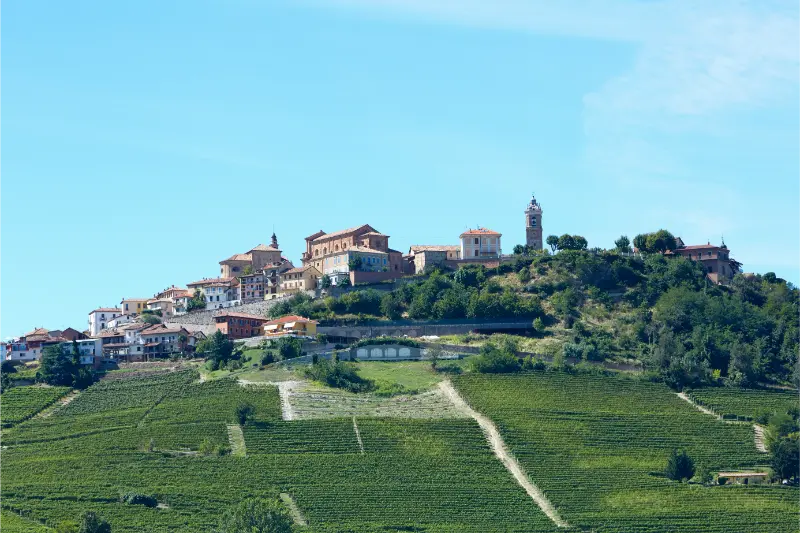
Do not add Monforte unless you skipped a winery. La Morra plus Barolo already fills a good day when experienced properly.
Day 3: Monforte and Serralunga
Start in Monforte d’Alba with the old town and auditorium area. After lunch, move to Serralunga d’Alba for the castle and compact village. Add one winery only if the timing is comfortable.
This is a visually strong day because the villages have very different shapes despite sharing Barolo country.
Day 4: Barbaresco and Neive
Cross to the eastern Langhe for Barbaresco and Neive. Climb the Barbaresco tower if open, explore Neive and book one Barbaresco-focused tasting. If you are based in Alba, the return is straightforward.
Treiso can be added as a short scenic stop only if you are not rushing a reservation.
The most scenic roads
The beauty lies less in one officially designated road than in the repeated transitions between ridge villages and vineyard slopes. Roads around La Morra, Barolo, Monforte, Serralunga and Barbaresco offer frequent panoramas, but safe stopping places are limited.
Never stop in a lane or block farm access for a photograph. Use public parking and viewpoints, then walk back to the scene.
Navigation mistakes to avoid
Do not trust a mapping app to distinguish the most comfortable road from the technically shortest one. Tiny agricultural lanes can be legal yet stressful. If your accommodation or winery provides recommended directions, follow them.
Download maps for poor mobile coverage and keep fuel above a low reserve rather than waiting for a village petrol station to appear.
Parking village by village
In Alba use established public car parks and walk to the centre. In hill villages, stop at signed parking before the tight historic core. In harvest season, respect agricultural access and temporary traffic controls.
Build ten to twenty minutes of parking margin before timed castle or winery visits. Being early is far less stressful than calling a producer from a narrow road to explain why you are late.
Wine and driving
A road trip and a wine trip are not automatically the same thing. Designate a sober driver, use spittoons, or hire a driver on serious tasting days. The wine tasting guide explains practical options.
If you intend to drink at dinner, park for the night before aperitivo whenever possible.
Where to stay on a road trip
One base in Alba minimizes packing and gives restaurant flexibility. Splitting the trip between Alba and a village such as La Morra or Monforte adds atmosphere and shortens some drives. Rural agriturismi are beautiful but can complicate dinner transport.
Read where to stay in the Langhe before deciding whether views or walkability matter more.
Seasonal driving conditions
Summer sun, autumn fog, harvest traffic, winter ice and spring rain each change the roads. Slow down around blind bends and expect cyclists. A tractor moving between vineyard parcels is not an inconvenience to the landscape—it is the reason the landscape exists.
After heavy rain, unpaved parking edges and walking tracks may become muddy.
Road trip with children
Break driving into short segments and include castles, towers, playground opportunities and food stops rather than only wineries. Grinzane Cavour is particularly useful because it provides museum content and outdoor context. Choose accommodation with space rather than forcing children through multiple formal dinners.
Keep car seats and motion-sickness needs in mind on winding roads.
Electric cars
EV travel is feasible, but charging should be planned around accommodation or larger towns rather than assumed in every tiny village. Check live charging apps and confirm whether a hotel charger is reserved for guests or shared. Hilly driving can affect consumption, although regenerative braking helps on descents.
Charge before a full rural day instead of using sightseeing time to search for an available unit.
A shorter two-day version
If you only have two days, spend day one in Alba, Grinzane and Barolo; day two in La Morra plus Barbaresco or Neive. Skip Monforte and Serralunga rather than turning the trip into a series of twenty-minute stops.
The region is close enough to revisit, and leaving something unseen is preferable to never having time to sit down.
Driving at night
Rural roads can be very dark, with tight bends and limited shoulders. If you dislike night driving, finish sightseeing before dinner and choose a restaurant within walking distance of your hotel. This is one of the strongest arguments for spending at least one night in a village rather than commuting back to a distant city.
Photography stops
Plan photographs around villages where you can park safely. Many iconic hill views are visible from public terraces, castle approaches and walking routes. A beautiful view never justifies stopping on a bend or entering private farmland.
How much time should you leave?
Allow more time than the map suggests. Parking, walking, meals and conversations are the substance of a Langhe trip, not delays to remove. A half day should contain one principal village or attraction plus at most one scheduled experience.
Do you need advance reservations?
Reserve wineries, important restaurants and any timed museum or castle visit that matters to you. Leave cafés, viewpoints and ordinary village walking unscheduled so the day can absorb weather and traffic changes.
Can you visit without drinking wine?
Yes. The Langhe are a cultural landscape of villages, castles, food and agriculture. Wine explains much of the territory but does not need to be consumed for the trip to be worthwhile.
Planning around meal times
Small Langhe villages do not operate like large cities with continuous service. Lunch and dinner reservations shape the day, and kitchens may close between services. Put winery visits on either side of meals rather than assuming you can eat whenever a tasting finishes. This also creates natural breaks between driving, walking and alcohol.
What to do if plans change
Weather, traffic, harvest work and opening schedules can change a day quickly. Keep one unscheduled village or viewpoint as a flexible option and save official links in your phone. If a winery cancels or a monument is closed, use the extra time for a longer lunch, an enoteca visit or a walk instead of trying to replace the reservation at the last minute.
Photography and private property
The vineyard landscape is visually open but much of it is private agricultural land. Take photographs from public roads, village terraces and marked paths, never from planted rows unless the owner explicitly permits access. Drones require separate legal and local checks and can disturb residents and farm work, so do not assume a scenic rural setting means unrestricted flying.
Mobile coverage and practical backups
Coverage is generally adequate but can weaken in valleys, inside thick-walled buildings and on minor roads. Download maps, keep addresses and booking confirmations available offline, and carry a small power bank on full sightseeing days. Paper or screenshot backups are especially useful when a timed visit depends on finding a rural entrance rather than a prominent city landmark.
How this stop fits a longer Piedmont trip
The Langhe work well after Turin because the rhythm changes from museums and boulevards to villages, vineyards and long meals. Avoid treating the region as a same-day extension of city sightseeing if wine and food are priorities. Two or more nights allow you to slow down, reduce evening driving and understand why these hills are a destination rather than only a collection of famous bottles.
Useful links for planning
- Langhe travel guide
- Where to stay in the Langhe
- Official regional tourism information
- Check accommodation options
Last updated: October 17, 2026