
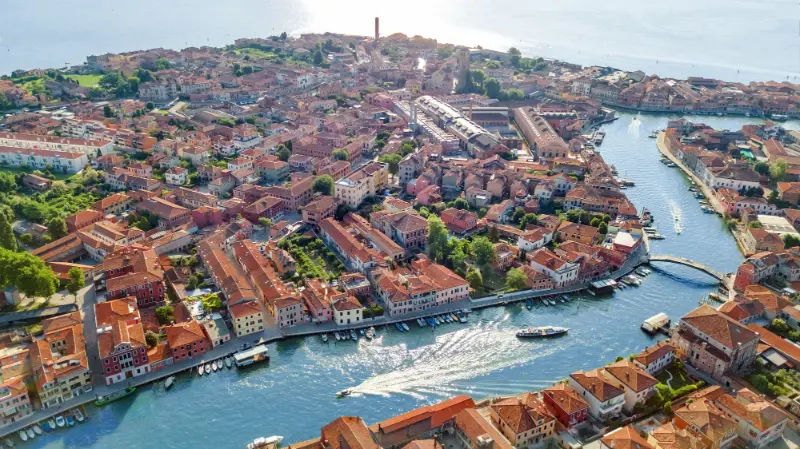
Murano, Burano and Torcello are often sold as one excursion, but they reward three different kinds of curiosity. Murano explains Venice’s glassmaking tradition, Burano combines a fishing-island identity with famous colour and lace, and Torcello reveals how old and sparsely settled the lagoon can feel. The challenge is not whether you can visit all three; it is how to avoid turning the day into a sequence of boat queues and ten-minute photo stops.
At a glance
| Best for | Murano Burano Torcello |
|---|---|
| Planning style | Book the most important timed entry first, then leave room for walking and local discoveries. |
| Useful base | Historic centre or a transport-connected neighbourhood, depending on your itinerary. |
| Good to know | Opening hours, fares and access rules can change; verify official sources close to travel. |
Can you visit all three islands in one day?
Yes, but the day works best when you accept that the islands are not equal in size or purpose. Murano deserves time for glass culture and the Glass Museum, Burano for streets, colour, lace traditions and a meal or slow walk, and Torcello for atmosphere, archaeology and the basilica complex. Trying to give each exactly two hours ignores travel time and what each place offers.
For a fuller understanding of the surrounding area, use our Venice Travel Guide alongside these more focused recommendations.
A balanced independent day often starts with Murano, continues to Burano for lunch and finishes with a shorter Torcello stop before returning. If your priority is photography and food, spend longer on Burano. If glass is the main interest, extend Murano and consider visiting a reputable furnace by reservation.
Getting there independently
Fondamente Nove is one of the key departure points for the northern lagoon, with Line 12 playing a central role in services toward Murano and Burano. Exact routes and stop patterns can vary, so check ACTV’s live timetable. A 24-hour transport pass often makes more sense than multiple single tickets when the day involves several boats.

If you stay near the railway station or southern Venice, factor in the time required just to reach the departure point. This is why an island excursion is rarely a “half day” once transport, waiting and walking are counted honestly.
Murano: glass without the sales pressure
Murano’s glass tradition is the reason to visit, but the island should not be reduced to a showroom. The Museo del Vetro provides historical context, while churches such as Santi Maria e Donato and the canals reveal a settlement with its own identity. Glass demonstrations can be fascinating when the focus is craftsmanship rather than a hard sales pitch.
If you intend to buy valuable glass, look for clear information about origin and authenticity. The “Vetro Artistico Murano” trademark was created to identify products made on Murano by authorised companies. Extremely cheap “Murano glass” sold without provenance deserves scepticism.
Burano: colour, lace and a village that is still lived in
Burano is famous for brightly painted houses, but the most rewarding visit goes beyond the same few waterfront photographs. Walk away from the busiest approach, notice fishing heritage, visit the lace museum if the craft interests you, and give the island enough time to become a place rather than a backdrop.
Food can be part of the reason to stay longer. Lagoon fish and risotto traditions are stronger experiences than grabbing the first sandwich near the main arrival stream. Reservations are sensible for a particular restaurant on busy weekends.
Torcello: why the quiet island matters
Torcello feels almost rural compared with Venice and Burano. Its historical importance is the surprise: settlement here predates much of the urban dominance of Venice, and the Basilica di Santa Maria Assunta preserves extraordinary early medieval mosaics. The landscape of paths, water and open space also helps visitors imagine a different phase of lagoon history.
Because Torcello is quiet, it is the easiest island to cut when you are rushed and the one many thoughtful travellers later wish they had not cut. Even a shorter visit adds historical depth to the day.
Guided tour or independent trip?
Independent travel is best for people who want flexible time, especially photographers, families and travellers who care deeply about one island. A guided boat tour can be efficient when you want logistics handled, have only one day and prefer an introduction from a guide. The trade-off is fixed timing; some tours allow only brief stops.
Compare stop duration, departure point and whether demonstrations or entries are included before booking. The words “Murano, Burano and Torcello tour” describe many products with very different pacing.
Crowd strategy
Start early and avoid following the same island order as every large excursion if you have flexibility. Burano is particularly pleasant before the midday peak or later in the afternoon. In summer, bring water and sun protection: shade can be limited on open lagoon routes and waiting pontoons.
Wind and weather affect how the lagoon feels. A cool, wet day is not necessarily wasted, but photography, outdoor cafés and boat comfort change substantially. Check the forecast and keep one central-Venice museum as a fallback if conditions are poor.
Should children do the island day?
Many children enjoy the boats, bright Burano streets and glassmaking demonstrations, but a three-island marathon can be too long. Families may have a better day choosing Murano plus Burano and skipping Torcello unless the children enjoy historic sites. Build in food and playground-like open-space breaks rather than relying on continuous sightseeing.
Our Venice with kids guide covers strollers, toilets, museums and age-appropriate pacing. For transport costs, use the vaporetto guide before deciding between single tickets and a pass.
How much time on each island?
A useful first-time split is roughly two hours on Murano, two to three on Burano including lunch, and about an hour on Torcello, plus all boat and waiting time. This is not a rule. Glass enthusiasts can spend half a day on Murano; photographers may want Burano in softer late-afternoon light; history lovers may give Torcello much longer.
What fails is pretending transfers do not exist. Boats may be full, the next service may not leave immediately and walking from a stop to a museum takes time. Start early and allow the day to breathe.
What to buy—and what not to buy
Murano glass ranges from small souvenirs to serious contemporary art. Price should reflect design, skill and provenance, not merely the word “Murano” on a sticker. Ask where the object was made and whether the maker participates in recognised authenticity schemes. Shipping valuable glass home can be sensible; understand insurance and return conditions first.
Burano lace has the same authenticity problem because genuine handwork takes enormous time and cannot compete with mass-produced prices. If a delicate piece is surprisingly cheap, it may be machine-made or imported. Buying less but understanding what you are buying supports the craft more meaningfully.
Food on Burano and lagoon traditions
Burano has a stronger food identity than many rushed tours allow visitors to discover. Risotto di gò, made with lagoon goby, is one traditional association, while seafood and biscuits such as bussolai are also linked with the island. A proper lunch can be the anchor that stops the day becoming a transport exercise.
If a particular restaurant matters, reserve. Otherwise walk beyond the first few places beside the main route and read menus calmly. As in Venice, a slightly less obvious table often produces a more relaxed meal.
Could you visit only one island?
Absolutely. Murano is the best single choice for glass and the easiest to combine with central Venice. Burano is the best choice if colourful streets, photography and a slower village lunch are your priorities. Torcello is for travellers motivated by early lagoon history and quiet rather than shopping or visual spectacle.
A one-island afternoon can be better than a rushed three-island day, especially in winter when daylight is short or when you already have multiple timed reservations in Venice. More stops do not automatically create a richer trip.
What if the weather is poor?
Lagoon islands are exposed to wind, rain and summer sun in a way that central Venice’s narrow streets are not. A grey day can still be beautiful, especially on Murano where the Glass Museum and demonstrations provide indoor time, but heavy wind or persistent rain can make repeated boat transfers tiring. Check official service notices if conditions are severe.
If the forecast deteriorates, it is reasonable to postpone the islands and use the day for the Doge’s Palace, Accademia, Scuola Grande di San Rocco or other central sights. Flexible planning is more valuable than forcing an excursion simply because it appeared on the original itinerary.
Useful official sources
Tours and activities
If you prefer a guided visit, compare the meeting point, group size, duration, cancellation rules and exactly which admissions are included before booking. A tour is most valuable when the guide adds context or solves a difficult reservation, not simply because a listing uses the phrase “skip the line”.
Where to stay
For this trip, Compare Venice hotels for a lagoon trip. Check the exact location on a map, recent reviews, cancellation terms and the route from your arrival point before choosing a non-refundable rate.
Final planning advice
Keep one part of the day deliberately unscheduled. Veneto’s historic cities are at their best when there is time for a market, café, church, canal, riverside walk or neighbourhood that was not on the original checklist. Use official websites for last-minute operational details, then use your itinerary as a framework rather than a race.
Last updated: October 17, 2026