
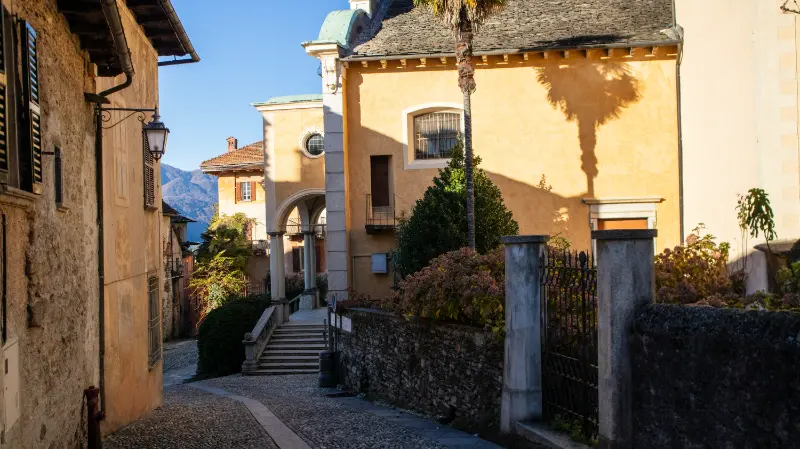
In the centre of Sardara, the Nuragic sanctuary of Sant’Anastasia reveals carefully built sacred wells, a settlement and centuries of changing traditions around water.
Some of Sardinia’s most memorable prehistoric places are not hidden in remote mountains. Sant’Anastasia occupies part of the modern village of Sardara, where a church and an archaeological sanctuary share the same historic setting. The main sacred well is architecturally striking, but the surrounding huts, a second well and finds preserved in the local museum help explain why this was a much larger community and ritual landscape.
Planning more than Sant’Anastasia Sacred Well? The Sardinia travel guide compares the main areas and helps you put this stop into a manageable route.
Plan your visit at a glance
| Where | Upper part of Sardara, in the Medio Campidano area of southwestern-central Sardinia |
|---|---|
| Allow | One to two hours at the archaeological area, with longer time for the local museum |
| Best approach | Find the signed archaeological entrance in Sardara and verify the current admission and opening rules |
| Good to know | Historic steps and excavated features; do not assume all parts are wheelchair-accessible |
| Suggested base | Sardara, Sanluri or Cagliari as part of a wider heritage journey |
The recommendations below distinguish the permanent character of the place from rules that may change by season. Check the official visitor information shortly before your trip, particularly if a permit, guided departure or protected-area access is involved.
A sacred well in the heart of a village
The sanctuary is unusual partly because the archaeology sits within Sardara rather than in an isolated field. The central sacred well, known as Funtana de is Dolus, has a stairway leading into a stone-built underground chamber. Its architectural form belongs to the Nuragic tradition of carefully constructed water sanctuaries and demonstrates sophisticated stoneworking as well as the importance of water in local beliefs.
Look at the arrangement before descending or approaching the entrance: the forecourt, stair passage and underground chamber form a purposeful sequence. Such structures should not be treated as ordinary household wells. Their design and associated finds suggest religious and communal practices, though the exact details of prehistoric ceremonies cannot be reconstructed with certainty.
How the well was built
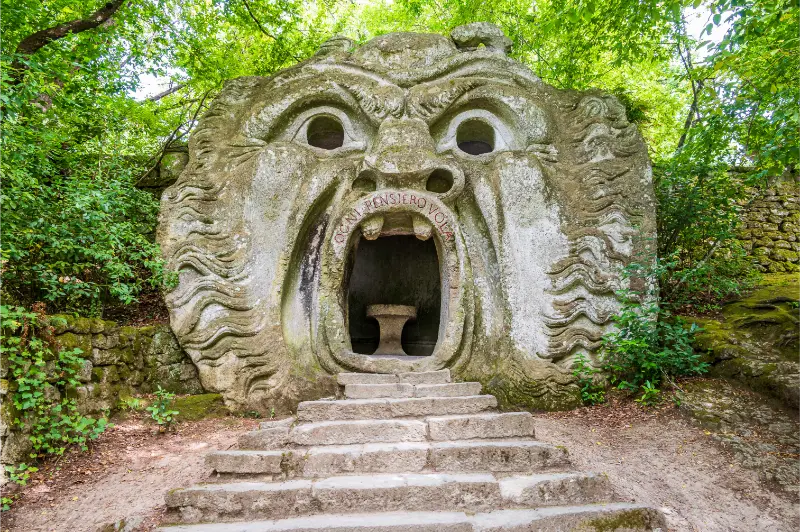
The sanctuary uses basalt and limestone blocks in a carefully organised composition, including a circular subterranean chamber with a corbelled covering. The descending steps are an essential architectural feature rather than a modern visitor convenience. Their alignment helps explain how ancient people approached the water and the chamber beneath the ground.
A guided explanation is particularly helpful here, since the spaces are compact and can be difficult to interpret from photographs alone. Remain on the permitted route and avoid touching or stepping onto ancient masonry. Even seemingly robust stones have survived through fragile relationships of balance and conservation that repeated visitor pressure can undermine.
The larger Nuragic settlement
Sant’Anastasia was not just a well standing by itself. Excavations have revealed other structures, including a second sacred well, hut remains and a large enclosure associated with a more extensive Nuragic settlement. Some buildings have been interpreted as meeting or communal spaces. Those features help connect ritual practices with the everyday life of people who lived here.
The archaeological story is still dependent on research. When comparing the ruins with reconstruction illustrations, distinguish observed features from scholars’ hypotheses. The low stone walls visible today represent only parts of structures whose organic materials have disappeared, and modern houses cover other portions of the former settlement.
Bronze objects and the Villa Abbas Museum
Finds from the area help make the distant past tangible. Bronze pieces, metalworking evidence, pottery and other material recovered from the village tell a story about skilled production and organised social activity. The nearby Villa Abbas archaeological museum provides a useful second stop for understanding material that cannot be fully appreciated from an excavation trench alone.
Do not treat the museum as an unrelated optional extra if your interest is the Nuragic world. Seeing objects after studying the architectural layout is often what makes a site come alive. Check museum hours separately from archaeological-site hours and ask whether any combined ticket exists for the day of your visit.
The Christian church and changing sacred places
The church of Sant’Anastasia, associated with a later phase of the site’s history, reminds visitors that places can acquire new meanings across centuries. Evidence from Punic, Byzantine and later periods helps demonstrate continuity and change rather than a single unbroken ritual. The medieval and later church does not mean its worship practices were identical to Bronze Age ceremonies.
Observe how modern Sardara has grown around remains that predate the present town by thousands of years. This is a striking form of historical layering, and one reason the sanctuary differs from isolated monuments in the countryside. Respect the church as a living cultural or religious space when accessible, alongside the archaeological regulations.
Planning the journey and enjoying Sardara
Sardara lies inland, making it a feasible stop on a route through southern and central Sardinia. A car offers flexibility, but the actual journey depends on where you are staying. Visitors can combine the site and museum with a relaxed lunch or a walk around the village. Other attractions in the area include historical buildings and the wider thermal traditions for which Sardara is known.
If starting from Cagliari, allow enough time for return traffic and do not force multiple distant nuraghi into the same afternoon. Barumini or other inland cultural landmarks can be part of a wider trip, but each deserves proper attention. A compact day built around the sacred well is perfectly worthwhile.
Weather, accessibility and conservation
The site includes historic stone steps and excavated ground, so do not assume an entirely level route. Ask the manager what visitors with reduced mobility can see safely, including alternative viewpoints. A family visit can work well with supervision, but open excavations and narrow passages require attention around younger children.
Confirm current entrance prices and hours shortly before travel rather than copying figures from an old cultural listing. Summer afternoons can be hot even for a relatively small site; a museum visit can provide contrast. Protect the archaeological features by staying out of closed sections and leaving the stonework untouched.
What to look for at the sacred well
Stand outside the entrance and consider the sequence of spaces: the place where people approached, the stair passage and the enclosed chamber containing water. That procession is one reason archaeologists understand this as a carefully planned sacred structure rather than an everyday hole for collecting water. The masonry works not only to support the chamber but to shape a visitor’s relationship with darkness, depth and a vital resource. The experience can be especially moving when explained by someone familiar with Sardinian Nuragic architecture.
Compare the building with photographs of other sacred wells on the island. Santa Cristina is celebrated for its precise geometric stairway, and Santa Vittoria at Serri is part of a much larger sanctuary landscape. Sant’Anastasia has its own character because excavations lie within a living village. These sites are not interchangeable, and seeing two on separate days helps visitors notice the differences in design and context.
After exploring the remains, the Villa Abbas museum can change how you imagine the sanctuary. Excavated artefacts offer clues about craft skills, exchange and the communities that maintained the site. If children are travelling with you, invite them to connect a bronze object to a person who might have used it, while explaining that archaeologists study traces rather than read ancient people’s thoughts. A careful, grounded imagination is the best companion to the stones.
A realistic visit: three ways to organise your day
Sanctuary and museum morning
Begin at Sant’Anastasia when open, study the sacred well and associated village features, then visit the Villa Abbas museum to see how finds help reconstruct the community.
A heritage-focused inland day
Combine Sardara with one carefully chosen nearby heritage stop rather than several distant sites. Allow time for lunch and a walk in the town itself.
Travelling with children
Focus on the descending well stairs, the idea of water as a precious resource and the original objects in the museum. Follow site boundaries carefully and avoid treating the excavation as a playground.
Practical details people often overlook
Verify archaeology and museum opening times independently; older official pages sometimes list schedules that may have changed.
The historic well includes steps. Ask about mobility access, slippery stone and whether visitors can approach the chamber on your chosen day.
Use the Villa Abbas museum to contextualise finds such as metalworking objects and pottery rather than relying on the ruins alone.
Where to stay and what to combine nearby
Sardara offers a quieter inland base and local food stops; Sanluri and Cagliari provide additional accommodation options for broader journeys.
The sanctuary can be compared with Santa Cristina or Santa Vittoria on separate days to understand how Sardinia’s water-related sacred architecture varied.
Questions travellers ask
Is Sant’Anastasia in Sardara or Serri?
Sant’Anastasia is in Sardara. Santa Vittoria is a different Nuragic sanctuary near Serri.
What is the main attraction?
The carefully built Nuragic sacred well and the wider settlement and ritual complex.
Is the site accessible without stairs?
Not in all areas. The ancient well includes steps and visitors should ask about current alternative access.
Should I visit the Villa Abbas museum?
Yes if possible; artefacts and local interpretation help explain what the excavation reveals.
Do I need to book?
Admission and opening rules may change. Verify the current site operator’s instructions before travel.
Further reading on My Italy Experience
Build a wider Sardinian route with the Su Nuraxi archaeology guide, our seven-day Sardinia itinerary, the best things to do in Sardinia, our Sardinia travel guide. These guides were already published when this article was prepared; they provide the region-level context rather than repeating this specific visit.
Official information and final advice
For the latest visitor rules and practical notices, consult the Sardegna Turismo Sant’Anastasia sanctuary guide. Use the official source to confirm dates and booking conditions, then keep your daily plan flexible for weather, traffic and any local restrictions.
Sant’Anastasia shows that some of Sardinia’s deepest historical layers remain woven into ordinary towns. See the well, understand the village around it and allow the museum objects to give the people behind the stones a stronger voice.
Last updated: October 17, 2026