
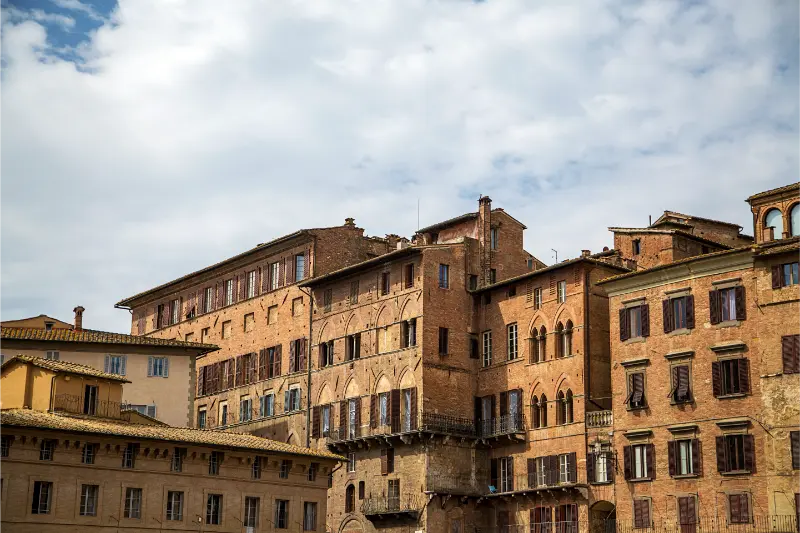
Siena is one of Tuscany’s best cities to experience slowly. Its steep medieval streets funnel toward Piazza del Campo, but the city is more than one extraordinary square. The cathedral complex, contrade, civic museum, viewpoints and food traditions make Siena worth a full day, and an overnight stay changes the atmosphere once excursion groups leave.
At a glance
| Ideal time | 1 full day; 2 nights for a slower stay |
|---|---|
| Essential sights | Piazza del Campo, Palazzo Pubblico, Duomo complex |
| Car needed? | No for the city; useful for countryside afterward |
| Terrain | Hilly, with frequent slopes and steps |
| Official reference | Opera del Duomo di Siena |
Why Siena deserves more than a rushed day trip
For a more detailed plan, our Palio di Siena Visitor Guide develops this part of the journey step by step.
For a more detailed plan, our San Galgano Abbey and Chiusdino Guide develops this part of the journey step by step.
Siena’s historic centre is compact in distance but layered in experience. The city’s slopes slow you down, church hours interrupt a rigid schedule, and the best streets are often the ones you did not plan to walk. A full day gives you time for the cathedral complex and civic centre without making lunch a ten-minute gap between tickets.
Extend a visit to Siena Travel with the suggestions in our Tuscany travel guide, which covers regional transport and where to base yourself.
Staying overnight is especially valuable in high season. Piazza del Campo becomes calmer after many buses leave, and early morning reveals a working city rather than only a visitor destination. Siena also makes a useful base for southern Tuscany when you do not want to change hotels every night.
Piazza del Campo: begin by understanding the space
Piazza del Campo is unusual not because it is simply beautiful, but because its shell-shaped plan, brick paving and relationship with Palazzo Pubblico create a coherent civic theatre. Sit for a few minutes before heading into a museum. Notice the slope, the nine-part paving pattern and how streets enter the square from different levels.

The Fonte Gaia occupies one side, while the Torre del Mangia rises beside the Palazzo Pubblico. The square is also the setting for the Palio, but on ordinary days it is Siena’s living room. Treat it as an urban space rather than a photo stop.
Palazzo Pubblico and Torre del Mangia
The Civic Museum inside Palazzo Pubblico is essential if Sienese art and political history interest you. Ambrogio Lorenzetti’s frescoes on good and bad government are among the city’s most important works because they connect painting directly to civic ideals. Allow enough time to read the room rather than walking through only for the famous image.
The Torre del Mangia offers a dramatic view but involves a demanding climb and may have timed or capacity-controlled access. If climbing is not suitable, you lose little: Siena provides other viewpoints and the city itself is the primary experience.
The Siena Duomo complex
For a closer look at this side of the destination, read our Siena Duomo Guide.
Siena Cathedral is visually dense inside and out, and the broader complex can include the Piccolomini Library, museum, crypt, baptistery and panoramic routes depending on the ticket and season. Check the official Opera del Duomo site before arrival because opening times, worship, floor uncovering and ticket combinations vary.
The cathedral floor is particularly famous but is uncovered only during specified periods. If seeing it is important, verify the current calendar rather than assuming it will be visible. Outside those dates, the cathedral remains fully worthwhile for its architecture, sculpture and library.
Santa Maria della Scala
Opposite the cathedral, Santa Maria della Scala is one of Siena’s most rewarding large complexes and is often under-allocated in short itineraries. The former hospital developed over centuries and now contains frescoed rooms, archaeological material and exhibition spaces. It is also useful as a weather-proof option when outdoor plans change.
Choose it over an extra distant village if your day is already art-focused. Siena has enough cultural depth to reward staying put, and crossing between the Duomo and Santa Maria della Scala is much more efficient than adding transport for the sake of another name.
The contrade are living communities, not themed districts
Siena is divided into contrade whose identities are most visible during the Palio but continue throughout the year through museums, churches, social spaces and community life. Visitors should avoid treating symbols and rivalries as tourist entertainment. They are part of local civic identity.
A respectful way to learn more is through official contrada museums or guided interpretation when available. Flags, fountains and plaques around the city become much more meaningful once you understand that the boundaries refer to real communities rather than decorative neighbourhood branding.
Palio dates change the entire city
The Palio is held in summer and transforms accommodation, access, crowds and daily rhythms. If you specifically want the event, plan far ahead and research viewing conditions carefully. If you do not want the intensity, avoid those dates rather than assuming you can visit Siena normally around the race.
Do not enter a contrada area during private celebrations as though it were an attraction. Crowds can also make mobility difficult, so families and travellers with accessibility needs should plan especially carefully.
Siena food: what belongs here
Local sweets such as ricciarelli and panforte are easy entry points, while pici pasta and robust Tuscan dishes work well for a slower meal. Look for seasonal menus and avoid choosing restaurants only by proximity to Piazza del Campo; a few streets away, the atmosphere can change quickly.
Wine lists often connect Siena with nearby Chianti and southern Tuscan regions. You do not need a formal tasting to appreciate that geography. A simple local meal with one regional wine can make more sense than forcing a full wine experience into an already busy museum day.
Getting to Siena from Florence
Siena is reachable from Florence by both bus and train, but the practical experience differs. Buses can place you more conveniently relative to the upper historic centre, while Siena’s railway station sits below the old town and requires an uphill connection. Consult current timetables and read our Italy train guide if rail travel is part of a larger route.
Do not compare transport only by scheduled journey time. Add the walk from your accommodation to the departure point and the final climb or bus transfer in Siena. Door-to-door time is what matters.
Driving and parking
If Siena is part of a road trip, do not drive into restricted central streets. Use signed car parks outside the ZTL and walk or use local connections. Review the Italy driving guide before arriving because camera-controlled zones are not forgiving to visitors.
A car becomes useful after Siena when heading toward the Val d’Orcia, Chianti or smaller hill towns. This makes Siena a logical transition point: arrive by train, stay, then collect a car later if your route allows it.
Where to stay
Inside or just beside the historic centre, choose location based on luggage and hills as much as beauty. A romantic lane may involve steep steps from parking or transport. Compare current options through Booking.com and read reviews for lift access, air conditioning and noise.
Travellers continuing by car may prefer accommodation with clear parking instructions outside the ZTL. Those staying without a car gain more from central access. One ‘best area’ does not fit both styles.
A one-day Siena itinerary
For a more detailed plan, our Monteriggioni Guide develops this part of the journey step by step.
Start at Piazza del Campo before the busiest period, then visit the civic museum if it is a priority. Move to the Duomo complex late morning, take a proper lunch, and use the afternoon for Santa Maria della Scala, contrada streets and viewpoints. Return to the Campo near evening rather than leaving immediately after the last ticket.
Do not add San Gimignano to this same day unless you deliberately want a highlights-only schedule. Siena deserves its own full day on a first visit.
A two-day Siena stay
Use the first day for the Duomo and Campo; on the second, walk quieter districts, add Santa Maria della Scala or a contrada museum, and take a longer meal. A second day also gives you weather flexibility and reduces the need to reserve everything back-to-back.
If you have a car, the second afternoon could transition toward Val d’Orcia or Chianti rather than returning to Florence.
Siena with children and accessibility considerations
Children often respond well to the dramatic square, tower silhouette and maze-like streets, but steep slopes can make strollers tiring. Build in sitting time and avoid stacking long museum visits. Gelato and an open-square break can be practical pacing tools.
Wheelchair users and travellers with limited mobility should study route gradients before arrival and check accessibility with individual monuments. Siena’s historic fabric includes steep streets and steps, so the shortest route is not always the easiest.
Best time and crowd strategy
Spring and autumn are attractive for walking, while summer combines long days with heat and major event pressure. Winter is calmer and can suit art-focused trips. Use our Italy season guide for broader weather planning.
Whatever the month, early morning and evening make the centre feel more local. The best crowd-avoidance tactic is often sleeping in Siena instead of trying to arrive in the middle of the same day-trip window as everyone else.
Final thoughts
Siena rewards travellers who let the city’s shape control the pace. Reserve the cathedral elements that matter, understand the Campo rather than merely photographing it, and leave enough time for streets that do not appear on a top-ten list. An overnight stay is one of the simplest ways to turn Siena from a famous stop into a memorable place.
Last updated: October 17, 2026