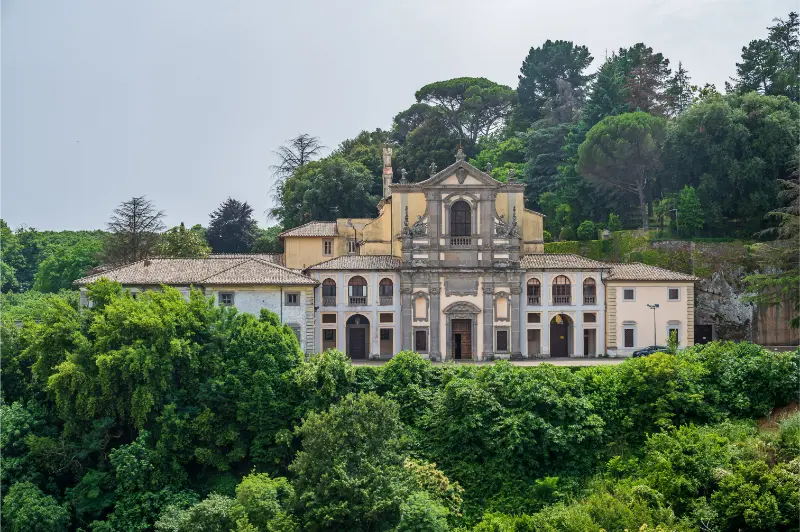
Tuscania is one of the best places in northern Lazio for travellers who want Etruscan archaeology and medieval architecture without the scale of a major tourist city. Its two great churches, San Pietro and Santa Maria Maggiore, stand outside the tight historic centre in a landscape that feels almost cinematic, while Etruscan necropolises and museum collections explain a much older settlement history. The town is compact, but it deserves more than a quick stop between Viterbo and the coast.
At a glance
| Best for | Medieval churches, Etruscan history, photography and slow Tuscia travel |
|---|---|
| Time needed | Half day minimum; full day with archaeology and lunch |
| From Rome | About 95 km by road; car is easiest |
| Main sights | San Pietro, Santa Maria Maggiore, historic centre and Etruscan heritage |
| Good pairing | Viterbo, Tarquinia or Lake Bolsena on a multi-day route |
Why Tuscania is different from nearby Etruscan destinations
Tarquinia is famous for painted Etruscan tombs; Cerveteri for the urban layout of the Banditaccia necropolis. Tuscania offers a different balance, where medieval churches and townscape often make the first visual impression while Etruscan material sits beneath and around them. That mixture makes it particularly rewarding for travellers who do not want an archaeology-only day.
You can pair Tuscania Travel with other places in Lazio; the Lazio travel guide gives an overview of realistic connections and where to stay.
If you are building an Etruscan itinerary, compare the Tarquinia guide and Cerveteri guide. The three places complement rather than replace one another. Trying to visit all three in one day would remove exactly the slow landscape context that makes them interesting.
San Pietro: the essential church
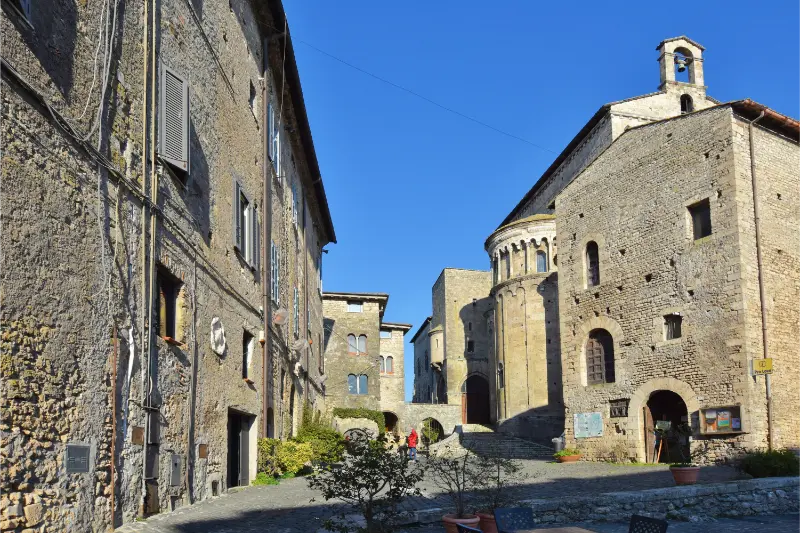
The Church of San Pietro stands on a hill outside the core of the modern town and is one of Tuscania’s defining images. Its façade, rose window, sculptural details and interior create a strong medieval ensemble. Inside, the crypt and Cosmatesque elements reward close attention, but opening arrangements can change with religious use and conservation.

VisitLazio’s Tuscania page highlights San Pietro together with Santa Maria Maggiore as the town’s essential churches. Check local access information before making a special trip for interiors, especially outside peak season. Even when an interior is closed, the setting and exterior remain worth seeing.
Santa Maria Maggiore
Santa Maria Maggiore stands below San Pietro and provides a second major medieval interior, with a richly worked façade, rose window and important frescoes. Visiting the two churches together makes more sense than treating them as competing attractions because their relationship to the hill and former settlement area helps you imagine medieval Tuscania beyond today’s street pattern.
Do not rush directly from one doorway to the other. Walk the space between them, look back toward San Pietro and pay attention to the surrounding walls and open land. Tuscania’s strength is architectural context, not only individual artworks.
The historic centre
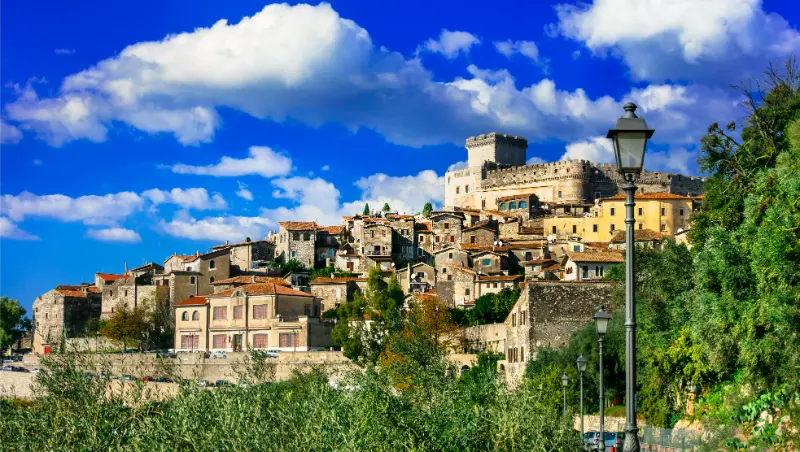
The town centre is compact, with stone streets, small piazzas and viewpoints over the countryside. It was heavily affected by the 1971 earthquake and subsequently restored, an important modern chapter that explains why some areas appear remarkably coherent today. A good visit includes time to wander without a fixed monument every ten minutes.
Have lunch in town rather than treating Tuscania as a two-church stop. Local restaurants can draw on Maremma Laziale and Tuscia traditions, including handmade pasta, meat, legumes and seasonal produce. Opening hours can be limited on quiet weekdays, so check if a particular restaurant matters.
Etruscan Tuscania
The surrounding territory contains Etruscan necropolises and finds that reveal the town’s importance long before the medieval churches. Access to individual archaeological areas can be limited or organised through specific openings, so do not assume every tomb marked on a map is freely accessible.
Use the local museum and current cultural information to understand what can actually be visited. This is a recurring lesson in Tuscia: archaeology often survives across farmland, cliffs and controlled sites rather than inside one continuously open park.
Museums and sarcophagi
Tuscania is known for Etruscan sarcophagi, and museum collections provide the context that outdoor tomb landscapes cannot. If the archaeological museum is open during your visit, place it before or after the churches depending on weather. Museum time is especially valuable when necropolis access is restricted.
Read labels selectively and focus on burial customs, family identity and local artistic production. A few objects understood well will connect more strongly with the landscape than photographing every case.
Lavender season: manage expectations
The Tuscania area is associated with lavender fields and an early-summer festival, which has made purple-field photography increasingly popular. Flowering dates vary with weather and farming decisions. Do not book non-refundable travel around an exact bloom week based on a previous year’s social media post.
If lavender is important, verify the current season locally and remember that many fields are agricultural property, not public photo studios. Use permitted paths, do not enter rows without permission and buy from local producers if you want the experience to support the people maintaining the landscape.
Getting there and parking
A car is the most practical way to reach Tuscania and combine it with other northern Lazio destinations. Public transport exists but is slower and less flexible for archaeological sites outside the centre. Park outside the tight historic lanes and walk; following navigation to the exact door of a restaurant is often a poor strategy in old Italian towns.
The Italy driving guide covers ZTLs and parking basics. Tuscania is easier than central Rome, but the same rule applies: road signs override the route your phone suggests.
Combine Tuscania with Tarquinia, Viterbo or Bolsena?
Tarquinia is logical if Etruscan history is the main theme, while Viterbo works for medieval urban life and papal history. Lake Bolsena provides a nature and food contrast. Choose one pairing over two days rather than all three in one day.
A particularly satisfying route is Viterbo overnight, Tuscania the next morning and Lake Bolsena in the afternoon, followed by another night in the area. That keeps driving short and allows churches, lunch and viewpoints to matter.
Where to stay
Tuscania has small-scale accommodation and countryside properties. Compare places to stay in Tuscania if you want a quiet base. Viterbo offers more restaurants and services, while rural agriturismi provide parking and landscape at the cost of needing a car for dinner.
For a longer northern Lazio trip, moving hotels every night is rarely necessary. Choose one base for two or three nights and make short loops. Tuscia rewards repeated evenings and slow roads more than constant packing.
Best time to visit
Spring and autumn offer comfortable walking weather and green or golden landscapes. Early summer can bring lavender and long daylight. High summer is hot, especially around exposed church sites, so visit early and rest at lunch. Winter is quiet and photogenic but requires checking church and restaurant hours carefully.
Photography is excellent in low light around San Pietro and across the countryside. Respect worship, private property and drone restrictions. The town is beautiful without turning every viewpoint into a production set.
Extra practical planning notes
Tuscania is also a good place to practice a slower photographic approach. The most rewarding images often come from the relationship between San Pietro, the walls, grass and changing sky rather than a tight façade shot. Arrive with enough time to wait for the light instead of racing between churches. In rural areas, park only in legitimate spaces and keep gates and farm access clear.
Before departure, verify same-day opening information for any museum, church, archaeological site or transport connection that is essential to your plan. Lazio rewards flexible itineraries because religious services, conservation work, seasonal timetables and local events can alter access. Keep one optional stop in reserve rather than making every hour dependent on perfect conditions.
A useful final check is to separate essential reservations from optional discoveries. Book the site that would genuinely disappoint you to miss, then leave cafés, viewpoints, short walks and secondary churches flexible. This protects the day from small delays and creates space for the unscripted experiences that often make a Rome or Lazio trip feel personal rather than mechanically scheduled.
Build transport time with a margin instead of assuming the fastest route shown by an app will happen exactly as predicted. A missed bus, a church service, a queue or a road closure can easily shift the day by twenty or thirty minutes. When the schedule has breathing room, you can respond by dropping an optional stop rather than rushing through the place you actually came to see.
For meals, identify an area rather than one irreplaceable restaurant unless you have a reservation. Local opening days, private events and seasonal hours can change. Having two or three nearby alternatives keeps food from dictating the entire itinerary and makes it easier to choose what looks appealing when you arrive.
Seasonal reality check
The same itinerary can feel very different by season. In high summer, heat, queues and the need for shade reduce the amount of sightseeing that fits comfortably into a day. In winter, shorter daylight and reduced opening hours can be the bigger limitation. Spring and autumn usually offer the easiest walking conditions, but rain and local events still make flexibility valuable. Check the forecast and opening notices the day before, then adjust the order of outdoor and indoor stops rather than abandoning the entire plan.
Weekends and public holidays can also change parking, restaurant demand and the atmosphere of small towns. If you are travelling by car, arrive earlier than you think you need to and use official parking rather than circling historic streets. If you are using public transport, save the return timetable before leaving Rome and confirm the last practical connection. These small preparations are especially important outside the capital, where services may be less frequent.
Finally, avoid measuring a successful day by the number of places visited. One palace, one village and a long lunch can produce a richer experience than five short stops linked by constant driving. The best Lazio itineraries keep enough empty time for a viewpoint, a conversation, an unexpected church opening or simply a slower walk through the landscape.
Final thoughts
Tuscania is not a “hidden gem” that needs to be discovered before everyone else; it is simply a very strong historic town that benefits from slower travel. Add it to the Lazio beyond Rome itinerary when you want medieval architecture, Etruscan depth and a quieter day in Tuscia.
Last updated: October 17, 2026