

Caprarola and Lake Vico form one of the strongest culture-and-nature combinations in northern Lazio. In the morning you can enter the extraordinary Palazzo Farnese, a Renaissance residence built around a pentagonal plan and monumental spiral staircase; within a short drive you can be in the volcanic landscape of Lake Vico, where beech and chestnut woods replace palace frescoes. The pairing works because the two places are close but completely different, and because neither requires a rushed checklist.
At a glance
| Best for | Renaissance architecture, gardens, nature, walking and a road trip |
|---|---|
| Time needed | One full day; overnight for longer hikes |
| Main sight | Palazzo Farnese at Caprarola |
| Nature stop | Lake Vico Nature Reserve |
| Best transport | Car, especially if combining palace and lake |
Why Caprarola matters
Palazzo Farnese dominates the town physically and historically. The project transformed an earlier fortress concept into a grand residence associated with Cardinal Alessandro Farnese and architect Vignola. The building’s pentagonal geometry, circular courtyard, state rooms and Scala Regia make it one of the most distinctive Renaissance palaces in central Italy.
Planning more than Caprarola and Lake Vico? The Lazio travel guide compares the main areas and helps you put this stop into a manageable route.
Caprarola itself was reshaped by the palace project, with the long “straight street” organising the urban approach uphill. VisitLazio’s Caprarola overview explains how the new axis cut through the older settlement. Walk at least part of it before or after the palace so the building is not experienced as an isolated monument.
Palazzo Farnese: plan the visit around the interior
The palace contains richly decorated rooms whose fresco cycles combine mythology, geography, politics and Farnese identity. The architecture is impressive even for visitors who do not usually seek palace interiors, but the rooms reward a slower look. Choose a few themes to follow—maps, family symbols, classical references—rather than photographing every ceiling.
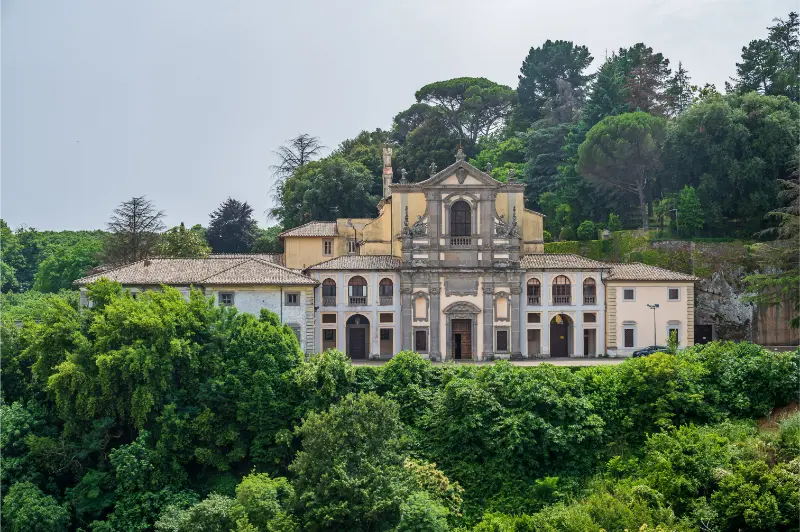
Opening arrangements can change for events and conservation. The Ministry of Culture continues to publish special openings in 2026, so check the official monumental villas of Tuscia site before travelling. Do not rely on a generic “open every day” listing copied from an old travel page.
The Scala Regia and the pentagonal plan
The Scala Regia is one of the palace’s defining architectural experiences: a broad spiral staircase designed for ceremonial movement. Its proportions make the ascent feel more like a processional space than a practical stair. The circular courtyard inside the pentagonal mass reinforces the building’s play between geometry and movement.
If you enjoy architecture, spend time understanding how the palace sits on the hill and controls the view along the town’s main axis. The building is not simply a decorated container; urban planning, gardens and interior circulation all express the Farnese project.
Gardens and outdoor areas
The palace gardens and upper landscape add another layer, but access can be affected by maintenance, weather and staffing. Ask on arrival which areas are open. If the full garden route is available, allow extra time rather than trying to squeeze it into the final fifteen minutes before closing.
In hot weather, palace interiors can feel cooler but the outdoor approach and gardens are exposed. Carry water and wear shoes suitable for slopes. Caprarola is a hill town, and the beautiful axial street is also a real climb.
Lunch in Caprarola
Caprarola lies in an area famous for hazelnuts, especially the Nocciola Romana DOP, and local menus often reflect the agricultural landscape of the Cimini Mountains. Choose lunch here before heading to the lake. A slow meal also separates the highly visual palace visit from the quieter afternoon outdoors.
Restaurant opening days can be irregular outside weekends and summer. If you have a fixed palace slot, reserve lunch or at least identify two options. Avoid planning a complicated detour for a famous dish when the purpose of the day is to keep driving minimal.
Lake Vico: a volcanic landscape, not a beach resort
Lake Vico occupies a volcanic basin and is protected by a nature reserve. VisitLazio describes it as surrounded by woods, wetlands, agricultural areas and the beech forest of Monte Venere. The atmosphere is quieter and greener than larger developed lakes, which is exactly why it pairs so well with Caprarola.
Use the regional Lake Vico page as an introduction, then consult reserve information for current trail conditions and access. Do not assume every shoreline is designed for swimming or parking. Protected landscapes work differently from commercial lakefront resorts.
What to do at Lake Vico
A short walk, birdwatching stop or lakeside pause is enough after a long palace morning. Stronger hikers can explore the reserve and Cimini woods, but that should be the main afternoon activity rather than an extra. Carry water and download trail information before leaving town, since mobile reception and signage may vary.
Autumn is especially attractive when woodland colour and hazelnut landscapes become part of the experience. Spring offers green walking conditions and birdlife. Summer can work for a cooler escape from Rome, while winter requires more attention to daylight and wet trails.
Driving and parking
A car makes the palace-lake combination straightforward. In Caprarola, follow public parking signs rather than trying to drive to the palace entrance through narrow streets. Around the lake, use designated areas and respect reserve restrictions. Navigation apps can suggest minor roads that are technically passable but unnecessarily awkward.
Before a self-drive day, review the Italy driving guide. If you are not comfortable with rural driving, Caprarola alone can still be reached with more planning, but public transport makes the lake component far less flexible.
Can you combine Caprarola with Viterbo?
Caprarola and Viterbo are close enough for a two-day itinerary, not necessarily a single overloaded day. Use the Viterbo travel guide for the medieval quarter, papal history and thermal context. Spend one night in the area and you can add Lake Vico without checking the clock every hour.
Another logical connection is Bomarzo. A two-night Tuscia loop could include Bomarzo, Viterbo, Caprarola and one lake or nature stop. Four destinations sound close on a map but deserve more than drive-by visits.
Where to stay
For a quiet trip, consider an agriturismo or small property near the Cimini Mountains. Compare accommodation around Caprarola and check parking, restaurant availability and road access before booking. Viterbo offers more evening choice if you prefer a larger base.
One night changes the pace dramatically: you can see the palace when your attention is fresh, walk by the lake without calculating the return to Rome, and have dinner in northern Lazio rather than on the motorway.
Extra practical planning notes
For photographers, the best day is not necessarily bright sunshine. Palazzo interiors demand respectful low-light technique, while Lake Vico often looks more atmospheric under soft cloud or morning mist. Tripods may be restricted inside cultural sites, and drone use around protected reserves is regulated. Check permission rather than assuming open countryside means unrestricted filming.
Before departure, verify same-day opening information for any museum, church, archaeological site or transport connection that is essential to your plan. Lazio rewards flexible itineraries because religious services, conservation work, seasonal timetables and local events can alter access. Keep one optional stop in reserve rather than making every hour dependent on perfect conditions.
A useful final check is to separate essential reservations from optional discoveries. Book the site that would genuinely disappoint you to miss, then leave cafés, viewpoints, short walks and secondary churches flexible. This protects the day from small delays and creates space for the unscripted experiences that often make a Rome or Lazio trip feel personal rather than mechanically scheduled.
Build transport time with a margin instead of assuming the fastest route shown by an app will happen exactly as predicted. A missed bus, a church service, a queue or a road closure can easily shift the day by twenty or thirty minutes. When the schedule has breathing room, you can respond by dropping an optional stop rather than rushing through the place you actually came to see.
For meals, identify an area rather than one irreplaceable restaurant unless you have a reservation. Local opening days, private events and seasonal hours can change. Having two or three nearby alternatives keeps food from dictating the entire itinerary and makes it easier to choose what looks appealing when you arrive.
Seasonal reality check
The same itinerary can feel very different by season. In high summer, heat, queues and the need for shade reduce the amount of sightseeing that fits comfortably into a day. In winter, shorter daylight and reduced opening hours can be the bigger limitation. Spring and autumn usually offer the easiest walking conditions, but rain and local events still make flexibility valuable. Check the forecast and opening notices the day before, then adjust the order of outdoor and indoor stops rather than abandoning the entire plan.
Weekends and public holidays can also change parking, restaurant demand and the atmosphere of small towns. If you are travelling by car, arrive earlier than you think you need to and use official parking rather than circling historic streets. If you are using public transport, save the return timetable before leaving Rome and confirm the last practical connection. These small preparations are especially important outside the capital, where services may be less frequent.
Finally, avoid measuring a successful day by the number of places visited. One palace, one village and a long lunch can produce a richer experience than five short stops linked by constant driving. The best Lazio itineraries keep enough empty time for a viewpoint, a conversation, an unexpected church opening or simply a slower walk through the landscape.
Final thoughts
Caprarola and Lake Vico show why Lazio works so well beyond Rome. The palace provides one of the region’s great Renaissance interiors; the lake replaces monumental scale with protected woodland and quiet water. Keep the day simple—palace, lunch, nature—and it becomes far more satisfying than trying to add three more towns because they are nearby.
Last updated: October 17, 2026