
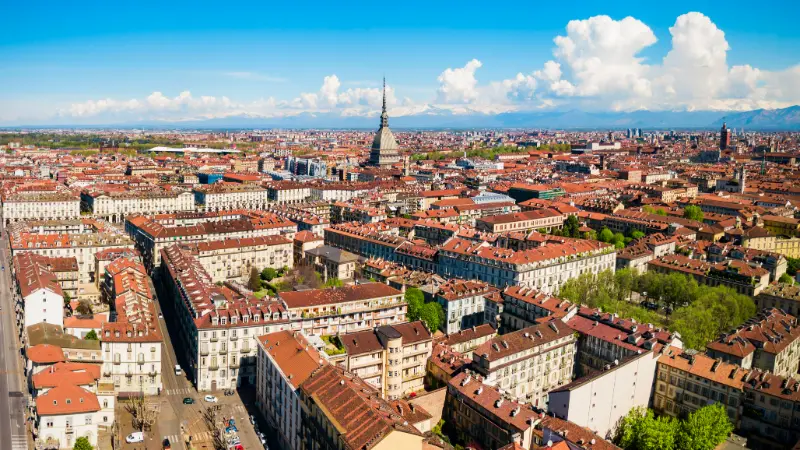
Turin is one of northern Italy’s most rewarding city breaks: elegant without feeling staged, rich in major museums yet easy to explore on foot, and distinctive for its Savoy architecture, café culture, chocolate traditions and Alpine backdrop.
At a glance
| Best for | Museums, architecture, food, cafés and a relaxed cultural city break |
|---|---|
| Ideal stay | 2–3 nights for a first visit |
| Main stations | Torino Porta Nuova and Torino Porta Susa |
| Must-book | Museo Egizio and popular Mole/ascensore time slots |
| Best base | Centro, Quadrilatero Romano or the Porta Nuova area |
Why Turin deserves more than a quick stop
For a visit with children, our Turin with Kids covers different priorities and easier ways to plan the day.
Turin often gets treated as a gateway to the Alps or the Langhe, but the city itself easily fills two or three days. Piazza Castello brings together the Savoy story, the arcaded centre makes walking comfortable in bad weather, and the city’s museums are substantial rather than token attractions. The Museo Egizio alone can absorb half a day if archaeology interests you, while the Mole Antonelliana combines architecture, cinema history and one of the classic viewpoints over the city.
The rhythm is also different from cities where every block is dominated by sightseeing. Turin has long residential avenues, neighbourhood markets, bookshops, aperitivo bars and historic cafés that make the centre feel lived in. That balance matters if you prefer trips in which a museum morning can be followed by an unhurried lunch, a riverside walk and a chocolate stop rather than another queue.
The essential sights for a first visit
To explore local dishes and food stops in more detail, use our Three Days in Turin.
Start around Piazza Castello. The Musei Reali include Palazzo Reale, the Royal Armoury, the Chapel of the Holy Shroud, Galleria Sabauda, the archaeological collections and gardens. From there Via Roma, Piazza San Carlo and the arcades lead naturally toward Porta Nuova. In the opposite direction, the Quadrilatero Romano preserves a denser street pattern and works well for an evening meal.

The second axis runs toward the Mole Antonelliana and the Po. The National Cinema Museum and Mole are best planned as a separate block because queues and the panoramic lift can affect timing. Cross toward Piazza Vittorio Veneto and the river if the weather is good, then consider the Gran Madre side or a climb to Monte dei Cappuccini for a broad city-and-Alps view.
How many days do you need?
One day works if Turin is a stop between Milan and the mountains, but it forces choices. The one-day Turin itinerary prioritises the historic centre plus one major museum. Two days is the sweet spot for most first-time visitors: one day for the royal centre and Museo Egizio, a second for the Mole, riverfront and neighbourhood time. See the two-day itinerary for a paced version.
A third day lets you add a major excursion such as the Reggia di Venaria or Superga without hollowing out the city experience. It also makes sense for food-focused travellers who want time for markets, cafés and aperitivo, or for museum travellers who prefer not to rush collections.
Getting around Turin
For routes, tickets and the practicalities of getting around, consult our Turin Airport to City Centre.
For routes, tickets and the practicalities of getting around, consult our Turin from Milan.
For routes, tickets and the practicalities of getting around, consult our Turin Public Transport Guide.
The centre is highly walkable, and many first-time visitors can cover the core almost entirely on foot. For longer hops, GTT operates buses, trams and the metro. The official tourism portal currently lists Tour tickets at €9.50 for 48 hours and €12.50 for 72 hours, while holders of the Torino+Piemonte Card can buy discounted versions at the tourist office. Check current transport ticket information before travel because fares can change.
Porta Nuova is very convenient for the southern centre; Porta Susa is useful for high-speed rail and the western side. If you are arriving from Caselle airport, compare the current rail and bus options rather than assuming a taxi is necessary. The official airport bus listing gives about 40–45 minutes to central Turin in normal conditions.
Where to stay
For a first visit, Centro is the easiest choice because Piazza Castello, Museo Egizio, Via Roma and the main café streets are close. The Quadrilatero Romano has more evening atmosphere and works well for travellers who like restaurants and bars near the hotel. Around Porta Nuova, the practical advantage is obvious if you are arriving late or leaving early. The where to stay in Turin guide compares these areas in more detail.
Prices vary sharply with fairs, football matches and major events, so compare real dates rather than relying on generic city averages. You can check current Turin accommodation prices on Booking.com before deciding whether a central location is worth the premium.
What to eat and drink
To explore local dishes and food stops in more detail, use our Porta Palazzo Turin Guide.
Turin’s food identity is broader than chocolate. Look for vitello tonnato, agnolotti or agnolotti del plin, tajarin, bagna cauda in season, local cheeses, vermouth and Piedmontese wines. Chocolate still matters: gianduiotto is closely associated with Turin, while bicerin layers coffee, chocolate and milk cream. The Turin food guide explains what to order and how to structure a food-focused day.
A useful approach is to avoid saving every specialty for dinner. Turin is particularly good for breakfast and mid-afternoon café stops, aperitivo and small tastings. That spreads the food experience through the day and avoids the common mistake of arriving at dinner with a checklist of six dishes.
Museum tickets and the Torino+Piemonte Card
For a closer look at this side of the destination, read our Best Things to Do in Turin.
For a closer look at this side of the destination, read our National Automobile Museum Turin Guide.
For a closer look at this side of the destination, read our Torino+Piemonte Card Guide.
Turin is one of the Italian cities where a museum card can genuinely change the economics of a short trip. The official Torino+Piemonte Card is currently sold in 24, 48, 72 and 120-hour versions, with the 24-hour card limited to three free museum entries. Whether it saves money depends on your exact plan, so add up the museums you would visit anyway rather than buying it automatically. See the official card page for current prices and reservation rules.
Reservations still matter even if a card covers admission. The Egyptian Museum in particular uses timed online ticketing, and popular Mole lift slots can disappear at busy times. Build the trip around one or two fixed reservations and keep the rest flexible.
Best time to visit
For a more detailed plan, our Basilica of Superga Guide develops this part of the journey step by step.
For a more detailed plan, our Chieri Travel Guide develops this part of the journey step by step.
Spring and autumn are excellent for combining museums with walking, but rain is not a disaster because the arcades and museum density make Turin unusually resilient as a city-break destination. Summer can be hot in the centre, although evenings along the Po are pleasant. Winter suits travellers who enjoy cafés, chocolate and museums, and the Alpine setting can look especially dramatic on clear days.
If your dates coincide with a major fair, football match, concert or event, book accommodation early. Museum opening patterns also matter: several attractions have weekly closing days, so a Monday/Tuesday visit needs more planning than a weekend.
A practical first-time strategy
- Book one major museum before you book minor attractions.
- Choose a central hotel if the price difference is reasonable; Turin rewards walking.
- Leave at least one unscheduled two-hour block for cafés, markets or the river.
- Do not attempt Museo Egizio and every section of Musei Reali back-to-back unless museums are the main purpose of the trip.
- Check official websites again a few days before departure for temporary closures and special exhibitions.
For live openings, events and temporary changes, use Turismo Torino e Provincia, plus the official museum websites rather than relying only on old blog posts.
Practical questions before you book
If you are arriving by air, compare total door-to-door time rather than headline fares. A cheap flight into one airport can be poor value if it lands late and forces an expensive transfer. Turin Airport at Caselle has public transport links to the city; always check the current timetable for your arrival hour.
Travellers continuing to the Alps or Langhe should consider whether to rent a car after, not before, the Turin stay. Parking and central restrictions make a car unnecessary for the city, while rail and walking are simpler. Picking up a vehicle on departure can save both money and hassle.
For families, the flat centre and arcades are helpful, but museum stamina matters. Alternate a major indoor attraction with a square, park or food stop. Turin rewards that slower rhythm better than an all-day queue schedule.
Frequently asked questions
Is Turin walkable?
Yes. The historic core is flat and compact, and the long arcades make walking unusually comfortable in rain or strong sun. Public transport becomes most useful for attractions outside the centre or tired evenings.
Do you need a car?
No for the city itself. A car is more useful after Turin if your trip continues to rural Piedmont, but it creates parking and access complications during a central stay.
Is Turin good in winter?
Very much so for museums, cafés, chocolate and indoor culture. Clear winter days can also give excellent Alpine views, although daylight is shorter and outdoor itineraries need adjustment.
Before you go
Opening hours, ticket prices, temporary exhibitions and transport fares can change. Recheck Turismo Torino e Provincia and the official attraction websites shortly before travel. This is particularly important around public holidays, city events and temporary maintenance closures.
Final thoughts
Turin works because its major attractions are genuinely important but the city never requires you to sprint between them. Give the museums enough time, use the arcades and cafés as part of the experience, and the result is a city break that feels both cultural and relaxed.
Last updated: October 17, 2026