
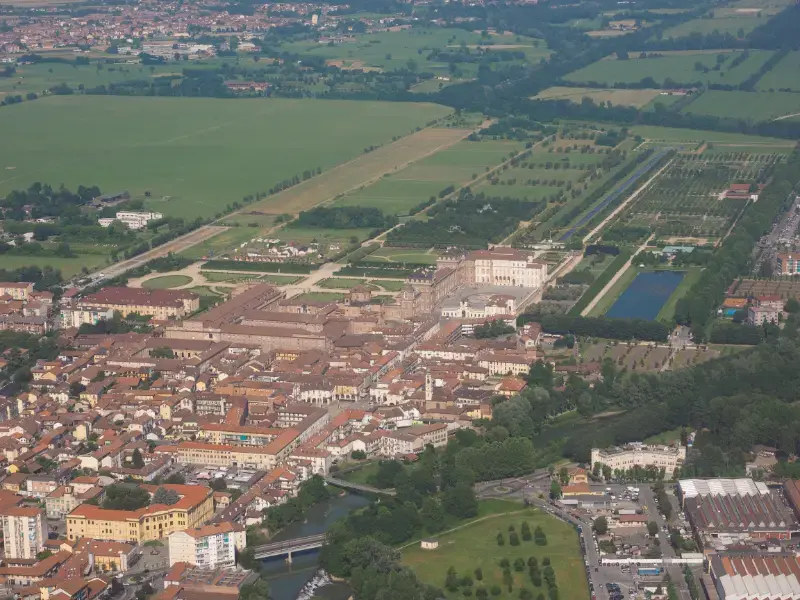
Venaria Reale is the grandest easy day trip from Turin for travellers who want Savoy architecture on a monumental scale. The complex combines the Reggia, Juvarra’s Galleria Grande, formal gardens, temporary exhibitions and the nearby Castello della Mandria, so a successful visit depends on deciding in advance how much of the estate you really want to cover.
Quick planning overview
| Best for | Savoy history, architecture, gardens, photography and first-time Turin visitors |
|---|---|
| 2026 Reggia + gardens | €18 full price |
| All-in palace ticket | €25 for Reggia, gardens and current exhibitions |
| Typical hours | Tuesday–Sunday; 9:30–18:00 in the main season, with autumn adjustments |
| Time needed | 4–5 hours for Reggia and gardens; full day with La Mandria |
Why this guide matters
Venaria is not simply one more palace around Turin. It was designed as a royal hunting and leisure complex and later restored on an enormous scale, which means its courtyards, ceremonial rooms, stables and garden axes reveal how the Savoy court shaped the landscape as well as architecture. It also works well as the first introduction to the wider Crown of Delights before Stupinigi and Rivoli.
Start with the Reggia, not the gardens
Enter the palace while your energy is highest. The route moves through ceremonial spaces and royal apartments toward the celebrated Galleria Grande, where light, perspective and Juvarra’s architecture create the visual climax of the visit.
Read the room sequence rather than photographing only ceilings. The building was designed to control movement, status and views, and understanding that order makes the monumental scale less overwhelming.
Galleria Grande and the Juvarra spaces
The Galleria Grande is the image most visitors remember: a long, luminous gallery whose floor, windows and stucco create an almost theatrical perspective. Nearby Juvarra-designed spaces and the great stables reinforce the connection between court ceremony and the hunting estate.
Crowds tend to pause in the centre for photographs. Step to the sides, look back along the axis and use the windows to connect the interior to the gardens outside.

Choosing the right ticket
In 2026 the standard Reggia ticket, including the gardens, is listed at €18 full price. The ‘Tutto in una Reggia’ option is €25 and includes the palace, gardens and exhibitions. A combined Reggia plus Castello della Mandria ticket is listed at €22.
Do not automatically buy the largest ticket. If you have only half a day, palace plus gardens is already substantial; the Mandria deserves additional time and transport planning.
The gardens
The restored gardens extend the architecture into open space with long axes, water features and broad views. They work best after the palace, when you can see how the interior sightlines continue outdoors.
In hot weather, protect the middle of the day for shaded or indoor areas. The distances are larger than they appear from palace windows, and trying to walk every path can leave too little time for the parts you actually care about.
Castello della Mandria
The Castello della Mandria lies within the wider park and offers a more intimate royal atmosphere than the main Reggia. It is associated with Victor Emmanuel II and preserves furnished apartments that contrast with Venaria’s monumental ceremonial spaces.
A combined ticket makes sense for a full-day Savoy itinerary. Bicycle rental can help with the connection when available, but check operating arrangements and closing times before relying on it.
Temporary exhibitions and events
Venaria hosts major exhibitions and seasonal events, which can change the best ticket choice and crowd pattern. Check the official calendar shortly before travelling, particularly if a headline exhibition is the main reason for your visit.
Special events may also affect garden prices or opening times. Treat the official site as the final source rather than relying on an old blog screenshot.
A realistic half-day plan
Arrive near opening, tour the Reggia for roughly two hours, then spend 60–90 minutes in the gardens and finish with lunch or coffee in Venaria’s historic centre. This leaves enough margin for queues and photography without turning the visit into a sprint.
If you add La Mandria, start earlier and protect the full day. Do not schedule an evening museum back in central Turin unless you are comfortable with a tightly controlled timetable.
How much time to allow
Four hours is a realistic minimum for the Reggia and a meaningful garden walk. Six to seven hours makes the experience much more comfortable, while a full day is appropriate if you include Castello della Mandria or a major temporary exhibition.
Use timed entry as the anchor and leave the garden portion flexible. Indoor routes take longer when rooms are busy, and large estates reward pauses more than speed.
Getting there and getting around
Venaria is close to Turin and can be reached by public transport as well as car. Check Turismo Torino or the Reggia site for the current connection that best matches your accommodation rather than assuming one bus route always operates identically.
Drivers should follow signed visitor parking and avoid attempting to park directly beside the monumental entrance. Once there, walk the historic centre and palace complex rather than relocating the car.
Best time to visit
Spring and early autumn offer the best balance for gardens and interiors. Summer provides long hours but can be hot in exposed garden areas. From 1 October, 2026 opening times shift, with weekday closing earlier and longer weekend hours.
Rain does not ruin the palace portion, but it changes the value of a garden-heavy ticket. On very hot days, schedule the outdoor portion early or late and carry water.
Food and breaks
Venaria’s centre has cafés and restaurants within walking distance, so there is no need to carry an entire picnic through the palace. Build lunch around your ticket time, not the other way round.
The estate is physically large. A seated break before the gardens or Mandria improves the second half of the visit and prevents the final rooms from becoming a blur.
Where to stay
Most travellers should stay in Turin and visit Venaria as a day trip. Staying in Venaria makes sense if you have a car, prefer a quieter evening or plan multiple northern Turin attractions.
For overnight options, compare Compare accommodation on Booking.com; for a broader city trip use accommodation from the Turin accommodation guide.
Families, accessibility and slower travel
The palace works well for families when adults accept that children may engage more with scale, gardens and stories than with every decorative room. Leave time outdoors rather than attempting the longest museum route without a break.
The official site provides accessibility information and modern visitor services, but the size of the estate still creates long walking distances. Contact the venue for current lift and mobility arrangements if needed.
What to combine with this trip
Pair Venaria with another Savoy residence on a different day, such as Stupinigi, or use the Turin museums guide to balance palace history with city collections.
Rivoli can fit the same broader theme, but combining both major sites in one day gives too little time to either unless you are travelling specifically for architecture and have private transport.
Common planning mistakes
- Buying the most expensive ticket without enough time to use it.
- Underestimating walking distances in the gardens.
- Arriving at midday in summer and doing all outdoor areas first.
- Assuming La Mandria is simply another room inside the Reggia.
- Failing to check temporary exhibitions and seasonal hours.
Useful links for planning
- La Venaria Reale – official hours
- La Venaria Reale – official tickets
- Three days around Turin Province
- Compare accommodation on Booking.com
Final tips
Venaria works best when you resist the urge to see every square metre. Give the palace real attention, choose a manageable section of the gardens and add La Mandria only when you genuinely have a full day. The reward is a much clearer understanding of the Savoy court than a rushed sequence of royal rooms.
A final planning note
For Venaria Reale guide, the most reliable approach is to recheck the few details that can change the actual day: opening hours, timed-entry requirements, weather and the final transport connection. Save the official address and ticket confirmation offline, because suburban and valley itineraries often involve moving between places where mobile reception or data performance can vary. If a visit depends on a guided tour, tasting, special exhibition or seasonal service, confirm the reservation directly rather than treating an old timetable as a promise.
Leave at least thirty minutes of unscheduled margin around the principal attraction. That buffer absorbs parking, a delayed bus, a longer museum room or an unexpected viewpoint without forcing you to cut the part of the day you travelled for. In Piedmont, realistic pacing usually produces a better trip than adding one more distant stop. The same principle applies to meals: in smaller towns and rural areas, kitchen hours may be narrower than in central Turin, so a flexible snack can protect the day without replacing a proper local meal.
Budget, reservations and responsible travel
Separate fixed costs from optional ones before the day begins. Tickets, guided visits, parking and transfers are worth budgeting first; souvenirs, tastings and extra exhibitions can then remain flexible. When advance purchase is recommended, check cancellation rules and whether the ticket is tied to a precise time. Carry a small amount of water and avoid depending on a single café or ticket office for essentials, especially outside the main season.
Respect working landscapes, religious sites, protected natural areas and residential streets as places used by local communities rather than as open-air attractions. Stay on signed routes, avoid blocking entrances for photographs, follow conservation rules and take waste away when bins are unavailable. These small choices matter particularly in Canavese and Val di Susa, where vineyards, wetlands, monasteries and mountain paths sit very close to everyday homes and farms.
For photography, plan around light and access rather than stopping wherever the view appears. Historic interiors may restrict flash, tripods or commercial shooting; outdoor viewpoints can become unsafe when visitors step into roads or onto unstable edges. A compact camera setup and a few deliberate stops usually work better than carrying heavy equipment through palaces, steep abbey stairs or long nature trails. If the weather turns, protect equipment first and accept that the best image may be the one that does not compromise safety or other visitors.