
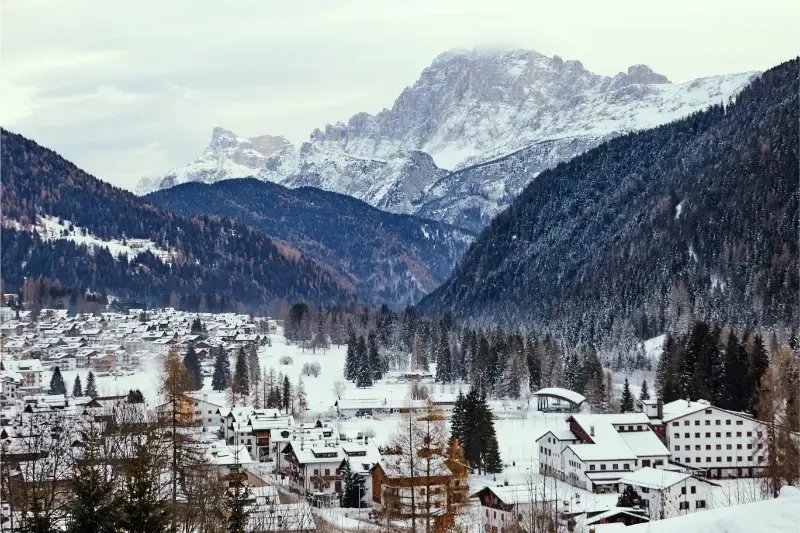
The Veneto Dolomites are not one destination but a network of valleys, mountain groups and towns that require more planning than a normal city break. Cortina d’Ampezzo is the best-known base, but Belluno province also includes Cadore, Auronzo and Misurina, Alleghe, Arabba, Marmolada areas, Val di Zoldo, Feltre and the Dolomiti Bellunesi National Park. The right itinerary depends on season, hiking ability, lift operation and how much driving you want to do.
At a glance
| Best for | Hiking, mountain scenery, skiing, road trips and photography |
|---|---|
| Main bases | Cortina, Auronzo/Misurina, Alleghe, Arabba, Val di Zoldo |
| Allow | 3–5 nights minimum for a focused area |
| Good to know | Mountain conditions and lift/road operations can change quickly; verify locally |
Why “the Dolomites” needs narrowing down
The UNESCO Dolomites cover a vast area across several provinces and regions. On the Veneto side, Belluno province contains multiple famous groups and valleys. It is a mistake to book one hotel and assume every viewpoint is 20 minutes away. Mountain roads curve, passes close seasonally and trailheads may require reservations, buses or early starts.
Start by choosing one or two adjacent zones. Cortina plus Cadore is a natural combination; Alleghe plus Val di Zoldo works for Civetta landscapes; Arabba connects well with high passes and the broader Dolomiti Superski network.
Cortina d’Ampezzo
Cortina is the best-known resort and has the widest mix of restaurants, shops, accommodation and lift-served mountain access. It works for first-time visitors who want scenery without giving up town amenities. The official tourism site describes extensive summer lift options as well as winter skiing across the Cortina area.
It is also one of the most expensive bases at peak periods. Book early for major holidays and events, and do not stay in Cortina solely for the name if your actual hiking plans are concentrated an hour away.

Cadore, Auronzo and Misurina
Cadore offers a broader collection of towns and valleys, while Auronzo and Misurina provide access to some of the most photographed Dolomite scenery. The Tre Cime area is enormously popular, so transport, parking and access systems should be checked specifically for your travel date rather than assumed from an old trip report.
Pieve di Cadore adds cultural and historical interest and can be a useful overnight stop for travellers who want more than trailheads. Lake scenery around Cadore also creates easier days when weather is not suitable for high-altitude hiking.
Alleghe, Civetta and Val di Zoldo
Alleghe sits beside a lake under the Civetta massif and provides a very different atmosphere from Cortina. Val di Zoldo is another strong base for hiking and winter sports, with villages that feel more compact and mountain-focused. These areas can be ideal if you value trail access over luxury shopping.
Because services are more dispersed, check restaurant opening nights, grocery options and transport before arriving without a car. In shoulder season, some tourism businesses reduce hours significantly.
Arabba and high passes
Arabba sits in a dramatic position near major passes and is strongly oriented toward skiing, cycling and high-mountain activities. It is excellent for travellers who want immediate access to pass roads and the Dolomiti Superski system, but less suitable if you expect a large town with broad cultural attractions.
Road cyclists should treat pass traffic, weather and altitude seriously. Drivers should never stop in unsafe road positions for photographs; use designated viewpoints and parking areas.
Summer hiking: choose by ability, not Instagram
The Belluno Dolomites offer everything from simple panoramic walks to exposed via ferrata and serious alpine routes. The official regional tourism site explicitly distinguishes walking, trekking, ferrata and mountaineering activities. A trail that looks easy in a short video may involve steep terrain, exposure or rapidly changing weather.
Check route length, elevation gain, surface, exposure and descent—not only distance. Carry water, layers and appropriate footwear, and turn around when conditions deteriorate. For via ferrata or unfamiliar high routes, a qualified mountain guide can be the right investment.
Summer lifts
Lift systems around Cortina and other resorts can save hours of climbing and make high viewpoints accessible to non-hikers, but each lift has its own seasonal operating calendar. Cortina currently offers single rides and multi-day products such as pedestrian and bike passes, while wider Dolomiti Supersummer products connect multiple areas.
Do not assume a lift runs every day in June, late September or bad weather. Verify opening status the evening before and again in the morning if wind or storms are forecast.
Winter skiing
Cortina’s official information describes a local ski network connected to broader Dolomiti Superski products, while Alleghe, Arabba and other Veneto areas offer their own access patterns. Skiers should choose accommodation based on the lifts they actually expect to use, not simply the most famous town name.
Snow conditions, avalanche risk and lift status are operational matters that change daily. Use official resort reports and local safety guidance. Off-piste terrain requires expertise and, in many cases, professional guidance.
Driving and public transport
A car offers the greatest flexibility for multi-valley trips, but mountain driving requires confidence. Pass roads can be narrow, steep and weather-dependent, while winter equipment rules must be respected. Build extra time and avoid moving accommodation every night.
Public transport can work for selected bases, particularly larger towns, but trailheads are more difficult. Summer shuttle systems may operate for popular areas. Research the exact final kilometres before booking a car-free itinerary.
Where to stay
Cortina suits first-time visitors seeking amenities and broad activity choice. Auronzo/Misurina suits Tre Cime-focused travel. Alleghe and Val di Zoldo suit Civetta scenery. Arabba suits high-pass access and serious cycling/skiing. Belluno and Feltre can work for lower-altitude cultural days and the national park.
The best hotel is therefore not the one with the most dramatic balcony photo; it is the one that reduces morning driving to your priority trails or lifts.
Dolomites with children
Families should prioritise lift-assisted walks, lakes, short nature trails and playground/picnic infrastructure rather than forcing children onto adult hiking targets. Weather changes can make even easy plans unpleasant, so keep a low-altitude backup day.
Cable cars can involve significant altitude gain. Dress children warmly, use sun protection and watch how they respond. Never rely on a stroller for mountain paths unless a route is explicitly described as suitable.
How many days and a sensible first itinerary
Three nights allow two full mountain days, which is the minimum useful stay. Five nights are much better because one poor-weather day does not ruin the trip. For a first visit, base in Cortina or Cadore, dedicate one day to a major panoramic area, one to an easier lake or village route and one to a second mountain group if weather allows.
If arriving after cities, the contrast with Venice is enormous. A Veneto itinerary that combines Venice, Verona and the Dolomites works best when you allow transition time rather than treating the mountains as a day trip.
Practical planning notes that save time
Build the day around geography rather than around a list copied from several different itineraries. In Venice and Veneto, a route that looks short can become slow because of bridges, boat waiting times, restricted traffic zones, mountain roads or seasonal transport. Put the hardest reservation or most weather-dependent activity first, then keep secondary stops movable. This simple rule reduces missed tickets and makes it easier to respond when a museum closes a room, a vaporetto is crowded, a lift stops for wind or a road journey takes longer than the map predicted.
Check the official source again 24–48 hours before the visit. Opening days, ticket rules, event closures and transport timetables are operational information rather than permanent facts. Save the relevant official page on your phone and take a screenshot of any ticket QR code that may need to work without a reliable connection. If you are moving between cities, keep the address of your accommodation and the name of the nearest stop available offline as well.
Budget and booking strategy
Do not pre-book every hour simply because booking is possible. Reserve the attractions or activities that genuinely sell out, then leave meals, walks and secondary churches flexible. Compare the total cost of city passes with the admissions you will actually use, and include transport only when it solves a real problem. A pass that saves a few euros but forces you into extra attractions is not saving time or money.
For accommodation, compare the final price including local taxes, breakfast, cancellation conditions and transport to the places you care about. In Venice, the cheapest room can become inconvenient if it requires several bridges with luggage; in the Veneto countryside or mountains, a remote property can create daily driving. Location should reduce friction in your itinerary, not just look attractive on the booking page.
Tours and activities
Guided hikes, via ferrata, e-bike tours and scenic day trips can be very useful in the Dolomites. For technical activities, prioritise qualified guides and clear equipment/safety information over the cheapest listing. For sightseeing tours, check how many hours are spent in the vehicle versus outdoors.
Where to stay
Choose a base close to your planned mountains: compare Cortina accommodation, Auronzo/Cadore, or Alleghe. Map each hotel to the trailheads or lifts you actually want before booking.
Useful official sources
- Dolomiti Bellunesi – official tourism
- Cortina d’Ampezzo – official tourism
- Dolomiti Bellunesi National Park
Final planning advice
Keep the first Dolomites trip geographically tight. Choose one base, check weather and lift status daily, match routes to actual ability and keep a lower-altitude alternative for storms. The mountains are most rewarding when the schedule bends to conditions rather than forcing a fixed list of viewpoints.