

A three-day Florence itinerary balancing the Duomo, Uffizi, Michelangelo’s David, Oltrarno workshops, food markets and panoramic walks.
At a glance
| Recommended stay | 3 full days |
|---|---|
| Pre-book | Uffizi, Accademia and dome climb if desired |
| Best on foot | Almost the entire historic centre |
| Quiet contrast | Oltrarno and San Miniato al Monte |
| Day-trip option | Add extra nights rather than sacrificing city time |
What you need to know
- Limit each day to one major museum.
- Reserve headline art in advance and keep churches and streets flexible.
- Cross the Arno for workshops, gardens and a calmer evening.
- Stay overnight: Florence before day trips arrive and after they leave feels completely different.
Why Florence deserves three days
Florence is geographically compact and emotionally dense. The temptation is to treat it as a one-day collection of the Duomo, David and Uffizi, yet Renaissance art becomes tiring when consumed without pauses. Three days let you alternate masterpiece rooms with markets, bridges, gardens and ordinary streets. You also gain early mornings and evenings, when the centre feels less like a corridor between attractions.
To connect Three Days in Florence with the rest of the destination, our Florence Travel Guide offers a broader overview of what to see and how to get around.
My preferred plan uses one anchor reservation per day. Everything else sits within the same district and can move according to weather or energy. The official FeelFlorence portal is useful for current access, events and sustainable visitor advice. Check individual museum sites before travel because opening days, reservation rules and temporary exhibitions change.
Day 1: Duomo district and civic Florence
Start in Piazza del Duomo before the main flow of groups. The cathedral complex includes several distinct experiences: the cathedral, baptistery, bell tower, museum and dome. Do not assume one queue or ticket covers everything. If climbing Brunelleschi’s dome is important, reserve the correct timed option and be honest about narrow stairs, height and physical effort.
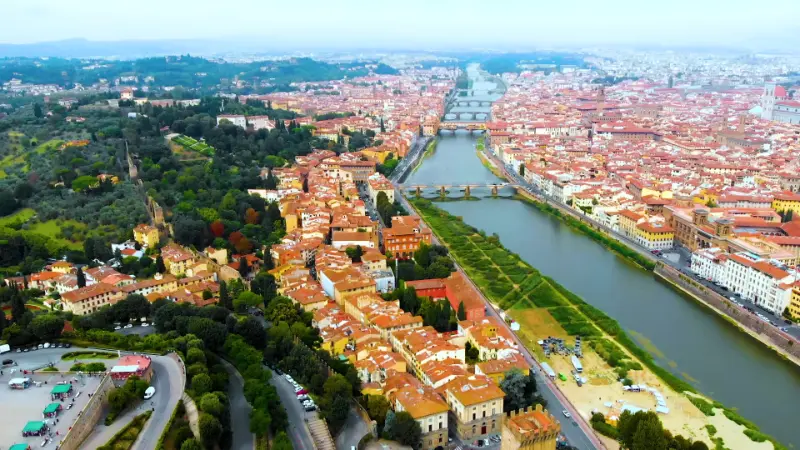
Continue along Via dei Calzaiuoli to Piazza della Signoria. The open-air sculpture setting prepares you for Palazzo Vecchio, but you do not need to enter every building. Walk through the Loggia dei Lanzi and toward the Arno. At sunset, cross Ponte Santa Trinita for the classic view back to Ponte Vecchio. Dinner in Santo Spirito or San Frediano gives the day a more residential finish.
Day 2: Uffizi, Santa Croce and artisan streets
Reserve the Uffizi for a time when your attention is strongest. Choose a route through the works you care about and take breaks near the windows; the museum is not a test of endurance. Avoid scheduling the Accademia immediately afterward. A slow lunch and a walk through the Santa Croce area restore visual energy.
In the afternoon, explore streets associated with leather, paper, restoration and small craft studios. Florence’s artisan identity is not frozen in the Renaissance, though central shops range from genuine workshops to mass-produced souvenirs. Ask where an item is made and do not photograph working artisans without permission. End with aperitivo, then take an evening loop through Piazza della Repubblica and the Duomo when the façades are illuminated.
Day 3: David, markets and the Oltrarno
Begin at the Accademia with a timed ticket to see Michelangelo’s David and the unfinished Prisoners. The sculpture is more affecting when you allow time around it rather than rushing in for a photograph. Continue to San Lorenzo and the Mercato Centrale area. The outdoor market is commercial; inside and in the surrounding streets you can still build a simple food-focused lunch.
Cross into the Oltrarno for the afternoon. Choose Palazzo Pitti and the Boboli Gardens if you want another major complex, or favour Santo Spirito, artisan lanes and the climb to Piazzale Michelangelo. Continue a little higher to San Miniato al Monte for a quieter panorama. The descent at dusk is one of the most satisfying ways to close three days in Florence.
How to book Florence’s major attractions
Use official museum and cathedral channels whenever possible, read cancellation conditions and save the booking confirmation offline. Search results can place resellers above official sites. A timed ticket reduces uncertainty but does not eliminate security lines. Arrive early enough to locate the correct entrance, especially around the Duomo where queues for different buildings can appear confusing.
Monday closures and seasonal schedules can reshape the itinerary, so assign days only after checking current calendars. If your dates are fixed and the Uffizi is unavailable, do not assume the trip is ruined. The Bargello, Museo dell’Opera del Duomo, Palazzo Vecchio, San Marco and Medici Chapels can build an exceptional art programme with more manageable crowds.
Where to stay
The Duomo and Piazza della Signoria area place you in the centre but can be noisy and expensive. Santa Maria Novella is convenient for trains, San Lorenzo is lively, Santa Croce has strong evening character, and the Oltrarno offers a more neighbourhood-based stay while remaining walkable. Near-station lodging varies significantly by street, so inspect the exact location.
Historic palazzi can have magnificent ceilings and awkward logistics. Confirm lift access, reception hours, luggage storage and air conditioning. If arriving by car, do not drive to the door without explicit instructions: central Florence has controlled traffic zones. A property with partner parking should explain the route and licence-plate procedure in writing.
Eating in Florence beyond bistecca
Florentine food is direct and seasonal. Ribollita, pappa al pomodoro, lampredotto, crostini, beans and simply grilled meats express a cuisine that values ingredients over elaborate presentation. Bistecca alla fiorentina is a large cut traditionally served rare and priced by weight; clarify size and price before ordering. It is best shared by diners who genuinely enjoy that style of meat.
For a quick lunch, markets and sandwich shops are useful, but avoid blocking narrow pavements while eating. Gelato colours should resemble their ingredients rather than fluorescent paint. I prefer a small selection displayed neatly to giant sculpted mounds. Wine bars can introduce Tuscan labels by the glass; ask for a local suggestion instead of defaulting automatically to the most famous name.
Florence with children
Children often respond better to a story—how the dome was built, why David’s hands look large, how pigments were made—than to a long sequence of rooms. Book a short family-focused visit, then balance it with a carousel ride, garden, river walk or picnic. The historic centre is compact, but stone paving and crowds make strollers less effortless than the map suggests.
Choose accommodation that permits a midday rest and reserve dinner at a family-compatible hour. A climb is memorable only when everyone is comfortable with tight spaces and many steps. The bell tower and dome are not interchangeable, so research the route before promising the experience. For a broader family trip, combine Florence with a few slower days on the seven-day Tuscany route.
Day trips: when they help and when they hurt
Pisa, Lucca, Siena, Bologna and the Tuscan countryside are all possible, but a day trip should not replace the third Florence day on a first visit. Add nights if you want both. Pisa and Lucca work well by train; Siena is connected by bus and train with different arrival points; rural wine areas are easier with a car, driver or organised excursion.
I would not collect a rental car while staying in central Florence. Finish the city portion, then pick up the vehicle outside the restricted centre and begin the countryside route. This clean transition prevents parking expense and ZTL anxiety. If your trip continues to Rome or Venice, a high-speed train is simpler than driving between the historic centres.
Small habits that improve the visit
Start early, but do not make every morning punitive. Carry a refillable bottle, protect shoulders in strong sun and keep a light layer for churches. Step aside before checking directions on a narrow pavement. Florence receives enormous visitor numbers in a small area, and considerate movement makes a real difference.
Most of all, look up. Façades, street shrines, rooflines and workshop signs tell the city’s story outside ticketed rooms. Sit on the less celebrated side of a piazza, cross the river by a bridge other than Ponte Vecchio and return to one favourite place twice. Repetition turns a famous city into a personal memory.
Keep one hour completely free on the final afternoon. You may use it for a church you noticed earlier, a bookshop, an artisan conversation or a second look at a favourite sculpture. This small reserve also absorbs queues and tiredness without disrupting a train or dinner booking. Florence rewards curiosity more reliably than another rigid appointment.
Frequently asked questions
Are three days enough in Florence?
Yes for a first visit, provided you reserve the major museum priorities and avoid adding a full day trip. Four or five nights are better if you want Tuscan excursions.
Can I walk everywhere?
Most visitor areas are walkable. Buses help with some outer districts, while taxis are useful with luggage or mobility constraints.
Which is more important, Uffizi or Accademia?
The Uffizi offers a broad Renaissance collection; the Accademia is a shorter visit centred on Michelangelo’s David. Choose according to interest rather than fame alone.
Is Florence suitable without a car?
Absolutely. A car is unnecessary in the city and inconvenient in the controlled historic centre. Rent one only when leaving for rural Tuscany.
Practical details, timetables, access rules and prices can change. Always confirm the latest information with the relevant official operator or attraction before travelling.
Last updated: October 17, 2026