
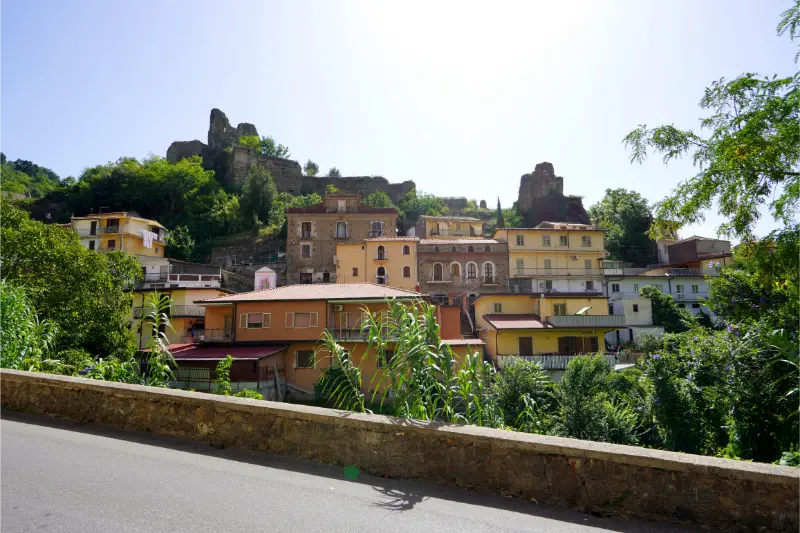
Lamezia Terme is often reduced to a name on an airport ticket, yet it is one of the most useful places in Calabria to understand how the region works. This is not a compact resort arranged around a single piazza. The modern municipality brings together the historic communities of Nicastro, Sambiase and Sant’Eufemia Lamezia, with an airport, railway connections, thermal springs and a castle on the slopes above the plain. For travelers who want both practical transport and an unhurried experience of everyday southern Italy, those contrasts are the reason to visit. The key is to plan the different districts as separate stops rather than assuming everything lies within a short walk of the terminal.
In this guide
- Understand Lamezia's three centers before setting out
- Nicastro: cathedral streets and the older town
- The Norman-Swabian castle and what visitors can actually see
- Archaeology, museums and the Lametino past
- Sambiase and the thermal tradition of Caronte
- From airport to town: avoid the classic transfer mistake
- A practical one-day itinerary with two different versions
- Where to stay: airport hub, Nicastro or Sambiase?
- Eating locally and making room for unhurried stops
- Nearby excursions worth combining with Lamezia
- Best time to visit, mobility and realistic expectations
- Frequently asked questions
Understand Lamezia’s three centers before setting out
The name Lamezia Terme belongs to a municipality created in the twentieth century by joining older settlements. Nicastro is the historic urban center with the cathedral, uphill streets and Norman-Swabian castle remains. Sambiase is associated with the thermal springs and has its own local streets, churches and food traditions. Sant’Eufemia is the lowland district where transport facilities make arrivals and departures comparatively straightforward. Confusing these areas is the most common reason for an awkward itinerary: an airport hotel may be convenient for an early flight but poor for exploring Nicastro on foot. Conversely, staying in the upper historic center can be atmospheric but less convenient with heavy luggage. Choose your base according to what you intend to do after landing, not just the place name on the booking listing. Check the address and district on a map; two hotels in the same municipality can produce very different days.
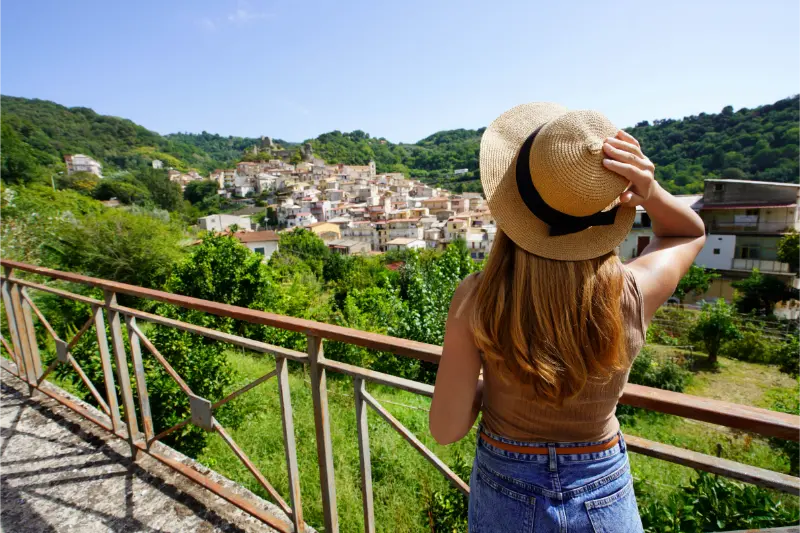
For a broader Calabria itinerary, see the Calabria travel guide before deciding which destinations to combine with Lamezia Terme Beyond the Airport.
Nicastro: cathedral streets and the older town
Start in the streets around Corso Numistrano and the Cathedral of Saints Peter and Paul. The cathedral’s current appearance reflects rebuilding after the earthquakes and political changes that repeatedly reshaped Calabria. A walk here is more engaging when you notice the slope: the modern commercial streets gradually give way to narrower passages and views back over the plain. The old Jewish quarter, historically known as the Giudecca, belongs to that layered history; it should be approached as a documented part of the town, not a reconstructed attraction offering theatrical displays. Small chapels, doorways and the changing texture of walls reveal more than a checklist of monument names. Allow time to sit in a café and observe the rhythms of a real working city. Nicastro rewards walkers who are comfortable on uneven surfaces and appreciate everyday architecture alongside its major landmarks.
The Norman-Swabian castle and what visitors can actually see
The castle above Nicastro is a compelling reason to climb toward the upper town, with foundations of earlier defenses and later medieval interventions linked to Norman and Swabian rule. Its ruined state is part of the story: earthquakes, neglect and rebuilding in the surrounding town have altered what remains. Do not assume the interior will be open, staffed or ticketed on the day of your visit. Confirm access locally and respect any fencing or closure notices. Even when entry is limited, the surrounding uphill approaches help explain why the site commanded the fertile plain between the mountains and the Tyrrhenian shore. Visit in cooler light, wear shoes suited to steep paving, and resist the temptation to use an unmarked shortcut simply to reach a photo point. The castle is a historic ruin, not an adventure playground.
Archaeology, museums and the Lametino past
The Lametino Archaeological Museum provides a useful corrective to the idea that only Calabria’s famous Greek coastal colonies have an ancient past. The wider plain contains evidence of settlements, exchanges and burial traditions extending across many periods. Museum collections and displays can change, especially during renovations or loans, so consult the current visitor page rather than planning around a particular room. The Diocesan Museum offers another view of regional art and religious life when open. Farther toward Sant’Eufemia, the remains associated with the Benedictine Abbey of Sant’Eufemia tell a different story, connected to medieval religious communities and landholding. These are not necessarily attractions to combine in one pedestrian circuit. Group museums with a Nicastro morning, and arrange a separate car or taxi segment if visiting archaeological remains away from the urban core. A careful two-stop day is more satisfying than collecting addresses that are inconveniently scattered.
Sambiase and the thermal tradition of Caronte
The springs around Sambiase explain the word ‘Terme’ in the municipality’s name. The Caronte thermal complex has long been associated with sulfurous mineral water and organized wellness treatments. In the same general area there are natural warm-water outflows that people sometimes visit independently, but these should not be confused with a supervised spa. Water conditions, hygiene, safe access and local rules can differ from those of a staffed facility. Anyone with health concerns should seek appropriate medical advice rather than treating a natural pool as a therapeutic prescription. For a relaxing visit, choose whether you want a booked treatment at an established facility or simply a walk exploring the cultural geography of the springs. Check the operator’s opening period and admission process before traveling. The experience is especially useful outside peak beach season, when Calabria’s interior and small towns can be explored at a slower pace.
From airport to town: avoid the classic transfer mistake
Lamezia Terme International Airport is a major gateway to Calabria, but the terminal is not in the heart of Nicastro. Lamezia Terme Centrale railway station is likewise a transport hub rather than the old-town cathedral square. Ground connections between airport, station and the municipality’s districts may depend on timetables, changes and operating days. Check the current airport or rail information for the date of travel and decide whether a prearranged transfer, licensed taxi, bus or rental car is most sensible. If you are landing late, do not assume the last train or bus still operates when you clear baggage claim. For a one-night stop before an early flight, a location near the transport hub may be worth more than old-town atmosphere. For a two-night cultural visit, an address near Nicastro’s streets usually feels far more rewarding. A few minutes spent checking your exact destination saves an unexpectedly costly taxi journey.
A practical one-day itinerary with two different versions
For a car-free cultural day, arrive in Nicastro in the morning, explore Corso Numistrano and the cathedral, take a coffee break, then spend the cooler part of the day heading toward the upper historic streets. If museum opening hours cooperate, add the Lametino Archaeological Museum; otherwise give the city itself more time. Finish with dinner in the urban center rather than returning to the airport area. With a car, the day can be divided into a Nicastro morning and a Sambiase afternoon, including a thermal appointment or a stroll near the springs. It is not necessary to squeeze in the sea as well. Visitors who want a beach should treat the Tyrrhenian coast as a separate outing and account for parking, coastal traffic and the return trip. A worthwhile Lamezia day is built around a theme, not around the number of municipal districts ticked off.
Where to stay: airport hub, Nicastro or Sambiase?
Three accommodation patterns suit different travelers. An airport- or station-adjacent property works for transit nights and early departures, provided you verify how to reach the terminal with luggage. Nicastro makes sense for a more atmospheric city stay, cafés, meals out and visits on foot, although street gradients can be challenging. Sambiase is the most logical choice if thermal treatments are the main purpose and you have confirmed the distance to the actual facility. Families with a rental car should check parking conditions rather than assuming every central guesthouse has a private space. Travelers without a car should scrutinize bus access to their accommodation, especially on Sundays and holidays. When searching hotels, specify the district name and open a map view of the property. In Lamezia, a lower room price is rarely a bargain if the location requires several unexpected transfers.
Eating locally and making room for unhurried stops
Lamezia sits in a fertile plain with olive growing, market produce and a culinary identity connected to both inland and coastal Calabria. Look for menus offering seasonal vegetables, local olive oil, fresh pasta, simple grilled dishes and regional cured meats rather than assuming every restaurant must specialize in fiery chili. The ‘nduja and red onion dishes associated with the broader Vibo area appear widely, but they are not the only tastes worth seeking. Choose a neighborhood trattoria where a few dishes are prepared well; ask what vegetables or fish are fresh that day. A lunch break in Nicastro also gives time to decide whether climbing toward the castle is realistic in the afternoon heat. Food is part of the route: letting lunch divide the day makes an urban visit easier and helps support smaller businesses outside the airport and highway economy.
Nearby excursions worth combining with Lamezia
The Tyrrhenian beaches near Falerna and Gizzeria are reasonable coastal extensions for travelers with independent transport, though sea conditions and beach facilities vary by season. Pizzo lies farther along the coast and is a more distinctive choice for a second stop if you are interested in its castle, Piedigrotta church and famous tartufo dessert. To the east, Catanzaro provides a different urban experience and a route toward the Ionian side. Inland drives climb toward wooded mountain landscapes where weather can feel entirely different from the coastal plain. Do not plan every possibility in a single afternoon: distances in Calabria can be deceptive because road character changes quickly. One substantial side trip per day leaves room for unexpected traffic and real visits. If your flight arrives late, settle in first rather than making the immediate drive to a mountain village in darkness.
Best time to visit, mobility and realistic expectations
Late spring and early fall are comfortable for uphill walking and a varied itinerary. Summer offers long evenings but can make the old town’s exposed stone streets demanding at midday. Winter is viable for urban exploration and some wellness visits, although the season, weather and local holidays affect smaller museums and services. Bring water, supportive shoes and sun protection, and be realistic about mobility: the steepest quarters are not suitable for every traveler, and historic paving can challenge wheelchairs and strollers. If accessible travel is essential, contact individual venues and accommodation providers for current entrance details. Lamezia’s reward is not a polished resort circuit. It is a chance to see how a city with several centers, ancient roots and an important modern transport role fits together. Plan for those contradictions and the visit becomes much more interesting.
At a glance
| Suggested time | Half a day to a full day, depending on your focus |
|---|---|
| Transport | Verify current rail, road or local transfers before travel |
| Best approach | Choose a realistic route and prioritize safety or access notices |
| Base or visit | Lamezia Terme, Calabria |
Related Calabria guides
- Calabria Travel Guide: Where to Go, Stay and How to Plan
- Where to Stay in Calabria: Best Areas and Bases
- Calabria in 7 Days: A Coast and Culture Road Trip
- Catanzaro: Historic Streets, Views and the Ionian Waterfront
Official sources and planning links
Schedules, access restrictions and services can change. Use these official or primary sources to check details before visiting:
Frequently asked questions
Is Lamezia Terme worth visiting or just an airport stop?
Yes, especially if you like layered history and authentic city life. Nicastro’s cathedral streets, castle remains and museums justify at least a day, while Sambiase adds the thermal experience.
Can I walk from the airport to Nicastro?
Do not plan on it. The terminal and the historic district are separate parts of the municipality; arrange suitable ground transport using current information.
Are the Caronte baths always open?
A commercial thermal facility may have seasonal schedules, appointments and service changes. Consult the operator directly before going.
Do I need a rental car?
Not for an intentionally limited Nicastro visit, but a car makes a wider itinerary covering Sambiase, ruins and neighboring coastal areas much easier.
Which district is best for a first visit?
Choose Nicastro for character and walkable historic streets; choose the airport area for a short transit stay and Sambiase for a thermal-focused visit.
Last updated: October 17, 2026