
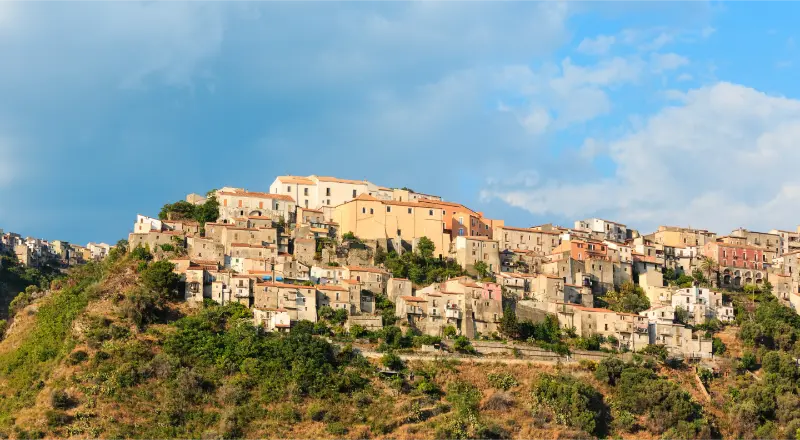
Calabria makes more sense when you stop imagining it as one long beach vacation. Italy’s southern peninsula has two different seas, high forested plateaus, layered Greek and Byzantine history, and distances that look modest on a map but require thoughtful driving. Tropea’s cliff-top old town, Reggio Calabria’s extraordinary Greek bronzes, the fishing houses of Chianalea, and the wooded interior of Sila belong to the same region. They do not belong in the same hurried day trip.
This guide is for travelers planning their first independent trip to Calabria. It explains how to choose a coast, whether a car is worth renting, where to spend your nights, and how to balance recognizable sights with quieter places. The best trip is not the one that checks off the longest list; it is the one that spends less time crossing the peninsula and more time actually experiencing it.
At a glance
| Best trip length | 7–10 days for two or three areas |
|---|---|
| Useful gateways | Lamezia Terme and Reggio Calabria, depending on routes |
| Most practical first bases | Tropea or Ricadi plus Reggio or Scilla |
| Car needed? | Useful for coves and Sila; not essential for every rail-based trip |
On this page
- First, understand Calabria's geography
- When to go: the seasons make different trips
- Where to base yourself on a first visit
- Arriving and getting around
- What belongs on the first-timer's shortlist
- A realistic one-week shape
- Eating in Calabria without reducing it to spicy food
- Costs, crowds, and accessibility
- FAQ
First, understand Calabria’s geography
For more detail on the landscape and possible routes, see our Sila National Park.
Calabria forms the toe of Italy’s boot, extending south of Basilicata toward the Strait of Messina. Its Tyrrhenian coast faces west toward the Aeolian Islands; the Ionian coast faces east toward the Gulf of Taranto and the open Ionian Sea. The central mountains and plateaus—Sila, Serre, Aspromonte, and the southern portion of Pollino—make apparently short cross-country connections slower than coastal train trips. A hotel on one shore does not automatically make the other an easy evening excursion.
For a first visit, divide the map into three practical zones. The Costa degli Dei around Pizzo, Tropea, Ricadi, and Capo Vaticano is ideal for a beach-focused stay with towns and boat trips. The Strait area around Scilla and Reggio Calabria combines coast and cultural sights, especially the National Archaeological Museum. The Sila plateau rewards travelers looking for forests, lake scenery, walking, and summer relief from the coastal heat. These areas combine well with two or three accommodation bases; forcing all three into one hotel produces a lot of driving.
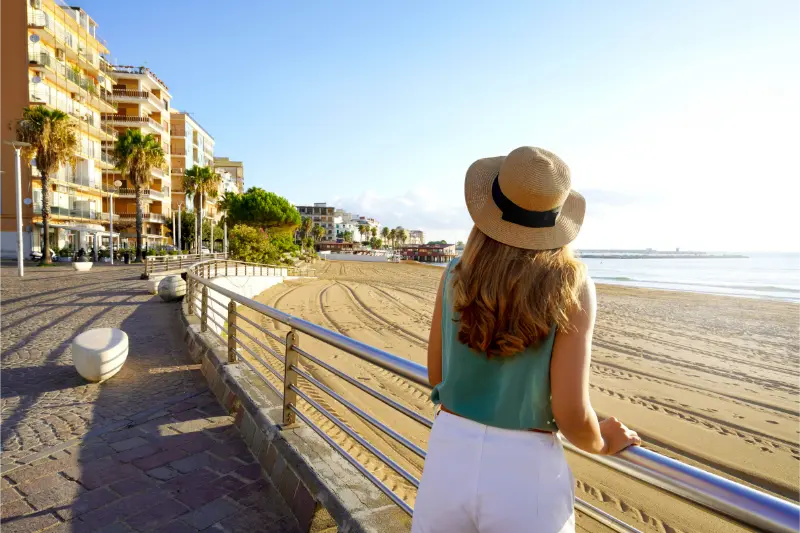
The eastern shore deserves a separate trip when time is short. Around Soverato, Le Castella, Crotone, Locri, and the Costa dei Gelsomini, Calabria opens onto longer beaches and archaeological sites linked to ancient Magna Graecia. It can be particularly appealing to travelers who prefer an understated coastal town to a famous west-coast resort, but public transportation and the choice of base require more deliberate planning.
When to go: the seasons make different trips
For a closer look at this side of the destination, read our Gerace.
Late May, June, and September are often the most flexible months for mixing sea, museums, town walks, and a little hiking. The water warms at different rates each year and beach services do not all run on identical calendars, but the trade-off between weather and visitor numbers is frequently favorable. July and August offer the fullest summer atmosphere and busy resort services, with greater pressure on parking, popular beaches, and accommodation. Book the limited elements of an August trip early; do not assume a well-known cove will have space for every arrival.
Spring is best understood as a touring season rather than a guaranteed swimming season. You can explore Reggio Calabria, village centers, Romanesque churches, archaeological areas, and the Sila forests with fewer beach crowds. In autumn, the coast gradually becomes quieter while inland food traditions and changing forest colors offer a very different reason to visit. Winter can bring snow and difficult road conditions on the Sila plateau even while the coastal cities remain comparatively mild. Check mountain conditions rather than using Reggio’s weather forecast to decide whether a mountain drive is safe.
Where to base yourself on a first visit
For a more detailed plan, our Catanzaro develops this part of the journey step by step.
Choose Tropea if you want evenings on foot, restaurant variety, a dramatic historic setting, and straightforward access to nearby beaches—provided you accept steps, slopes, and a busy atmosphere in peak season. Capo Vaticano and the Ricadi area make more sense when the holiday revolves around swimming, accommodation with outdoor space, and beach access; a vehicle helps enormously unless your lodging offers reliable transfers. Pizzo works for a more town-centered stay and can be convenient near the Lamezia arrival corridor.
Choose Reggio Calabria for the museum, waterfront, city restaurants, and rail connections; it also makes an excellent overnight before exploring Scilla. Scilla itself suits travelers who picture breakfast beside the water and an evening in the fishing quarter, but not every street accepts vehicles or offers simple luggage unloading. In Sila, look around Camigliatello Silano or Lorica according to whether you prefer a developed mountain village or a lake-oriented stay. Verify how far your property actually sits from the trailhead or lakeshore: a rural address can conceal a surprisingly long final drive.
For a week with a rental car, two coastal nights in the Strait area, three nights around Tropea or Ricadi, and one or two nights in Sila can work. With trains only, concentrate more heavily on Reggio and rail-served Tyrrhenian towns, reserving guided transfers for individual excursions rather than improvising buses in sparsely served valleys.
Arriving and getting around
For a closer look at this side of the destination, read our Stilo and the Cattolica.
Lamezia Terme International Airport is the central gateway for many visitors; Reggio Calabria Airport is relevant for the southern tip, subject to the routes operating on your dates. Crotone may suit particular Ionian-coast plans when flights align. Compare the full journey from airport to accommodation, not just the airfare. An apparently cheap arrival can become expensive if it forces a late private transfer to a remote beach property.
Calabria’s Tyrrhenian railway links important stops, but individual beaches, hilltop villages, nature areas, and hotels outside town centers may be far from stations. Trenitalia lists regional rail and integrated bus links, including the Lamezia airport connection. The Ionian rail corridor and inland services can require longer journey times or changes, so consult the actual timetable for your specific weekday. Do not build a tight airport connection around a service that runs infrequently.
A rental car expands the range of scenery but is not essential for every trip. In historic centers, narrow streets, resident-only zones, and scarce parking can make the car a liability. Choose lodging with clearly explained parking, avoid driving straight into medieval streets, and confirm whether a beach lot or access road has seasonal restrictions. If you rent, allow generous time for winding roads, use official trailhead parking where available, and never follow navigation into a lane too narrow to reverse safely.
What belongs on the first-timer’s shortlist
For a more detailed plan, our Paola and the Sanctuary of Saint Francis of Paola develops this part of the journey step by step.
Tropea pairs a compact old center above the sea with the distinctive silhouette of Santa Maria dell’Isola. Spend time at street level before heading to the beach; its appeal is not confined to a single viewpoint. Near Ricadi, Capo Vaticano’s overlooks and Grotticelle beaches offer a different landscape of promontories, small bays, and transparent water. Sea conditions change quickly: a beautiful overhead view does not guarantee calm swimming or a safe boat outing that afternoon.
In Scilla, the story is split between Marina Grande, a broad waterfront below the town, and Chianalea, where houses stand close to the water. Reggio Calabria is not just a stop for the Riace Bronzes: its Falcomatà waterfront, historic streets, and the view across the Strait invite a proper city day. Pizzo’s cliffside square and the rock-hewn church of Piedigrotta provide a memorable contrast to the surrounding resort coast.
The Sila National Park introduces pines, lakes, wildlife interpretation centers, and cooler upland air. Its Cupone visitor center near Lake Cecita and the A. Garcea visitor center toward Villaggio Mancuso are useful starting points; confirm access and exhibition availability with the park before departure. A complete Calabria itinerary can also include archaeological places on the Ionian side, but it is better to add one intentionally than to drive hours for a short photo stop.
A realistic one-week shape
For a closer look at this side of the destination, read our Scilla and Chianalea.
On days one and two, arrive at Reggio Calabria or transfer south, explore the archaeological museum, and give Scilla enough time for both its beach and Chianalea. On days three through five, move to Tropea or the Ricadi coast for a mix of swimming, town evenings, and a weather-dependent boat outing. On days six and seven, choose between a Sila forest experience on the way north or a slower Pizzo-and-coast finale close to your departure airport. This is an example of pacing, not a promise of specific driving times.
If your flight is from Lamezia and the trip lasts only four or five days, focus on Pizzo, Tropea, and Capo Vaticano instead. If your main interest is cultural travel rather than the beach, Reggio plus Scilla, Locri, and selected Ionian towns may be a stronger fit. Calabria rewards choosing an identity for the trip rather than treating every top-ten list as a mandatory route.
Eating in Calabria without reducing it to spicy food
For more detail on the landscape and possible routes, see our Tropea, Calabria.
‘Nduja and peperoncino are part of the region’s food identity, but the cooking is broader: sweet red onions associated with Tropea, fish along the Strait and coasts, seasonal vegetables, preserved foods, mountain cheeses, and robust rural dishes. Ask about a local specialty rather than ordering the same menu every night. In Pizzo, tartufo gelato is a signature treat, but a beachfront restaurant’s quality is not guaranteed by a scenic address.
Markets and neighborhood bakeries can be as revealing as a formal dinner. Ask what is in season, look for genuinely local ingredients, and verify allergens when necessary. If you do not eat spicy food, say so; not every regional dish is hot. Carry drinking water on beach and hill walks, particularly when midday temperatures are high. Dining hours differ between resort and non-resort towns, so have a backup option after long drives or late arrivals.
Costs, crowds, and accessibility
For more detail on the landscape and possible routes, see our Le Castella.
Accommodation prices fluctuate sharply by season and location; comparisons that do not specify dates are misleading. Allocate money not only to nights and meals but also to beach equipment, parking, boat trips, transfer legs, and possible guided hikes. A centrally located hotel with a simple station connection might cost more per night and still lower the total cost of a car-free trip. During the busiest weeks, book parking or beach access where a provider requires it, and use more than one beach as a fallback.
Calabria’s picturesque views often involve cobblestones, steps, steep lanes, and uneven access to the sea. Ask your accommodation about the route from the entrance to your room and from the property to the nearest usable beach; a listing that says “near the beach” may be measuring horizontal distance rather than elevation. For a low-effort city day, parts of Reggio’s waterfront are easier to navigate than steep hillside centers. For Sila paths, inquire directly about trail surfaces and accessibility instead of relying on a generalized description of the national park.
FAQ
Is Calabria worth visiting without a car?
For a more detailed plan, our Reggio Calabria develops this part of the journey step by step.
Yes, especially for a trip centered on Reggio Calabria and railway-linked west-coast towns. A car becomes more valuable for Capo Vaticano’s spread-out accommodation, isolated coves, mountain trails, and rural villages. Match your bases to the transport you actually intend to use.
How many days should I spend in Calabria?
For a more detailed plan, our Cosenza, Calabria develops this part of the journey step by step.
Five days can work for one stretch of coast and one city. Seven to ten days offers a meaningful first introduction with two or three bases. Two weeks allows a better balance of the Tyrrhenian coast, mountains, and some Ionian sites without constant repacking.
Is the Tyrrhenian or Ionian coast better?
For a more detailed plan, our Crotone and Capo Colonna develops this part of the journey step by step.
For more detail on the landscape and possible routes, see our Soverato.
Neither is universally better. The Tyrrhenian side has the high-profile cluster of Tropea, Capo Vaticano, Pizzo, and Scilla. The Ionian side has different beaches, ancient sites, and often a quieter rhythm. Decide by your interests, flight access, and preferred base rather than by a single ranking.
Can I combine Calabria with Sicily?
For a closer look at this side of the destination, read our Pizzo, Calabria.
Yes. The Strait of Messina makes the southern tip a logical starting point for an onward trip, but ferry transfers and onward travel still take time. Avoid planning a day that requires museum visits, ferry boarding, and a distant Sicily arrival without a buffer.
Which official websites should I check before leaving?
Use the regional tourism portal for destinations, the national archaeological museum for Reggio visits, the Sila National Park for trails and visitor centers, and Trenitalia for current transport schedules. Check your accommodation’s access instructions separately.
Continue planning your Italy trip
- Best Things to Do in Calabria: Coast, Culture and Nature
- Where to Stay in Calabria: Best Areas and Bases
- Calabria in 7 Days: A Coast and Culture Road Trip
- Italy Travel Guide for First-Time Visitors: How to Plan a Trip That Feels Unhurried
Official resources and current information
Schedules, access restrictions and services can change. Use these official sources shortly before traveling rather than treating old prices or timetables as fixed.
- Calabria: official Italy tourism overview
- Calabria regional tourism portal
- Calabria rail connections
Last updated: October 17, 2026