
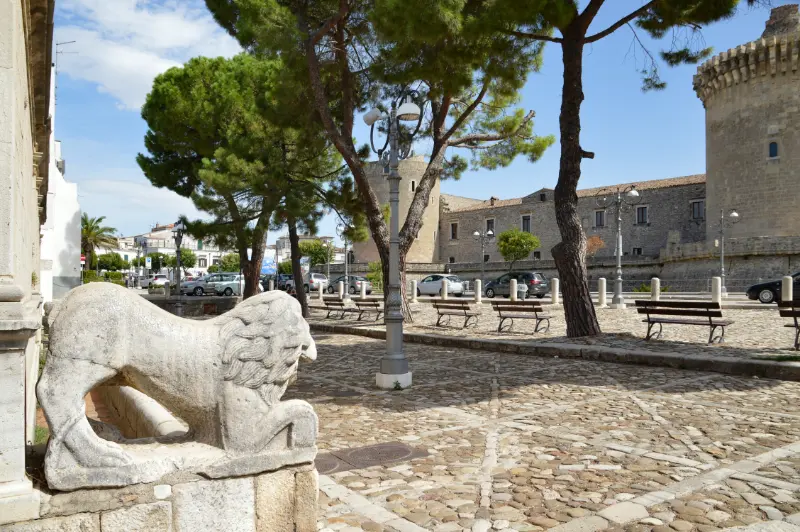
Venosa is one of the most rewarding places in northern Basilicata for visitors who enjoy understanding how different periods of history meet in a single town. Ancient Venusia became a Roman colony; the poet Horace was born here; and within a relatively small area you can find an archaeological park, the Abbey of the Holy Trinity, its astonishing unfinished extension and a castle housing a national archaeological museum. Venosa is too often treated as a footnote to Matera or as a quick stop on a winery route. With a carefully planned day, however, the town becomes a coherent journey from Roman streets to medieval religious ambition and later noble architecture. Opening arrangements vary among the sites, so planning around the official Ministry of Culture visitor information is more useful than relying on an old itinerary’s ticket prices or hours.
In this guide
- Begin with the story of Roman Venusia
- Visit the archaeological park with enough time
- The Abbey of the Holy Trinity
- Why the Incompiuta is so memorable
- National Archaeological Museum in the Pirro del Balzo Castle
- Horace and the literary identity of Venosa
- Walk Venosa's historic center between sites
- Plan a full-day Venosa itinerary
- Where to stay: Venosa or nearby Melfi?
- Add Aglianico del Vulture without rushing the history
- Getting to Venosa and combining nearby sites
- Visitor etiquette and conservation awareness
- Frequently asked questions
Begin with the story of Roman Venusia
Venosa stands on ground with a long history before and after Roman colonization. The Roman settlement of Venusia was established in 291 BCE, and its strategic position tied it to wider movements of people, trade and military power in southern Italy. At the archaeological park, surviving structures help visitors imagine the scale of the ancient town rather than merely admire isolated stone fragments. The right approach is to read the site in sequence: identify the main remains, look for evidence of public and private life and remember that visible ruins represent only selected layers of a much larger city. Exposed outdoor surfaces can be hot in summer and slippery after rain, so a midday rush is seldom ideal. Before visiting, consult the official park page for opening conditions, guided experiences and which areas are accessible on your chosen date.
To see where Venosa fits into a wider Basilicata itinerary, use our Basilicata travel guide for transport, bases and possible neighbouring stops.
Visit the archaeological park with enough time
The archaeological park lies outside the immediate heart of the modern historic center, making a car or carefully organized local transfer helpful. Do not expect to arrive at the museum entrance and immediately see every Roman monument without walking. The park’s remains and interpretive material offer context on the development of Venusia through different periods, but some features can be subtle to a visitor unfamiliar with archaeology. Give yourself time to look closely instead of taking photographs from the gate and leaving. Check whether any sections are temporarily closed for conservation work and whether a combined ticket includes the adjacent heritage complex. Carry water and sun protection when visiting in warmer months. If your party includes children, turn the visit into a small historical detective walk, asking them to identify foundations, columns and the outlines of buildings rather than expecting an interactive theme park.
The Abbey of the Holy Trinity
The Abbey of the Holy Trinity is central to Venosa’s medieval history and one of the most distinctive religious complexes in Basilicata. Its older church brings together architectural elements and historical phases shaped by centuries of use and rebuilding. The abbey also has associations with prominent Norman figures, linking Venosa to the formation of medieval power in southern Italy. When inside, take time to examine the relationship between preserved spaces, reused materials and later additions rather than searching only for one famous tomb or inscription. As an active cultural and potentially religious site, access may be affected by services or conservation needs. Respect any restrictions on photography, keep voices low and avoid touching delicate surfaces. The most rewarding moment is often noticing how the complex moves between Roman material remains and medieval building practices.
Why the Incompiuta is so memorable
The Incompiuta, the unfinished new church beside the older abbey, communicates architectural ambition in a way that a completed building could not. Tall masonry and an open skeletal plan suggest the scale of a grand religious project that was never fully realized. Visitors can compare the existing fabric with the imagined completed structure, noticing stonework, arches and relationships between the two phases of the complex. It is a place to slow down and read information panels, not merely to take a dramatic picture framed by columns. The unfinished status does not make the area abandoned or free to explore in any direction. Stay in authorized visitor spaces and observe restrictions on access to fragile remains. Weather affects the experience because parts of the structure are exposed, and a quiet morning may reveal its proportions better than a hurried visit in the strongest sunlight.
National Archaeological Museum in the Pirro del Balzo Castle
The national museum is housed in Venosa’s castle, generally associated with Pirro del Balzo, and offers an essential companion to the open-air park. Objects, explanatory displays and regional discoveries help place the exposed archaeological remains into their historical setting. The castle itself is an attraction: the robust structure makes a strong contrast with the religious architecture at the abbey. Allow time to understand its location within the town and the surrounding streets rather than arriving exclusively for museum exhibits. The Ministry of Culture administers the museum and publishes current visitor details, including any combined admission arrangements with other Vulture sites. Always confirm schedules independently because museum and park opening hours may differ. If you have only one afternoon, decide whether the museum or the open-air park is your priority; attempting both plus a long winery lunch may turn the day into a race.
Horace and the literary identity of Venosa
Quintus Horatius Flaccus, better known as Horace, was born in ancient Venusia. That connection gives the town a place in Roman literary history that reaches far beyond its modern size. Statues, references to the poet and places traditionally associated with his memory create an interesting thread through a historic-center walk. Be careful with sites marketed as the poet’s house: surviving buildings are not necessarily proven to be the exact dwelling of a famous ancient individual. Read their interpretive descriptions and treat them as historical traditions where appropriate. Rather than expecting a single grand literary museum to dominate the town, look for how Venosa incorporates Horace into public memory, street names and local cultural identity. This is especially enjoyable if you read a short introduction to his life before traveling.
Walk Venosa's historic center between sites
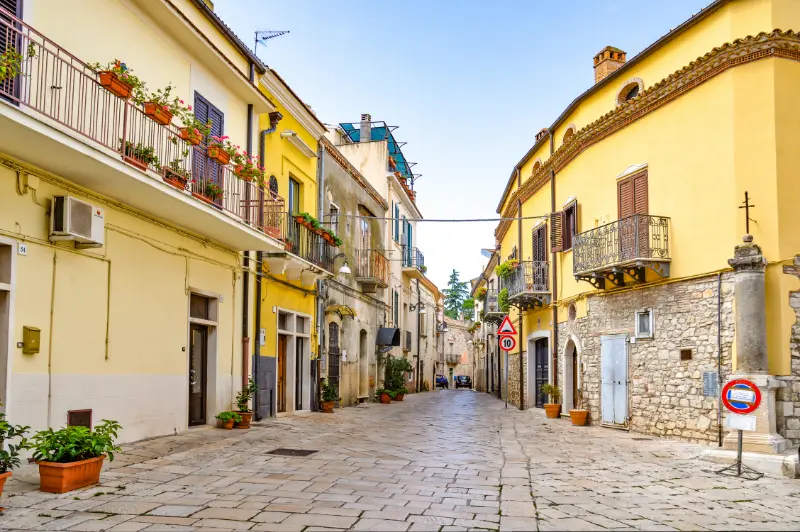
Venosa is a town to experience on foot as well as through ticketed monuments. The streets around its central square, the cathedral area and smaller historic passages reveal a working community shaped by different centuries. Look for stone fragments reused in walls, fountains and changes in the building fabric that connect the current settlement with older history. Give yourself an hour without a fixed museum appointment so you can stop in a café, browse a bakery and find a viewpoint toward the surrounding countryside. The town’s historic core is not the same as the outlying archaeological park, so allow sufficient time for transfers. Parking in central streets may be regulated or limited, and visitors should follow signs rather than assuming a direct drive to every landmark. A slower walk also helps explain why Venosa is worth a night, not just a museum ticket.
Plan a full-day Venosa itinerary
Start with the archaeological park and Holy Trinity complex if the official opening schedule supports that order. Morning light and cooler temperatures make outdoor ruins easier to appreciate. Spend enough time at the Incompiuta to compare the different architectural phases, then return to town for lunch. Use the afternoon for the museum in the castle and a self-guided historic-center circuit. This sequence minimizes backtracking and gives you context before viewing museum objects, but it should be reversed if current opening hours require it. A visitor deeply interested in archaeology can easily spend more time at the park and museum and omit a minor monument; that is preferable to treating all stops as mandatory. In winter or during unusual closures, check daylight and museum hours before departure, as the archaeological experience may need to be shortened.
Where to stay: Venosa or nearby Melfi?
Venosa is a good overnight choice for travelers who value walkable town evenings, food and Roman heritage. A guesthouse near the historic center can make dinner and an early stroll easy, although parking arrangements require confirmation. Melfi, with its imposing castle and larger regional role, is another practical base for the northern Vulture circuit. Rural lodging or vineyard properties can offer quiet views and local products but usually require a car for evening dining. Do not choose between towns solely by their apparent geographic closeness on a map; consider your next day’s route, current museum schedule and arrival time. If you want to explore wineries, contact producers before choosing a rural stay because not every estate operates a tasting room or restaurant every day.
Add Aglianico del Vulture without rushing the history
The Vulture is associated with Aglianico wine, produced in a landscape whose volcanic history influences local agriculture and regional identity. A tasting can be a lovely addition to a Venosa stay, but book it as an intentional experience rather than something squeezed between archaeology appointments. Confirm whether the winery accepts visits, provides tours in your language and offers a nonalcoholic option for the driver. If you intend to drink, arrange a safe return and avoid a long drive afterward. Local restaurants offer other opportunities to understand the area through seasonal vegetables, bread, cheeses and traditional dishes. Wine is part of the landscape, but not the only reason to come; the archaeological park and abbey deserve equal prominence in the itinerary.
Getting to Venosa and combining nearby sites
Venosa is most straightforward to include in a rental-car itinerary through the Vulture area. Public-transport connections may be available but require checking the route, service day, transfers and the gap between a bus stop and individual attractions. Visitors arriving from Matera should not assume that Venosa is a quick neighboring town; the transfer crosses a meaningful portion of Basilicata. Pairing Venosa with Melfi makes geographical sense, with one full day in each town for a relaxed cultural circuit. Lagopesole Castle can be considered on an extended northern itinerary if opening times align, but adding it to an already full day may be counterproductive. Use the Ministry of Culture’s visitor-information portal for Venosa and Melfi to decide which museums and archaeological parks can be combined with current tickets.
Visitor etiquette and conservation awareness
Venosa’s Roman and medieval remains are irreplaceable resources rather than a backdrop for climbing. Never stand on fragile walls, collect fragments or enter fenced areas. In churches and museum interiors, observe photography and dress rules and allow space for worshippers or guided groups. Exposed archaeological sites can be vulnerable to heavy rain, restoration and heat, so closures may be necessary for good reasons. Families should keep children close to uneven excavations and choose a route that matches their attention spans. The town is also a living community; support its cafés, restaurants and accommodation without treating private courtyards as public attractions. Good visitor behavior protects the very layered atmosphere that makes Venosa special.
At a glance
| Suggested stay | Full day or one overnight |
|---|---|
| Main sights | Archaeological park, abbey, Incompiuta, museum |
| Best nearby pairing | Melfi and Vulture vineyards |
| Before visiting | Check separate museum and park hours |
Related guides on MyItalyExperience
- Basilicata Travel Guide: Matera, Mountains, Coast and Vulture
- Seven Days in Basilicata: A Realistic Matera-to-Vulture Road Trip
- Best Things to Do in Basilicata: 20 Places Worth Your Time
- Driving in Italy: ZTLs, Tolls, Parking and Rental Cars Explained
Official sources for up-to-date details
The Ministry of Culture operates the main museum and archaeological sites with individual entrance rules. Consult its current visitor information before arranging the sequence of your day.
Frequently asked questions
What is Venosa famous for?
Venosa is known for the Roman colony of Venusia, the birthplace of Horace, its archaeological park, the Abbey of the Holy Trinity and the remarkable unfinished Incompiuta.
Can I visit the archaeological park and museum on one ticket?
Combined ticket options may be offered by the Ministry of Culture, but validity, included sites and prices can change. Confirm the current arrangements on the official Melfi and Venosa museum website.
How long should I allow for Venosa?
A full day is ideal for the main archaeological and cultural sites, with an overnight useful if you also plan food and wine experiences or nearby Melfi.
Is Venosa worth a trip without a car?
It can be, but public transport and transfers between the town and archaeological sites need careful checking. A car or arranged tour provides more flexibility for a multi-stop Vulture itinerary.
Is the Incompiuta an abandoned church I can explore freely?
No. It is a protected heritage site with visitor rules. Use authorized access and respect conservation barriers even though the building was never completed.
Last updated: October 17, 2026