

Basilicata rewards visitors who are prepared to look past the photograph of Matera and follow the region’s different landscapes. One day you can descend into the stone lanes of the Sassi; another you can cross the forests and sandstone peaks of the Lucanian Dolomites or watch fishing boats return to Maratea’s Tyrrhenian harbor. In the north, Norman and Swabian castles rise among the vineyards of the Vulture; farther east, the Ionian coast opens into long, sandy stretches near Metaponto. The distances on a map can look modest, but mountainous roads and dispersed sights make decisions about transport and bases unusually important. This guide explains which experiences belong together, what requires advance planning and how to give Basilicata enough time to feel like a destination rather than a hurried stop between Puglia and Calabria.
In this guide
For more detail on the landscape and possible routes, see our Maratea Travel Guide.
- Get oriented: two provinces, several different trips
- Matera: understand what UNESCO protects
- The Lucanian Dolomites beyond the zip line
- Maratea and the Tyrrhenian coast
- The Vulture: Melfi, Venosa and rural northern Basilicata
- The Ionian side and Metaponto
- Getting to Basilicata and getting around
- When to visit: match season to the landscape
- Build a practical itinerary instead of chasing highlights
- Where to sleep and how to choose an honest base
- Food, budget and responsible travel
- Frequently asked questions
Get oriented: two provinces, several different trips
For a closer look at this side of the destination, read our Pietrapertosa.
Basilicata, historically called Lucania, has two provinces, Matera and Potenza, but that division is a poor substitute for a travel map. Matera sits toward the eastern side, close to Puglia and relatively practical to reach from Bari. The Potenza area connects the Apennine interior, the Lucanian Dolomites and the Vulture. Maratea occupies a short but intricate stretch of Tyrrhenian coastline on the west, while the Ionian shore lies farther south and east. A visitor concentrating on Matera and the cave churches needs different transportation, lodging and footwear from someone combining mountain villages and coastal swimming. The best route is therefore built around two or three geographic clusters, not a string of attractive names. Many first-timers underestimate the road time between Matera and Maratea or confuse a train station serving a municipality with the historic village several kilometers uphill. Start by marking the actual arrival point of your accommodation and each attraction entrance.
Matera: understand what UNESCO protects
For a closer look at this side of the destination, read our Acerenza Travel Guide.
For a closer look at this side of the destination, read our Matera Sassi.
For a closer look at this side of the destination, read our Potenza Travel Guide.
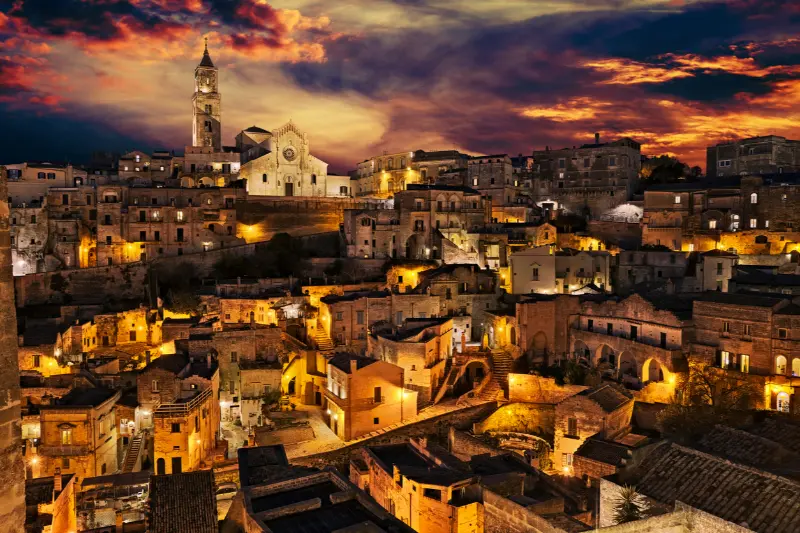
The UNESCO site is not simply a collection of picturesque cave hotels. It covers the Sassi districts and the Park of the Rupestrian Churches across the ravine: a landscape where people adapted caves, terraces, cisterns, churches and streets to a difficult limestone environment over many centuries. Sasso Caveoso and Sasso Barisano curl below the older Civita, with the cathedral occupying its own elevated position. For a first visit, spend two nights and make an unhurried circuit in daylight before returning after sunset. The sequence matters. Begin from the upper town to understand the shape of the Sassi; then descend on foot, visit a domestic cave museum or a rupestrian church with a legitimate ticket, and climb gradually toward a viewpoint. Across the Gravina, Murgia Materana offers a different reading of the settlement rather than simply another photography stop. Trails can be exposed, steep and difficult in heat; checking current park access is essential.
The Lucanian Dolomites beyond the zip line
For a more detailed plan, our Castelmezzano develops this part of the journey step by step.
Around Castelmezzano and Pietrapertosa, dramatic sandstone ridges rise above compact villages whose narrow lanes make driving into the center impractical. The famous Volo dell’Angelo connects the two towns when operating, but it should be treated as an optional adventure rather than the reason the area exists. The regional park also protects forests, historical sites and walking routes, many with marked distances and difficulty ratings on the park’s website. Stay overnight if your schedule allows. An early village walk, a calm lunch and an afternoon excursion create a more rewarding experience than racing from Matera merely to buy a flight ticket. Families or visitors uncomfortable with heights can still enjoy the viewpoints and the smaller streets. Hiking plans require suitable shoes, drinking water and an honest assessment of ascent, trail exposure and forecast thunderstorms. Mountain weather can turn a pleasant morning into a poor afternoon very quickly.
Maratea and the Tyrrhenian coast
Maratea is sometimes called the Pearl of the Tyrrhenian, but it is not one continuous beach town. The inland historic center, harbor, scattered hamlets, cliffside viewpoints and bathing spots occupy different elevations and roads. The statue of Cristo Redentore on Mount San Biagio is a major landmark; traffic arrangements and access restrictions toward the summit may change seasonally, so check locally rather than assuming you can drive to the statue. For beach time, decide whether you prefer a supervised lido, a pebble cove or a rocky snorkeling shore, and note the exact access path. Not every cove is easy with a stroller, heavy bag or limited mobility. The port area works well for an evening meal and coastal atmosphere; an upper-town stay is better for exploring churches and restaurants on foot. Maratea fits naturally into a western coast trip, less naturally into a rushed Matera day trip.
The Vulture: Melfi, Venosa and rural northern Basilicata
For a closer look at this side of the destination, read our Venosa.
To explore local dishes and food stops in more detail, use our Melfi Castle and the Vulture.
The Vulture area offers a completely different sort of vacation from Matera. Melfi’s great castle now houses the National Archaeological Museum, connecting Norman, Swabian and later history with archaeological discoveries. Nearby Venosa layers Roman remains, the archaeological park, the old Abbey of the Holy Trinity and the remarkable unfinished church called the Incompiuta. The same trip can include vineyards producing Aglianico del Vulture, but tasting rooms do not necessarily accommodate drop-ins and anyone driving should plan responsibly. Consider using Melfi or a rural property as a two-night base to explore these sites. Museum tickets, combinations, available areas and opening hours are published by the Ministry of Culture’s Melfi and Venosa institutions; they are worth checking before setting out because not all monuments operate on one shared schedule. The rewarding feature here is the connection among landscape, medieval power and much older settlement.
The Ionian side and Metaponto
For more detail on the landscape and possible routes, see our Metaponto Archaeological Park, Tavole Palatine and Beaches.
Basilicata has an Ionian coastline too, making it possible to pair a historic inland holiday with a few gentler seaside days. Metaponto is particularly interesting because its coastal setting is close to traces of Magna Graecia, including the celebrated columns of the Tavole Palatine. The coast is less cliff-bound than Maratea, with broader stretches of sand and family-oriented beach infrastructure in established resorts. Do not assume that every archaeological site and museum follows identical opening arrangements, or that a coastal hotel is convenient for an evening walking tour of Matera. Choose the Ionian shore when the priority is sand, beach clubs and a relaxing family pace; choose Maratea if coves, hill scenery and intimate coastal roads appeal more. Wind, sea conditions and summer traffic still matter. A beach holiday here can be excellent, but it will feel different from the famous cliff views of the Tyrrhenian side.
Getting to Basilicata and getting around
Bari is a common gateway for Matera, while other travelers enter through Naples, the Tyrrhenian rail corridor or road connections from Puglia and Calabria. Matera’s local rail services use Ferrovie Appulo Lucane and are not interchangeable with every Trenitalia service in the region. Check departure station, day of travel and whether an itinerary mixes train and bus sections. Potenza has different rail links, while rural mountain villages often require infrequent buses or a car. A rental car is a major advantage for the Lucanian Dolomites, Vulture and small-town itineraries, but not for parking inside Matera’s pedestrian historic areas. Book a property with clear parking instructions and avoid navigating by simply entering the hotel name in a map app. Mountain roads demand time, and late-night rural driving can be tiring. If traveling without a car, simplify the plan to a limited number of well-served bases rather than forcing every sight into one week.
When to visit: match season to the landscape
For a more detailed plan, our Aliano and the Calanchi develops this part of the journey step by step.
Spring and early fall are usually the easiest seasons for combining long walks, urban sightseeing and village visits without the most intense heat. Summer makes sense for swimming, harbor evenings and beach services, but Matera’s exposed stone surfaces and the Murgia can be uncomfortable under strong sun. July and August also create tighter parking and accommodation conditions along Maratea’s coast. Winter brings quieter towns and possible snow or difficult conditions in higher mountain areas; some small restaurants and tourism services operate fewer days. Shoulder-season travel is not automatically crowd-free during holiday weekends. When planning a hiking trip, consider afternoon thunderstorms and changing conditions at elevation; when planning sea days, look at beach access, lifeguard provisions and the actual forecast. The right season depends on the area, not a single regional average.
Build a practical itinerary instead of chasing highlights
For a more detailed plan, our Craco Ghost Town develops this part of the journey step by step.
With three nights, focus on Matera and one easy nearby outing. Four or five nights can cover Matera and the Lucanian Dolomites if transport is settled in advance. Seven nights allow a thoughtful triangle of Matera, mountain villages and Vulture, or a different combination of Matera, the Ionian coast and Maratea with long driving days carefully limited. Trying to add all of those areas plus Pollino hiking and every castle is usually counterproductive. Put sightseeing that requires reservations early in the day; leave time for lunch, photo stops and steep town streets. Use the final night near your departure airport or station when you have an early connection. A successful itinerary is measured by the time you spend in the places themselves, not by how many names you can mark on a list.
Where to sleep and how to choose an honest base
If choosing a base is the next step, our Where to Stay in Basilicata compares the options in more detail.
A cave room in Matera can be memorable, but the experience may involve long stairways, humidity, uneven floors and luggage transfers; verify ventilation, access instructions, and the actual entrance. For a family with a stroller or anyone avoiding stairs, the upper town around the Piano can be more practical. In Castelmezzano and Pietrapertosa, choose properties for walkable village atmosphere, noting that parking may be outside the core. Maratea’s center, harbor and beach hamlets are distinct lodging locations, so check your map rather than relying on a generic Maratea address. Melfi is a useful urban base for castles and museums; rural lodging can be excellent for quiet evenings if you have a car. Reserve early for sought-after summer and holiday periods, but avoid assuming a high price automatically buys the best location for your intended activities.
Food, budget and responsible travel
For more detail on the landscape and possible routes, see our Policoro Travel Guide.
To explore local dishes and food stops in more detail, use our Rotonda and Pollino National Park.
Look for regional dishes such as pasta with local peppers, bread traditions linked to Matera, cheeses, seasonal vegetables and Aglianico wine. Restaurants in small villages can observe weekly closing days, and mountain or beach businesses may have distinctly seasonal hours. Keep your budget flexible: transport arrangements, guided access to cave churches, parking, coastal lodgings and admission tickets matter more than theoretical low daily averages. Bring a refillable bottle when safe drinking water is available and never enter unmarked caves, restricted archaeological areas or private properties for a photograph. UNESCO status does not mean every alley, chapel or hillside is open at all times. The most respectful way to experience this region is to spend locally, follow signage and treat working villages as living places rather than stage sets.
At a glance
| Suggested trip | 4–7 nights to combine several regions |
|---|---|
| Best transport | Car for remote areas; verify FAL connections for Matera |
| Highlights | Matera, Lucanian Dolomites, Maratea and the Vulture |
| Overnight strategy | Two or three geographically sensible bases |
Related guides on MyItalyExperience
- Italy Travel Guide for First-Time Visitors: How to Plan a Trip That Feels Unhurried
- Train Travel in Italy: Tickets, Stations and Routes Explained for Visitors
- Best Time to Visit Italy: A Month-by-Month Guide for Every Kind of Trip
- Driving in Italy: ZTLs, Tolls, Parking and Rental Cars Explained
Official sources for up-to-date details
For regional travel plans, consult the tourism board, railway notices and heritage-site information before visiting; the source links below provide a way to verify the route decisions outlined here. Pay particular attention to widely separated areas such as the Vulture and Maratea.
Frequently asked questions
Is Basilicata worth visiting beyond Matera?
For a more detailed plan, our Best Things to Do in Basilicata develops this part of the journey step by step.
Yes. Matera is extraordinary, but Maratea’s coast, the mountain villages of the Lucanian Dolomites and the museums and vineyards of the Vulture give the region several distinct travel experiences. The key is allowing enough time between them.
How many days do I need for Basilicata?
For a more detailed plan, our Seven Days in Basilicata develops this part of the journey step by step.
Three days can give Matera proper attention. A week can connect two or three regional clusters without an exhausting schedule. Longer stays are especially worthwhile for hiking, beach time and slower rural drives.
Can I visit Basilicata without renting a car?
Matera is relatively feasible without one, especially via connections from Bari. Reaching small mountain villages and combining far-flung attractions is considerably harder; choose fewer bases and verify current buses rather than relying on assumed frequency.
Is Basilicata suitable for families?
Yes, but choose activities by age and mobility. Flat sandy beaches are easier for younger children than steep Sassi stairways or exposed hiking routes, and many beautiful village centers do not allow convenient doorstep parking.
What should I book in advance?
Reserve accommodation in busy periods, check current museum and guided cave-church arrangements, confirm any adventure activity with its operator, and verify transport connections close to departure. Do not rely on a fixed schedule published years earlier.
Last updated: October 17, 2026