
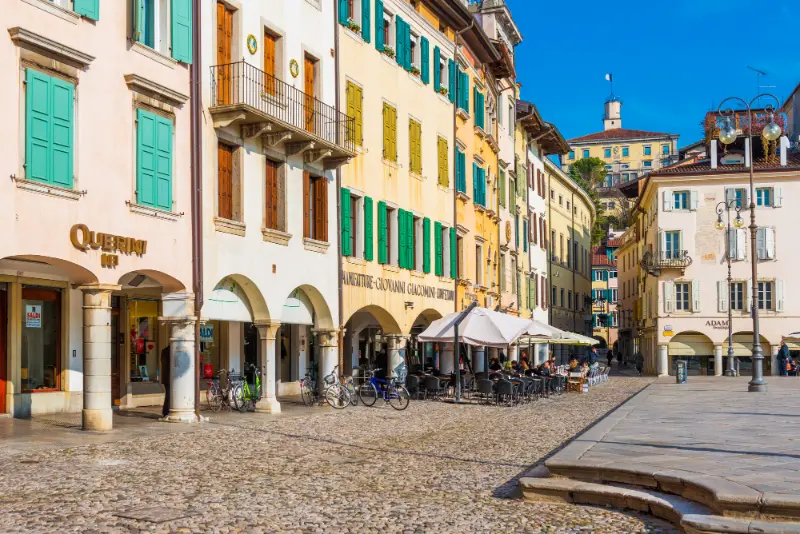
A week in Friuli Venezia Giulia is enough to appreciate its contrasting character, but not enough to cover every mountain valley, seaside resort and historic town. This route favors places that fit together geographically: Trieste and its coast, the Italian–Slovenian border around Gorizia, Friulian Udine and Cividale, then Aquileia and Grado. It works particularly well from late spring to early autumn, though the city and museum days adapt to any season. The goal is to spend more time visiting and less time reorganizing luggage or waiting for the next connection.
On this page
- First choose your transport and overnight plan
- Day 1: arrive in Trieste and explore the waterfront
- Day 2: San Giusto and Miramare without rushing
- Day 3: Gorizia and the neighboring Slovenian city
- Day 4: Udine's squares, art and food
- Day 5: Cividale del Friuli and the Natisone River
- Day 6: Roman Aquileia, with enough time for the mosaics
- Day 7: Grado's beach, historic center and lagoon
- A no-car version: what changes
- Traveling by car: parking and sensible detours
- Budgeting the week realistically
- Families and accessibility: adapt the pace
- When this seven-day plan works best
- Useful alternatives if you have different priorities
At a glance
| Day | Main focus |
|---|---|
| 1 | Trieste waterfront |
| 2 | San Giusto and Miramare |
| 3 | Gorizia and Nova Gorica |
| 4 | Udine |
| 5 | Cividale del Friuli |
| 6 | Aquileia |
| 7 | Grado |
First choose your transport and overnight plan
The itinerary assumes arrival through Trieste Airport, Venice or a regional rail connection. A car is optional for most city segments and helpful for certain excursions, but you can build a mostly car-free variation by checking current rail and bus schedules. For accommodation, consider two or three nights in Trieste, two in Udine and the final two near Grado. If you dislike hotel changes, use Trieste and Udine as the two main bases and treat Grado as a day trip with a preplanned return.
You can place 7 Days in Friuli Venezia Giulia in a more complete itinerary with the Trieste Travel Guide, which also covers practical arrival details.
Check transport schedules before fixing museum tickets. Grado does not sit on the main railway line, and a smooth route depends on its road connection. In the summer, additional sea services may be offered, but do not build the week’s essential transfers around unconfirmed seasonal ferries. The hotel sequence can be reversed for arrivals from the west.

Day 1: arrive in Trieste and explore the waterfront
Keep the first day flexible. From Trieste Centrale or the airport connection, reach your accommodation and leave luggage before setting out. Begin at Piazza Unità d’Italia, where the city’s palaces face the Adriatic, and walk along Molo Audace. Then continue through the Canal Grande area to see a very different urban setting of waterways, churches and cafés. A late arrival still leaves time for an enjoyable waterfront stroll; an early arrival can include a museum or a quiet lunch in the old town.
Avoid booking a timed visit to Miramare immediately after a flight, particularly if you’re arriving via a connecting train. Delays and luggage transfers are easier to absorb when the only plan is a city walk. For dinner, choose a place within walking distance of the hotel so the trip begins comfortably, and keep some energy for a fuller day tomorrow.
Day 2: San Giusto and Miramare without rushing
Spend the morning climbing or traveling to San Giusto hill to see the cathedral, castle surroundings and views across the gulf. The castle and its exhibitions may involve separate tickets, so review them before committing. Returning downhill through the older streets offers a good sense of Trieste’s changing layers. After lunch, travel toward Miramare Castle and its park north of the city. Give this outing enough time for both the historical residence and an outdoor walk along the promontory.
This combination fills a proper day. If the weather is windy or wet, reverse the order to use the most suitable conditions for the park, or substitute an indoor museum in the afternoon. Travelers with mobility concerns should identify bus stops and walking gradients rather than assuming the two castles are straightforward pedestrian destinations. Sleep again in Trieste rather than changing hotels after an active day.
Day 3: Gorizia and the neighboring Slovenian city
Travel from Trieste toward Gorizia and focus the day on the way borders shaped everyday life. Walk from the historic streets toward Borgo Castello, allowing time for a castle visit or views over the town. Then explore the story of Piazza Transalpina and Nova Gorica on the Slovenian side. The European Capital of Culture project shared by the two cities in 2025 remains a useful lens for understanding the places in 2026, but exhibitions and tours should be checked for their current schedule.
Do not assume the castle district and border square are adjacent: allow walking or transit time. Bring identification when crossing into Slovenia and check connections if relying on public transport. This can be a day trip returning to Trieste, or a stop while transferring to Udine if luggage storage and transport align. If traveling with small children, choose either the castle or a longer cross-border walk rather than insisting on every museum.
Day 4: Udine's squares, art and food
Move to Udine and begin with Piazza Libertà and the Loggia del Lionello. The castle hill provides a different viewpoint, while streets toward Piazza Matteotti are pleasant for a relaxed lunch. Art lovers should select at least one Tiepolo-related collection or Casa Cavazzini. Not all museums are open on the same days, so choose which matters most and confirm access before the morning. The city rewards unstructured time, and it would be a shame to use it only as a place to change trains.
Spend the evening in Udine. Local osterias and the central squares are part of the experience, especially after day-trippers have gone. If the trip includes wine tasting, avoid driving afterward. Accommodation near the center works well if you want to walk to dinner; the station area may be more practical for an early departure on day five.
Day 5: Cividale del Friuli and the Natisone River
Take the dedicated train service from Udine to Cividale if traveling without a car. Start around the Devil’s Bridge, looking into the Natisone gorge, then explore the historic streets and the town’s Lombard heritage. The Tempietto Longobardo, within Santa Maria in Valle, is a particularly important stop. The Christian Museum and archaeological collections can deepen the experience, though you should be realistic about time and the interests of your group.
Allow most of the day rather than visiting only for a photograph of the bridge. A comfortable lunch and slow walk through the center make this one of the route’s most enjoyable cultural outings. If weather is poor, prioritize indoor heritage sites and skip any riverbank path with unsuitable conditions. Return to Udine for a second night, avoiding a needless hotel switch.
Day 6: Roman Aquileia, with enough time for the mosaics
Leave Udine for Aquileia, by car or a carefully checked combination of train and bus. The Patriarchal Basilica’s early Christian mosaic floor is the centerpiece, but the museum collections and archaeological areas also deserve time. Choose a deliberate route between the basilica, excavated sections and the National Archaeological Museum rather than trying to discover their locations on arrival. Some remains are visible outdoors; others require admission or have particular opening arrangements. Summer heat can make the outdoor walking segments tiring.
If the group is enthusiastic about Roman history, spend much of the day here. If travelers need a gentler schedule, focus on the basilica and one additional site before continuing toward Grado. Arriving at the seaside in the late afternoon leaves time to enjoy the old town without turning the day into a race. If you are not changing hotels, return to Udine according to the actual bus or train schedule.
Day 7: Grado's beach, historic center and lagoon
Finish with a quieter day at the sea. Grado’s sandy shore offers a straightforward place to rest, especially for families, while the streets near the Basilica of Sant’Eufemia reward an hour or two away from the beach. If you would rather explore nature, investigate a lagoon boat outing or a designated reserve route. Check seasonal sailing times, wind and availability; a lagoon cruise is an option, not a guaranteed element of every itinerary.
For travelers departing on day seven, keep the plan modest and confirm the connection back to Trieste Airport or the railway. It is often better to enjoy breakfast, take one final walk and leave with a comfortable margin than to fit a long excursion before a flight. With an eighth day available, add Palmanova’s star-shaped fortifications or more time in Grado instead of forcing both into the last afternoon.
A no-car version: what changes
Trieste, Gorizia, Udine and Cividale are strong candidates for rail-based travel. The coastal heritage leg requires more attention: Aquileia and Grado are reached using road connections from rail hubs, and the return trip may be less frequent than the train between major cities. Before booking accommodation, compare departures for the exact day of the week, including Sundays and holidays. Use the regional tourism site and transport operator for confirmation rather than relying on a route summary from a previous season.
Luggage can become a hidden cost in an itinerary like this. When moving between bases, consider hotel luggage storage and avoid scheduling a long archaeological stop while carrying bags. A taxi for one awkward connection may be worthwhile, but check availability and approximate cost beforehand. For a fully rail-centered week, replace Grado overnight with another Udine night and make the coast an optional day out.
Traveling by car: parking and sensible detours
A car allows flexible timing at Aquileia and Grado and makes Collio wineries or Palmanova possible detours. It is least useful inside the city centers, where restricted traffic areas, garages and narrow streets can complicate navigation. Confirm the hotel’s parking instructions before arrival, and do not drive into pedestrian lanes just because a navigation app directs you there. A roadside stop at a vineyard needs an appointment if you intend to visit a producer.
Build extra time into coastal routes on summer weekends. If you are tempted to add the mountains, remember that the Fusine Lakes near Tarvisio form a separate northern excursion and would consume much of a day. A week is better spent well in three distinct areas than poorly across five.
Budgeting the week realistically
The main variable is accommodation location and season: seaside rooms can become expensive at summer peaks, while city prices rise around major events. Budget for city museum admissions, archaeological tickets, regional train and bus fares, parking and beach facilities where applicable. Grado’s reserved loungers are not necessarily included in hotel prices. Restaurant costs vary with location, and a simple café lunch gives you flexibility on museum-heavy days. Transport should be costed per day; a rail ticket that looks cheap can be less economical if every visit requires a lengthy connecting taxi.
A useful budget sheet lists one night’s accommodation, one main attraction and one longer transport segment for each day. This makes it easier to decide where paying a little extra saves time and where you can enjoy a free walk or historic square.
Families and accessibility: adapt the pace
The route includes exposed outdoor archaeology, uphill castle approaches, historic pavements and sandy beaches, so no single level of accessibility describes the whole week. Check venues individually for step-free routes, lifts and visitor assistance. For younger children, one major attraction plus a playground, beach or café stop tends to work better than three consecutive museums. In Udine, broad squares make relaxed breaks possible; at Aquileia, sun exposure and walking distances deserve planning.
Seniors may prefer remaining in one base for an extra night rather than transferring three times. A slightly slower schedule that leaves energy for dinner and evening walks will often feel richer than covering more attractions. The order of the days can be changed to accommodate weather and opening days without losing the route’s logic.
When this seven-day plan works best
Late spring and early fall suit a mixed itinerary because city walking and archaeology are comfortable, even if swimming is not guaranteed. Summer supports beach days and longer daylight but brings heat and more demand for accommodation along the coast. Winter is possible as a city-and-history trip, but the lagoon boat component and beach portion need to become museums, food stops or additional urban walks. Always check the Bora wind around Trieste, museum closures and public transport for your exact dates.
If your main goal is hiking, choose a different seven-day structure with nights in Tarvisio or Carnia. The region’s Alps deserve proper planning rather than being inserted between two crowded urban days. The itinerary above is designed as an introduction to the region’s history, contrasting cities and seaside atmosphere.
Useful alternatives if you have different priorities
Food and wine travelers can replace Grado’s beach day with Collio or San Daniele del Friuli, using arranged transport if tasting. Architecture lovers could add Palmanova, an extraordinary planned fortification town, on the Aquileia day only if they are willing to reduce archaeological time. Travelers keen on less-visited cities might trade Gorizia for Pordenone, but this changes the geographic efficiency of the route. Another option is to base in Trieste for three days and Udine for four, choosing day trips according to weather.
Whatever version you choose, resist treating each day’s list as compulsory. Keeping one afternoon free for an unexpected exhibition, a longer meal or a village found along the way is a feature of a well-designed trip, not a planning failure.
Related My Italy Experience guides
- Friuli Venezia Giulia Travel Guide: Trieste, Historic Towns, Coast and Mountains
- Trieste Travel Guide: What to See, Where to Stay and How to Explore the City
- Udine Travel Guide: Piazza Libertà, Tiepolo Art, Food and Day Trips
- Grado Travel Guide: Beaches, Old Town, Lagoon Trips and Family Tips
Frequently asked questions
Can I follow this itinerary without a car?
Most city legs are realistic using trains. Aquileia and Grado need careful bus planning, and some transfers may be easier with a taxi, rental car or organized excursion.
Is the week too busy for children?
It can be adapted by dropping one museum per day, staying in only two bases and protecting a full beach or rest day in Grado.
What if it rains on the beach day?
Use the day for Aquileia indoor museums and basilica, another Trieste collection, or a relaxed Udine visit. Do not rely on weather-sensitive lagoon sailing.
Map and visitor information
Official planning sources
- Official regional arrivals and rail links
- Gorizia and Nova Gorica cultural visitor information
- Grado and Aquileia tourism area
Check the actual location, parking or train links, beach arrangements and cancellation rules before choosing your base.
Last updated: October 17, 2026