
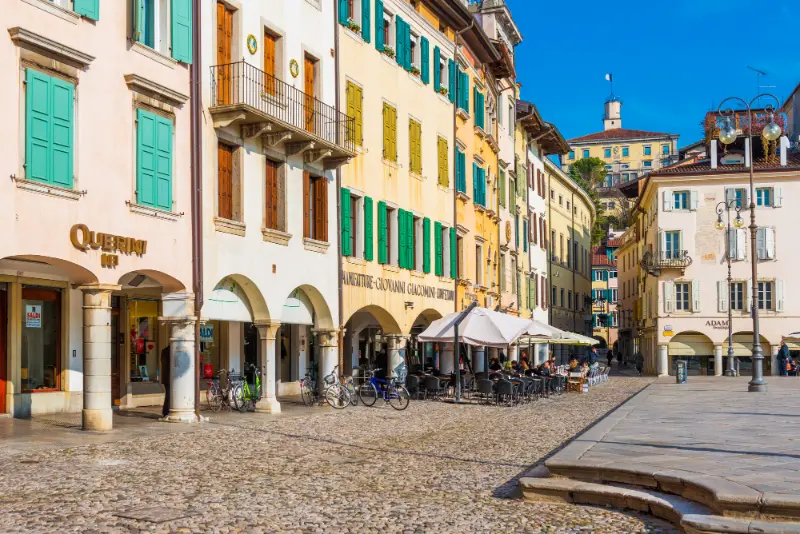
Friuli Venezia Giulia sits at Italy’s northeastern edge, where the Adriatic meets the limestone Karst and the mountains climb toward Austria and Slovenia. For travelers accustomed to the standard Rome–Florence–Venice circuit, the appeal is not one blockbuster attraction. It is the chance to spend a morning among Roman mosaics, eat lunch in a Friulian osteria, and finish the day beside a waterfront with a distinctly Central European character. The region is small on a map, but its rail-connected cities, lagoon coast, vineyards, and Alpine valleys call for different approaches. Choosing two or three bases is usually more satisfying than racing between every corner.
On this page
- Understanding the region before planning a route
- Trieste: a maritime city with another rhythm
- Udine: art, squares and a slower city break
- Roman Aquileia and the mosaic heritage
- Cividale, Gorizia and the border story
- Coast, lagoons and beach decisions
- The mountains: Julian Alps, Carnia and quiet valleys
- How to get there and move around
- When to go: weather and seasonal trade-offs
- How many days and where to sleep
- Food and small experiences worth making time for
- Traveling with children, seniors or reduced mobility
- A balanced first itinerary
At a glance
| Trip style | Recommended focus |
|---|---|
| First visit | Trieste, Udine and Aquileia |
| Coast | Grado and lagoon |
| Alpine walking | Tarvisio or Carnia with overnight stay |
| Car-free culture | Trieste, Udine, Cividale, Gorizia |
Understanding the region before planning a route
For a more detailed plan, our San Daniele del Friuli Travel Guide develops this part of the journey step by step.
For a more detailed plan, our Sappada Travel Guide develops this part of the journey step by step.
For a more detailed plan, our Venzone Travel Guide develops this part of the journey step by step.
The name combines historic Friuli with Venezia Giulia, and the distinction still helps explain the landscape. Udine and the Friulian plain have a strong local language, food culture and Venetian architectural influence. Trieste grew as a Habsburg maritime city, with coffee houses, grand nineteenth-century buildings and a port looking beyond Italy. Gorizia reflects a shared Italian–Slovenian border history. Up north, Carnia and the Julian Alps offer mountain villages, lakes and trails that feel far removed from the beaches of Grado. These are not interchangeable settings. For a first visit, think in corridors: the rail route connecting Trieste, the airport area, Gorizia and Udine; the historic plain around Aquileia; and the road-dependent valleys rising from the north.

A common mistake is to assume every destination is an easy day trip from Trieste. Udine and Gorizia work well without a car, but an excursion mixing mountain stops and the lagoon can become a transport exercise rather than a holiday. Make your first decision about landscapes rather than ticking off attractions.
Trieste: a maritime city with another rhythm
For a visit with children, our Lignano Sabbiadoro Travel Guide covers different priorities and easier ways to plan the day.
Trieste deserves at least a full day and often two nights. Begin at Piazza Unità d’Italia, a monumental square that opens directly onto the sea, and walk to Molo Audace to see how the urban waterfront changes with the light. The Canal Grande district introduces a more intimate city of bridges, churches and cafés; then climb San Giusto hill for the cathedral, castle surroundings and views across the gulf. Miramare Castle and its grounds lie outside the central walking circuit, so give them a separate half-day rather than squeezing them between museums. The shoreline around Barcola is popular for swimming and sunbathing in the warmer months, but its bathing terraces differ from sandy Adriatic resorts.
Trieste also rewards an indoor day. Its museums and historic coffee houses make rainy weather less disruptive than on a beach-centered trip. Many streets around the old town are walkable, but the San Giusto climb and some coastal approaches require more effort. A city bus can reduce walking, and a central stay is useful for returning after dinner.
Udine: art, squares and a slower city break
Udine is the strongest inland urban base for travelers who want history without the crowds associated with Italy’s largest cities. Piazza Libertà, the Loggia del Lionello and the castle hill form a clear first walking route. Afterward, visit Piazza Matteotti, browse side streets, and choose between Casa Cavazzini’s modern art and the galleries associated with Tiepolo. The historical centre is compact enough for an unhurried day, although museum hours should shape the order. The castle hill adds a moderate uphill stretch; travelers with limited mobility can plan an alternative route or focus on the lower squares.
Udine’s evening life is part of its attraction. Instead of scheduling a late transfer, allow time for a meal with frico, seasonal vegetables or other Friulian dishes. The city has rail access to Trieste, Pordenone and the Venice direction, and a dedicated line serves Cividale del Friuli. That makes it an effective base for a history-focused short break without renting a car.
Roman Aquileia and the mosaic heritage
For a closer look at this side of the destination, read our Palmanova Travel Guide.
For a closer look at this side of the destination, read our Pordenone Travel Guide.
Aquileia was founded as a Roman colony in 181 BC and later became an influential early Christian centre. Its UNESCO-listed archaeological area and Patriarchal Basilica make it one of the region’s most significant historical outings. The basilica mosaic floor deserves slow attention: rather than glancing at a single viewpoint, allow time to understand how the complex relates to the excavated town, museum collections and surviving river-port landscape. Some archaeological remains can be seen outdoors, while protected areas and museum sections have separate admission arrangements.
Aquileia is not a large-city experience. It is a spread-out heritage landscape, so comfortable shoes, sun protection in summer and an awareness of closing times matter. Pairing it with Grado can work well by car, but do not assume a seamless same-day bus connection without checking the current timetable. Visitors passionate about Roman history may want most of a day in Aquileia alone.
Cividale, Gorizia and the border story
To explore local dishes and food stops in more detail, use our Gorizia Travel Guide.
Cividale del Friuli is known for its Lombard heritage, including the Tempietto Longobardo within the Monastery of Santa Maria in Valle. Its Devil’s Bridge crosses the Natisone gorge, giving a dramatic contrast to the small streets and church interiors. A dedicated Udine–Cividale railway makes it a sensible car-free excursion. Reserve time for the museum circuit rather than treating the bridge as the entire visit.
Gorizia is a different proposition. The city grew around its castle and has parks, Habsburg-period architecture and a complicated twentieth-century border history. Its relationship with adjacent Nova Gorica in Slovenia was highlighted by the two cities’ shared European Capital of Culture project in 2025. Walking toward Piazza Transalpina turns that history into something visible. Check cross-border transport and any identification requirements before leaving Italy, even though both countries belong to the Schengen Area.
Coast, lagoons and beach decisions
For more detail on the landscape and possible routes, see our Piancavallo Travel Guide.
For soft sand and traditional seaside holidays, Grado and Lignano Sabbiadoro are the main names to investigate. Grado has an atmospheric old town, early Christian churches and beach areas facing the Adriatic. Its lagoon is a landscape of channels, birdlife and fishermen’s huts; guided boat trips add a different dimension to a beach stay. Lignano suits travelers who place greater emphasis on extensive resort infrastructure and family-oriented beach services. Each has a noticeably different personality from Trieste’s rocky or engineered bathing areas.
Nature-minded visitors can explore protected lagoon habitats such as Valle Cavanata, with attention to designated routes and seasonal wildlife protection. Not all boat routes operate throughout the year, and weather or tide conditions can affect excursions. Choose a beach base by the kind of coast you want, not simply by the distance shown on a map.
The mountains: Julian Alps, Carnia and quiet valleys
For more detail on the landscape and possible routes, see our Tarvisio Travel Guide.
The mountain north is another holiday entirely. Around Tarvisio, the Fusine Lakes and the mountain setting near the Slovenian and Austrian borders attract walkers and photographers. Carnia offers stone villages, food traditions and roads to mountain passes; the Dolomiti Friulane area is known for more remote scenery. Trail difficulty changes dramatically between short lakeside routes and exposed Alpine paths. Snow can remain at elevation after conditions feel springlike down in Udine.
A mountain detour deserves its own nights if hiking is the goal. Public transport can reach some main towns but generally cannot match the flexibility of a car for scattered trailheads. Confirm local road and trail conditions, use marked paths, carry layers and avoid building a schedule around cable cars or mountain huts without checking their current season.
How to get there and move around
Trieste Airport is located at Ronchi dei Legionari rather than inside Trieste. Its connected rail station makes it practical to continue to major cities. Regional trains provide useful links toward Trieste, Udine, Gorizia and Pordenone; Udine also connects with Cividale on the FUC service. Ferries, buses and seasonal coastal boats fill some gaps, but services to small villages vary by day and season. Look up the exact return journey before choosing a public-transport day trip, especially on Sundays.
A car is useful for vineyards, upland valleys and combining several rural stops. In the cities it is often less helpful: parking restrictions and pedestrian areas can increase cost and frustration. Many visitors can combine a few days by train with a short car rental for the mountains. Check tolls and cross-border rental conditions if the trip also extends into Slovenia or Austria.
When to go: weather and seasonal trade-offs
Spring is excellent for museums, cities, cycling and flowering countryside, but sea temperatures may not suit a swimming holiday. Summer brings beach life, longer mountain walking windows and busy coastal accommodation. The interior can feel hot; plan archaeological outings earlier in the day and take shade breaks. Autumn is attractive for food, vineyards and walks in milder weather, although some seasonal ferries and mountain services wind down. Winter is a good time for galleries, coffee houses and certain mountain activities, with shorter daylight and more weather-related changes.
The Bora wind is especially associated with Trieste and can make waterfront weather feel very different from the thermometer. Check the forecast for each area instead of extrapolating from one regional city. For a first mixed city-and-coast holiday, late spring or early autumn usually offers a comfortable compromise.
How many days and where to sleep
If choosing a base is the next step, our Where to Stay in Friuli Venezia Giulia compares the options in more detail.
With three days, choose Trieste plus a single excursion or Udine with Cividale and a historic site. Five days permits two bases and a worthwhile coast or border-city addition. Seven days works well with Trieste and Udine as the main overnight stops, plus time around Aquileia, Grado and Gorizia. Ten days makes room for a mountain stay or a slower visit to the western part around Pordenone and the Friulian foothills.
Sleep in central Trieste if cafés, seafront evenings and cultural sights are priorities; in Udine for Friulian towns and rail excursions; or in Grado for a classic beach holiday. Mountain accommodation requires a careful location check: a valley name can conceal a long drive between trailheads. Read cancellation policies and parking details instead of assuming all regional properties work for the same itinerary.
Food and small experiences worth making time for
The region’s cuisine reflects mountains, central Europe and the Adriatic. Frico, a potato-and-cheese dish, is a substantial Friulian classic. Prosciutto di San Daniele is associated with the hills to the west of Udine, while local wines range across Collio and the Colli Orientali. Trieste’s coffee culture carries its own vocabulary and café traditions. On the coast, fish and lagoon dishes take precedence. The variety is a reason not to book every meal in advance: stop in local bakeries, markets or family-run places while following the day’s route.
Wine tasting should be planned with transport in mind. If everyone in the party wants to taste, choose a driver-free arrangement or a guided experience. Respect working vineyards and book cellar visits ahead rather than walking unannounced onto private property.
Traveling with children, seniors or reduced mobility
For a visit with children, our Forni di Sopra Travel Guide covers different priorities and easier ways to plan the day.
Friuli Venezia Giulia can be a gentle destination when days are designed around manageable distances. Trieste’s central waterfront and Udine’s broad squares offer flexible strolls and café stops. Grado is practical for families seeking organized beaches, though the precise beach entrance and changing-room facilities should be checked. Museum complexes such as Aquileia contain a mix of level paths, historic surfaces and specific accessible routes. Contact individual venues for the most reliable information about lifts, ramps and guided visits.
For older travelers, a two-base route is usually easier than switching hotels daily. For children, alternate an indoor museum with an outdoor activity instead of expecting a full day of archaeological interpretation to work at every age. In the mountains, choose routes by actual terrain, not their apparent shortness on an online map.
A balanced first itinerary
Start with two nights in Trieste to cover the city and Miramare. Move to Udine for two or three nights, including Cividale and time to enjoy the city itself. Use a final base near Grado if beaches are important, with Aquileia and perhaps Palmanova as historic stops. Replace the last segment with Gorizia and Collio if your interests lean toward border history and vineyards. The order can be reversed for arrivals from Venice.
The most useful discipline is leaving spare time. A lunch that runs long, unexpected museum exhibition or beautiful evening on the pier can be as memorable as the next attraction on the list. Build your plan around a handful of strong experiences rather than treating the whole region as a checklist.
Related My Italy Experience guides
- Trieste Travel Guide: What to See, Where to Stay and How to Explore the City
- Udine Travel Guide: Piazza Libertà, Tiepolo Art, Food and Day Trips
- Aquileia Travel Guide: Basilica Mosaics, Roman Ruins and Practical Visit Tips
- Cividale del Friuli Travel Guide: Lombard Temple, Devil's Bridge and Natisone
Frequently asked questions
Is Friuli Venezia Giulia worth visiting for a first trip to Italy?
For a more detailed plan, our Best Things to Do in Friuli Venezia Giulia develops this part of the journey step by step.
Yes, especially if you enjoy smaller cities, Adriatic scenery, Roman and early medieval heritage. Combine it with better-known destinations if time permits, but leave at least four or five days to enjoy its distinct character.
Do I need to rent a car?
Not for a Trieste–Udine–Gorizia–Cividale city itinerary. A car becomes helpful for mountain trailheads, scattered villages and countryside wine producers; check public transport to Aquileia and Grado carefully.
How long should I stay?
Three days suits one main city and an excursion; five to seven days allows a richer city, coast and heritage route. Add more nights if you want to hike in the northern mountains.
Map and visitor information
Official planning sources
Check the actual location, parking or train links, beach arrangements and cancellation rules before choosing your base.
Last updated: October 17, 2026