
Lombardy can work very well for a family vacation because the region offers short city excursions, train journeys, easy lakefront walks, museums and outdoor activities. But 'family friendly' is not a single standard. A waterfront promenade suitable for a toddler is different from an Alpine path that a confident ten-year-old might enjoy; a large museum can fascinate one child and exhaust another. This guide focuses on choosing realistic experiences, using transport sensibly and allowing enough downtime to make the journey pleasant for both adults and children.
Start with a smaller daily plan
A family holiday usually improves when each day has one main activity and a backup, rather than three nonnegotiable bookings. In Milan, a science museum plus a nearby park may fill the day; on Lake Como, a boat ride and one village walk can be plenty. The same principle applies to mountain resorts: a cable-car ascent, if operating, does not need to be followed by a long exposed hike. Children notice food, play spaces, unusual transport and changes in landscape as much as famous monuments. Give those small experiences room to happen.
Planning more than Lombardy with Kids? The Lombardy travel guide compares the main areas and helps you put this stop into a manageable route.
Build the itinerary around your youngest traveler's stamina. A child who enjoys walking in a flat park may still struggle with cobbled hills, summer heat and long lines for ferries. Look at total time on feet rather than just the distance between attractions. When possible, stay two or three nights in one place so the family can return to familiar accommodation without unpacking repeatedly. A flexible afternoon after a travel day often prevents a difficult evening.

Milan's museums and green spaces
Milan offers some of the strongest wet-weather options in the region. The National Museum of Science and Technology has collections that can appeal to different ages, but large galleries are easier to enjoy when you choose a specific section rather than attempting to see everything. Parco Sempione provides green space near the Sforza Castle area, while other urban parks offer opportunities to pause between city visits. A walk through the Galleria and around the Duomo can be exciting for children who enjoy architecture and busy public spaces, but timed rooftop experiences may involve stairs or access limitations.
Reserve scarce attractions only if the children are old enough to appreciate the visit and tolerate its rules. Leonardo's Last Supper has controlled viewing conditions; it may be an adult priority rather than a relaxed family afternoon. Restaurants near major sights vary widely in waiting times and atmosphere. A lunch reservation or a simple bakery plan can be more valuable than adding a distant landmark. Choose a base near public transit, and check whether the metro station you need has convenient lift access for a stroller.
Bergamo: a funicular and an old town to explore
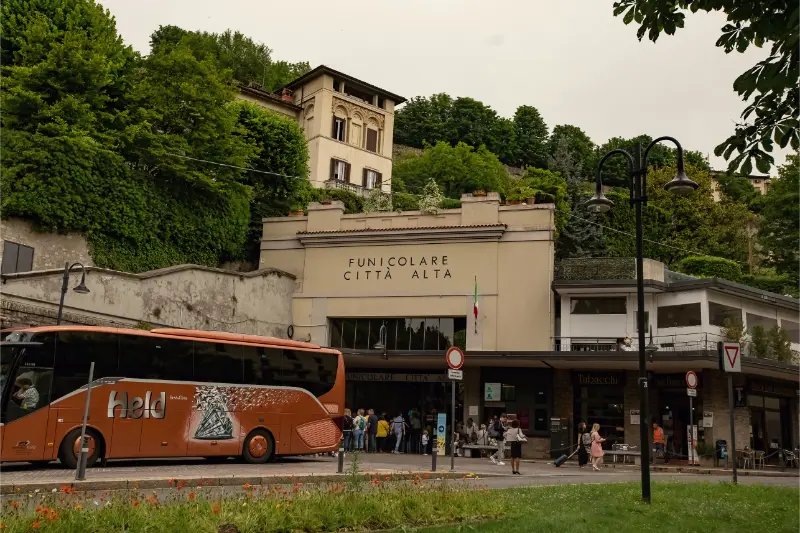
Bergamo offers a memorable change from Milan. Reaching Città Alta by funicular can itself feel like an attraction, and the historic squares and walls are interesting without requiring a long museum visit. Older children may enjoy the idea of a fortified city high above the modern town. Younger children will benefit from an outing that includes an outdoor break and time to eat. The upper town's cobbled lanes and slopes can be awkward with small-wheeled strollers, so investigate the route you plan to walk.
Try not to do every viewpoint in one day. The upper town rewards leisurely discovery, and tired children may enjoy a gelato and a short scenic walk more than another church interior. If traveling from Milan, leave margin for the train and the transfer to the funicular. Families staying overnight can explore early in the morning and return to the hotel for a rest, an advantage often overlooked when comparing the cost of a day trip with an additional room night.
Lake Como: boats without the exhausting village marathon
A ferry crossing on Lake Como offers beautiful views and a simple sense of adventure. Choose one or two villages rather than attempting Como, Varenna, Bellagio and Menaggio in the same afternoon. Como town and Varenna can be reached by rail, but they sit on different approaches; check the correct station and onward ferry. Bellagio has no conventional railway station, so its boat or road connection must be considered when staying there. Young children usually enjoy spending time by the water as much as moving constantly between piers.
Some historic village streets are steep, and many scenic viewpoints involve steps. A baby carrier may be more practical than a stroller on certain routes, while a flat promenade can be a better choice for young children. Check whether the chosen boat route runs on your travel date and when the last return departs. Bring sun protection for exposed decks and layers for breezes, even on warm days. If weather causes a cancellation, a nearby town walk or museum is a better response than frantic improvisation.
Lake Garda: choose the right shore and beach
The Lombardy shore of Lake Garda includes Desenzano, Sirmione, Salò and Gardone Riviera, among other towns. Desenzano can be convenient by train and offers a lively town setting. Sirmione has a castle and memorable peninsula but can be especially busy during high-season afternoons. Salò is attractive for waterfront walking. Families interested in longer swimming holidays should assess each specific beach, shore surface and access point; Lake Garda is not one uninterrupted stretch of soft sand.
Swimming requires normal water safety precautions. Depth may change quickly, the shore may be rocky or pebbly, and designated bathing zones matter. Look for supervised areas where appropriate and check local conditions rather than relying on photographs. Do not assume a rental advertised as being on Lake Garda is easy to reach from the train or that a lakeside road has a safe stroller path. A short stay is better centered on one part of the lake instead of repeated transfers around the entire shoreline.
Lake Iseo: Monte Isola and simpler outings
Lake Iseo can be a particularly manageable destination for families who enjoy quieter places. Iseo town has a waterfront and serves as a practical base for outings, while a ferry to Monte Isola introduces the novelty of island life. The island's villages are appealing, though routes into its interior can become steep. Choose a walk appropriate to the family rather than automatically following the most ambitious published circuit. The eastern rail corridor allows some excursions without a car, an advantage when parents do not want to drive after a full day out.
The Torbiere del Sebino wetlands can be interesting for children who like birds and nature, provided everyone respects the protected-area rules and remains on permitted paths. Bring water, sunscreen and suitable footwear; nature reserves are not playgrounds and shade may be limited. A shorter observation walk can be more rewarding than a long march. Combine the outing with an easy meal in town rather than a winery-focused afternoon that may not hold young children's interest.
Mountain vacations with young travelers
Valtellina, Bormio, Livigno and other mountain areas offer outdoor adventures, but the word 'easy' is often relative. Check the trail's elevation gain, surface, exposure and approximate walking time, along with the family's recent experience. A stroller-friendly town walk is not equivalent to a gravel route through high pasture. Cable cars can broaden access to scenery, but they may not operate between seasons and an arrival station can still lead directly to rough alpine terrain.
Altitude and changeable weather also matter. Carry layers, water and sun protection even when the valley is warm. Do not plan a long mountain walk after a tiring car transfer. For very young children, pick an accommodation base with shops, restaurants and lower-altitude walks. Older children may enjoy a guided nature activity or cycling route, but only after checking the operator's age limits, safety equipment and difficulty level. Mountain scenery is enjoyable without turning every day into a test of endurance.
A family-focused approach to museums
Brescia, Cremona, Mantua and Monza all offer cultural visits that can be adapted to children. In Brescia, the Roman remains and Santa Giulia complex provide opportunities to connect objects with stories; in Cremona, musical instruments and the Torrazzo may capture attention differently from a large painting gallery. Mantua's palaces are splendid but extensive, so it may be wiser to choose one. Monza's Royal Villa area and park allow a combination of indoor and outdoor time.
Check museum-specific family tickets, activity programs and accessibility rather than assuming all attractions offer similar discounts. Some performances or demonstrations have fixed times and require separate booking. Children's engagement is often improved by preparing one simple question in advance: what did people use this object for, who lived in this palace or how does an instrument make sound? Small conversations work better than asking a tired child to absorb every panel.
Animals, farms and nature: plan ethically
Agricultural landscapes, nature reserves and mountain parks can make a wonderful alternative to another city museum. Seek legitimate educational farm experiences or guided wildlife activities run with appropriate welfare and conservation standards. Protected habitats are places to observe, not touch or feed animals. Watch from marked trails, keep noise down where requested and explain the rules to children before setting out. This helps make nature interesting without turning it into a forced encounter.
Look at the exact activity duration and facilities: access to toilets, availability of drinking water, whether the experience continues in rain and the minimum age. In rural areas, a short-looking detour may involve long road journeys. The most successful outing often combines one educational stop with a village lunch or easy walk rather than stacking multiple animal-themed attractions on the same day.
Family accommodation: more than just a cot
Choose lodging with the practical basics that matter to your group. A lift, enough floor space for luggage, refrigeration, reliable air conditioning in summer or heating in winter may matter more than decorative furnishings. Ask whether the quoted occupancy actually includes the child's age and whether an extra bed is suitable. In lake villages, investigate the climb from the pier and whether the building has stairs. In mountain resorts, compare the distance to transport, grocery shops and simple restaurants before being seduced by a remote view.
An apartment may be useful for breakfasts and laundry, while a hotel can simplify late arrivals and daily cleaning. Neither is automatically better. Read the cancellation policy, especially if weather is central to the trip, and compare the full cost with local taxes and parking. When moving between bases, keeping packing manageable is a family travel skill worth more than one extra attraction on the itinerary.
Public transport with children
Trains and funiculars can become part of the holiday rather than simply transfers. Lombardy has regional rail and urban public transport that work well for many city and lake itineraries. The regional 'Io viaggio in famiglia' initiative provides concessions under defined conditions; check the current official rules for the child's age, accompanying adult and transport operator. On boats, fares, stroller arrangements and deck access can differ. Never assume one region-wide pass applies automatically to every tourist service.
Allow extra time at stations and piers, especially with a stroller or car seat. If a connection is tight, choose the following one rather than running through an unfamiliar interchange. Children may need snacks and toilets at inconvenient moments. Saving a little schedule margin makes travel more comfortable for everyone. For a trip with many small children, three bases across ten days are usually more realistic than changing hotels every night.
A seven-day family itinerary
One workable structure is three nights in Milan, two near Lake Como and two in Bergamo or at Lake Iseo. Spend the Milan days mixing one major museum with parks and gentle neighborhood walks. At the lake, prioritize a single boat outing and one day based in town, leaving space for changes in weather. Finish with a smaller historic place where walks are short and evening routines are easier. A mountain-oriented family might substitute Valtellina for the final two nights, provided the transfer and the weather suit the children's age.
Avoid promising a 'perfect' schedule. Keep one flexible day with no advance-paid activity, especially if the trip includes water or mountains. For older children, involve them in choosing between two sensible options. For younger ones, build the day around naps, early dinner and plenty of open space. The most valuable souvenir from a family visit to Lombardy may be the memory of a funicular, a ferry or a leisurely lakeside lunch rather than the number of museums entered.
Final advice for a low-stress family trip
Before leaving, check transport and attraction opening dates, safety rules for bathing, accessibility of the hotel approach and realistic weather for both lowland and mountain portions. Pack appropriate footwear and layers, and save offline copies of tickets and accommodation details. Start with shorter outings and extend them only when the day is going well. Lombardy has enough variety that you never need to force the family through a long, unsuitable excursion simply because it was on the original plan.
At a glance
| Travel focus | Practical choice |
|---|---|
| Young children | One main outing and easy town walks |
| Rainy day | Milan science museums or city museums |
| Lake excursion | One ferry crossing and a waterfront base |
| Mountain day | Verified gentle trails and seasonal lift access |
Explore related guides
- Milan with Kids: Family-Friendly Museums, Parks, Transport and a Realistic City Break
- Bergamo Travel Guide: Città Alta, Città Bassa, Transport, Food and How Long to Stay
- Lake Iseo Travel Guide: Towns, Monte Isola, Ferries, Beaches and Franciacorta
- Monza Park Guide: Walking, Cycling, Historic Villas, Mills and the Autodromo
Map and official travel resources
Compare places to stay
Frequently asked questions
Which Lombardy lake is easiest with children?
Como town, Desenzano and Iseo can be practical for services and transport, but inspect the exact lodging and beach.
Is Bergamo suitable with a stroller?
Parts are manageable, yet upper-town cobbles and hills require a planned route.
Can kids ride free on regional transport?
Some family concessions exist under specific conditions; check the current official rules for age and operator.
Last updated: October 17, 2026