
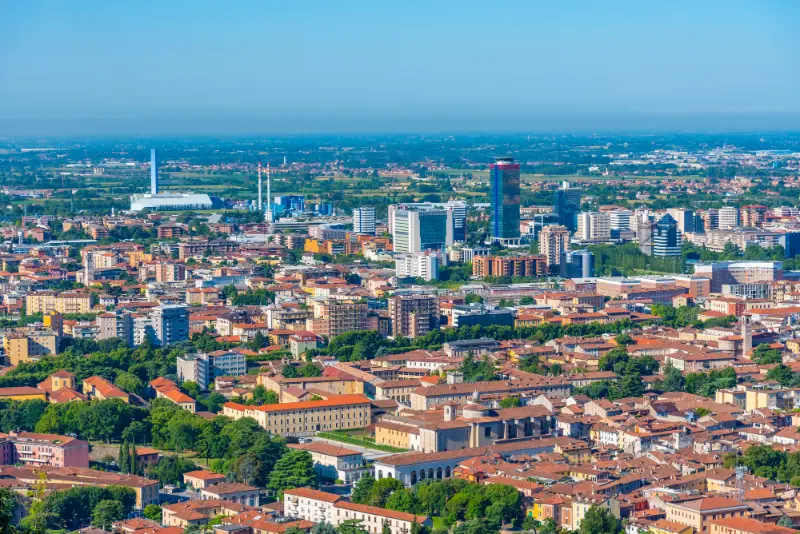
Brescia’s food reflects the city’s position between the Lombard plain, pre-Alpine valleys, Lake Iseo and Franciacorta. The result is a cuisine of filled pasta, slow-cooked meat, polenta, cheeses and robust flavours, balanced by one of Italy’s best-known traditional-method sparkling wine regions just west of the city.
You do not need to order every famous dish in one sitting. Brescian cooking can be rich, so the best strategy is to spread specialties across lunch, aperitivo and dinner, especially if your day also includes museums and the climb to the castle.
Pair your food stops with the Roman sites and historic squares using our Brescia travel guide, especially if this is your first visit.
| Signature pasta | Casoncelli alla bresciana |
|---|---|
| Most substantial specialty | Spiedo bresciano |
| Classic accompaniment | Polenta |
| Regional wine connection | Franciacorta |
| Best strategy | One major traditional meal + lighter tastings |
Casoncelli alla bresciana
Casoncelli are filled pasta with local variations across eastern Lombardy. In the Brescian tradition, the pasta is generally served with butter, sage and cheese, while fillings can combine meat, breadcrumbs, herbs and other ingredients depending on family or restaurant recipe.
Treat casoncelli as a real first course, not a tasting portion unless the restaurant says otherwise. If you plan a heavy second course, share or order a smaller portion when possible.
Spiedo bresciano
Spiedo is one of the province’s most identity-rich dishes: meats are slowly roasted on a rotating spit and traditionally served with polenta. Preparation is time-consuming, which is why good versions are associated with restaurants that specialise in it rather than every generic menu in the centre.
Ask whether spiedo needs to be reserved and what the serving format is. It can be a substantial meal, so schedule it for dinner or a long Sunday lunch rather than between Santa Giulia and an afternoon castle climb.

Polenta
Polenta accompanies many Brescian meat dishes and reflects the agricultural cooking of the wider region. Depending on the preparation, it may be soft and creamy or firmer, and mountain areas introduce different grains, cheeses and textures.
Visitors sometimes order polenta in addition to a dish that already includes it. Ask first. A simple question prevents an unnecessarily heavy meal and gives the server a chance to explain how the dish is traditionally served.
Cheeses from the province
The Brescian territory reaches into valleys and mountains with strong dairy traditions. Depending on season and restaurant sourcing, cheese boards can include products from Val Camonica, the Garda area or other parts of the province.
A small cheese tasting works well at aperitivo or after a lighter dinner. Ask for local provenance rather than accepting a generic Italian selection if the purpose is to understand Brescia.
Salumi and cured meats
Cured meats are another easy way to taste the province without committing to a formal meal. They often appear on antipasto boards with cheese, pickles or bread and are particularly useful when travelling with a group that wants to share several flavours.
Check portion size before ordering multiple starters. In traditional restaurants, an antipasto board can be large enough to change the rest of the meal.
Fish from nearby lakes
Brescia province includes Lake Garda and part of Lake Iseo, so freshwater fish belongs to the wider regional food landscape even if it is less central to city stereotypes than spiedo. Menus may feature sardines, trout or other lake fish depending on location and season.
For a dedicated fish meal, you may find a stronger sense of place by eating directly on Lake Iseo or Lake Garda. In the city, choose fish when the restaurant clearly treats it as a specialty rather than an obligatory menu category.
Franciacorta
Franciacorta is produced in the hills west of Brescia using the traditional method, and the wine region is close enough to be a natural extension of a city stay. Different styles range from very dry expressions to richer blends and vintage bottlings.
If you are driving, plan wine tasting responsibly and book transport or designate a driver. For a simple city meal, ask for a glass rather than ordering a bottle solely because the name is famous.
Desserts and sweet stops
Brescia has local pastry traditions alongside broader Lombard classics. Rather than searching for one supposedly mandatory dessert, use historic bakeries and pastry shops to sample seasonal products, biscuits or cakes with coffee.
A sweet stop in the afternoon can replace a formal dessert after a heavy dinner. This is especially practical on a museum day because it creates a deliberate rest between attractions.
Where to eat in the centre
The streets around Piazza della Loggia, Piazza Paolo VI and the broader historic centre offer a mixture of traditional restaurants, contemporary dining, cafés and aperitivo bars. Central location is convenient, but menus vary widely in how locally focused they are.
Read the menu before sitting down. A short list featuring a few Brescian dishes is often a better sign than a huge menu promising every Italian specialty from pizza to seafood to truffles.
A realistic food day
Keep breakfast simple, have casoncelli or another local first course at lunch, take an afternoon coffee or pastry break, then reserve dinner for spiedo or a substantial regional main. If you want Franciacorta, pair a glass with aperitivo or dinner.
This pacing lets you taste more without turning the entire visit into digestion. Food should support the travel day rather than make museums and walking feel like obstacles between meals.
Where to stay
For accommodation, compare locations as carefully as prices: a slightly cheaper room can cost time if it leaves you dependent on infrequent transport.
Continue planning
Use these related My Italy Experience guides to build the rest of the trip without repeating the same planning work:
- One day in Brescia
- Franciacorta wine travel guide
- Lake Iseo travel guide
Check live information before the day begins
Brescia Food Guide works best when the fixed plan is checked against live information. Brescia’s civic museums publish opening days, temporary closures and exhibition changes through Fondazione Brescia Musei, while Brescia Mobilità publishes current metro and bus information. The city is compact enough that a closure will not ruin the day, but discovering it at the door can waste the exact hour you had reserved for a major stop.
Build one flexible alternative into the plan. If a museum is closed, substitute a square, church, neighbourhood walk or the castle; if weather deteriorates, move an indoor attraction forward. This simple contingency keeps the itinerary useful without turning the article into a schedule that only works on one perfect date.
Season, heat and daylight
Brescia can be visited year-round, but the order of activities should change with the season. In summer, do the castle climb early or late and use museums through the hottest hours. In winter, prioritise outdoor viewpoints while daylight is strong, then move indoors. Spring and early autumn are the easiest periods for long walking days, though events can make accommodation busier.
Rain should change emphasis rather than cancel the trip. Santa Giulia, Brixia’s indoor components, the Pinacoteca and castle museums provide enough depth for a wet day. Carrying a compact umbrella and choosing footwear that handles smooth stone makes more difference than trying to predict a completely dry forecast.
Accessibility and realistic walking
Central Brescia is walkable, but ‘compact’ does not mean entirely flat or barrier-free. The castle requires an uphill approach, older churches may have steps, and long museum routes can be tiring even when individual distances look short. Travellers with limited mobility should check current accessibility information for the exact sites they plan to enter rather than assuming historic buildings offer identical access.
For everyone else, pace matters. A route containing Santa Giulia, the archaeological park, several churches and the castle can easily exceed the effort suggested by the map. Use the metro strategically, take a real lunch break and reduce the number of attractions before you reduce the time spent at the most important ones.
Using Brescia as part of a wider Lombardy trip
The city fits naturally between Milan, Bergamo, Lake Iseo and Lake Garda. Direct rail corridors make it possible to arrive from Milan, spend one or two nights, then continue east or north without backtracking. That makes Brescia especially useful for travellers building a car-free northern Italy itinerary.
Avoid treating the city only as a base, however. If every daylight hour is spent on excursions, you lose the Roman and museum experiences that justify sleeping here. A good rule is to reserve at least one full day for Brescia before using additional nights for Lake Iseo, Franciacorta or Garda.
Families and mixed-interest groups
Brescia works well for groups whose interests differ because the centre offers several types of experience close together. One person may care about archaeology, another about views, another about cafés and shopping. The castle, central squares and short walking distances allow those interests to overlap without splitting the group for an entire day.
With children, shorten museum blocks and add open-air time between them. Santa Giulia is substantial enough that adults should decide which sections matter most rather than expecting young visitors to absorb every room. The castle can then provide movement and views after a long indoor visit.
How to keep the visit from feeling generic
The purpose of a focused guide such as Brescia food guide is not to reproduce a universal Italy checklist. Notice what is specifically Brescian: the physical proximity of Roman Brixia and the Lombard monastery, the contrast between Piazza della Loggia and Piazza della Vittoria, the title Leonessa d’Italia, and the connection from the city to Franciacorta and the pre-Alpine valleys.
Choose at least one experience that could not simply be swapped with another Italian city. That may be the Winged Victory, Romanino and Moretto, a Brescian food specialty or the civic history of the castle. Those specific choices are what turn an efficient itinerary into a memorable one.
Useful official sources
Final planning advice
Use Brescia’s food as a map of the province: filled pasta and spiedo for the city’s traditional table, cheeses and polenta for the valleys, lake fish for the nearby waters and Franciacorta for the vineyards west of town. Spread those experiences across the trip rather than forcing them into one oversized meal.
Last updated: October 17, 2026