
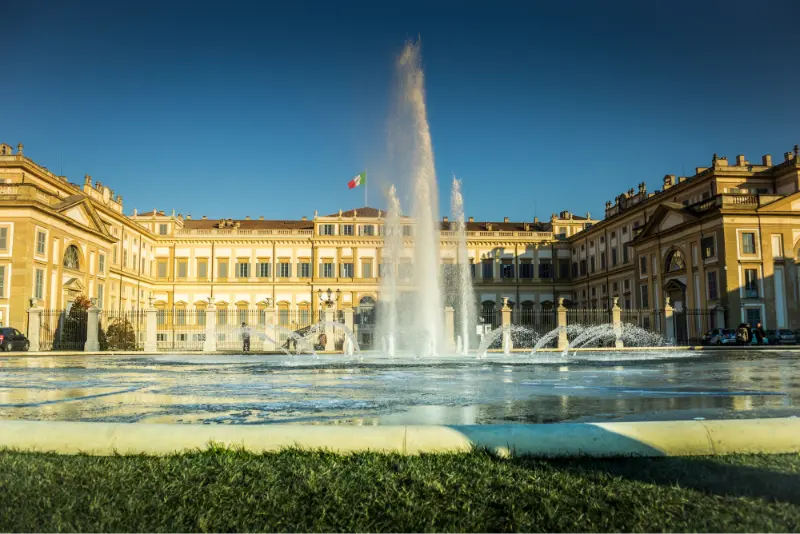
The best things to do in Monza fall into three very different groups: medieval and civic sights in the compact centre, royal architecture and gardens around the Villa Reale, and the vast park landscape that also contains the Autodromo Nazionale Monza. Trying to treat all three as a single short walking loop is the main planning mistake.
Use this list to choose priorities rather than to collect check marks. A first-time visitor can comfortably experience six to eight highlights in a full day if major admissions line up; seeing all eighteen properly requires at least two days or several return visits.
To connect Best Things to Do in Monza with the rest of the destination, our Monza Travel Guide offers a broader overview of what to see and how to get around.
| Essential first visit | Duomo, Iron Crown, Arengario, Villa Reale, Royal Gardens, Monza Park |
|---|---|
| For motorsport fans | Autodromo tour and historic banking |
| For art and history | Duomo Museum, Civic Museums and royal apartments |
| For outdoors | Park paths, Lambro, villas, mills and cycling |
1. Visit the Duomo of Monza
The cathedral is the city’s historical anchor and the natural first stop. Its striped façade opens onto a richly layered interior associated above all with Queen Theodelinda. Even travellers who do not usually spend long in churches should allow time here because the building connects Monza to Lombard, medieval and later royal history.
Visit respectfully around services and do not assume tourist access is continuous. If the chapel or museum is central to your day, consult the official schedule before arrival.
2. See the Iron Crown and Chapel of Theodelinda
The Iron Crown is the object most visitors remember, but the setting is equally important. The Chapel of Theodelinda contains a major fresco cycle and creates the historical context that a quick glimpse of the crown alone cannot provide.
The current Duomo guidance requires reservation for chapel and crown visits. That makes this the first item to schedule if it is non-negotiable. Read our Duomo and Iron Crown guide for a focused plan.
3. Explore the Duomo Museum and Treasury
The museum extends the cathedral visit through liturgical objects, works associated with Theodelinda and material that helps explain why Monza mattered to rulers across centuries. It is not simply an overflow collection: for history-focused travellers, it supplies the context that turns the cathedral from a beautiful church into a political monument.
The museum currently publishes split morning and afternoon hours from Tuesday to Sunday. Allow at least an hour if you read labels carefully and more if you are combining it with a booked chapel visit.
4. Photograph the Arengario
The medieval Arengario is Monza’s most recognisable civic building and a reminder that the city’s history is not only royal or religious. Its open loggia and upper hall sit directly in the urban flow of the centre, making it easy to see even on a short visit.
Use the building as a geographical marker. The Duomo, pedestrian shopping streets, cafés and routes toward the Lambro all radiate from this small central area, so it is a good meeting point if your group splits up.
5. Walk the old centre and the Lambro
Monza rewards an unstructured hour. Follow the pedestrian streets, cross the river, look for historic façades and give yourself permission to stop rather than treating every minute as transfer time. The Lambro adds a different texture to the centre and helps explain the city’s relationship with the much larger park upstream.
This is also the easiest part of the day to shorten or extend around timed admissions. Keep it flexible rather than reserving every activity.
6. Visit the Villa Reale
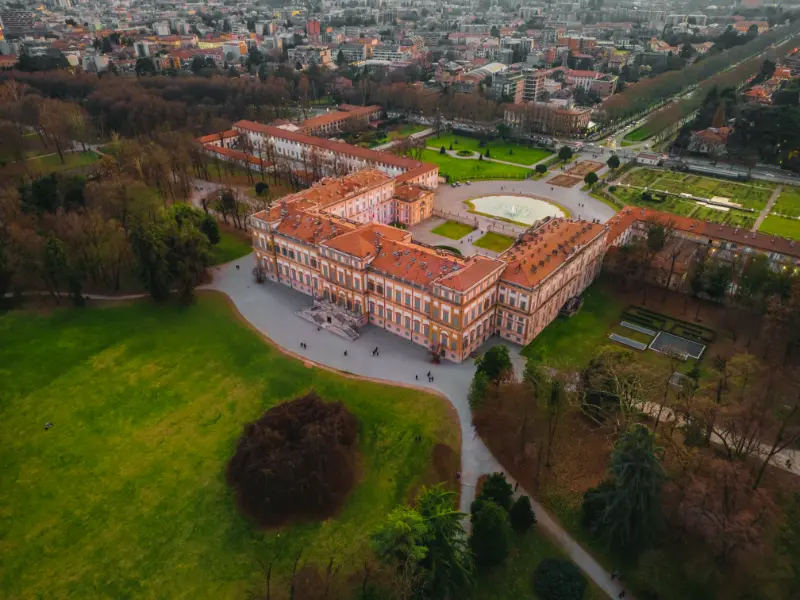
The Royal Villa gives Monza its second major historical identity. Built under Habsburg rule and later used by the Savoy dynasty, its rooms move the visitor from eighteenth-century court culture into the period of the Kingdom of Italy. The architecture and decorative programmes make more sense when you remember that the residence was designed as a political stage as much as a home.
For 2026 the standard full ticket is published at €15, with seasonal opening hours. Confirm what the current visit route includes on the official Reggia website because exhibitions and accessible rooms can vary.
7. Walk the Royal Gardens
The Royal Gardens cover about 40 hectares and are among the earliest examples of English-style landscape gardening in northern Italy. Their ponds, trees and curving paths create a softer transition between the formal palace and the immense park beyond.
Give the gardens a separate half hour to hour rather than treating them as the path to your next stop. They are especially useful after an interior visit when you want quiet space without committing to a multi-kilometre park route.
8. Explore Monza Park
The park covers more than 700 hectares and contains woodland, farms, mills, villas, sports facilities and the Autodromo. Its scale is the attraction. You can walk for hours without feeling that you are circling a city garden.
For a first visit, choose a defined route instead of wandering until you are tired. Our Monza Park guide explains the main areas, cycling options and how to combine the park with the Villa or circuit.
9. See Villa Mirabello
Villa Mirabello is one of the park’s architectural landmarks and helps reveal the landscape that existed before the nineteenth-century park became associated with racing. Even when interior access is not part of your day, the villa is a useful destination for a park walk.
Pair it with nearby paths and farm buildings rather than walking there only for a quick photograph. The journey through the park is part of the experience.
10. Look for mills, cascine and historic landscape features
The park contains old mills and farm complexes that reflect its original role as a model agricultural estate as well as a hunting reserve. These structures are easy to miss if you stay only near the palace or circuit.
Cycling is the most efficient way to connect several of them. On foot, pick one cluster and accept that covering the entire park in a day would undermine the relaxed character that makes it appealing.
11. Visit the Autodromo Nazionale Monza
For motorsport fans, the circuit is not a side attraction. Official experiences can include the press room, briefing room, podium and track-related routes, while race weekends transform the entire park. Access depends on the circuit calendar, so check before travelling.
The official Autodromo tour page lists current tour formats. Our circuit guide explains how to choose among them.
12. See the historic banking
The surviving high-speed banking is one of the most evocative physical traces of Monza’s racing history. It conveys the ambition and risk of earlier circuit design in a way that photographs cannot. Access is controlled, however, and should not be assumed simply because the structure is visible in the park.
Choose an authorised tour or route that includes the banking. Never cross barriers or enter restricted track areas independently.
13. Visit the Musei Civici
Monza’s Civic Museums add local art and urban history to a day otherwise dominated by royal and religious narratives. They are especially useful in bad weather or on a second visit when you want to understand the city beyond its most famous monuments.
Check current opening days before building the museum into a tight itinerary. Smaller civic museums often have schedules that differ from major tourist attractions.
14. Find the Cappella Espiatoria
The Expiatory Chapel commemorates King Umberto I, who was assassinated in Monza in 1900. It is a powerful counterpart to the royal rooms at the Villa because it marks the violent end of a chapter of Savoy history directly in the city.
The site is outside the core Duomo route, so visit it when moving between the centre and Villa area or as part of a themed royal-history walk.
15. Cycle through the park
A bicycle changes the scale of Monza Park. Routes that feel too spread out on foot become easy to connect, and you can move between the palace zone, rural buildings and circuit without turning the day into a long hike.
Use designated paths and respect temporary restrictions around events. Rental services can be seasonal, so verify availability if you are relying on one.
16. Have a slow lunch in the centre
A meal is not filler between attractions. Monza’s centre is compact enough that you can sit down properly without losing the day, and this is the simplest way to reset before walking to the Villa.
Choose a restaurant based on current menus and atmosphere rather than chasing a single supposedly obligatory dish. Lombard risotto, polenta and seasonal meat or vegetable dishes are natural choices, but good cooking matters more than a checklist.
17. Visit during an event only if the event is your priority
Grand Prix weekend, concerts, exhibitions and park events can be exciting, but they change transport, access and crowd levels. A normal sightseeing strategy does not automatically survive a major event.
If an event is the reason for your visit, embrace that version of Monza and reduce the sightseeing list. If culture and gardens are the priority, choose a quieter date.
18. Use Monza as a doorway to Brianza
The city sits at the southern edge of Brianza, a varied area of small towns, villas, hills and protected landscapes. Montevecchia and the Curone valley are especially attractive when you want nature after urban sightseeing.
Our Brianza travel guide suggests day-trip combinations and explains when a car becomes more useful than rail.
Practical questions
What are the three absolute must-sees?
For a first visit, choose the Duomo with the Iron Crown, Villa Reale and at least one substantial walk in Monza Park. Add the Autodromo if motorsport is a primary interest.
Can I do the Villa and Autodromo on the same afternoon?
Sometimes, but only if opening times and tour slots align. The park is large, so allow realistic transfer time between the palace area and circuit.
What is best in bad weather?
Prioritise the Duomo Museum, Villa Reale and Civic Museums. Keep the historic centre walk short and move the long park section to another day if conditions are poor.
What should families prioritise?
Mix one or two structured cultural visits with the park. The combination of a short cathedral or palace visit and outdoor time is usually more sustainable than several museums in succession.
Is the centre pedestrian friendly?
The main historic core is easy to explore on foot. The challenge is not the centre but the greater distances once you extend the day into the Villa, park and circuit.
How many days do I need for all eighteen?
Two days is a sensible minimum if you want depth rather than photographs. A third day is useful if you add Brianza or attend a circuit event.
How to choose from the list
Give each traveller in your group two priorities, then look for overlap. If everyone names the park but only one person wants the circuit, the motorsport visit should not consume half the day. If the Iron Crown appears on several lists, its reservation becomes the organising point.
This simple exercise prevents the “top 18” format from becoming an obligation. Monza is compact enough to revisit, and many secondary attractions become more meaningful after you understand the Duomo, Villa and park first.
Final planning advice
The most rewarding Monza itinerary is selective. Put one historical anchor, one royal or museum experience and one outdoor component into each half day. That gives the city room to change character instead of turning its unusually varied attractions into a race from ticket desk to ticket desk.
Last updated: October 17, 2026