
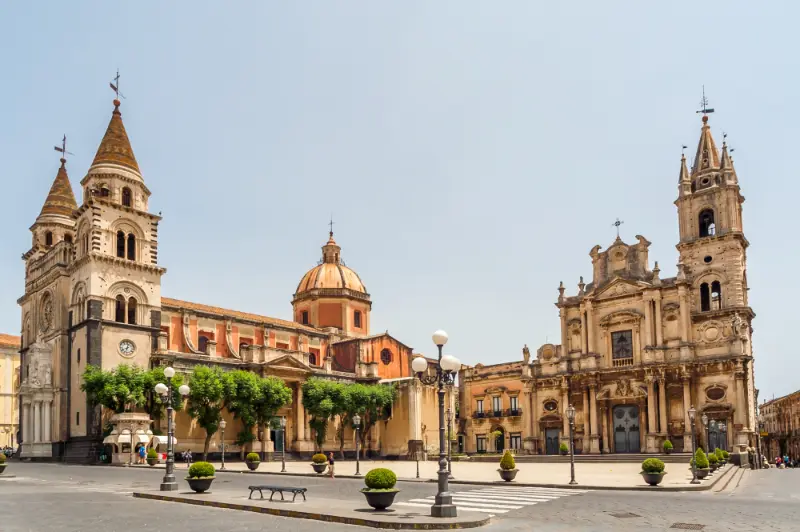
Acireale stands on a lava terrace above the Ionian Sea, between Catania and Taormina. Its Baroque centre is substantial enough for a dedicated visit, while the dramatic descent toward fishing villages and the Timpa landscape gives the city a geographical character very different from inland Baroque towns.
Acireale is an excellent place to experience eastern Sicily at a slower pace. It offers churches, piazzas, granita traditions and coastal scenery without the same intensity as Taormina or central Catania. This guide focuses on what deserves your time, where logistics become inefficient and how Acireale fits into a wider Sicily itinerary.
Our Sicily travel guide places Acireale Travel in the context of the wider region, including travel times and alternative bases.
Quick planning summary
| Best for | Baroque architecture, granita, Etna-coast scenery and travellers looking for a less touristic base north of Catania |
|---|---|
| Time needed | One full day; one or two nights work well for coast and Etna-side excursions. |
| Car | Useful for the Timpa coast and regional touring, but unnecessary for the compact historic centre. |
| Best seasons | April–June and September–October are excellent for sightseeing; summer works with earlier starts, shade and realistic heat planning. |
| Main planning rule | Walk Piazza Duomo and the central Baroque streets first, then choose a coast extension such as Santa Maria La Scala rather than trying to drive to every Aci village in one day. |
Is Acireale worth visiting?
Yes, especially for Baroque architecture, granita, Etna-coast scenery and travellers looking for a less touristic base north of Catania. Acireale is an excellent place to experience eastern Sicily at a slower pace. It offers churches, piazzas, granita traditions and coastal scenery without the same intensity as Taormina or central Catania.
My priority: Walk Piazza Duomo and the central Baroque streets first, then choose a coast extension such as Santa Maria La Scala rather than trying to drive to every Aci village in one day. The most useful Sicily plans are built around one anchor experience per day, with smaller nearby stops added only when they improve the rhythm rather than create another deadline.
What to see and do
Piazza Duomo
The cathedral, Basilica of Saints Peter and Paul and civic architecture create Acireale’s main urban stage. Sit long enough to notice the lava-stone details against pale façades.

Give this stop enough time to understand why it matters. Where opening times, ferries, protected areas, guided entry, religious services or weather conditions are involved, verify the current arrangement close to your travel date rather than relying on an old itinerary.
Acireale Cathedral
The cathedral is dedicated to Maria Santissima Annunziata and holds a central place in the city’s religious life. Visit respectfully around services.
Give this stop enough time to understand why it matters. Where opening times, ferries, protected areas, guided entry, religious services or weather conditions are involved, verify the current arrangement close to your travel date rather than relying on an old itinerary.
Basilica of San Sebastiano
One of Acireale’s strongest Baroque monuments, San Sebastiano rewards attention to its façade and interior rather than being treated as another church on a checklist.
Give this stop enough time to understand why it matters. Where opening times, ferries, protected areas, guided entry, religious services or weather conditions are involved, verify the current arrangement close to your travel date rather than relying on an old itinerary.
La Timpa landscape
The steep natural escarpment between the city and sea preserves vegetation, paths and views that explain why Acireale sits so dramatically above the coast.
Give this stop enough time to understand why it matters. Where opening times, ferries, protected areas, guided entry, religious services or weather conditions are involved, verify the current arrangement close to your travel date rather than relying on an old itinerary.
Santa Maria La Scala
This fishing village below Acireale offers a completely different scale and atmosphere. The road/descent makes it a deliberate excursion rather than a casual extension on foot for everyone.
Give this stop enough time to understand why it matters. Where opening times, ferries, protected areas, guided entry, religious services or weather conditions are involved, verify the current arrangement close to your travel date rather than relying on an old itinerary.
Granita tradition
Acireale is an excellent place to slow down for granita and brioche. Use the food stop as part of the city’s culture, not merely a quick refreshment.
Give this stop enough time to understand why it matters. Where opening times, ferries, protected areas, guided entry, religious services or weather conditions are involved, verify the current arrangement close to your travel date rather than relying on an old itinerary.
How to plan the visit
Walk Piazza Duomo and the central Baroque streets first, then choose a coast extension such as Santa Maria La Scala rather than trying to drive to every Aci village in one day. Make that the anchor decision, then add only nearby experiences that genuinely complement it.
Sicily’s distances can look deceptively short. Historic-center traffic, restricted streets, mountain roads, parking, ferry check-in and long walks from official car parks can add significant time. Build door-to-door margin rather than using pure driving time as the schedule.
In July and August, place exposed archaeology, hills and nature walks in the morning or later afternoon. Use the hottest hours for lunch, museums, shaded interiors or a real rest. In spring and autumn you can sightsee longer, but daylight and weather matter more for outdoor plans.
Avoid booking every hour. One important timed attraction or excursion is enough for most days. Keeping the rest flexible gives you room for traffic, a longer lunch, an unexpectedly good museum or simply staying longer at a place that works for you.
Getting there and getting around
Acireale is connected by road and rail, though the station is not identical to the central piazza. A car is useful for coast villages and Etna routes. Park outside the tight historic streets and walk.
Driving and parking
If you drive, park once whenever possible. Historic towns and popular natural sites can have restricted traffic, one-way systems or seasonal parking arrangements. The closest legal space is not always the best choice if reaching it requires twenty minutes of circling.
Public transport and tours
Public transport works best when the destination lies on a major rail or bus corridor. Organized tours can be good value when they remove difficult parking or combine a destination with a guide. Compare actual time on site before booking; some tours spend more hours in transfers than you may expect.
How much can you combine in one day?
One main destination plus one complementary stop is usually enough. Repeating parking, orientation and walking-startup time across three or four towns often consumes the very hours you hoped to save.
Where to stay in Acireale
Acireale can be a quieter alternative to Catania for travellers with a car. Stay central for dinner and Baroque atmosphere, or nearer the coast if sea views matter more than easy evening walking.
When comparing accommodation, check parking or ferry access, stairs, air conditioning, street noise, breakfast times and the real walking route. In hill towns and island ports, a short straight-line distance can still mean a difficult arrival with luggage.
A realistic itinerary
Morning
Start in Piazza Duomo and visit the major churches.
Late morning / lunch
Take a long granita or lunch break instead of rushing onward.
Afternoon
Use the afternoon for La Timpa or Santa Maria La Scala if weather and transport suit.
Evening
Return to the centre for an evening walk rather than adding another full city.
If the day begins to run late, remove the least important secondary stop rather than compressing everything. Sicily is particularly rewarding when you have enough time for the transition between major sights—food, viewpoints, markets and evening streets.
Food and local character
Granita, pastries and eastern-Sicilian savory dishes are strong reasons to linger. Seafood becomes more prominent in the coastal villages below.
Look for food that belongs to the immediate geography. Western Sicily, the Etna coast, hill villages and island gateways do not have identical culinary identities. Ask what is local and seasonal instead of treating a universal checklist of Sicilian dishes as mandatory everywhere.
Reserve a restaurant when a specific meal matters or when peak-season demand is high. Otherwise, some flexibility is useful because a museum, beach or trail often takes longer than expected.
Best time to visit
Spring
April to early June is one of the most balanced periods for cultural and outdoor travel: comfortable temperatures, greener landscapes and lower pressure than midsummer. Easter events can be fascinating but may alter traffic and opening hours.
Summer
July and August bring the fullest beach services, ferries and events, but also intense heat and crowds. Start early, protect midday and reserve essential accommodation or transport in advance.
Autumn
September and October often combine warm sea temperatures with easier cultural sightseeing. Food and harvest experiences become especially interesting, while some coastal services gradually reduce later in the season.
Winter
Winter can be excellent for cities, cathedrals and archaeology with low crowds, but daylight is shorter and smaller coastal businesses or nature services may operate reduced schedules.
Costs and what to book in advance
The biggest costs are usually accommodation, rental cars, guided tours, major archaeological admission and boat or nature activities rather than simply walking a town. Decide which paid experience defines the day and protect enough time for it.
Book earlier for peak-season accommodation, island or boat transport, regulated natural activities and special guided access. For ordinary town walks and churches, flexibility is usually more valuable than filling the schedule with reservations.
Families and accessibility
Piazzas and food stops make the central visit easy with children. Coastal descents and hiking paths require more planning.
The city centre is more manageable than many hill towns, but church thresholds and the steep Timpa connection vary. Use road transport for the coast when walking gradients are unsuitable.
For families, one major cultural anchor plus a beach, garden, viewpoint or food experience usually works better than a dense adult checklist. Water, shade, toilets and the walk back to the car deserve as much planning as tickets.
Common mistakes to avoid
- Skipping Acireale because it sits between more famous cities.
- Trying to walk the steep coast connection in unsuitable heat.
- Seeing only Piazza Duomo and leaving.
- Visiting without trying the local granita tradition.
- Combining Acireale, Taormina and Etna in one rushed day.
The broader mistake is measuring success by the number of places completed. Sicily’s strongest cultural and natural experiences benefit from time, and a slower geographic cluster almost always produces a better trip than constant movement.
How Acireale fits into a wider Sicily route
Include Acireale when its strengths match your priorities: Baroque architecture, granita, Etna-coast scenery and travellers looking for a less touristic base north of Catania. If adding it creates a major detour, another one-night hotel and a late arrival at the next base, save it for a different trip. If it sits naturally inside your existing cluster, it becomes a high-value addition.
For a seven-day Sicily trip, concentrate on one or two geographic clusters. Ten days can support three. With two weeks or more, archaeology, island stays, nature reserves and inland detours begin to fit without sacrificing the atmosphere of each base.
Also alternate intense cultural days with slower outdoor time. A full archaeological park followed by another exposed site is physically harder than pairing temples with a beach, a town evening or a shorter food-focused day.
Practical decisions that improve a Acireale visit
A simple test is to remove one planned attraction and ask whether the day becomes better. If the answer is yes, the original plan was too full. Travel friction in Sicily comes from heat, parking, opening hours, queues, ferry timing and long meals more than from pure map distance.
Use early and late light for viewpoints, old streets and exposed outdoor sites. Put indoor attractions into the brightest midday hours when possible. This does more for comfort and photography than trying to visit every famous place at the same conventional time.
If you sleep locally, spend at least one evening where you are staying instead of driving away for dinner. The passeggiata, changing light and quieter streets after day visitors leave are often part of what makes a destination memorable.
Related Sicily guides
Catania Travel Guide — useful for continuing the route without creating an unnecessary cross-island detour.
Mount Etna Travel Guide — useful for continuing the route without creating an unnecessary cross-island detour.
Taormina Travel Guide — useful for continuing the route without creating an unnecessary cross-island detour.
Sicily Travel Guide — useful for continuing the route without creating an unnecessary cross-island detour.
Official information to check before travel
Opening hours, reserve rules, transport and seasonal access can change. Before travelling, check the official destination information and verify anything that is essential to the day.
Last updated: October 17, 2026
Leave a Reply