

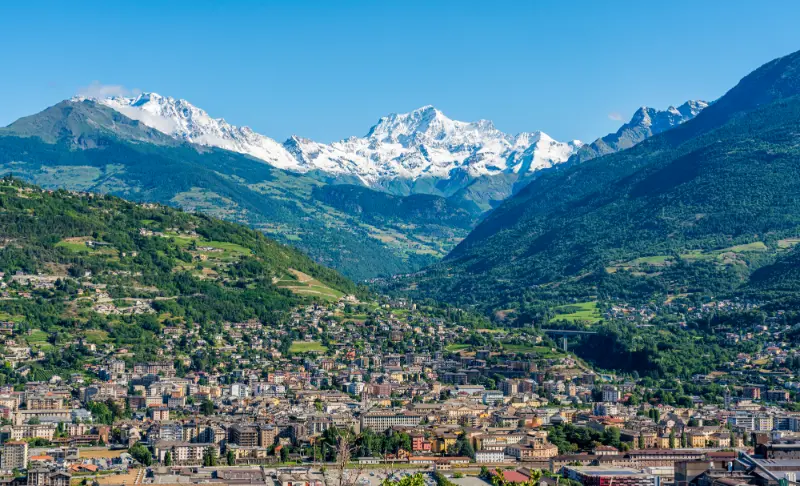
The Aosta Valley is Italy's smallest region, but its landscape feels enormous. High peaks rise above a narrow central valley, side roads climb toward quiet villages, and old castles appear in places where the mountains seem to leave almost no room for a building. The regional capital, Aosta, preserves substantial Roman remains. Elsewhere, the rhythm changes with the seasons: walking trails in summer, autumn colors in forested valleys, skiing in winter and spring days that can feel warm in town while the mountains remain covered with snow.
The Italy travel guide puts a mountain stay here in context with the rest of an Italian journey, without rushing a scenic detour.
| Base | Best for | Suggested stay |
|---|---|---|
| Aosta | Roman city and central-valley castles | 2–3 nights |
| Courmayeur | Mont Blanc and selected mountain outings | 2–4 nights |
| Cogne | Gran Paradiso walks and villages | 2–4 nights |
| Cervinia / Gressoney | High-altitude scenery and sports | 3+ nights |
Aosta Valley is an especially rewarding destination for travelers who want a real mountain holiday without giving up history, local food and a comfortable place to spend an afternoon when the weather turns. It is not a region to conquer in a series of hurried day trips. The valley may look compact on a map, but side roads, mountain conditions and the position of cable cars make travel times vary considerably. The key is to choose a base near the activities that matter most to you and to treat every mountain excursion as a plan with a weather-dependent alternative.
Understanding the valley before choosing a base
The main valley runs roughly east to west, with Aosta near the center and mountain valleys branching away. The eastern entrance brings visitors toward Pont-Saint-Martin and Bard; farther along are castles and towns with different histories. From Aosta, routes lead toward Cogne and the Gran Paradiso area to the south, while other roads rise toward the Great Saint Bernard route and nearby side valleys. Courmayeur, near the western end, is strongly associated with Mont Blanc scenery. Breuil-Cervinia lies in another mountain setting below the Matterhorn, and Gressoney has its own Walser traditions and access to the Monte Rosa area.
These places are not a single chain of attractions along one easy road. For example, spending the morning in Courmayeur and the afternoon in Cervinia is a poor plan if your aim is to enjoy both mountain environments. Choose one valley for a full day, often two, and allow extra time when using buses. If you want several areas on one trip, plan two bases rather than spending every evening in the car. The weather can make one side valley more suitable than another, so flexibility is an asset rather than a failure of organization.
Aosta: Roman monuments, food and the easiest urban base
The city of Aosta is a natural starting point for a first visit. Roman walls, the Arch of Augustus and surviving ancient structures tell the story of its position on transalpine routes. The old streets are compact enough to explore on foot, with cafés and restaurants providing a comfortable break between monuments. The city’s appeal is not limited to sightseeing: it is also a practical hub for transport, shops and accommodation.
Explore this part of the journey in more detail with Aosta Travel Guide.
At least one full day is worthwhile. Travelers who plan to take several different local buses may find it convenient to sleep in Aosta and make selected day trips, but they should check onward connections carefully. A route requiring a long wait at the main bus station is less attractive than it appears on a regional map. Aosta also offers a useful bad-weather day when cloud or rain makes a high-altitude excursion unsafe. In peak travel periods, reserve accommodation in a location where evening restaurants are genuinely within comfortable walking distance, especially if you prefer not to drive after dark.
Courmayeur and Mont Blanc: choosing the right mountain experience
Courmayeur sits close to the Italian side of Mont Blanc and combines an alpine town atmosphere with access to dramatic scenery. The Skyway Monte Bianco cable car offers a distinctive high-altitude experience, but it is neither a substitute for every mountain walk nor something to book blindly without watching the forecast. Visibility, wind and operating conditions can affect the value and availability of a visit. Tickets and time slots should be checked through the official operator.
Explore this part of the journey in more detail with Courmayeur Travel Guide.
The Val Ferret and Val Veny areas offer different landscapes and seasonal ways of spending time outdoors. Access rules, shuttle services and parking can vary, particularly in busy summer weeks. Do not assume you can drive to every trailhead at any hour. Courmayeur suits travelers who want mountain views, comfortable accommodation and a choice between a short walk, a longer hike or a restaurant afternoon. It can also be expensive at popular times, so selecting a nearby base may help the budget, provided the transport arrangement does not create long daily transfers.
Cogne and Gran Paradiso: the quieter side of the mountains
Cogne provides a different kind of alpine stay. Meadows, traditional villages and the nearby Gran Paradiso National Park create opportunities for walking and observing mountain landscapes at a slower pace. The Lillaz waterfalls are well known, but even a relatively short outing needs appropriate footwear and realistic expectations about wet or uneven ground. Valnontey and other nearby areas have their own trails and views, each with different access requirements.
Explore this part of the journey in more detail with Cogne Travel Guide and Gran Paradiso National Park.
Gran Paradiso is a protected mountain environment, not a theme park where wildlife appears on demand. Visitors may see ibex or other animals, but responsible observation means keeping distance, avoiding disturbance and following park rules. The difficulty of hikes changes substantially with elevation gain. A gentle meadow path is a different proposition from a long route toward a high refuge. Choose activities suited to your group, review official trail information and carry warm layers even when the valley floor feels comfortable. Staying in Cogne for two or three nights is often more rewarding than visiting briefly from far away.
Cervinia, the Matterhorn and mountain seasons
Breuil-Cervinia is associated with the Italian side of the Matterhorn and the high-altitude ski environment. Its mountain setting can feel very different from lower towns, particularly when weather moves through quickly. Visitors come for winter sports and lifts, but summer walking and mountain scenery are also part of its appeal. Before booking, distinguish the activities you actually plan to do from the broader marketing of the resort. Not every lift operates on every date, and high-altitude conditions can restrict access even during an advertised operating season.
Explore this part of the journey in more detail with Breuil-Cervinia Travel Guide.
A family or non-skier may prefer a hotel near the village services rather than a location optimized solely for the slopes. Anyone planning hikes should check the starting altitude, route grading and possibility of snow, not only the distance. Wind and cold become more significant at elevation. Treat trips toward the upper lift network as substantial outings and carry appropriate clothing. If the weather forecast is poor, a lower valley day focused on food, a museum or a castle can save the vacation from becoming a series of expensive disappointments.
Gressoney, Champoluc and the less obvious valleys
The eastern and northeastern valleys add another layer to an Aosta Valley trip. Gressoney-Saint-Jean and Gressoney-La-Trinité share mountain scenery but differ in atmosphere and proximity to particular activities. Their Walser cultural heritage provides an interesting context beyond skiing and hiking. Champoluc in Val d’Ayas is another worthwhile base for outdoor travelers, while Brusson and smaller villages may suit those looking for a quieter stay.
Explore this part of the journey in more detail with Gressoney-Saint-Jean Guide, Champoluc Travel Guide and Gressoney-La-Trinité Guide.
These areas are particularly valuable for return visitors who already know Courmayeur or Aosta and want a different valley for several days. Getting between separate side valleys can involve lengthy road routes, so choose one main area rather than attempting a valley-hopping checklist. Cable cars and mountain transport operate according to their own seasonal calendars. Some summer walks are family-friendly; others have steep ascents or exposed sections that require experience. Pick trails from current route descriptions and local advice. A day of gentle exploration in a village is a good use of mountain time, not a missed opportunity.
The castles: history across the main valley
One of the pleasures of Aosta Valley is the number of castles that punctuate the journey. Fénis is known for its medieval architecture and enclosed courtyards, while Issogne offers a different perspective on noble life and painted decoration. The Fort of Bard occupies a striking defensive position near the eastern entrance to the valley and today supports cultural visits and exhibitions. Sarre’s royal connections and other castles broaden the story beyond a single period.
Explore this part of the journey in more detail with Fénis Castle Guide, Fort Bard Travel Guide, Issogne Castle Guide and Sarre Royal Castle Guide.
Do not assume that every castle is open for independent wandering at all times. Some require guided tours, advance booking or seasonal schedules, and photography rules may vary. It is often better to choose two visits that fit your route than race through five sites in one day. Combine a castle with a local town or a relaxed lunch and the day feels balanced. Travelers interested in architecture can build an enjoyable journey along the central valley, using Aosta or a nearby town as a base and adding shorter side trips when time allows.
Pré-Saint-Didier, Saint-Vincent and restorative afternoons
Not every vacation day has to involve an ascent. Pré-Saint-Didier is associated with thermal bathing and views toward the Mont Blanc area, while Saint-Vincent offers another established town setting linked to relaxation and services. These destinations can provide welcome contrast after a long hike or an uncomfortable weather day. Thermal facilities may use timed admission and have particular age restrictions or rules, so check them directly before taking children or making a nonrefundable booking.
Explore this part of the journey in more detail with Pré-Saint-Didier Guide and Saint-Vincent Travel Guide.
A spa outing makes the most sense when it fits naturally into the valley you are already visiting. Crossing the region solely for a short appointment can turn a relaxing plan into a transport exercise. If you prefer not to use a spa, a café, an easy village walk or a small museum can serve the same purpose. Budget for relaxation experiences separately from accommodation; the cost of treatment packages or premium access varies considerably and may be higher during weekends and holidays.
Getting around: buses, trains, mountain roads and cableways
The central corridor is easier to navigate than many of the side valleys. Regional buses link Aosta with communities along and away from the main route, but frequency varies by destination, day and season. Railway arrangements have also been subject to works and service changes, so travelers should check the current status rather than relying on an old timetable. If using public transport, plan the final return connection before setting off and verify whether the last leg to a trailhead requires a seasonal shuttle.
Explore this part of the journey in more detail with Pila Travel Guide.
Driving allows greater flexibility for visiting castles and moving among separate valleys, yet it also introduces challenges. Mountain roads may be narrow or winding, winter equipment requirements can apply and popular trailheads may have limited or regulated parking. The Mont Blanc and Great Saint Bernard transport corridors involve their own operating and toll conditions. Do not plan an international pass crossing without checking current road status. A practical strategy is to use public transport for a town-based visit and rent a car only when you want to explore outlying valleys, if suitable local options are available.
When to visit: what each season changes
Late spring and summer are appealing for lower-elevation walks, alpine meadows and visits to mountain villages, but high trails can retain snow after the valley becomes green. July and August bring more services in many resorts and more visitors at popular sites. Early autumn is often beautiful for colors and quieter stays, though lifts and mountain huts may start reducing their schedules. Weather becomes less predictable with altitude throughout the year, so choose a route and a backup plan each day.
Winter is primarily associated with skiing and snow activities, but the valley also offers castles, towns, spas and short scenic visits for people who do not ski. A snowy landscape does not mean every route is safe for snowshoeing: avalanche conditions and terrain matter. In shoulder seasons, you may find attractive room rates but fewer operating lifts. A mountain holiday planned around one particular cable car requires checking both its service calendar and the likely conditions. Avoid treating the weather forecast for Aosta city as an accurate forecast for a high-altitude viewpoint.
Where to stay for different travel styles
Aosta is a flexible hub for the first visit, especially when you want Roman monuments, castle excursions and access to basic transport. Courmayeur suits a Mont Blanc-focused holiday with comfortable restaurants and mountain outings. Cogne works for travelers looking to spend several days near Gran Paradiso. Cervinia is a logical choice when your activities center on its high-altitude setting, while Champoluc, Gressoney and La Thuile cater to different alpine interests and resort atmospheres.
The best property is not always the one with the most spectacular photograph. Check whether you can reach restaurants on foot, whether the hotel provides parking, and how far it is from the actual lift or trailhead you will use. In winter, verify access if snow falls. Families may appreciate a property with a convenient evening meal option and space to rest between outings. Guests with mobility requirements should ask about steps, lift dimensions and accessible transport, since picturesque mountain buildings can present real obstacles.
A realistic five-day introduction
Spend the first day in Aosta exploring Roman remains and the historic streets at a comfortable pace. On day two, follow the central valley east to visit a castle and the Fort of Bard, leaving sufficient time for museum exhibitions and the journey. Day three can introduce the Cogne area, with a meadow walk or Lillaz outing chosen according to the group’s abilities and the weather. Day four is a dedicated Courmayeur day: either a carefully planned mountain experience or lower-level exploration if conditions are unfavorable.
On day five, choose between another castle, an easy village outing or a restorative spa afternoon before departure. This itinerary is intentionally modest. It does not try to squeeze Cervinia and Gressoney into the same short stay, and it leaves room for mountain weather to change plans. For seven to ten days, add a second base in a valley you want to explore more deeply. Travelers whose priority is hiking may be happier spending almost the entire trip in Cogne or another single mountain area rather than following a sightseeing circuit.
Food, families and the practical details that matter
Regional cooking reflects alpine traditions: cheeses such as Fontina, hearty soups, polenta, cured meats and local wines appear in different forms across the valley. Look for small restaurants serving dishes that suit the season rather than assuming every mountain restaurant follows the same menu. When visiting with children, plan warm breaks and snacks for walks; meals can be less flexible outside resort centers, especially between seasons. Carry water and remember that mountain sun can be strong even in cool air.
Families and less experienced hikers should identify genuinely easy paths before arrival, checking distance, gradient and surface. A route marked short may still be unsuitable for a stroller or someone with limited balance. Keep clear of wildlife, follow park instructions and never approach a glacier or technical terrain without appropriate expertise. The official regional tourism portal, https://www.lovevda.it/en, is a strong starting point for transport, lift information and seasonal visitor services. Individual castles, parks and cableway operators should be consulted for final bookings and opening details.
Final advice: spend more time in fewer valleys
Aosta Valley’s most memorable qualities are difficult to schedule to the minute: the light on a mountain face, the quiet of a village after the day visitors leave, and the way a small Roman street or medieval castle suddenly comes into view beneath enormous peaks. Give yourself space for these moments. Book major experiences when reservations are required, but do not make every day depend on a high-altitude lift, a long drive and perfect weather at the same time.
Choose a central-valley cultural itinerary or a mountain-focused stay, then add a few carefully selected excursions. Use official weather, road and transport information close to the date, particularly in winter and the shoulder seasons. This small region rewards travelers who respect its geography and its seasons. The best introduction is often not a list of famous peaks, but a comfortable base, an unhurried walk and enough time to notice the life of the valley between the mountains.
Practical questions
Is Aosta Valley practical without a car?
Aosta and many main-valley destinations are served by public transport. Remote trailheads and cross-valley outings need advance timetable checks or a car.
How many days should I allow for Aosta Valley?
Four to five days are enough for an introductory Aosta-and-castles itinerary with one mountain valley. Stay longer for hiking or several alpine bases.
Can I go hiking in Aosta Valley in spring?
Lower paths may be accessible, but snow can linger at altitude. Check the specific route and current local safety information before setting out.
Compare accommodation in Valle d'Aosta after choosing the area that suits your route.