
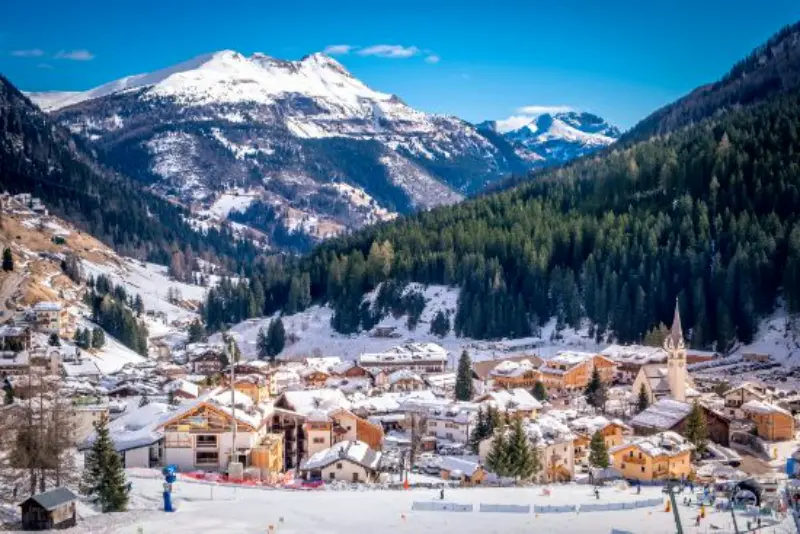
Arabba is one of the strongest Veneto bases for travellers who want to be surrounded by high Dolomite scenery rather than commute to it. The village sits beneath the Sella and close to the Marmolada area, with lift connections, hiking routes and winter access to the Sellaronda ski circuit. It is a small mountain base, so the quality of the trip depends heavily on weather, lift schedules and choosing activities that match your real experience level.
| Best for | Hiking, skiing, high-mountain scenery and road trips |
|---|---|
| Ideal stay | 2–5 nights depending on activities |
| Key nearby areas | Passo Pordoi, Passo Campolongo, Marmolada and Sella group |
| Main caution | Weather, altitude, lift operations and mountain-road conditions |
Why choose Arabba
Arabba is not a resort town full of urban attractions. Its value is location. You wake up close to major passes, lifts and high terrain, which reduces the need for long daily transfers. This suits walkers, cyclists and skiers who care more about mountain access than nightlife or shopping. Travellers seeking a larger centre may prefer Cortina, while Arabba feels more directly tied to the surrounding slopes.
Marmolada planning
The Marmolada is the highest massif in the Dolomites and a serious alpine environment. Lift systems can make high viewpoints accessible, but altitude and weather still matter. Check official operations on the morning of your visit, bring warm layers even in summer and never interpret a cable car as proof that the terrain beyond the station is easy.
Summer hiking
Choose trails by elevation gain, exposure and surface, not just kilometres. Afternoon thunderstorms are a real summer consideration, so early starts are often sensible. Carry water, rain protection and an offline map, and turn around if conditions deteriorate. Families should prioritise clearly marked, lower-risk routes rather than selecting hikes from dramatic social-media photographs.
Winter and the Sellaronda
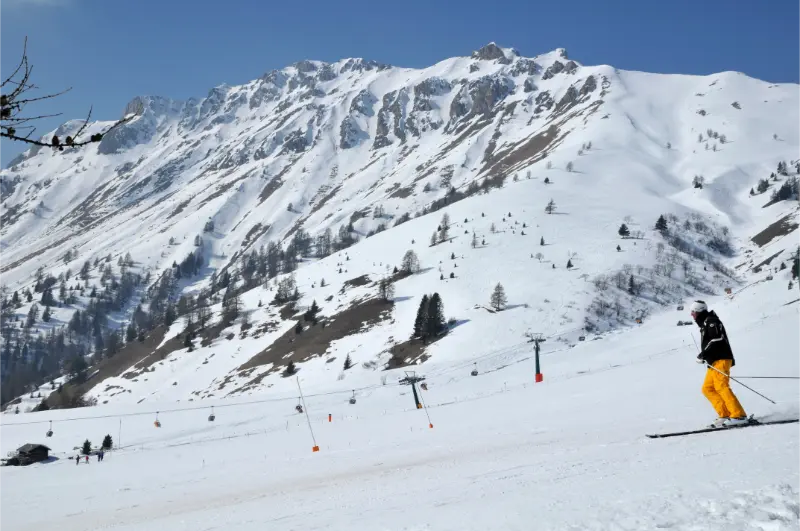
Arabba is closely linked to the Sellaronda ski circuit and broader Dolomiti Superski network. Winter visitors should check lift status, snow conditions and route direction before setting out. The circuit can be long, and completing it requires sufficient skiing ability and an early enough start. Do not treat it as a sightseeing loop for absolute beginners.
Driving the mountain passes
Passo Pordoi and Passo Campolongo create spectacular road-trip possibilities, but mountain roads are not a place for aggressive schedules. Cyclists, buses, weather and seasonal restrictions affect journey times. In winter, tyres and chains must comply with current rules; in summer, major cycling events can temporarily close roads. Check local information before departure.
Where Arabba fits in a Veneto itinerary
Use our Veneto Dolomites guide for the regional overview and Cortina guide if you are comparing bases. Arabba works especially well as part of a mountain-only segment rather than a rushed day trip from Venice. The drive is scenic but too long to treat casually.
Food and mountain culture
Mountain huts and local restaurants are part of the experience. Look for Ladin-influenced dishes, polenta, cheese, mushrooms and hearty mountain cooking. Huts may close between seasons, so never assume a meal will be available on a remote route. Carry snacks even when your plan includes lunch at altitude.
Who should stay in Arabba
Choose Arabba if you want immediate access to mountains and are comfortable with a small resort rhythm. It suits active couples, ski groups, hikers and road-trippers. Families can enjoy it too when activities are selected carefully. Travellers who want museums, shopping and a broader range of rainy-day alternatives may be happier in a larger Dolomite town.
How much time should you allow?
Do not plan by attraction count alone. Allow time for walking, transport, ticket checks, breaks and the simple fact that Veneto rewards unhurried observation. A compact museum may fit comfortably into two hours, while a lake town or mountain base deserves a full day because the journey, waterfront or landscape is part of the experience. If you are connecting this stop with another destination, build in a margin rather than assuming every train, ferry, lift or road segment will run exactly on your ideal schedule.
Best time to visit
Spring and early autumn usually give the best balance of pleasant temperatures and manageable visitor numbers, but the right season depends on the experience. Venice cultural venues work year-round, Garda is most lively from late spring through summer, and mountain areas need a separate weather and lift-opening check. Winter can be rewarding for city breaks and snow trips but brings shorter daylight and more limited transport in rural areas. Always check the official source shortly before travel when an attraction, event, boat, lift or seasonal road is central to your plan.
Getting there and getting around
Use public transport where it is genuinely convenient and a car only where it adds freedom. Venice itself is a walking-and-boat destination; Verona, Padua and many rail-connected towns are easy without a car; the Po Delta and parts of the Dolomites are much easier with one. On road trips, do not confuse a short distance with a short journey: lakeside roads, mountain passes and historic-centre restrictions can make a modest number of kilometres take longer than expected. Parking outside the oldest core is often the least stressful choice.
What to book in advance
Reserve the parts of the day that can genuinely sell out: timed museum entries, major exhibitions, special tours, performances, winery visits and mountain lifts or parking systems when reservations are required. Keep ordinary meals, neighborhood walks and secondary sights flexible. This balance avoids turning a holiday into a chain of deadlines while protecting the experiences that would be difficult to replace at short notice.
Common mistakes to avoid
The most common mistake is trying to combine too much. Another is relying on an old blog post for opening hours or ticket rules. A third is choosing accommodation only by price without checking the real transport pattern. Read the official source for the date of your visit, screenshot essential tickets, and leave one part of the day deliberately unscheduled. Veneto is easy to enjoy when logistics support the experience rather than dominate it.
Is it worth adding to a Veneto itinerary?
Yes, if the subject matches the kind of trip you want rather than because it appears on a checklist. The best itineraries combine one or two major anchors with smaller places that offer contrast: Venice with the lagoon or art institutions, Verona with Lake Garda or Valpolicella, Padua with the Euganean Hills, and the Dolomites with quieter valleys. Think in geographic clusters. You will spend less time in transit and gain a much clearer sense of how the region changes from lagoon to plain, lake and mountain.
Tours, tickets and experiences
A guided experience is most useful when it solves a real problem: timed-entry logistics, specialist interpretation, transport, difficult reservations or a route that would otherwise require a designated driver. Compare the exact meeting point, duration, inclusions and cancellation terms before paying. Do not book an activity merely because it is available; book it when it makes the day easier or adds access and knowledge you would not obtain independently.
Where to stay
For an overnight stay, compare accommodation in Arabba, Italy. Compare the map, public-transport access and cancellation conditions rather than choosing only by headline price. A slightly more expensive room in the right location can save substantial travel time, especially around Venice, Lake Garda and the Dolomites.
Useful official sources
Final planning advice
Build the day around one main reason for being here, then add secondary sights only if they fit naturally. Verify the official information shortly before travel, keep some flexibility for weather or transport changes, and resist the temptation to turn every destination into a checklist. The strongest Veneto itineraries work because each stop has a clear purpose and because travel time is treated as part of the plan.
A more realistic way to structure the day
A useful way to improve the visit is to plan in layers. First decide the one experience that would make the day successful even if nothing else happened. Then identify a nearby second choice that requires little extra transport. Finally keep one optional stop for energy, weather and opening hours. This approach is especially valuable in Veneto because short map distances can hide bridges, ferry waits, mountain roads or seasonal services. It also protects time for food, photographs and ordinary local life, which are often the moments travellers remember most. Avoid scheduling every thirty minutes. Leave realistic margins, confirm the last return service, save tickets offline, and carry only what you need. If conditions change, replace the optional layer instead of forcing the original plan. A useful way to improve the visit is to plan in layers. First decide the one experience that would make the day successful even if nothing else happened. Then identify a nearby second choice that requires little extra transport. Finally keep one optional stop for energy, weather and opening hours. This approach is especially valuable in Veneto because short map distances can hide bridges, ferry waits, mountain roads or seasonal services. It also protects time for food, photographs and ordinary local life, which are often the moments travellers remember most. Avoid scheduling every thirty minutes. Leave realistic margins, confirm the last return service, save tickets offline, and carry only what you need. If conditions change, replace the optional layer instead of forcing the original plan. A useful way to improve the visit is to plan in layers. First decide the one experience that would make the day successful even if nothing else happened. Then identify a nearby second choice that requires little extra transport. Finally keep one optional stop for energy, weather and opening hours. This approach is especially valuable in Veneto because short map distances can hide bridges, ferry waits, mountain roads or seasonal services. It also protects time for food, photographs and ordinary local life, which are often the moments travellers remember most. Avoid scheduling every thirty minutes. Leave realistic margins, confirm the last return service, save tickets offline, and carry only what you need. If conditions change, replace the optional layer instead of forcing the original plan.