

Arezzo is one of Tuscany’s strongest choices when you want major art without the scale and pressure of Florence. Piero della Francesca’s frescoes are the headline, but Piazza Grande, Vasari, Roman and Etruscan archaeology, churches and an important antiques tradition make the city a complete destination rather than a backup day trip.
At a glance
| Ideal time | 1 full day; 1–2 nights for a slower visit |
|---|---|
| Main booking | Piero della Francesca frescoes in San Francesco |
| Best for | Renaissance art, architecture, antiques, quieter city travel |
| Car needed? | No for the city |
| Official tourism | Discover Arezzo |
Start with Piero della Francesca
The fresco cycle known as the Legend of the True Cross in the Basilica of San Francesco is the artistic reason many travellers come to Arezzo. The official Discover Arezzo ticket office includes timed reservation products, so book this first if it is essential to your day.
For a broader Tuscany itinerary, see the Tuscany travel guide before deciding which destinations to combine with Arezzo Travel.
Timed access changes the itinerary for the better: once that slot is fixed, the rest of Arezzo can remain flexible. Arrive early enough to account for ticket collection or entry procedures specified on your confirmation.
Why the frescoes are worth focused time
Discover Arezzo describes the cycle as one of Piero della Francesca’s major masterpieces. Use the official Basilica of San Francesco page for context before visiting.
Do not rush immediately to the next museum. Spend a few minutes in the piazza afterward and let the composition settle. Arezzo is particularly good at this kind of pacing because major sights are close but the streets rarely force you into a conveyor belt.
Piazza Grande
Piazza Grande is Arezzo’s great civic space, sloping across the historic centre and framed by buildings from different periods. The Vasari Loggia gives one side a powerful architectural rhythm.
Walk the whole square and look back from different levels. It is also the setting for major local events, so access and atmosphere can change dramatically on event dates.
Santa Maria della Pieve
The Romanesque Pieve of Santa Maria is one of the city’s most distinctive churches, with a many-columned façade and a tall bell tower. Its position between Corso Italia and Piazza Grande makes it easy to include without adding transport.
Check worship times and dress respectfully. Even a short interior visit provides a useful counterpoint to Renaissance Arezzo.
The Cathedral and the upper city
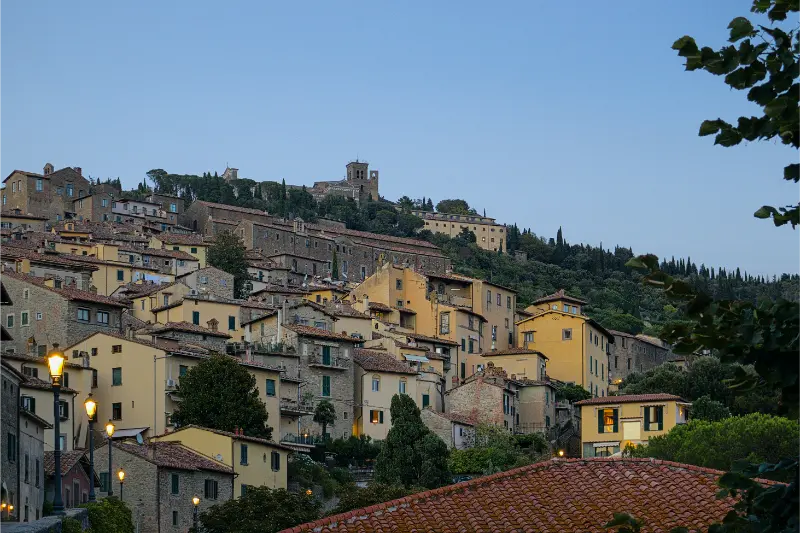
Arezzo Cathedral sits at the top of the historic centre and contains works connected with Piero della Francesca as well as broader religious art. The climb from lower streets is noticeable but rewards you with a different view of the city’s shape.
Continue toward the Medici Fortress and the Prato gardens for outdoor time. These spaces are useful after a museum and especially welcome on clear days.
Casa Vasari
Giorgio Vasari was born in Arezzo, and his house helps connect the city to the artist, architect and biographer whose writing shaped later understanding of Renaissance art. Frescoed rooms make it a more personal-scale visit than a large gallery.
If you buy a combined museum product, check whether reservations are required for any component. Do not assume one pass guarantees unrestricted entry at any hour.
Archaeological Museum and Roman amphitheatre
Arezzo’s history reaches well before the Renaissance. The archaeological museum and adjacent Roman amphitheatre provide Etruscan and Roman context, which is useful if your Tuscany trip has otherwise been dominated by medieval and Renaissance cities.
This is also a good rainy-day option. Allow enough time to understand the local material rather than treating archaeology as filler between famous artworks.
The antiques tradition
Arezzo is known for a major antiques market held on regular dates, transforming streets and squares with dealers and collectors. If your trip overlaps, expect a more animated centre and greater accommodation demand.
If antiques are not your focus, the event can still be atmospheric, but plan walking routes and parking accordingly. Verify current dates with the local tourism authority before booking around it.
Goldworking and local identity
The Arezzo area has an important jewellery and goldworking tradition. You may notice shops and industry references that rarely appear in generic Tuscany itineraries.
Treat this as part of the city’s living economy, not simply a souvenir category. Quality and pricing vary, so research purchases carefully if jewellery is a reason for visiting.
Food in Arezzo
Arezzo sits between different Tuscan landscapes, and local menus can include handmade pasta, meat, beans, soups and seasonal ingredients. The atmosphere is often less dominated by international visitor demand than central Florence.
Choose a restaurant based on menu and recent opening information rather than proximity to Piazza Grande. A few streets away can provide a quieter meal.
Arriving by train
Arezzo is one of Tuscany’s easiest art cities by rail, with direct or straightforward connections from Florence and toward Rome on regional and some faster services. The station is within walking distance of the historic centre. See our Italy train guide for ticket basics.
This accessibility makes Arezzo an excellent car-free overnight or day trip. It is also a logical stop between Florence and Rome rather than a detour.
Driving and parking
If you arrive by car, leave it outside restricted central streets and walk uphill. Review the driving in Italy guide before approaching the historic core.
A car becomes useful if you continue to Cortona, the Valtiberina, Anghiari or rural eastern Tuscany. For central Arezzo itself, it is unnecessary.
Arezzo as a base for eastern Tuscany
Arezzo can anchor a route toward Sansepolcro, Monterchi, Anghiari and other places connected with Piero della Francesca or the Valtiberina. This turns a single museum visit into a thematic art journey.
Do not attempt all of them in one day. Two or three nights allow a far more coherent eastern Tuscany section.
Where to stay
Near the station is practical for rail travel; inside or beside the historic centre is better for atmosphere. Compare current rooms through Booking.com and read comments about uphill access if carrying luggage.
An overnight is valuable if you want the centre after day visitors depart or if your fresco reservation is early the next morning.
A one-day itinerary
Reserve San Francesco for the morning, then walk toward Piazza Grande and Santa Maria della Pieve. Have lunch before continuing uphill to the Cathedral, Prato and fortress. Use the late afternoon for Casa Vasari or archaeology depending on interest.
The schedule deliberately includes one major booked artwork and several flexible sights. That makes the day resilient if a church closes temporarily or you spend longer over lunch.
Arezzo with children
The city is manageable for families because distances are short, though the upper centre involves hills. Alternate one museum with the fortress gardens or Piazza Grande. See Italy with kids for broader family logistics.
Do not expect young children to appreciate several art interiors consecutively. The fresco reservation can be the cultural anchor, with the rest kept flexible.
What to reserve and what can stay spontaneous
Piero della Francesca is the booking priority because timed access can shape the day. After that, keep churches, squares and the fortress flexible unless a special exhibition requires a ticket. This balance protects you from a late train or a longer-than-expected lunch.
Check the official ticket office again shortly before travel because museum combinations and reservation procedures can change. Save the confirmation offline.
Arezzo in half a day
If you have only four or five hours, reserve San Francesco, walk to Piazza Grande and Santa Maria della Pieve, then continue up to the Cathedral and Prato before returning to the station. Skip the archaeology and Casa Vasari unless one of them is a particular interest.
This condensed route still shows art, civic space and topography. It is better than adding many interiors and spending the day watching the departure clock.
When an overnight is worth it
Stay overnight if your reservation is early, if you want the antiques market atmosphere, or if Arezzo is the start of an eastern Tuscany loop. Evening also reveals a calmer city after commuters and day visitors leave.
An overnight is less necessary if Arezzo is a simple rail day trip from Florence and you are not continuing east. Let the transport plan decide rather than adding a hotel change automatically.
Accessibility and hills
From the station, the route into the upper historic centre climbs gradually and then more noticeably. Travellers with limited mobility should plan taxis or local transport where appropriate and verify access for individual museums.
You can still experience Arezzo without climbing every street. San Francesco and the lower centre already contain major cultural value, and the itinerary can be shortened without becoming meaningless.
Arezzo also works particularly well as a deliberate pause between Florence and Rome: luggage storage or an overnight stay can turn a transport day into a cultural day without requiring a rental car or a long detour.
Final thoughts
Arezzo deserves a place in a first or second Tuscany itinerary because it combines world-class art with a city scale that remains easy to absorb. Reserve Piero della Francesca, walk the rest without pressure, and consider using Arezzo as the doorway to eastern Tuscany rather than returning immediately to Florence.
Last updated: October 17, 2026