
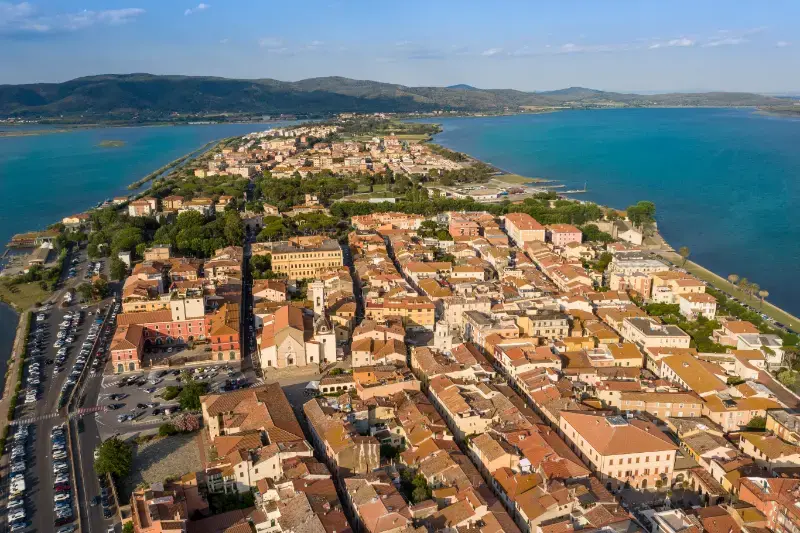
Maremma is the Tuscany to choose when you want the region to feel broader than Florence, vineyards and hill towns. Southern Tuscany opens toward Mediterranean coast, wetlands, wooded hills, Etruscan archaeology, tufa villages and thermal landscapes. It is a region for road trips, nature days and slower stays rather than a single day excursion.
At a glance
| Ideal stay | 3–5 nights |
|---|---|
| Best for | Coast, nature, Etruscan heritage, road trips, food |
| Main nature anchor | Maremma Regional Park |
| Car needed? | Strongly recommended for a broad itinerary |
| Official park info | Maremma Regional Park |
What area does Maremma cover?
Maremma is a broad historical and geographical area, so travel guides use the name in different ways. For a first trip, it is practical to focus on southern coastal Tuscany around Grosseto, Alberese, Orbetello and Monte Argentario, plus inland tufa towns such as Pitigliano, Sovana and Sorano.
Our Tuscany travel guide places Maremma Travel in the context of the wider region, including travel times and alternative bases.
Trying to cover coast and inland from Florence as separate day trips wastes time. Move your base south and let Maremma become its own chapter of the itinerary.
Maremma Regional Park
The protected area near Alberese is one of the best introductions to coastal Maremma. The official park information explains ticketed itineraries and seasonal visiting procedures. Current rules note that some summer routes require guided access during the high fire-risk period, so always verify conditions before setting out.
Bring water, suitable footwear, sun protection and insect repellent. Nature here is not an urban park; route length, heat and seasonal restrictions matter.
Marina di Alberese and the protected coast
The beach at Marina di Alberese sits within the wider protected landscape and feels different from highly developed resort beaches. Access procedures can change seasonally, including transport and parking arrangements.
Go for the combination of coastal nature and sea rather than expecting full resort infrastructure. Carry out waste and respect protected habitats.
Talamone
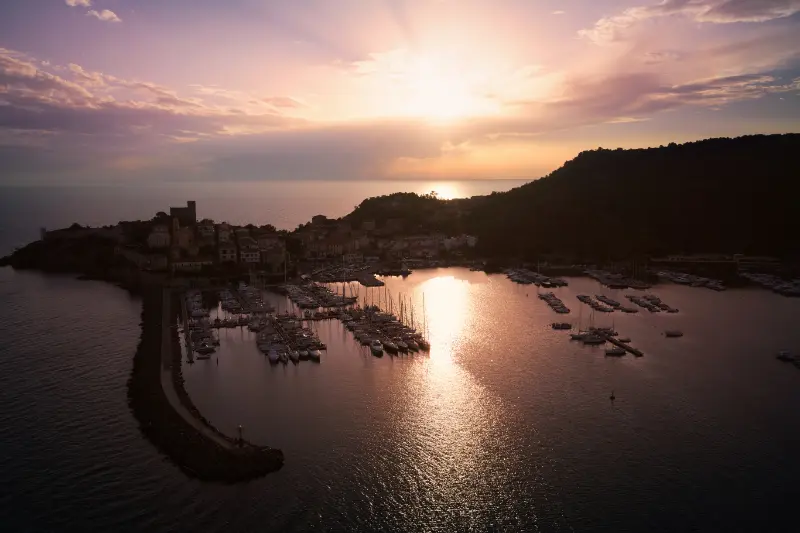
Talamone occupies a headland with views over the coast and links naturally with the southern side of the park. It can work as a short scenic stop, an overnight or a base for water-oriented activities.
Parking and summer traffic can be tight, so do not arrive at the busiest hour expecting effortless access. Evening is particularly attractive if you are staying nearby.
Orbetello lagoon
Orbetello sits between lagoon waters and the routes toward Monte Argentario. The wetlands are important for birdlife and give the area an ecological identity beyond beaches.
Use the town as a practical base for restaurants and services, then explore the peninsula and nearby coast. In mosquito season, repellent can be more valuable than another camera lens.
Monte Argentario
Porto Santo Stefano and Porto Ercole are the two best-known centres on Monte Argentario. The peninsula combines harbour atmosphere, beaches and scenic roads, but travel times increase sharply in summer traffic.
Choose one side for a relaxed day rather than circling the entire peninsula because the map looks compact. Boat trips can add coves and coastline that are difficult to access from land.
Capalbio and the southern edge
Capalbio is a hill town near the coast and works well as a cultural break from beaches. Its walls and compact centre can be visited without turning the day into a major museum schedule.
Pair it with a nearby coastal stop or the unusual Giardino dei Tarocchi if contemporary art interests you, checking current opening and reservation rules directly.
Pitigliano, Sovana and Sorano
These inland towns are built into and around volcanic tufa landscapes and create one of Maremma’s strongest cultural road-trip circuits. Pitigliano has a dramatic approach; Sovana is smaller and archaeological; Sorano feels rugged and less polished.
Give the trio a full day or split them over two. The roads are winding and the villages reward walking. This is not a useful add-on after a full beach day.
Etruscan history and the vie cave
The Etruscan presence is visible in archaeological sites and sunken roads cut into tufa, especially around Sovana and Pitigliano. These routes can be slippery, shaded and uneven, so footwear matters.
Use official local information for trail conditions. Heavy rain, maintenance or seasonal vegetation can change what is comfortable and safe.
Saturnia and thermal landscapes
Saturnia is associated with thermal water, including famous outdoor cascades, but access, parking and crowd conditions can change. The wider area also has commercial spa options where facilities and reservations are clearer.
Do not assume a viral image represents a quiet natural pool waiting for you. Visit early, respect parking rules, and consider a paid spa if comfort and controlled access matter.
Grosseto as a practical base
Grosseto is often overlooked because it lacks the immediate postcard recognition of coastal towns, but it has transport connections, services and a walled historic centre. It can be a sensible base for travellers balancing park visits and day trips.
Choosing a practical town for two nights can make the rest of Maremma easier, especially in shoulder season when resort services are less predictable.
Driving Maremma
A car is the simplest way to connect coast, park entrances and inland villages. Review our driving in Italy guide and avoid planning routes that cross the whole region every day.
Fuel stations and services are easy to find near main roads but less convenient on rural loops. Download offline maps and leave a time margin before sunset or dinner.
Where to stay
Choose Alberese or Grosseto for the park, Orbetello/Argentario for coast, or Pitigliano/Sorano for inland atmosphere. Trying to use one base for everything creates repetitive driving. Compare current options through Booking.com.
Check whether a countryside property offers dinner, how far it is from a paved road and whether beach parking is included if relevant. Small practical details determine whether a rural stay feels relaxing.
Food in Maremma
Maremma food reflects pastoral, agricultural and coastal traditions. Acquacotta, wild-boar dishes, handmade pasta, local cheeses and seafood can all appear depending on where you are. The diversity is a reason to move between inland and coast.
Do not expect every restaurant to serve the same ‘Tuscan classics’. Order geographically: seafood near the coast, inland dishes in the tufa towns, and seasonal produce everywhere.
A three-day first itinerary
Day one: Maremma Regional Park and Alberese. Day two: Orbetello and Monte Argentario. Day three: Pitigliano, Sovana and Sorano, or Saturnia if thermal landscapes matter more than archaeology.
With five days, slow each section down rather than adding more distant destinations. A beach half-day, one long lunch and an extra night in the inland hills are better upgrades than more kilometres.
Best time to visit
Spring and early autumn are excellent for walking and road trips; summer is strongest for sea but introduces heat, traffic and park fire-risk procedures; winter is quiet and can suit food and hill-town travel. See our Italy season guide for broader planning.
Always check the park’s current rules close to your date. Nature destinations are more sensitive to heat, fire risk and weather than city museums.
How to divide coast and inland without overdriving
Use two bases if you have five nights: two or three near the coast and two inland around Pitigliano or Saturnia. With only three nights, choose which side matters more and make the other a single day trip. Repeatedly crossing the region wastes the hours you came to enjoy.
Check dinner options before choosing a remote base. A 25-minute country drive may feel easy at noon and very different after a long beach or hiking day.
Beach planning in high season
Summer beach days need an earlier start than city sightseeing. Parking near popular stretches can fill, roads around Argentario can slow and midday heat makes exposed walks tiring. Carry sun protection and more water than you would for an urban day.
Research whether the beach is free, serviced by stabilimenti, inside a protected area or reached by boat. These are different experiences with different access rules.
Nature safety and seasonal rules
The official park visiting rules are especially important in summer, when fire-risk procedures can make guides compulsory on some paths. Do not rely on an old route description downloaded months earlier.
Ticks, mosquitoes, sun exposure and dehydration are ordinary outdoor risks. Suitable shoes, repellent, water and a charged phone are part of the itinerary.
Maremma without a car
Rail can bring you to Grosseto and some coastal towns, but a comprehensive Maremma itinerary becomes much harder without private transport. Instead of trying to reach every inland village, base in Grosseto or Orbetello and use local buses, taxis or organised excursions selectively.
The principle is the same as in our Italy without a car guide: reduce the number of places and increase the time in each. A car-free Maremma can work, but it should not imitate a driving loop.
If wildlife watching is important, bring binoculars and treat distance as part of responsible observation. Do not approach animals for photographs, feed them or leave marked paths to obtain a better angle; protected landscapes remain valuable precisely because visitor behaviour is controlled.
Final thoughts
Maremma is the right antidote to a Tuscany itinerary that has become too city-heavy. Base yourself in the south, combine one protected-landscape day with coast and inland history, and accept that distances require time. The region becomes memorable when you stop trying to make it a day trip from somewhere else.
Last updated: October 17, 2026