
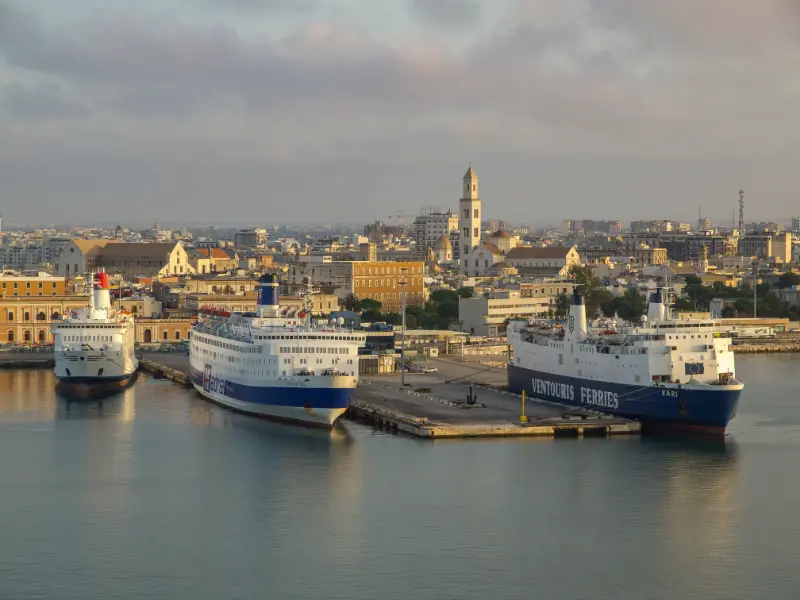
Bari is the most useful city in Puglia to understand before you start moving around the region. It is a working Adriatic port, a pilgrimage city, a university hub, a food destination and one of the easiest transport gateways in southern Italy.
Do not treat Bari only as an airport stop. Bari Vecchia, the Basilica of San Nicola, the seafront and the food culture justify at least one full day, while the rail network makes the city a strong base for short trips north and south.
If Bari Travel is part of a longer route through Puglia, our Puglia travel guide is a useful starting point for choosing the next stop.
This article is designed around decisions rather than a generic list: how long to stay, what deserves priority, where transport changes the experience, which combinations are realistic and what commonly wastes time on a first trip.
Quick planning summary
| Best for | Travellers who want to combine historic towns, food, coastline and countryside without turning the trip into a race. |
|---|---|
| Minimum time | One focused day for a single destination; several nights for a regional base or a multi-stop route. |
| Car | Useful for rural Puglia and beach-hopping, but not necessary for every city; train-based trips work well along parts of the Adriatic corridor. |
| Best months | Late April–June and September–October for the easiest balance of weather, daylight and crowds. |
| Planning rule | Choose bases by geography, not only by hotel price; Puglia is long, and unnecessary backtracking quickly consumes a day. |
What to see and do
Bari Vecchia without rushing
Start inside the old town rather than on the shopping streets. The pleasure is in the network of lanes between the Basilica of San Nicola, the Cathedral of San Sabino and the castle, where residential life still shares space with visitors. Early morning is particularly good if you want to see the old centre before tour groups arrive; evening is better for atmosphere, street food and a slower walk through Piazza Mercantile and Piazza del Ferrarese.
Give the old town at least two hours, longer if you enter churches or the castle. The famous pasta-making streets are worth seeing, but remember that they are real homes and working spaces. Photograph with discretion and spend money with local producers rather than treating the lanes as an open-air set.

Basilica of San Nicola
The Basilica of San Nicola is Bari’s defining monument and one of the reasons the city feels different from other Italian coastal capitals. The Romanesque church houses the relics of Saint Nicholas and attracts pilgrims from both Western and Eastern Christian traditions.
Visit outside major services if you want a calmer architectural experience, but remember that this is first a functioning place of worship. The crypt is essential to understanding the basilica’s international importance. Around the church, allow time for the lanes leading toward the waterfront rather than immediately moving to the next attraction.
Cathedral, castle and medieval layers
For a closer look at this side of the destination, read our Molfetta Travel Guide.
The Cathedral of San Sabino is quieter than San Nicola and helps explain the Apulian Romanesque language in a less crowded setting. The Norman-Swabian Castle adds the military and dynastic layer of Bari’s history and anchors the western edge of the old town.
These sights work best as one geographic cluster. Walk them in sequence rather than crossing Bari Vecchia repeatedly. If opening times do not line up, keep the castle as the flexible element: the old town itself remains worthwhile even when an interior visit is not possible.
Lungomare and the modern city
Bari’s seafront changes the rhythm of the visit. The long promenade gives open views, evening light and a useful contrast with the compressed lanes of Bari Vecchia. Continue toward the Murat district if you want cafés, shopping and a clearer sense of contemporary Bari.
The waterfront is particularly valuable at the end of the day. In summer, midday sun can be punishing, while late afternoon makes the walk much more pleasant. Pane e Pomodoro beach is reachable from the centre if you want a city swim, but do not confuse it with the more scenic beach areas elsewhere in Puglia.
Eat Bari rather than just seeing it
Focaccia barese, panzerotti, sgagliozze, seafood and orecchiette are not side attractions; they are central to a Bari visit. A street-food lunch can work extremely well if you plan a more relaxed restaurant dinner later.
Avoid eating every famous item in one hour. Use breakfast, lunch and aperitivo to spread the food experience across the day. Markets and bakeries tell you more about the city than a generic menu designed around national Italian classics.
How to plan the visit
For a more detailed plan, our Giovinazzo Travel Guide develops this part of the journey step by step.
How much time? One full day is enough for a strong first visit. Two nights are better if Bari is your arrival point, if you want a food-focused evening, or if you plan a day trip by train.
Protect the first two hours of the day for the place or experience that matters most. Puglia becomes much easier when the hottest or busiest part of the day is used for lunch, a beach, a pool or an indoor stop rather than for crossing a famous town at peak crowd level.
If you are travelling in July or August, treat parking as part of the itinerary. Arriving twenty minutes earlier is usually better than building a schedule that assumes you can drive to the front door of every historic centre or beach.
Getting there and getting around
Bari Centrale is the key rail hub for the Adriatic corridor, while Bari Airport is connected to the city by rail and road services. Within the centre, walking is usually faster than using a car. Do not drive into Bari Vecchia unless your accommodation gives explicit instructions; choose a garage or public parking outside the restricted core.
Car, train or a mix?
Puglia is one of the Italian regions where a mixed strategy often works best. Trains are excellent for selected Adriatic towns and remove parking stress; a car is far more useful for masserie, inland villages, remote beaches and routes that cross the countryside.
Do not keep a rental car simply because you already paid for it. If several days are concentrated in rail-connected towns, returning or delaying the car can reduce parking fees and make the trip calmer. Conversely, do not force public transport onto a rural itinerary where it creates long waits or impossible connections.
Parking and ZTL strategy
Historic centres across Puglia frequently have restricted traffic, narrow lanes or pedestrian areas. Follow official signs to peripheral parking and walk the final section. Accommodation inside a ZTL should provide exact arrival instructions; never assume a hotel booking automatically authorises your number plate.
Where to stay
First-time visitors usually do best between Bari Vecchia, Murat and the seafront. Bari Vecchia gives atmosphere but can involve stairs and difficult luggage access. Murat is easier for the station and restaurants. The seafront works for views and evening walks but can mean a longer walk to trains.
Before booking, check the real travel time to your first morning stop, whether parking is included, whether dinner is available in rural properties and how luggage reaches the room. In Puglia, a beautiful location that adds forty minutes each way can become expensive in time over several days.
A realistic itinerary
Morning
Bari Vecchia, Basilica of San Nicola, Cathedral and the lanes around the old centre.
Lunch
Bakery or simple local lunch: focaccia, panzerotto or orecchiette rather than a long formal meal if you want to keep the afternoon open.
Afternoon
Norman-Swabian Castle, Murat district and a café break. If museums matter more than shopping, use this slot for an interior visit.
Evening
Walk the lungomare, return toward the old town for aperitivo and dinner, and enjoy Bari after day-trippers leave.
Food and local character
Order focaccia barese from a bakery when it is fresh, try a panzerotto hot rather than as a take-away souvenir, and look for orecchiette with cime di rapa when the season and menu make sense. Raw seafood is part of local culture but choose reputable establishments and use normal food-safety judgement.
Leave room for unplanned food stops. Bakeries, small caseifici, vegetable dishes, olive oil and seasonal specials can be more memorable than chasing a list of famous restaurants. If a specific tasting or masseria dinner matters, reserve it; otherwise keep at least one meal each day flexible.
Best time to visit
For a more detailed plan, our Bitonto Travel Guide develops this part of the journey step by step.
April to June
Late spring is one of the easiest periods for sightseeing. Daylight is long, countryside is green and walking temperatures are generally kinder than midsummer. The sea warms progressively, so beach-focused travellers may prefer late May or June.
July and August
Expect heat, busy coastal parking and higher accommodation demand. Start towns early, protect midday and reserve the experiences where capacity matters. The reward is lively evenings and reliable beach weather, but a schedule that looks reasonable in April can feel exhausting in August.
September and October
September is excellent for combining sea and towns, while October is stronger for food, countryside and walking. Ferry, beach-club and seasonal service patterns may reduce later in autumn, so verify practical details rather than assuming summer frequency.
Winter
Cities and larger towns remain rewarding, but beach destinations become quiet and some seasonal businesses close. Winter suits food, architecture and local life more than a classic coastal holiday.
Worth knowing before you go
One practical advantage of Bari is that the city can absorb a poor-weather day better than most Puglia bases. Churches, theatres, galleries, markets and food stops give you alternatives when the sea or a boat plan fails. That makes Bari useful at the beginning of a trip, when weather uncertainty can otherwise force major changes.
If you arrive by air and plan to rent a car later, consider sleeping centrally first and collecting the vehicle only when you leave for the countryside. The old town and Murat are more enjoyable on foot, and delaying the rental avoids paying for a car that spends its first day in a garage.
Families and accessibility
Bari works well with children because the centre is relatively flat and food stops are easy to build into the day. The old town has uneven paving and crowded lanes, so a compact stroller is more useful than a large one.
Accessibility varies sharply between modern waterfronts, stone historic centres, beaches and rural properties. Check the exact attraction rather than the destination as a whole. Old-town stairs, polished stone, cobbles and steep lanes can matter more than distance.
Mistakes to avoid
- Using Bari only as a sleep-before-the-flight city.
- Trying to drive into the historic centre without checking ZTL and parking rules.
- Scheduling a beach-heavy day inside Bari when the region offers much stronger beach choices elsewhere.
- Eating beside the first major sight instead of walking a few streets for better local options.
The common pattern behind these mistakes is trying to make the itinerary look efficient on a map instead of efficient on the ground. Build in parking, meals, heat and the simple pleasure of not moving every hour.
Key decisions that improve the trip
Is Bari worth staying overnight?
Yes for most first-time visitors. The city is livelier after the day-trip hours, food options widen in the evening and an overnight stay protects you from building a flight or train connection into the same day as sightseeing. If your wider route starts south of Bari, one or two nights also let you begin rested rather than collecting a rental car immediately after landing.
Bari or Monopoli as a base?
Choose Bari for airport access, city energy, museums, pilgrimage sites and the broadest rail connections. Choose Monopoli if you want a smaller old town and easier beach time. A short trip can split nights between them, but on a one-week itinerary it is usually better to choose one and use the train for the other.
A day trip from Bari that actually works
Polignano a Mare and Monopoli are the easiest high-value pair because both sit on the same rail corridor. Alberobello is possible but less frictionless by public transport. If you want trulli, rural restaurants and several Valle d’Itria towns in one day, a car or organised excursion is much more practical.
What I would skip on a first day
Do not overload the first Bari day with distant beaches, shopping centres or multiple museums unless they are a personal priority. The old town, San Nicola, a food stop and the seafront give a better sense of place. Extra indoor sights can be added if weather is poor or you have a second day.
On-the-ground strategy
Save key addresses, parking points and opening information offline before leaving your accommodation. Mobile coverage is usually fine in towns, but rural roads and crowded events are not the moment to discover that a map or booking confirmation is unavailable.
Carry water, sun protection and a light layer for evenings or boat trips. Beach shoes are useful on rocky or pebbly coves. If you are driving, keep valuables out of sight and avoid loading or unloading luggage in exposed parking areas more than necessary.
Allow a margin before the final train, flight, boat or long drive of the day. Puglia rewards flexibility: a thirty-minute buffer often has more value than one extra viewpoint squeezed into an already full schedule.
Useful related guides
This is the first guide in the new Puglia cluster. The regional planning articles and destination guides published after it will build the internal network without linking readers to content that was not yet live at this article’s publication time.
Official information to check before travel
Opening hours, road access, seasonal services and local rules can change. Before travelling, check the relevant Puglia destination information and verify any attraction, beach service or transport connection that is essential to your day.
Last updated: October 17, 2026
Leave a Reply