

The best things to do in Rimini span two thousand years and a very modern beach culture. You can walk from a Roman triumphal arch to Renaissance architecture, a surgeon’s archaeological house, Fellini’s cinematic world and a huge Adriatic beach in the same day. The key is to group the sights geographically so the visit feels like a city rather than a disconnected checklist.
| Top Roman sight | Tiberius Bridge / Arch of Augustus |
|---|---|
| Best museum pass | Rimini Art Card |
| Best neighbourhood | Borgo San Giuliano |
| Best modern experience | Fellini Museum |
| Best outdoor time | Beach + Parco del Mare |
1. Arch of Augustus
Start with the Arch of Augustus, one of the clearest surviving statements of Roman Ariminum. It marked the end of the Via Flaminia and still functions as a symbolic gateway to the centre. The monument is outdoors and easy to see without a ticket, making it a natural first stop before walking through the old urban axis.
Do not spend only thirty seconds taking a photo. Look at how the arch aligns with the modern street network and imagine the road connection to Rome; this context makes the rest of Roman Rimini easier to understand.
2. Tempio Malatestiano
The Tempio Malatestiano is Rimini’s essential Renaissance building, reshaped for Sigismondo Pandolfo Malatesta with Leon Battista Alberti’s famous exterior. Inside, chapels, sculpture and funerary ambition reveal a ruler using architecture to project status and memory.
Visit with enough time to read the exterior and interior separately. Religious services can affect access, so check local information if the church is a priority on a short itinerary.
3. Piazza Tre Martiri and 4. Piazza Cavour
These two squares show different sides of central Rimini. Piazza Tre Martiri preserves the line of the Roman forum and today works as a busy commercial space. Piazza Cavour is framed by civic buildings and gives access to Teatro Galli, the old fish market area and the route toward Castel Sismondo.
Walking between them is more valuable than treating either as a single sight. Cafés, shops and side streets make this section the best place to understand everyday city life away from the beach.
5. Domus del Chirurgo
The Domus del Chirurgo is one of Rimini’s most distinctive archaeological sites because the remains are tied to a third-century physician and an exceptional set of surgical instruments. The protective structure lets you see the domestic complex while the City Museum provides the objects and interpretation.
Buy the relevant museum ticket or Rimini Art Card when it matches the rest of your plan. Archaeology here becomes much more meaningful when you visit both the site and collection rather than looking through the glass enclosure from outside.
6. City Museum
The City Museum extends the story beyond the Roman period with archaeology, medieval and Renaissance works and local history. It is the best rainy-day anchor and one of the places where Rimini’s two-thousand-year narrative becomes coherent.
Allow at least ninety minutes if you enjoy museums. If the beach is your main priority, use the museum selectively around the Domus collection rather than exhausting yourself before the rest of the day.
7. Fellini Museum
The Fellini Museum is spread across Castel Sismondo, Palazzo del Fulgor and Piazza Malatesta. It uses multimedia installations and immersive design to explore the director’s films, collaborators and relationship with memory. Even travellers who know only La dolce vita or Amarcord can enjoy the visual approach.
The 2026 Rimini Art Card includes the Fellini Museum together with the City Museum and Domus del Chirurgo for €14 full price and is valid for seven days, making it useful if you plan to visit all three.
8. Castel Sismondo and 9. Teatro Galli
Castel Sismondo is inseparable from Sigismondo Malatesta and today forms part of the Fellini Museum experience. Nearby Teatro Galli, rebuilt and reopened after a long historical interruption, restores another major architectural presence to the civic centre.
Check event schedules because performances can turn the theatre from an exterior sight into an evening experience. Even without a show ticket, the area around Piazza Malatesta is worth exploring for the way historic and contemporary Rimini overlap.
10. Tiberius Bridge and 11. Borgo San Giuliano
Walk across the Tiberius Bridge toward Borgo San Giuliano. The Roman bridge is still a functioning piece of the city, while the former fishermen’s quarter beyond it offers low houses, murals, restaurants and a more intimate scale. This is one of Rimini’s best late-afternoon walks.
The neighbourhood is often associated with Fellini through murals and local memory, but it is not a theme park. Wander the side streets, have a drink or dinner, and treat the art as part of a living residential district.
12. Rimini beach and 13. Parco del Mare
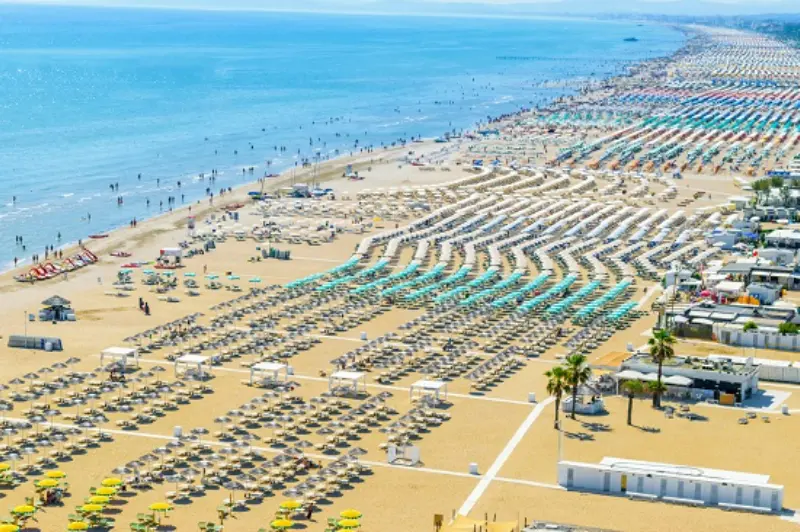
The beach is a genuine attraction rather than an afterthought. Rimini has about 15 kilometres of fine sand and hundreds of organised bathing establishments. Parco del Mare has transformed long sections of the seafront into a pedestrian and cycling environment with greenery, fitness areas and public space.
You do not need to rent a lounger to enter the beach. Pay for services only when you want them, and remember the 2026 smoke-free rules on the beaches. Sunrise walks are particularly rewarding if you are staying near Marina Centro.
14. Grand Hotel and 15. Marina Centro
The Grand Hotel is a landmark tied to Rimini’s resort history and Fellini’s imagination. Marina Centro around it remains the classic seaside district, mixing hotels, restaurants, nightlife and beach access. A walk here helps explain how Rimini evolved from nineteenth-century bathing culture into a mass tourism capital.
The area is busiest in summer evenings. Visit earlier if architecture and seafront space matter more to you than nightlife, or embrace the evening promenade if the resort atmosphere is part of the reason you came.
16–20. Markets, cycling, food and day trips
Round out the city with a market visit, a piadina stop, a bicycle ride along the seafront, a cultural event or a day trip into the hills. Santarcangelo, Verucchio, San Leo and San Marino all add different landscapes and histories within reach of Rimini.
Do not try to fit all five into one short stay. The city itself deserves at least a day and a half before you start collecting hill towns.
Where to stay
If you want to walk to both the beach and centre, Marina Centro near the station side is the most flexible base. For a culture-first weekend, central Rimini reduces the need for buses.
Tours and activities
A guided activity is most useful when it adds context, removes transport friction or bundles several sights into a coherent route. Compare the exact meeting point, duration, language, inclusions and cancellation terms rather than choosing only by headline price.
Continue planning
These related My Italy Experience guides make it easier to connect this article with the rest of the trip without repeating the same planning work.
Useful official sources
Final planning advice
Choose ten of these experiences for a two-day stay rather than chasing all twenty. A strong Rimini itinerary balances Roman and Malatesta history, Fellini, Borgo San Giuliano and enough beach time to understand the city’s modern identity.
How to prioritise with limited time
With one day, choose the Arch of Augustus, Tempio Malatestiano, one museum, Tiberius Bridge/Borgo San Giuliano and a sunset beach walk. With two days, add Fellini Museum, Domus del Chirurgo, longer beach time and Parco del Mare. Save inland day trips for a third day or longer stay.
Using the Rimini Art Card
At €14 full price in 2026, the Rimini Art Card is most useful when you plan to visit the City Museum, Domus del Chirurgo and Fellini Museum within its seven-day validity. Check current opening days before buying; a pass has little value if one of your intended museums is closed during your short stay.
Rainy-day version
On a wet day, focus on the City Museum, Domus del Chirurgo, Fellini Museum, Tempio Malatestiano and cafés around the historic centre. Save the beach, Parco del Mare and Borgo walks for breaks in the weather. Rimini has enough indoor culture that rain should change the order of the itinerary rather than cancel the day.
Before you leave
Before finalising a trip around best things to do in Rimini, check the exact opening day, first and last transport, weather, reservation rules and the walking distance from your accommodation. Save official confirmations offline, allow a realistic meal break, and keep one alternative for rain or unexpected closures. Also check whether a city pass, combined ticket or hotel package actually covers the experiences you intend to use; paying for unused inclusions rarely improves a short trip. Leave at least thirty minutes of unscheduled time between major activities so small delays do not cascade through the day.
Practical pacing
A good best things to do in Rimini plan should also leave room for the ordinary parts of travel: finding breakfast, using a restroom, collecting luggage, waiting for a bus and changing plans when a place is busier than expected. Build the route in geographical order, avoid back-to-back reservations in different districts, and decide in advance which attraction you would drop if the day runs late. That keeps the itinerary useful in real conditions rather than only on paper.