
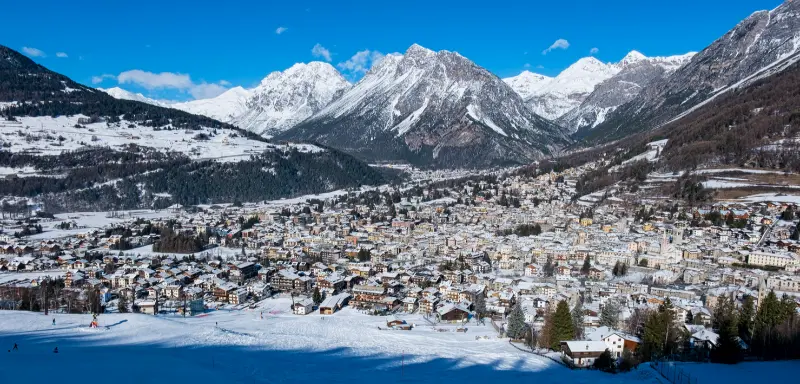
Bormio is one of Italy’s strongest all-season mountain towns because it combines a genuine historic centre with thermal water, skiing, cycling and access to spectacular high-alpine roads and valleys. The right trip depends heavily on season, so planning should begin with what is actually open rather than with a fixed sightseeing checklist.
| Best for | Thermal baths, skiing, cycling, hiking and historic atmosphere |
|---|---|
| Ideal stay | 2–4 nights |
| Rail station | None; continue by bus from the Valtellina rail corridor |
| Signature road | Stelvio Pass when seasonally open |
| Strong rainy-day option | Thermal baths |
Why Bormio works in every season
Bormio is unusual among Alpine resorts because the historic town remains part of the experience. Stone streets, old churches and traditional buildings provide a cultural layer that many ski destinations lack, while thermal water gives the town a second identity independent of snow. In summer, high passes and hiking dominate; in winter, skiing and warm water become the natural combination.
You can pair Bormio Travel with other places in Lombardy; the Lombardy travel guide gives an overview of realistic connections and where to stay.
This variety is why Bormio deserves at least two nights. One day can focus on the centre and spa, while another explores the mountains. Trying to squeeze Bormio into a day trip from Milan creates a long transfer and leaves little time for what makes the place special.
Explore the historic centre
Begin on foot around the old centre rather than driving from sight to sight. The Kuerc area, churches, lanes and traditional façades reveal Bormio’s long history as a trading and administrative centre on Alpine routes. The scale is manageable, and the best details appear when you slow down.
Via Roma is the main shopping and strolling axis, but step into smaller streets rather than treating it as the entire town. If weather closes the mountains, the centre, cafés and thermal options can fill a satisfying day without feeling like a consolation prize.

Understand the three thermal experiences
Bormio is associated with three distinct thermal options: Bormio Terme in town and the QC Terme Bagni Vecchi and Bagni Nuovi complexes nearby. They differ in atmosphere, age policies, booking systems and price. Our Bormio thermal baths guide compares them rather than assuming one spa suits everyone.
Bormio Terme is particularly useful for families because its wellness area includes spaces suitable for children. In 2026 the official price page lists an adult day entry at €35 and junior day entry at €26, with children under six free under the stated one-child-per-paying-adult condition. Entry is not reserved and remains subject to capacity, so check current rules before arrival.
Stelvio Pass and high roads
The Stelvio is one of the most famous roads in the Alps, but it is seasonal. Snow and maintenance close high passes for a large part of the year, and weather can affect access even outside winter. Never promise yourself a Stelvio drive months in advance without a fallback plan.
When open, the road is spectacular but demanding. Cyclists, motorcyclists, buses and cars share hairpins, and scenery is not an excuse to stop in unsafe places. If you want to photograph the pass, use designated parking and viewpoints. For cyclists, the climb should be treated as a serious athletic objective rather than casual sightseeing.
Summer hiking and nearby valleys
Valfurva and Santa Caterina provide access to high mountain scenery and the Stelvio National Park area. Choose routes based on current trail and lift information, not just distance. At altitude, 8 kilometres can be much harder than 15 kilometres on a flat city path.
Start early, carry layers and turn around when thunderstorms build. If you are not experienced in the mountains, a guided walk can add safety and context. Wildlife, glaciers and First World War history are fascinating, but the terrain deserves respect.
Winter in Bormio
In winter, skiing becomes central and accommodation location matters more. Staying near lift access can save daily transport, while the old centre offers stronger evening atmosphere. Decide whether skiing or town life is the priority before booking.
Winter driving requires proper equipment and patience. Snowfall, holiday traffic and low temperatures can lengthen transfers. If arriving by public transport, compare the through bus connections from rail hubs and avoid very tight changes.
How many days to spend in Bormio
A first visit to Bormio works best when you resist the urge to collect sights and instead build the day around geography. In mountain areas, a place that looks close on a map can require a slow bus, a winding road or a significant change in elevation. One full day is enough for a focused introduction, but two or three days produce a much calmer trip and leave room for weather changes, long lunches and spontaneous walks.
If Bormio is part of a wider Valtellina trip, decide in advance which experiences are essential. A museum, a historic centre, a wine visit, a panoramic train and a mountain walk all demand different rhythms. The most satisfying itineraries normally combine one structured visit with one flexible outdoor period rather than scheduling every hour.
Getting around without wasting time
Bormio has no railway station. The usual public-transport approach combines rail to the Valtellina corridor with onward bus services. Check the exact connection for your date and season; late-evening options are much less frequent than in a city.
A car is useful for Valfurva, high roads and dispersed accommodation, but the historic centre is best explored on foot. In winter, comply with equipment rules and check road conditions. In summer, high passes can create congestion on popular weekends.
Best time to visit
Winter is prime for skiing and thermal bathing; summer for passes, cycling and hiking. Late spring and autumn can be peaceful but are transitional: lifts, huts and pass roads may be closed. Bormio itself remains worthwhile because the historic centre and thermal water are not dependent on one season.
Mountain weather deserves more respect than the calendar. Check the forecast the evening before any hike and again in the morning, carry a warm layer even after a sunny start, and keep a museum, spa or town walk as a fallback. A flexible day is not a compromise in Valtellina; it is often the difference between an enjoyable trip and a stressful one.
Where to stay and how to choose a base
Choose accommodation according to the activity that matters most rather than simply searching for the geographic centre of Bormio. Travellers relying on trains should value a walkable station and evening restaurants; drivers can prioritise parking and access to the main road; hikers should check the first morning bus or lift rather than the straight-line distance to a trail.
For a multi-stop trip, two bases are often better than changing hotel every night. A lower or central Valtellina base can cover Sondrio, Tirano, wine terraces and Teglio, while an Alta Valtellina base works for Bormio, Livigno and high passes. This reduces packing and gives each half of the trip a coherent rhythm.
Travelling with children
With children, reduce the number of formal visits and protect time for movement. Short walks, playground stops, cable cars, easy lakeside or riverside paths and thermal pools often work better than a sequence of churches and museums. In mountain areas, check age rules, minimum heights and water-area restrictions before promising a specific activity.
Build meals into the plan early. Many local dishes are filling, and a long restaurant lunch followed immediately by a steep walk is rarely ideal. A lighter midday meal and a more relaxed dinner can work better on active days, especially when travelling with younger children.
What to book in advance
Reserve the experiences with limited capacity first: panoramic railway seats, guided wine tastings, spa sessions where booking is required, popular restaurants at weekends and any guided mountain activity. Leave ordinary town sightseeing flexible unless an official site specifically requires a time slot.
Keep screenshots or offline copies of tickets, because mobile coverage can weaken in side valleys and high terrain. Also save the address of your accommodation and the final public-transport departure of the day. These small precautions matter more in alpine destinations than in large cities with frequent alternatives.
What to pack
Even on a culture-focused trip, bring shoes with reliable grip, a refillable water bottle, sun protection, a light waterproof layer and something warm. In winter, add proper snow footwear and gloves; in summer, do not underestimate UV exposure at altitude. If you are visiting thermal baths, check whether towels, robes, slippers or swimming caps are included or need to be brought or rented.
For rail and bus travel, a compact bag is easier than a large rigid suitcase. If the itinerary includes wine purchases or duty-free shopping, leave room and verify customs allowances before buying. A power bank is useful on panoramic train days, when photography and navigation can drain a phone quickly.
Two-day Bormio plan
Day one: historic centre in the morning, leisurely lunch, then a thermal session. Day two: choose a mountain day appropriate to season—Stelvio when open, Valfurva hiking, skiing or another outdoor excursion. This pairing gives one cultural/wellness day and one landscape day.
If you are continuing east, compare the next base in our Livigno travel guide. If you are arriving from the Bernina route, Tirano is the natural transition town.
Last updated: October 17, 2026