

Cala Luna rewards people who plan the journey as carefully as the beach itself: a long ribbon of pale sand, gigantic cliff-side recesses and one of the Gulf of Orosei’s most memorable arrivals.
Arriving by sea is theatrical. Pale cliffs fill the horizon, the boat slows near a long beach and the famous shadowed openings in the rock suddenly make sense. Yet the scene is only half the story. Sea conditions influence boat landings; the inland trail is a serious route, not an effortless coastal stroll; and a busy summer day can feel very different from a quiet morning in shoulder season. Choose your approach according to the whole group, not only a photograph.
For a broader Sardinia itinerary, see the Sardinia travel guide before deciding which destinations to combine with Cala Luna.
Plan your visit at a glance
| Where | Gulf of Orosei, eastern Sardinia, between the Dorgali and Baunei territories |
|---|---|
| Allow | Half-day by boat, longer for a full beach stop; a land hike requires separate planning |
| Best approach | Book a suitable boat journey from Cala Gonone and confirm actual landing arrangements |
| Good to know | The overland route is demanding; return boats and weather are not guaranteed |
| Suggested base | Cala Gonone or Dorgali; Orosei for a wider coastal itinerary |
The recommendations below distinguish the permanent character of the place from rules that may change by season. Check the official visitor information shortly before your trip, particularly if a permit, guided departure or protected-area access is involved.
The beach beneath the cliffs
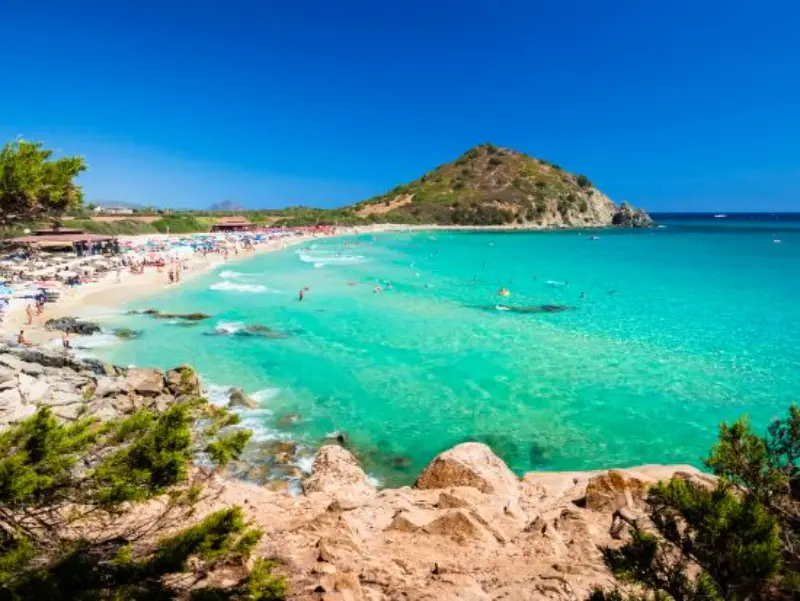
Cala Luna lies where the gorge of Codula di Luna meets the sea. The cove feels unusually spacious for this coast: sand stretches below steep limestone walls, while a series of enormous rock recesses casts striking shadows. These recesses are natural geological forms, not hotel cabanas or purpose-built shelters. They are part of a fragile coastal environment and should be treated accordingly.
The beach is attractive for swimming, but do not interpret its bright colours as a guarantee of shallow water along its full length. Depth, shore break and currents can change. Swimming close to landing boats, under unstable rock or in an exposed sea is a poor compromise for a photograph. When children are present, choose a clear section of shore and keep them within reach.
What the boat journey is really like
Boats serving Cala Luna typically use departure points such as Cala Gonone, with some itineraries linked to other Gulf of Orosei ports. Operators sell different products: direct transfers, multi-cove day cruises, time-limited beach stops and excursions that may include a cave. Read whether your ticket includes an actual landing, how long you remain ashore, and the agreed return port.
The stretch of coast is beautiful from the water, with folded rock, small openings and beaches that can otherwise be hard to reach. But the same exposed marine setting that creates dramatic scenery can cause cancellations or changes of route. Do not schedule a non-refundable long-distance transfer immediately after your return sailing. Keep a second activity near Cala Gonone in reserve.
Hiking from Cala Fuili: an honest assessment
A land approach from the Cala Fuili area is often described online as a hiking alternative. It passes through rugged Mediterranean terrain, with rocky sections, changes in elevation and navigation that are not comparable to a city promenade. Experienced walkers must evaluate heat, daylight, trail condition, water supply and their own ability to make the return journey independently.
Combining an outbound hike with a return boat sounds attractive but is risky if assumed rather than arranged. A ticket for an ordinary cruise is not automatically a rescue service, and bad weather can cancel collection. Treat any hike as a serious independent outdoor activity: use reliable local route information and turn back if the group is slower than expected.
Inside the cove: swimming, shade and respect
The limestone scenery is the reason many visitors stay longer than planned. Walk along the accessible shore to see how the texture of the beach changes and how the rock recesses frame the sea. Choose a spot away from the busiest arrival area if conditions allow, but do not enter restricted or unstable sections or approach nesting wildlife.
There may be temporary services during the busiest season, but a resilient plan assumes you must carry drinking water, protection from the sun and any essentials. Bring a reusable bottle and keep packaging securely inside a bag. Moving rocks, collecting materials and leaving litter would take something away from the landscape that visitors came to see.
Which season feels best?
Summer offers the broadest choice of organised marine excursions, although also the strongest competition for boat seats and comfortable beach space. Late spring and early autumn can bring beautiful light and more breathing room; however, sea conditions rather than the calendar decide whether boats can operate. Some services are seasonal and not every advertised stop runs every day.
For photography, the contrast between cave shadow and bright water becomes intense around midday. Earlier or later views can be softer, but do not choose a return sailing simply for better light. If your priority is a peaceful beach rather than a long excursion, an accessible cove near your accommodation may be more satisfying when the gulf is busy or windswept.
Families, accessibility and realistic expectations
Reaching the cove by boat is often much more practical than trekking for families. Even so, embarkation can involve steps, changing boat positions and walking over uneven beach surfaces. Ask the actual operator about boarding assistance, mobility limitations, prams and where the vessel lands. A calm-looking promotional image does not indicate a step-free service.
Families should prioritise a dependable return time, a clear meeting point and shade plans. Prepare children for waiting, the sound of engines and the possibility of a changed itinerary. For visitors who cannot manage irregular terrain, a panoramic cruise without landing might offer a more enjoyable and honest experience than a stressful disembarkation.
The crucial return-boat question
Before confirming a cruise, ask what happens if your chosen beach stop becomes impossible after departure. Some products operate as a continuous cruise while others leave passengers ashore and collect them later. Those are fundamentally different commitments. Ensure the return time is stated in a way everyone understands and ask how the crew contacts passengers if the plan changes. On a day of rising wind the safest decision might be to shorten the stop or abandon it entirely, even when the beach looked perfect in the morning. Save a paper or offline record of the operator name and phone number. If travelling with someone prone to motion sickness, discuss the expected sea and boat type before paying. A beautiful coastline is not improved by an avoidable stressful return. This is where a little planning delivers more value than another beach photograph.
A realistic visit: three ways to organise your day
A comfortable first visit
Start in Cala Gonone, ask the operator for the sea forecast and return details, and choose a transfer with a generous but not exhausting beach stop. Swim when conditions are suitable, explore the view of the cliff recesses from safe ground and return with time to spare. The day feels complete without stacking another long drive onto it.
A photography-focused day
Choose a departure that gives you enough time to explore the different perspectives along the permitted shore. Photograph the caves from a respectful distance and protect your camera from salt spray. Prioritise weather, lens safety and clean compositions over forcing a low-light arrival or entering sensitive spaces.
An outdoor-adventure day
Only confident, equipped hikers should investigate the land route with up-to-date local advice. Set turnaround times before walking and carry offline maps, emergency contacts, food and sufficient water. Never count on an unconfirmed boat pickup; have a safe independent exit strategy.
Practical details people often overlook
Check your departure location before paying. Cala Gonone, Santa Maria Navarrese and Arbatax are not interchangeable piers; the drive between them can be substantial. Also distinguish a cruise that passes Cala Luna from one with an actual beach landing, and check if passengers can be left ashore or must remain with the vessel.
For sea days, bring footwear that tolerates wet rocks, a dry bag for valuables, sun protection and a layer for the return boat. A beach umbrella may be inconvenient on a crowded vessel, so ask about allowable luggage. Lifeguard coverage should never be assumed at a remote cove.
Before leaving the hotel, check marine warnings and verify that the port you will return to still has transport or parking access after your excursion. Mobile reception can be limited along cliffs, making screenshots of tickets, operator telephone numbers and meeting instructions particularly helpful.
Where to stay and what to combine nearby
Cala Gonone makes the simplest overnight base for boat departures and offers restaurants and a seafront to enjoy without another long drive. Dorgali provides a different setting inland, with mountain landscapes, craft traditions and options for combining the coast with culture. Choose based on the type of trip, not only the lowest room rate.
For a wider journey, connect Cala Luna with the landscapes in our Gulf of Orosei guide, then reserve a separate day for either a guided cave visit or the hinterland. Cala Mariolu and Cala Goloritzé are famous nearby names, but they deserve their own logistics and are not automatic extra stops on every Cala Luna ticket.
Questions travellers ask
Is Cala Luna accessible by car?
There is no straightforward drive-up beach access. Most day visitors arrive by boat; the land route is a demanding hike. Driving to Cala Gonone gets you to a departure area, not to the sand itself.
Can I hike there and take a boat back?
Potentially, but only with explicit prior confirmation from an operator and a reliable alternative if boats cannot run. Do not assume that a seat will be available on the beach.
Are the large caves safe to enter?
The rock recesses are a striking backdrop, but safety depends on current conditions. Avoid areas with signs of falling debris, restricted access or wildlife protection and follow onsite guidance.
How much time should I plan?
The shore visit can fill several relaxing hours. Total duration depends heavily on the port, type of trip and sea. Allow a generous buffer rather than building a minute-by-minute schedule.
Further reading on My Italy Experience
Build a wider Sardinian route with the Gulf of Orosei overview, the best beaches of Sardinia, where to stay in Sardinia, Sardinia travel planning. These guides were already published when this article was prepared; they provide the region-level context rather than repeating this specific visit.
Official information and final advice
For the latest visitor rules and practical notices, consult Sardegna Turismo’s Cala Luna information. Use the official source to confirm dates and booking conditions, then keep your daily plan flexible for weather, traffic and any local restrictions.
The best Cala Luna day is not necessarily the longest or most complicated one. A sensible departure, a reliable return and a little time to notice the limestone landscape make the excursion feel like an encounter with the gulf rather than a race between landmarks.
Last updated: October 17, 2026