
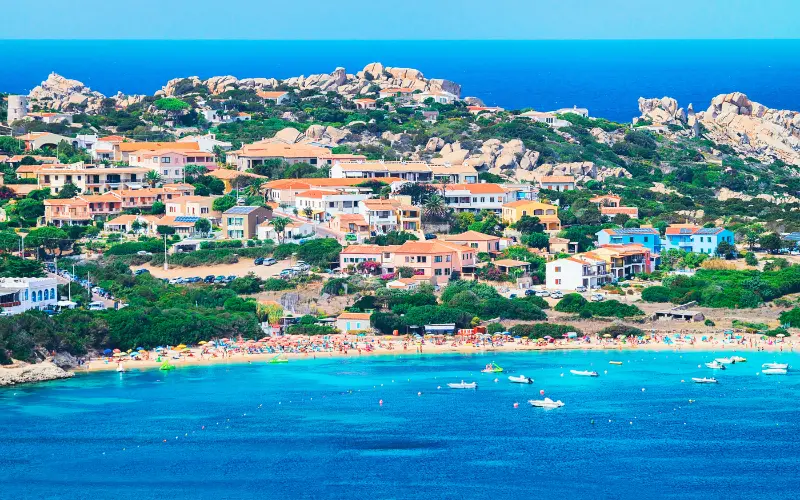
At Capo Testa, Sardinia seems to have been assembled from huge blocks of weathered granite. On one side are narrow beaches protected by an isthmus; on the other, paths twist toward a lighthouse and the boulder-filled Valle della Luna. The landscape rewards slow exploration far more than a rushed drive to a viewpoint, but the wind and complicated network of informal tracks can catch visitors by surprise.
This guide is for travellers planning a visit to Santa Teresa Gallura, far northern Sardinia. It distinguishes verified site features from changeable arrangements such as fees, guided-tour availability and seasonal transport. Those operational details should always be checked for the date you actually travel.
Extend a visit to Capo Testa and Valle della Luna with the suggestions in our Sardinia travel guide, which covers regional transport and where to base yourself.
At a glance
| Destination | Santa Teresa Gallura, far northern Sardinia |
|---|---|
| What it is | granite promontory, beaches and walking paths |
| Good overnight base | Santa Teresa Gallura |
| Plan to verify | Official visitor access, permits or tickets, current weather and transport |
| Suggested approach | Begin at the isthmus and compare Rena di Levante with Rena di Ponente, deciding where the wind makes walking or swimming sensible. |
| Best add-on | Spend half a day in Santa Teresa or visit a northern Gallura village on a separate drive. |
Why this place is worth visiting
In Santa Teresa Gallura, far northern Sardinia, the attraction is a granite promontory, beaches and walking paths with a character of its own. Capo Testa is attached to the mainland by a narrow isthmus, with Rena di Levante on one side and Rena di Ponente on the other. The details that follow explain what is distinctive, what is actually practical, and where careless planning can spoil the experience.
A meaningful visit allows you to notice how Santa Teresa Gallura, far northern Sardinia fits into the wider island. Instead of trying to see three distant attractions in one rush, aim to understand the main place first, allow time for the journey and make any optional second stop dependent on the conditions you find.
What to see and experience
The slender isthmus and two different shores
Capo Testa is attached to the mainland by a narrow isthmus, with Rena di Levante on one side and Rena di Ponente on the other. Because their exposures differ, conditions may be calmer at one beach depending on the wind. Do not take this as a guarantee of safe swimming: inspect the actual water and posted warnings. This geographic arrangement is the best introduction to the promontory and explains why local people discuss wind direction so often.
The lighthouse and the western granite edge
The lighthouse area is a memorable starting point for studying the coastline, although access to the building itself is not equivalent to access to surrounding viewpoints. Stay on open public paths, respect fenced property and avoid climbing toward a photograph over exposed drops. Sea spray, strong gusts and rounded smooth rock can make the outermost stones more hazardous than they appear from the road.
Walking into Valle della Luna
Cala Grande, commonly called Valle della Luna, sits on the western part of the promontory. It is a wild valley of rounded granite, small inlets and Mediterranean scrub, not a developed beach with a level promenade. The official regional description notes a footpath into the valley after the road approach. Follow mapped tracks, carry water, and expect uneven ground; a trail suitable for able walkers may still be impractical with a stroller.
Granite as the main attraction
Wind, salt and erosion have produced huge rock forms that suggest animals, faces and abstract sculpture. Rather than squeezing between every boulder, choose safe viewpoints that show the relationship between rock, sea and vegetation. This is an ideal place to notice how granite differs from the limestone cliffs of eastern Sardinia. Keep children away from unsupported rock scrambles and do not mark surfaces or collect materials.
Cala Spinosa and small northern coves
Cala Spinosa is a small rocky inlet near the promontory, beautiful in settled conditions but approached by a more demanding path than the isthmus beaches. Avoid assuming that every cove marked on a map has lifeguards or services. If you want a full sandy beach afternoon, Rena di Ponente or Levante can be more practical than descending to a remote stony pocket of coast.
Wind and seasonal decisions
Mistral and other winds can transform a peaceful panorama into an uncomfortable exposed walk. The choice between east and west beaches should be made on arrival, with weather forecast and local flags in mind. Spring and autumn can be superb for the trails but still very windy. In summer the rock stores heat, shade is scarce and parked cars near the narrow peninsula may be limited.
Santa Teresa Gallura as a base
Santa Teresa offers an appealing town centre, shops and Rena Bianca beach close to accommodation. It is a much more convenient place to eat and overnight than trying to stay near a trailhead without services. The town also has ferry links toward Corsica, although connections should never be improvised after a full hiking day. For a relaxed visit, leave the evening in town unplanned.
A closer look: Plan a route that respects wind and terrain
On Capo Testa, exposure matters more than the calendar. Before leaving Santa Teresa, check wind strength and direction, then choose between the isthmus beaches or sheltered public footpaths. Wear footwear appropriate for gritty granite and rough walking rather than assuming beach sandals are suitable for Valle della Luna. Mark a firm turning point before twilight.
How to get there and where to start
Drive from Santa Teresa Gallura toward Capo Testa, which the municipality describes as about five kilometres from town. Public transport may be seasonal, so check locally instead of assuming a frequent year-round shuttle. Identify lawful parking before setting off on foot. The area has multiple small paths; the Valle della Luna entrance should not be confused with a direct beach access road.
For visitors staying in Santa Teresa Gallura, look at the full door-to-door journey rather than the straight-line distance. Include road bends, parking, check-in and any final walk or boat transfer. A hire car is often useful in rural Sardinia, but it is not an excuse to enter private tracks or ignore visitor restrictions. If you do not want to drive, investigate a scheduled tour or a local driver before choosing accommodation.
An achievable one-day plan
Morning: make the primary visit work
Begin at the isthmus and compare Rena di Levante with Rena di Ponente, deciding where the wind makes walking or swimming sensible. Take photographs without blocking the narrow access road.
Midday: give the experience time
Explore one trail toward the lighthouse or Valle della Luna, not every branching path. Have water, closed shoes and a clear turnaround time; enjoy the granite landscape from safe footing.
Afternoon: finish without rushing
Return to Santa Teresa Gallura for an easy evening and, if conditions permit, a separate stop at Rena Bianca. Keep the day flexible rather than insisting on swimming at a wind-exposed cove.
Where to stay nearby
For this particular trip, Santa Teresa Gallura is a practical base. Choose accommodation according to the actual departure or entrance point, not merely a property described as being in Sardinia. A central town may give you better restaurants, parking or access to a morning departure, while a quieter coastal stay may mean a longer daily drive. When comparing rooms, verify cancellation terms, parking costs and whether you need a car for dinner.
When to visit
Late spring and September often balance pleasant walking temperatures with useful daylight. Summer is attractive for bathing but needs early starts and careful parking plans. Winter visits can be atmospheric, though exposed routes and sea-edge rocks demand increased caution in strong wind or rain.
For a day at Santa Teresa Gallura, far northern Sardinia, the most important factor can be very different from the general weather forecast for Cagliari, Olbia or Alghero. Check the forecast and official access information for the specific shore, trail or monument. Reserve the most time-sensitive activity first, then place meals and flexible sightseeing around it. In summer, carry extra water and reduce unnecessary outdoor walking in the hottest hours.
Tickets, time and budget considerations
Prices, capacities and tour timetables are not fixed facts for future holiday dates. Consult the official operator linked below to confirm whether entry is free, ticketed, guided, limited by a quota or weather-dependent. Compare the full cost of travel, not just admission: parking, boat transfer, equipment, local guides and a potential refund policy can make two apparently similar plans very different. Do not prepay unrelated activities too close together.
Budget also depends on the season and the style of visit. A self-guided outdoor experience may require only transport and supplies, while a specialist excursion can involve advance tickets or guides. If booking an experience with limited capacity, retain the confirmation offline and know which party members or vehicles are included. Visitors should prioritise reputable official operators over unverified resellers promising unusual access.
Visiting with children and accessibility
The two isthmus beaches are more straightforward for many families than the granite trails. Carry children only on terrain where you can keep a stable stance; a stroller is unsuitable for many paths to Valle della Luna. Travellers needing step-free access should focus on designated beach access points and confirm their condition locally.
Accessibility is not determined solely by distance. Consider the surface underfoot, slope, shade, availability of toilets and the ease of turning back. Where a site is managed, ask the operator about step-free routes and any assistance options rather than assuming the experience is fully accessible or entirely unsuitable. A shorter visit completed comfortably will usually be more rewarding than an ambitious schedule that leaves everyone exhausted.
What to pack
- Route and booking information: downloaded directions, official confirmation and the correct meeting point.
- Suitable footwear: grip and comfort matched to the terrain, not just a beach photograph.
- Weather protection: sun hat, sunscreen, layers or rain protection appropriate to the forecast.
- Drinking water and snacks: do not assume a bar or refill point is open at the site.
- Responsible travel: a small bag for personal waste, and binoculars or a camera when relevant.
What to see nearby
Spend half a day in Santa Teresa or visit a northern Gallura village on a separate drive. La Maddalena departs from Palau and is an entirely different island excursion; it need not be squeezed into the same afternoon.
Keep the geography realistic when moving between Sardinian attractions. An island itinerary can look compact on a small screen yet involve winding roads, variable weather and separate visitor entrances. For longer stays, cluster nearby destinations by area and make a clear distinction between a full-day experience and a brief stop en route. This approach often saves more time and money than trying to tick every landmark off a single list.
Common mistakes to avoid
Treating all coves as equivalent, following unmarked shortcuts between boulders, assuming beach water is safe merely because the opposite side is calm, and attempting sunset walks without a return route.
Another avoidable mistake is copying a detailed itinerary from a different season. Timed access, closed paths, local traffic arrangements and the availability of boats or guided visits can change. A good plan has one priority, one sensible backup and a clear threshold for changing course when safety or comfort becomes a concern.
Frequently asked questions
Where is Valle della Luna?
It is the Cala Grande granite valley on the western side of Capo Testa, near Santa Teresa Gallura.
Can I swim at Capo Testa?
There are beaches and inlets, but the safest choice depends on conditions; compare the two sides of the isthmus and respect warnings.
Is the valley an easy stroll?
Parts require uneven walking among rock and scrub. Use proper shoes and avoid assuming that the whole area is pushchair-friendly.
Where should I stay?
Santa Teresa Gallura provides the most convenient nearby base for restaurants, beach access and a relaxed evening.
Useful Sardinia guides
- the best beaches in Sardinia
- La Maddalena archipelago
- where to stay in Sardinia
- a ten-day island itinerary
Official source and last practical check
Official information for this destination: www.comune.santateresagallura.ss.it. Check the relevant opening or access section before travelling. This guide is editorial planning advice, not an official booking confirmation.
Before departure, put three things in the same note: the exact authorised entrance or boarding point, the latest cancellation or closure update, and a realistic return plan. That simple preparation helps you enjoy the place for what makes it distinctive rather than spending the whole visit resolving avoidable logistics.
Further background: www.sardegnaturismo.it. Always prioritise current notices from the site operator when they differ from older general tourism descriptions.
Last updated: October 17, 2026