

Plan Castel Giorgio near Orvieto around its castle, Alfina plateau scenery, Etruscan traces and quiet countryside, with realistic timing, driving and nearby combinations.
Castel Giorgio works best when you decide what the main experience is before you arrive. This guide is built around that decision, with realistic timing, access cautions, seasonal planning and combinations that make sense on the road rather than on a crowded checklist.
| Best for | road trippers, archaeology-minded travellers, countryside stays and visitors exploring the Orvieto–Lake Bolsena borderlands |
|---|---|
| Realistic time | Around 2 hours for the village; half a day if you add countryside, archaeology or a drive across the Alfina plateau. |
| Main planning challenge | The interest is distributed across the territory rather than concentrated in one pedestrian centre, so a car is much more useful than a checklist approach. |
| Best anchor | Use the castle and village as the historical anchor, then choose one countryside extension toward the plateau or nearby Etruscan landscapes. |
Why Castel Giorgio belongs on an Orvieto-area road trip
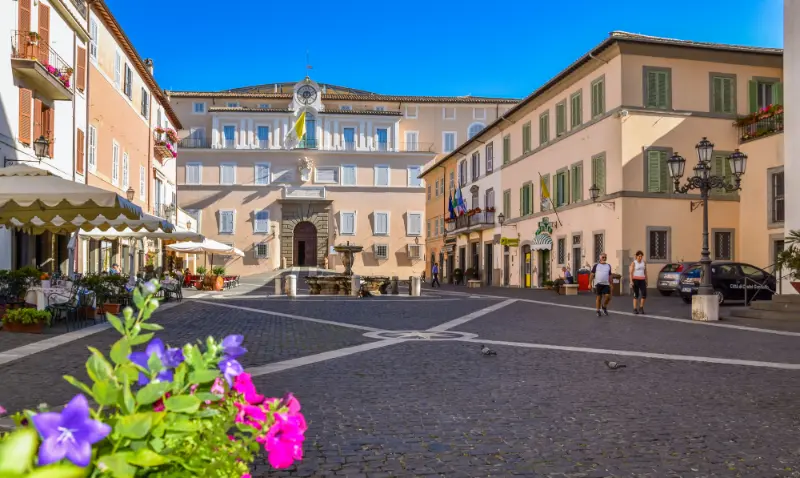
Castel Giorgio sits on the Alfina plateau northwest of Orvieto, in a landscape that feels different from the tufa cliff and steep streets of the better-known city. The terrain is broader, cooler and more rural, with roads leading toward volcanic Lake Bolsena and the borders with Lazio. The village grew around a castle established in the late fifteenth century by Giorgio della Rovere, bishop of Orvieto. That history gives the town a clear connection with Orvieto while the surrounding plateau gives it a separate landscape identity.
The castle and the origin of the town
The settlement takes its name from Giorgio della Rovere, who chose the site for a residence in 1477. The castle suffered damage through conflict, fire and earthquake and was later substantially reworked. Today, the best way to understand it is as the nucleus around which the village formed, not simply as a standalone attraction. Current interior access should be checked locally because historic palaces and castles in small towns may host functions, institutions or limited openings rather than operate on continuous tourist schedules.
Etruscan traces in the territory
The Castel Giorgio area was used long before the medieval and Renaissance settlement. Archaeological finds and necropolis evidence point to Etruscan occupation, connecting the plateau with the larger cultural landscape of Orvieto and the Lake Bolsena basin. Unless a site has managed access and clear signage, resist the temptation to wander onto private land in search of tombs or ruins. Use official archaeological information and marked routes, and treat landscape context as part of the experience.
The Alfina plateau
The high plateau is one of the main reasons to drive here. Open fields, woods and long horizons create a different sense of scale from the tightly folded hills around central Orvieto. Summer temperatures can also feel more comfortable at elevation, while winter conditions can be colder and foggier. The plateau works particularly well for scenic driving, farmhouse stays and combining Umbria with a day toward Bolsena or the Lazio side of the border.
Castel Giorgio as a base for a quieter stay
If you want to visit Orvieto but sleep somewhere rural, Castel Giorgio can make sense. You trade the ability to walk out of a hotel directly into Piazza Duomo for easier countryside access, parking and a quieter evening. This is especially useful for families or travellers planning several day trips by car. Check the exact driving time to your priority sights before booking: “near Orvieto” can still involve winding local roads rather than a fast urban connection.
A practical half-day route
Walk the village and castle area first, then drive a short loop across the plateau. If archaeology is your priority, verify a managed site or local museum before setting out. If landscape is the priority, keep the second half deliberately open and use viewpoints, farm stops or a leisurely lunch rather than another timed attraction. This is a place where flexibility creates more value than a dense schedule.
How long to spend
Around 2 hours for the village; half a day if you add countryside, archaeology or a drive across the Alfina plateau. The important point is to protect time for the reason you came. A small historic centre can be walked quickly, but the visit becomes much richer when you allow for interpretation, a viewpoint, a conversation in a shop or an unhurried meal. If your day includes a reservation, count backwards from that fixed time and remove optional stops before you remove the buffer.
Getting there
A car is the practical default here. Public transport exists in parts of Umbria, but the smaller villages, rural attractions and countryside roads in the Orvieto area are much easier to combine by car. Navigation apps are useful for the main approach but become less reliable inside medieval centres, where streets can be narrow, restricted or unsuitable for through traffic. Aim for signed public parking outside the oldest streets and walk the final section. This approach is usually faster than following a sat-nav into a lane where turning around becomes the hardest part of the visit.
Parking strategy
Parking deserves ten minutes of planning even in a small place. Check the municipality or attraction page when available, especially for festival days, markets or road works. Do not assume that an empty-looking square is legal visitor parking. Historic centres can use resident-only zones or temporary restrictions. Build a small arrival buffer before any timed tour, museum or tasting; parking stress is one of the easiest ways to turn a short rural drive into a late arrival.
Best time to visit
Spring and early autumn are usually the easiest seasons for walking, photography and countryside driving. Summer is workable with an early start, a long lunch break and fewer exposed afternoon stops. Winter is quieter but daylight is short and small attractions may open only on selected days or by reservation. In every season, let the attraction with the most restrictive schedule choose the order of the day. Streets and viewpoints remain available much longer than museums, guided caves, private architectural sites or wineries.
Where to stay
Choose accommodation according to the next morning rather than only the prettiest photo. Staying in or near Castel Giorgio makes sense if you want a quiet evening and an early start on surrounding rural roads. Orvieto remains the stronger base when you want restaurants, rail connections and the city’s major sights within walking distance. Farm stays are ideal for travellers with a car, but check the final access road, parking and evening food options before booking.
Food and pacing the day
Food is part of the experience, but lunch timing matters. Small-town kitchens often have a defined service window and a proper meal can easily take ninety minutes. If you have a reserved activity, visit first and eat afterward unless the restaurant booking itself is the priority. Across the Orvietano look for olive oil, handmade pasta, legumes, cured meats, seasonal truffles and mushrooms, local cheeses and wines linked to Orvieto. Asking what is seasonal usually produces a better meal than choosing only the most famous regional dish.
Travelling with children
Families do best when the day has one clear story rather than a sequence of churches and viewpoints. A cave, unusual rock, castle, tiny theatre or vineyard landscape gives children something concrete to remember. Pushchairs can be awkward on cobbles, slopes and natural trails, so check surfaces before assuming a short route is easy. For older children, give them a visual task—find a tower, identify a rock type, count defensive gates or compare two village plans—and leave time for an unstructured break.
Accessibility and limited mobility
Travellers with limited mobility should distinguish between short distance and easy access. Umbrian hill towns can involve steep gradients, uneven stone, steps and parking below the main sights. Natural sites can be more demanding still. If step-free access is essential, contact the site directly and ask about the route from the parking area, not just whether the building is technically accessible. A destination can be only a few hundred metres across and still require a physically demanding walk.
Easy places to combine nearby
Choose one or two of these rather than all of them. The best day normally has one structured attraction with fixed hours and one open-ended village or landscape stop. This gives you enough flexibility for parking, a slow meal, weather changes or a site that takes longer than expected.
Common planning mistakes
- Assuming a small village requires no planning because it looks compact on the map.
- Driving into the oldest lanes instead of using signed parking outside the historic core.
- Treating a privately managed castle, cave, winery or cultural site as guaranteed to be open without confirmation.
- Adding too many nearby villages simply because the road distances look short.
- Scheduling a long lunch immediately before the one fixed appointment of the day.
- Ignoring heat, rain, trail conditions or seasonal opening patterns when the visit includes outdoor sites.
A simple itinerary that works
Start early enough that the first hour in Castel Giorgio feels unhurried. Use the morning for the main cultural or outdoor anchor, when energy is high and parking is easier. Put lunch in the middle of the day rather than squeezing it between two appointments. In the afternoon, choose one nearby village, viewpoint or countryside drive and keep it optional. If the first stop runs long, drop the second without feeling that the day has failed.
Official sources and what to recheck
Historical and planning details were checked against official or institutional information available in 2026. Because this article is scheduled for later publication, recheck opening hours, admission prices, guided-tour dates, reservation procedures, road restrictions, parking, trail conditions and temporary closures shortly before travel.
The decision that makes this visit better
Use Castel Giorgio to experience the quieter, higher side of the Orvieto area. The village gives the historical anchor; the Alfina plateau supplies the landscape that makes the detour memorable.
Leave a Reply