
Comacchio Travel Guide: Trepponti, Canals, Eel Museum, Lagoons and Po Delta Tips — Plan a Comacchio trip around Trepponti, canals, Museo Delta Antico, Manifattura dei Marinati, lagoon landscapes, eel traditions and Po Delta excursions. This guide is built for practical trip planning: what deserves time, which opening details matter in 2026, how to combine nearby sights and when a slower route is better than adding one more museum.
| Best for | canals, Po Delta landscapes, archaeology, birdlife, food and a contrasting day trip from Ferrara |
|---|---|
| Suggested time | one full day for the town plus lagoon; stay overnight if you want a boat trip, birdwatching or a slower Delta experience |
| Getting around | a car is useful from Ferrara; in Comacchio itself, walk and use organised lagoon excursions where appropriate |
| Planning principle | Confirm the one fixed museum, tour or opening that matters most, then build the flexible walking time around it. |
Why this experience deserves a place in your Ferrara trip
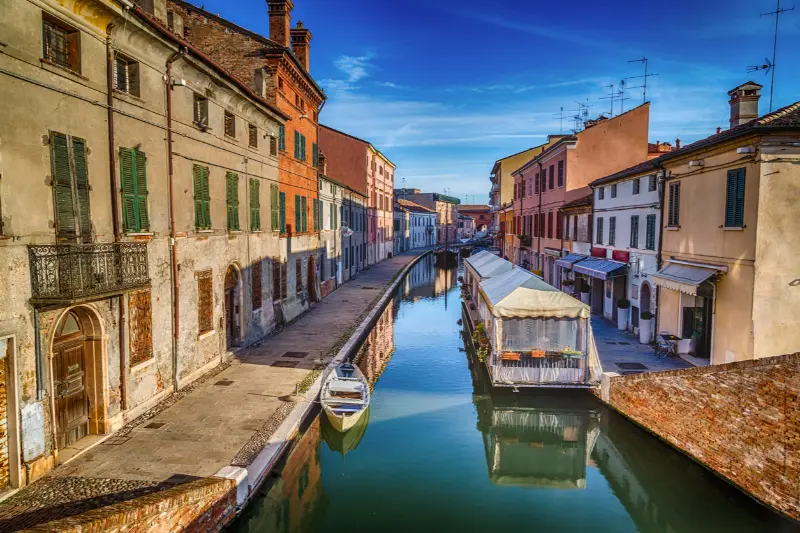
Comacchio is the strongest first excursion from Ferrara for travellers who want a completely different landscape. The town is built around canals and bridges near the Valli di Comacchio, and its identity is tied to water, fishing, eel processing and the archaeology of the ancient Po Delta. It feels more intimate than Venice and should not be treated as a substitute for it.
The best day combines the historic centre with at least one place that explains the lagoon economy or archaeology. Trepponti gives you the iconic view, but the Manifattura dei Marinati, Museo Delta Antico and the wetlands around Stazione Foce are what make the trip more than a photo stop.
Ferrara rewards visitors who pay attention to transitions. A short walk can move from medieval brickwork to planned Renaissance avenues, from a courtly palace to a neighbourhood shaped by ordinary commercial life, or from dense streets to the green walls. Treat those transitions as part of the attraction rather than dead time between tickets.
What to see and how to experience it
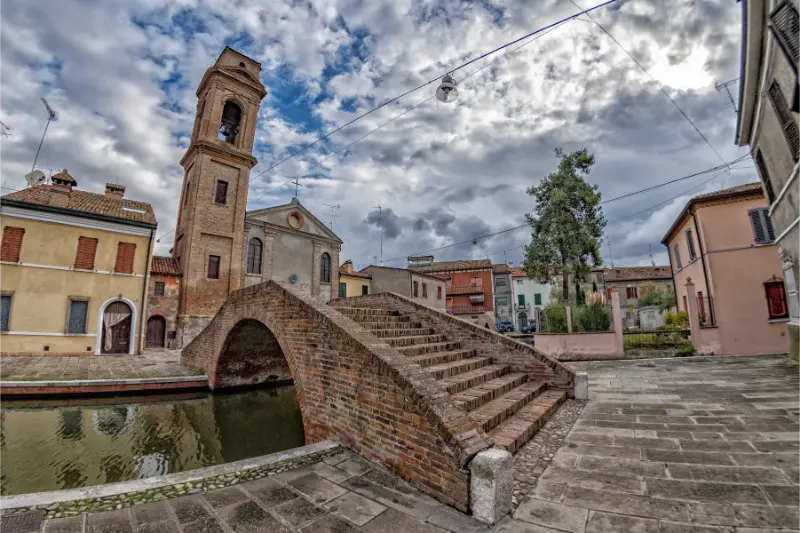
Trepponti
The seventeenth-century bridge complex is Comacchio’s visual symbol. Arrive early or return later in the day because the experience changes when the busiest groups have moved on. Walk both sides of the canals rather than stopping for one frontal photograph.
Canals and historic centre
Comacchio is best explored on foot through its bridges, narrow streets and canal edges. The town is compact, so slow down and notice the relationship between water level, houses, small boats and former commercial routes.
Museo Delta Antico
The Ancient Delta Museum explains the archaeology and long history of the territory, including the Etruscan world of Spina and the Roman period. It is the most important indoor visit for understanding why this wetland area was historically connected to wider Mediterranean trade.
Manifattura dei Marinati
The historic marinating factory preserves the Sala dei Fuochi with twelve fireplaces, the landing area and vinegar room. In the autumn processing season, the site is especially powerful because the eel tradition is not presented only as something from the past.
Loggiato dei Cappuccini
The long portico near the Manifattura adds architectural rhythm to the walk and helps connect the food tradition with the town rather than isolating the museum from its surroundings.
Stazione Foce and the lagoons
A few kilometres from the centre, Stazione Foce is a gateway to the Valli di Comacchio and a logical departure area for wetland experiences. This is where the landscape becomes the main attraction.
Birdlife and seasonal nature
The Po Delta is known for rich birdlife, including flamingos in suitable areas and seasons. Wildlife sightings are never guaranteed; treat them as part of a habitat experience rather than a scheduled performance.
Eel and lagoon food
Eel is central to Comacchio’s identity and appears grilled, marinated and in other preparations. If you do not eat eel, the Delta still offers seafood, clams and rice-based traditions, so the food experience is broader than one ingredient.
Important 2026 information
The Museo Delta Antico publishes seasonal 2026-style hours: March–June and September–October, weekdays 9:30–13:00 and 15:00–18:30, with longer continuous weekend opening; July–August daily 9:30–18:30; November–February reduced winter hours with Monday closure. Its standard admission is listed from €7. The Manifattura dei Marinati also uses seasonal hours, generally Tuesday to Sunday in spring, summer and early autumn, with different winter schedules. Check the official Visit Comacchio pages immediately before travel.
Opening hours and admission rules are the details most likely to change. Recheck the official page 24–48 hours before the visit when an interior is essential, and check again on major holidays. Religious services, restoration work, temporary exhibitions and special events can override ordinary schedules without making the surrounding district unsuitable for a visit.
A realistic way to organise the visit
Start at Trepponti and spend the first hour walking the canal centre before the day gets busier. Visit Museo Delta Antico in the morning, then have lunch with a local lagoon dish. In the afternoon, continue to the Manifattura dei Marinati and Loggiato dei Cappuccini. If you have booked a lagoon or Stazione Foce experience, let that fixed departure time determine the sequence rather than squeezing it in at the end.
Keep at least one hour of the day uncommitted. Ferrara is the kind of city where a longer coffee, a quieter street, a bakery or an unexpected exhibition can be more memorable than the final item on a rigid checklist. If you are travelling in winter, protect daylight for outdoor walking; in summer, move slower in the hottest part of the afternoon.
Getting there and getting around
From Ferrara, a car gives the greatest flexibility for Comacchio because it also lets you reach Stazione Foce and other Po Delta sites. Public transport can work for the town itself, but a nature-focused day is easier when you are not tying every wetland stop to a bus timetable.
Inside Comacchio, park once and walk. The canal centre is compact and is more enjoyable without repeated short drives. Boat or lagoon experiences normally have their own meeting points, so read the booking details rather than assuming every excursion leaves from Trepponti.
Road distances across the Delta can look short on a map but the landscape, bridges and waterways shape the actual route. Leave buffer time before fixed departures and avoid planning a museum closing time and a boat departure only a few minutes apart.
Best time to go
Comacchio works year-round, but the balance changes by season. Spring and autumn are especially attractive for wetlands and birdlife, while autumn adds the strongest connection with traditional eel processing. Summer combines the town with the Adriatic coast but brings heat and more visitors.
Winter can be quiet and evocative, yet museum hours are reduced and fog or wind can reshape outdoor plans. For birdwatching and photography, light and water conditions matter as much as temperature, so keep the nature component flexible.
Food and breaks
Autumn is especially interesting for the eel tradition, but Comacchio’s food should be approached with curiosity rather than obligation. Marinated eel is intense and works well as a tasting even if you do not want a full eel-based meal. Ask restaurants about seasonal fish, clams and rice dishes, and remember that lagoon cuisine differs significantly from the richer meat and pasta traditions of Ferrara city.
Do not treat lunch as a problem to solve between attractions. Ferrara and its province have food traditions strong enough to deserve time. If you have a fixed afternoon entry, book lunch early or choose a lighter meal; if the afternoon is flexible, let the meal become part of the cultural experience rather than checking the time every ten minutes.
Where to stay
Comacchio works as a day trip from Ferrara, but an overnight stay becomes worthwhile for early birdwatching, sunset over the wetlands or a boat excursion that does not align neatly with day-trip hours. Staying in Comacchio gives the historic centre a quieter evening atmosphere; coastal accommodation can make more sense in summer if beaches are also part of the trip.
Tours and bookable experiences
A guided visit can be worthwhile when interpretation is the main value: Renaissance art, Este history, Jewish heritage, food traditions or a wetland ecosystem all benefit from context. Before booking, check the exact meeting point, language, duration, inclusions and cancellation terms. A “Ferrara tour” may be a walking tour, museum visit, food experience or transport package, so compare the details rather than the title alone.
Families, accessibility and pace
Children often enjoy the bridges, boats and visible relationship with water. Museo Delta Antico adds interactive and multisensory elements, while the Manifattura is strongest when children are old enough to understand the food-processing story. Near open water and lagoon environments, normal supervision matters more than trying to cover every attraction.
Accessibility in a historic city is rarely uniform. A museum may have a lift while the approach uses cobbles; a church may have a step-free side entrance; a tower may be impossible even when the main building is accessible. Check the exact route you intend to use, and build in seated breaks rather than waiting until someone is already tired.
Budget and ticket strategy
Ferrara can be visited at several budget levels because many of its defining experiences are public spaces: streets, squares, the castle exterior, the Renaissance avenues and the walls. Spend ticket money on the interiors that genuinely match your interests. If you expect to visit several municipal sites, compare the current MyFE Card conditions with individual admissions before buying separate tickets.
Online booking is most useful for major exhibitions, guided visits and anything with limited capacity. For ordinary museum entry, advance purchase may still save time, but flexibility can be more valuable on a multi-museum day. Keep confirmation emails or QR codes available offline in case mobile reception is weak inside thick-walled historic buildings.
Photography and local atmosphere
Ferrara is especially rewarding in softer morning and late-afternoon light because brick, water and pale stone respond strongly to changing conditions. Wide-angle views work around the castle and Renaissance avenues; the medieval quarter is better approached through details, arches and layered perspectives. Inside museums and religious buildings, follow the current photography rules and never assume flash is permitted.
Common planning mistakes
- visiting Trepponti and leaving without understanding the lagoon or eel tradition
- assuming museum hours are identical in summer and winter
- booking a lagoon departure without checking the exact meeting point
- expecting guaranteed wildlife sightings rather than appreciating the habitat
- driving between short central stops instead of parking once and walking
- trying to combine too many Delta towns in a single short winter day
Frequently asked questions
Is Comacchio worth a day trip from Ferrara?
Yes. It offers the province’s clearest contrast with Ferrara city through canals, lagoon landscapes, archaeology and a food tradition linked to eel and fishing.
How long do you need?
A full day is ideal for the town plus one museum and a lagoon-related experience. Stay overnight for birdwatching or a more relaxed Delta itinerary.
What is the most important museum?
Museo Delta Antico gives the broadest historical context; Manifattura dei Marinati is essential for understanding the living eel-processing tradition.
Do you need a car?
A car is useful from Ferrara and for moving between Comacchio, Stazione Foce and other Delta sites, though the historic centre itself is best explored on foot.
Continue planning your Emilia-Romagna trip
Use these related guides to connect this article with the rest of the site without repeating the same planning work. The links below point only to guides scheduled before this article or to regional guides already present in the database.
Useful official sources
Use the official sources above for the final check before departure. They are more reliable than an old screenshot or a timetable copied into a review, especially for holiday openings, temporary closures, restoration work and exhibition-specific pricing.
Final planning advice
Comacchio is most rewarding when the canal centre and the lagoon are treated as one destination. Give the town time, learn why eel processing and archaeology matter, then let water, birdlife and changing light provide the part of the day that cannot be reduced to a checklist.
Leave a Reply