
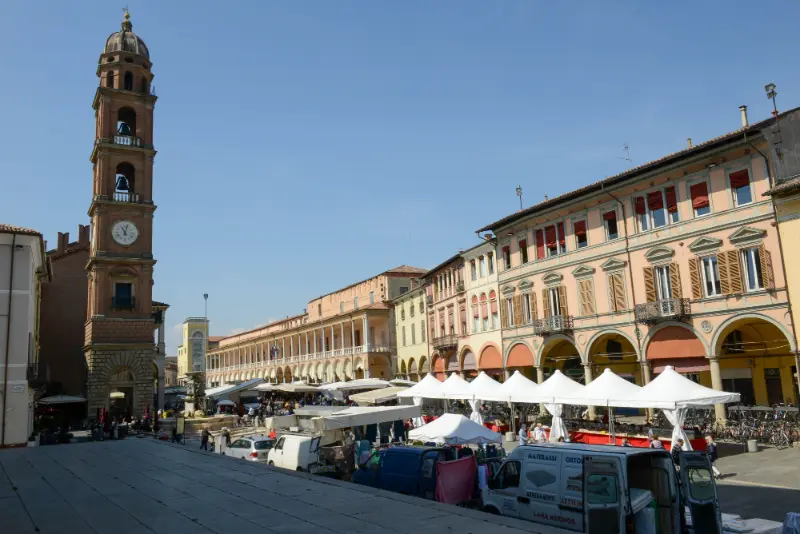
Emilia-Romagna is one of Italy's most rewarding regions for travelers who like variety without constantly changing hotels. A fast train can put you in Bologna for lunch, but the best reasons to stay longer are scattered across the map: Ravenna's glittering early Christian mosaics, the quiet courtyards of Parma, Modena's Romanesque cathedral, beach towns along the Adriatic, and wooded valleys in the Apennines. The distances between many major cities are manageable. The experiences are not interchangeable. Bologna is a lively university city, Parma feels measured and elegant, and Ravenna asks you to slow down and look carefully at what is above your head.
For a longer journey linking this region with other parts of the country, our Italy travel guide explains how to balance the main stops and avoid exhausting transfers.
| Base | Best for | Suggested stay |
|---|---|---|
| Bologna | City trips, central trains | 2–3 nights |
| Parma or Modena | Food, art, countryside visits | 2–3 nights |
| Ravenna | Byzantine mosaics, relaxed evenings | 1–2 nights |
| Rimini coast | Beach time with city excursions | 3+ nights |
The name joins two historic territories. Emilia follows the ancient Via Emilia road through a chain of inland cities; Romagna turns toward Ravenna, Rimini, hill towns and the coast. That distinction is useful when planning. Someone interested in art and food might spend a week traveling between Parma and Ravenna by rail, while a family seeking beaches and an amusement park might be better served by staying near the Romagna coast. This guide helps you choose rather than trying to cram the entire region into one hurried itinerary.
At a glance: decide what matters most
Emilia-Romagna works particularly well for first-time independent travel because several historic centers sit close to railway stations. Bologna is the strongest all-purpose hub for a trip combining food, museums, and day trips. Parma and Modena reward a more leisurely approach, with room to enjoy a market or a long lunch rather than simply ticking off monuments. Ravenna should be treated as a destination in its own right, not just a detour on the way to the beach. Rimini combines a resort-town identity with Roman remains, a lively historic center, and easy access to the southern coastline. Ferrara, north of Bologna, is a good choice for travelers interested in Renaissance urban planning and cycling.
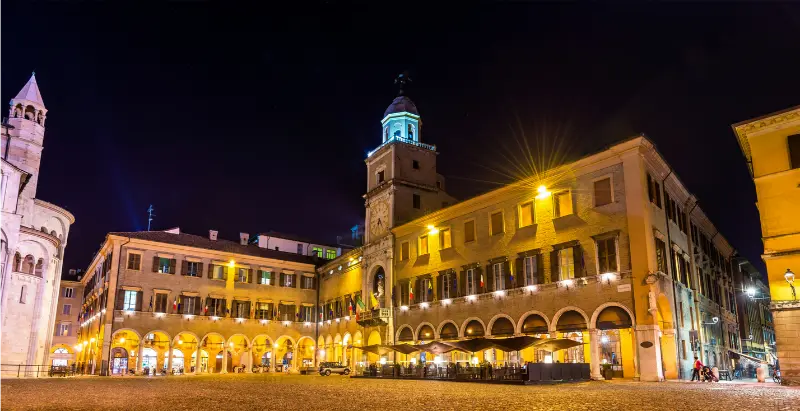
For a short visit, commit to two or three bases rather than collecting cities. A traveler with five nights could spend three in Bologna and two in Ravenna, adding Modena as a day trip if energy allows. With ten nights, you can introduce Parma, the Adriatic, or an Apennine valley. If your main dream is the coast, reverse this logic and use the seaside as the base, with city outings on cooler or cloudy days.
Bologna: porticoes, art and a city that rewards wandering
Bologna is often described as a convenient rail interchange. That is true but misses the reason to stop. Its long porticoes reshape the experience of walking through a city: you can move between squares, independent shops, university buildings, and neighborhood cafés with surprising protection from rain or summer sun. Piazza Maggiore and the Basilica of San Petronio make a natural starting point, while the streets around the old market district create an easy route for anyone curious about the city’s food culture.
Explore this part of the journey in more detail with Bologna Travel Guide, Bologna Food Guide and Bologna Porticoes UNESCO Guide.
Plan at least a full day and preferably two. The historic center is compact enough for a comfortable walking itinerary, but cobblestones and long distances can be tiring if you schedule every church and museum. The famous Two Towers area remains an essential visual landmark, yet access conditions around the towers can change; don’t plan an entire afternoon around climbing one without checking the current situation. Bologna is also a strong evening destination. Staying overnight gives you time for dinner after the day-tripping crowds have left and lets you start an excursion by train the following morning.
Parma, Modena and the Food Valley beyond famous names
Parma appeals to travelers who prefer handsome streets, music history and art to a long list of big-ticket sights. The cathedral and baptistery are the obvious anchors, but leaving time for the squares and smaller shops makes the visit more satisfying. Parma is also a sensible base for exploring food traditions in the surrounding countryside, though many production sites require advance reservations and are not easily reached by local buses.
Explore this part of the journey in more detail with Parma Travel Guide, Parma Food Guide and Parma Food Valley Guide.
Modena has a different rhythm: a walkable old center, an extraordinary cathedral complex and a strong link with traditional balsamic vinegar and automotive heritage. Visitors interested in car museums should check where each venue is located and how it connects to the city. The Ferrari attractions are not all in central Modena. Reggio Emilia and Piacenza are valuable additions when you have extra days; their appeal lies in civic squares, local museums and relaxed meals rather than one internationally famous monument. Across the region, Parmigiano Reggiano, cured meats, filled pasta and regional wines are best approached as local traditions to understand rather than souvenirs to buy in a rush.
Ravenna: mosaics that deserve an unhurried visit
Ravenna is one of those Italian cities whose finest moments happen indoors. From the street, several of its early Christian monuments appear relatively modest; inside, intensely colored mosaics cover walls and ceilings with figures, patterns and gold. The Basilica of San Vitale and the Mausoleum of Galla Placidia are among the most recognizable sites, but the value of a visit grows when you see how the monuments relate to the city’s Byzantine history and early Christian art.
Explore this part of the journey in more detail with Ravenna Travel Guide, Ravenna Mosaics UNESCO Guide and Basilica of San Vitale Ravenna Guide.
Give Ravenna a full day at minimum. A second night makes the experience easier if you want to add additional monuments, Dante-related places, or time in a local restaurant without racing through the afternoon. Check current ticket combinations, reservation requirements and opening hours on the official monument websites because access arrangements differ between sites. The railway station is walkable from much of the center, making Ravenna feasible without a car; the beaches and natural areas outside town require separate transport planning. Those who love mosaics may also appreciate the workshops and contemporary approaches to the craft rather than stopping at the principal churches.
Ferrara, the Po Delta and the pleasure of the smaller cities
Ferrara offers a change of scale after Bologna. Its Renaissance street plan, broad avenues and castle create a city where a bicycle often feels more natural than a crowded sightseeing schedule. A day trip is possible, though an overnight stay gives you time to explore beyond the central streets. Cycling is not compulsory: the central area is easy to enjoy on foot if you choose a reasonable route.
The Po Delta is a different kind of excursion, focused on waterways, lagoons and birdlife rather than urban landmarks. Conditions depend on the season, weather, water levels and which reserve areas are accessible. Guided excursions can be worthwhile because they help visitors understand the landscape and avoid protected areas where access is restricted. Comacchio offers a recognizable base for exploring the delta. If you’re pairing Ferrara with nature, allow a separate day for the wetlands instead of treating them as a brief roadside photo stop. This is also a reminder that Emilia-Romagna includes quiet landscapes far from the better-known rail corridor.
Rimini and the Adriatic: choosing the right seaside stay
The Romagna Riviera is not one uniform beach. Rimini has a substantial historic core, seaside promenades, restaurants and transport connections, so it can work for travelers who want both beach time and urban exploration. Farther along the coast, towns such as Riccione and Cattolica have their own atmospheres and family services. Cervia and Milano Marittima suit a different holiday style, with salt-pan heritage, pinewoods and beach resorts. Choose based on whether you want nightlife, children’s activities, longer quiet walks or a convenient station.
Explore this part of the journey in more detail with Rimini Travel Guide, Rimini Beach Guide and Riviera Romagnola Theme Parks Guide.
In peak summer, beach establishments can be busy and paid facilities dominate parts of the shore, while public beach access and services vary by municipality. Check the particular stretch of coast rather than assuming identical conditions. Families may appreciate a base near a station and accommodation with practical extras such as laundry, shaded outdoor space and flexible meal times. A beach holiday in late spring or early fall may offer pleasant walking weather but not the same beach-service calendar as July or August. If you plan theme parks or aquariums, check opening dates independently.
In the Apennines: villages, forests and days outdoors
The Apennines rise south of the cities and provide a quieter counterpoint to the food-and-art itinerary. Routes through the Tuscan-Emilian Apennines and the Foreste Casentinesi area reward hikers, but the choice of trail matters. An easy village walk is not equivalent to a ridge route with elevation gain, navigation demands or rapidly changing mountain weather. Ask local visitor centers about conditions before setting out, especially outside the main summer season.
Explore this part of the journey in more detail with Parco dei Cento Laghi Guide and Bobbio Travel Guide.
Mountain villages and forest landscapes can be rewarding without undertaking a long hike. A farmhouse stay may be a better choice than a city hotel when the purpose of the trip is peace, regional cooking and exploring a small area by car. Public transport to some valleys is limited, with timetables designed around school or commuter needs. Arrange your return journey before leaving the station. In spring and autumn, carry layers and waterproof gear; a sunny forecast for Bologna does not describe conditions higher in the mountains.
Getting around: when trains are ideal and when a car helps
For Bologna, Modena, Parma, Reggio Emilia, Piacenza, Ferrara, Ravenna and Rimini, rail is often the simplest option. High-speed trains stop at selected major hubs, while regional trains connect smaller cities. Always distinguish Bologna Centrale from other stations or airport connections when booking. For day trips, confirm the last practical train home and leave a buffer for connections. A journey that looks short on a map can take longer when it includes a station change or a bus transfer to an outlying sight.
Renting a car becomes more useful for cheese dairies, countryside lodging, hill villages and protected natural areas. Avoid taking it into historic centers without checking the limited-traffic zones, called ZTLs. Cameras enforce many restrictions, and a hotel address inside a restricted area does not automatically authorize you to drive there. Ask the property for precise instructions before arrival. Parking on the edge of town and walking or using local buses is often easier than negotiating medieval streets. If you combine rail cities and rural days, rent only for the countryside segment rather than paying to keep a car parked in Bologna.
When to visit and how seasons change the experience
April to early June and September into October are generally comfortable periods for combining city sightseeing with day trips, though rain is always possible. Summer brings hot, humid conditions to the inland plains; plan museums and long walks earlier in the day, take a midday break and look for air-conditioned lodging. The coast becomes most active in summer, and prices near popular beaches may rise around holidays and weekends. Autumn is appealing for food-focused itineraries and countryside colors, but individual producers and events have their own schedules.
Winter can suit a Bologna, Parma or Ravenna city break, especially if your priorities are museums, meals and uncrowded streets rather than swimming or long outdoor days. Expect shorter daylight hours and occasional fog on the plains. Mountain areas may have snow, winter road conditions and seasonal lift operations; verify specific resort information rather than relying on a regional forecast. If your dates overlap a major trade fair in Bologna or an important festival, book accommodation earlier than usual because room demand can be very different from an ordinary weekend.
Where to stay: bases for different kinds of trips
Bologna is the most efficient base for travelers who want to make frequent rail excursions. Stay near the historic center if evenings on foot matter more than the quickest station exit; choose the station side when you’re making early departures on several days. Parma works well as a slower base for western Emilia and gastronomic excursions. Ravenna is best when mosaics and a more intimate evening atmosphere are important, while Rimini suits travelers who want to alternate beach afternoons with historic-center visits and train trips.
For a multi-base itinerary, resist changing hotels every night. Packing and checking in repeatedly can consume more time than the actual train journey. Three nights in Bologna, two in Ravenna and two at the coast can feel more relaxed than seven single-night stops. For visitors with limited mobility, confirm elevator access and the real walking distance from the station; historic buildings sometimes have stairs that do not appear prominently in booking descriptions. A countryside agriturismo may be wonderful, but it is a poor choice for a car-free itinerary unless transfers are clearly arranged.
An achievable seven-day first visit
On day one, arrive in Bologna, walk through Piazza Maggiore and enjoy an easy evening in the center. Give day two to the city’s porticoes, churches and food neighborhoods without packing in several distant attractions. On day three, take a train to Modena, explore the cathedral area and decide whether a food experience is worth booking ahead. Day four can be spent in Parma, with enough time for its historic core and a comfortable meal rather than a rushed tasting circuit.
Move to Ravenna for days five and six. Visit the major mosaic sites on the first day, keeping the second for overlooked monuments or a slower excursion. On day seven, choose between Ferrara for cycling and Renaissance streets or Rimini if you want a glimpse of the Adriatic before departing. This plan is deliberately selective. Ferrara, the Po Delta, the Apennines and a full coast holiday deserve additional days, not a series of impossible detours squeezed between train connections.
Food, costs and small decisions that improve the trip
Emilia-Romagna’s food reputation is deserved, but the best meal is not necessarily found in the most advertised restaurant. Look for menus that make sense locally and seasonally, with clear prices and dishes cooked in a regional style. Tagliatelle al ragù, tortellini, cappelletti, piadina and different cured meats belong to particular areas and traditions; sampling variations is more interesting than insisting every place serves the same highlights. Make time for a market or a local bakery, particularly when traveling with children who may not want a long restaurant lunch.
Explore this part of the journey in more detail with Bologna Food Guide and Piacenza Food Guide.
Plan a budget by category rather than trusting one fixed regional daily figure. Bologna during an international trade event may be more expensive than a midweek stay in Parma. Coastal hotels vary sharply by season and proximity to the beach. Paid museums, guided factory visits and taxis to rural producers add up; book the experiences you care about and leave room for free pleasures such as squares, porticoes and walking paths. Carry some cash for smaller purchases, though cards are widespread. Practical questions about opening hours, transport and accessibility should be checked close to travel dates through official providers.
Traveling with children and visitors who prefer a gentler pace
A successful family itinerary has fewer transitions and more places to pause. In Bologna, combine a short historic-center route with food stops rather than a long march between museums. In Ravenna, introduce the mosaics as a discovery game and schedule a break after a major site. Near the coast, check whether a beach has convenient toilets, shade and accessible entrances; these details may be more important than a famous resort name. The region also offers parks and countryside activities, although opening schedules can change by season.
Travelers who find stairs or rough paving difficult should research the specific attraction, not simply whether a town is described as accessible. Historic streets, cobblestones and churches may have obstacles, and some coastal promenade sections are much easier than old hill villages. Ask accommodation providers for precise information about step-free entrance, shower access and lift size. A well-selected base and two interesting activities each day usually produce a more enjoyable journey than an overambitious checklist.
Before booking: a final planning check
Decide first whether this is a rail-based city trip, a countryside food journey, a mountain escape or a beach vacation. Next, choose the two or three places you genuinely want to experience and count the nights needed to enjoy them. Only then should you add secondary stops. Check travel times on the actual dates, look at museum calendars and ask about ZTL access before renting a car. If you want food-production tours, arrange those before planning your daily route; the visits are often the least flexible part of the schedule.
Reliable starting points are the regional tourism portal at https://emiliaromagnaturismo.it/en, official rail operators at https://www.trenitalia.com, and the individual monument or park websites. Emilia-Romagna is easiest to enjoy when you give each part of it a distinct purpose. The cities offer layers of art and history, the countryside explains the region’s flavors, and the coast provides a completely different rhythm. You do not have to see all three on one visit to leave with a real sense of the place.
Practical questions
Is Emilia-Romagna easy to visit without a car?
Yes for the main cities: Bologna, Modena, Parma, Ravenna, Ferrara and Rimini have useful rail connections. A car becomes more useful for remote villages, producer visits and the Apennines.
How many days should I spend in Emilia-Romagna?
Five to seven days allow a satisfying city-and-food itinerary. Add more time for beach days, nature trips or overnight stays in the countryside.
Which city makes the best first base?
Bologna is the most versatile railway hub. Ravenna is a stronger choice when mosaics and a slower cultural visit are the main priorities.
Compare accommodation in Emilia-Romagna after choosing the area that suits your route.