
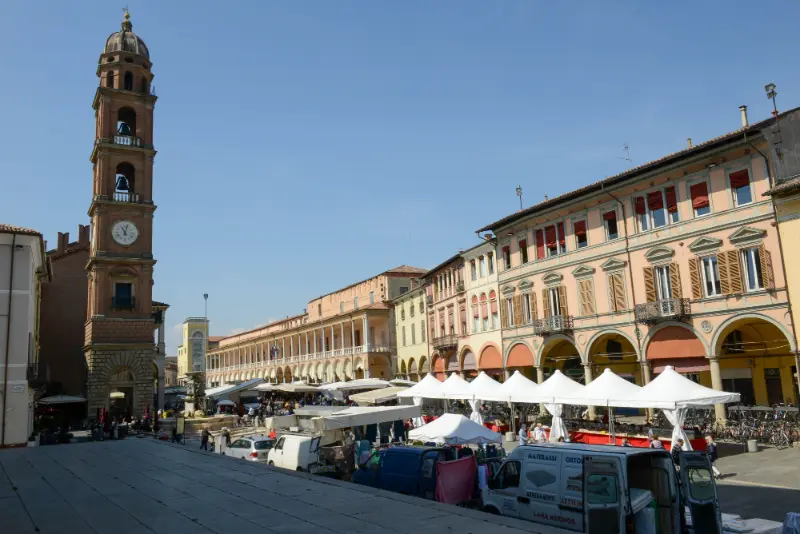
Faenza is much more than a convenient stop on the Via Emilia. Its name became internationally associated with faience ceramics, yet the city also has one of Romagna’s most elegant paired piazzas, a strong neoclassical heritage, active artisan workshops and enough museums for a full cultural day.
The best visit combines one major museum, the historic centre and direct contact with contemporary ceramic production. Trying to collect every museum in a day misses the point: Faenza is at its most distinctive when centuries of ceramic tradition connect to living workshops.
| Best for | Ceramics, art, workshops, elegant small-city atmosphere |
|---|---|
| Ideal stay | 1 full day; 1 night for workshops or Brisighella pairing |
| Key museum | MIC – International Museum of Ceramics |
| Train | About 5 minutes on foot from MIC; city is easy without a car |
| Best pairing | Brisighella or Ravenna, depending direction |
Why Faenza deserves a dedicated day
Faenza sits on the Via Emilia between Bologna and Rimini and roughly thirty kilometres from Ravenna. That location makes it easy to treat as a stopover, but its cultural identity is strong enough for a full day. The city gave the European word faïence to a type of glazed pottery, reflecting how widely its ceramic production became known.
Today the tradition is not only historical. Visit Romagna lists dozens of active workshops and ateliers, and ceramic plaques around the centre help identify places where artists still work. This continuity is the main reason Faenza feels different from a town with one famous museum.
Piazza del Popolo and Piazza della Libertà
The historic centre opens around two connected civic spaces framed by arcades and important buildings. Piazza del Popolo is the city’s social and architectural heart; adjacent Piazza della Libertà leads toward the cathedral. Walk the perimeter slowly because the double loggias and changes in façade are more interesting than a quick central photograph.
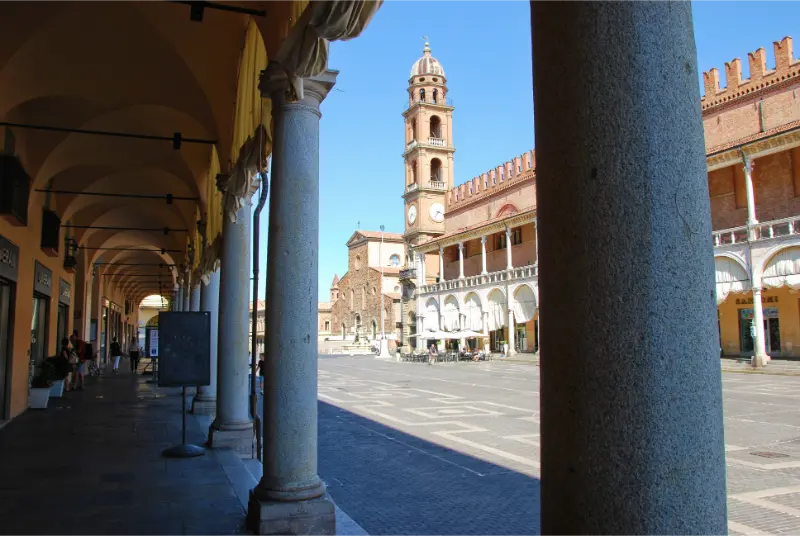
These squares also make Faenza easy to navigate. Most first-time sights radiate from this core, so you can return between museums for coffee, lunch or an evening aperitivo instead of following a rigid one-way route.
The Cathedral of San Pietro
Faenza’s cathedral reflects Tuscan Renaissance influence associated with the Manfredi period and provides a useful counterpoint to the city’s ceramics. The interior includes important devotional and artistic works, including the cult of the Madonna delle Grazie, patron of Faenza.
Treat the cathedral as a living religious building, not a guaranteed museum stop. Check service times, dress respectfully and keep the visit concise when worship is taking place. It fits naturally between the main piazzas and Palazzo Milzetti.
MIC: the essential first museum
The International Museum of Ceramics is the city’s anchor attraction and can easily take two hours or more. Its collections range across ancient, Islamic, European, Asian and modern ceramics, making it far broader than a local craft museum. The museum also explains why Faenza became a reference point for ceramic art internationally.
The latest published schedule is Tuesday–Sunday and holidays 10:00–19:00 from April through October; winter weekday and weekend hours are shorter. The standard full ticket is €12, with a €2 supplement during many temporary exhibitions. Because the station is only a short walk away, MIC is an excellent first or final stop for rail travellers.
Ceramic workshops: where Faenza becomes alive
Visit Romagna notes more than sixty workshops and artist studios in the Faenza area. This is where the city gains an advantage over a conventional museum destination. A booked demonstration or short workshop lets you see clay preparation, throwing, glazing or decoration as a current practice rather than a historic technique sealed behind glass.
Do not assume every studio welcomes walk-ins. Identify one or two workshops whose style interests you and contact them in advance. A half-hour conversation with a maker can add more to the day than another small collection visited in a rush.
Palazzo Milzetti and neoclassical Faenza
Faenza has a strong neoclassical layer that surprises visitors who come only for ceramics. Palazzo Milzetti is the key interior, with richly decorated rooms associated with artist Felice Giani and sculptor Antonio Trentanove. It shows how aristocratic taste transformed the city around the turn of the nineteenth century.
If you have only one day, choose Palazzo Milzetti after MIC only if you still have attention for another serious interior. Otherwise walk the neoclassical route around town and save the palace for a second visit.
A realistic one-day itinerary
Arrive by train in the morning and begin at MIC before the galleries become tiring. Walk to Piazza del Popolo and Piazza della Libertà for lunch, see the cathedral, then choose either Palazzo Milzetti or a booked ceramic workshop for the afternoon. Finish with a slow circuit of the centre and aperitivo.
This plan works because it gives each part of Faenza a different function: museum for global context, piazzas for urban life, workshop for living tradition. Adding four more museums usually reduces rather than improves the day.
Faenza with children
MIC can work well with older children if you turn the visit into a search for unusual shapes, animals and decorative techniques. A hands-on ceramic workshop is even better because it gives them something active after galleries. Keep the historic-centre walk short and build in gelato or park time.
Families using trains benefit from the compact layout. You do not need to manage parking or move a car between attractions, and the station-to-MIC distance is unusually convenient for a cultural day trip.
Getting there and parking
Faenza has direct rail connections along the Via Emilia and connections toward Ravenna, so it is one of the province’s easiest towns to visit without a car. The historic centre and major museums are walkable. A bicycle can extend the day toward countryside routes, but it is unnecessary for the core sights.
Drivers should use peripheral or central public parking and then walk. Check ZTL signs rather than following a navigation app blindly into restricted streets. A car becomes more useful if Faenza is paired with Brisighella, hill wineries or rural workshops.
Food and wine
Faenza sits between plain and hills, so the table connects classic Romagna dishes with local wines. Expect piadina, fresh pasta, meat dishes and seasonal products, with Sangiovese and Albana common regional companions. The cultural day improves when lunch is treated as part of the itinerary rather than something squeezed between museums.
For wider regional context, use our Ravenna food guide but remember that inland Faenza feels different from Ravenna’s coast-influenced dining. If wine is a priority, consider a separate hill excursion rather than drinking and then driving.
Should you combine Faenza and Brisighella in one day?
It is possible, especially by car or with careful train planning, but the combination changes Faenza into a half-day. That works for travellers who mainly want MIC plus the central piazzas. It does not work well if you also want Palazzo Milzetti, a studio visit and a long lunch.
If ceramics are your main interest, give Faenza the full day. If you want variety, use the morning for MIC and the centre, then move to Brisighella in the afternoon. The following article in this cluster is intentionally separate because each destination deserves a different pace.
How to choose between Faenza and Ravenna for a day trip
Choose Faenza when you want a smaller city, active craftsmanship and a museum that connects art to making. Choose Ravenna when late-antique mosaics and UNESCO monuments are the priority. The two cities complement one another so well that an overnight split can be better than treating one as a rushed add-on.
Faenza is also more forgiving for repeat visitors to Emilia-Romagna because much of its value lies in workshops, temporary exhibitions and neighbourhood detail. You can return with a different ceramic interest and build a substantially different day.
What is actually worth booking in advance
Book a ceramic workshop or studio demonstration first because artisan availability is limited and may depend on production schedules. Check MIC exhibitions second, especially if a major show changes ticket price or demands extra time. Restaurants and tastings matter most on weekends or during events.
You generally do not need to over-schedule the central piazzas and street walk. Leave those flexible. The best Faenza day has one fixed creative experience and enough unplanned time to notice shop windows, ceramic plaques and local life.
Tours and experiences
Guided experiences around Faenza may focus on ceramics, food or combinations with Brisighella. Confirm whether a workshop demonstration, museum ticket or transport is included before booking.
Where to stay
Faenza’s centre is compact, so choose accommodation near Piazza del Popolo or between the centre and station for a car-free stay. A countryside agriturismo works better if you are combining wineries, Brisighella and hill drives.
Official sources and last checks
- Visit Romagna – Faenza
- MIC Faenza – opening hours and tickets
- Visit Romagna – Faenza, the town of ceramics
Opening times, ticket systems, guided visits and temporary closures can change. Recheck the official pages shortly before travel, especially when a timed entry or limited opening is essential to your itinerary.
Final planning advice
Build the day around one major museum and one living ceramic experience. Faenza becomes memorable when MIC explains the global history and an artisan workshop shows that the tradition is still active. The piazzas and neoclassical streets then give the city enough breathing room to feel like a destination, not a theme park for pottery.
Leave a Reply