
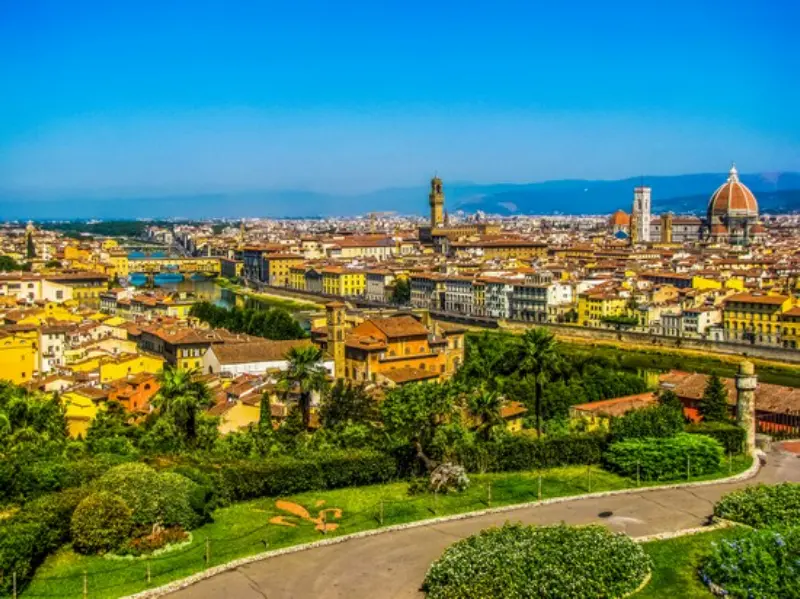
Oltrarno is where Florence becomes easier to read as a living city rather than a sequence of museum reservations. The name simply means “beyond the Arno,” but for visitors it usually refers to a broad mix of Santo Spirito, San Frediano, San Niccolò and the streets around Palazzo Pitti. You still have major monuments here, yet the rhythm changes: artisan workshops sit behind modest doors, small squares fill in the evening, and the walk between sights is often as memorable as the sights themselves.
At a glance
| Best for | Neighbourhood atmosphere, artisans, food, gardens and evening walks |
|---|---|
| Ideal time | Half a day; a full day if you include Pitti and Boboli |
| Best starting point | Ponte Vecchio or Santa Trinita bridge |
| Good evening base | Santo Spirito and San Frediano |
| Official inspiration | Visit Tuscany |
What counts as Oltrarno?
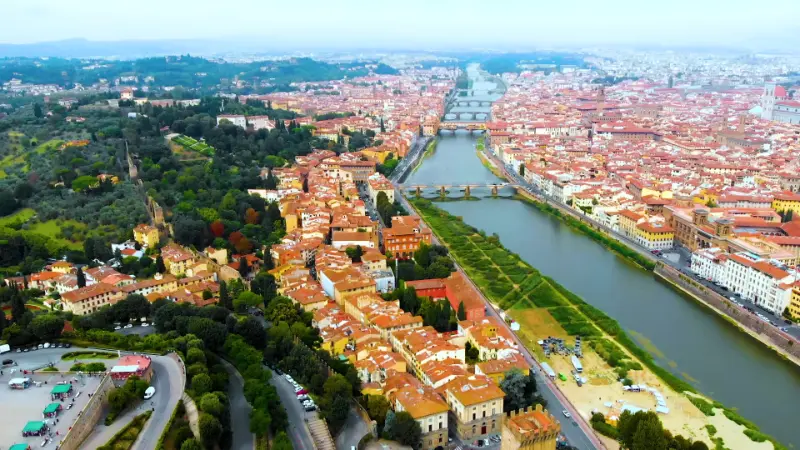
Oltrarno is not a single attraction district with a clear entrance. It is the left bank of the Arno, and the visitor experience changes from east to west. San Niccolò climbs toward Piazzale Michelangelo and has a hillside feel. Santo Spirito is organised around one of Florence’s liveliest squares. San Frediano feels more residential and artisan-led. Palazzo Pitti and Boboli form the monumental centre of the area.
For the wider destination context behind Florence Oltrarno, see our Florence Travel Guide, including sights, transport and useful planning choices.
That variety is exactly why the neighbourhood deserves more than a quick crossing of Ponte Vecchio. If your Florence itinerary is already museum-heavy, Oltrarno is where I would deliberately leave some hours unbooked.
A practical Oltrarno walking route
1. Cross the Arno early
Start from Ponte Santa Trinita if you want one of the classic views back toward Ponte Vecchio, then enter the quieter grid around Via Maggio. Crossing before the main shopping hours gives you a calmer sense of the river and the palace façades.
2. Palazzo Pitti and Boboli
If you are visiting the palace and gardens, give them a dedicated block rather than trying to squeeze them between churches. Our Pitti and Boboli guide explains the ticket choices and walking strategy.
3. Santo Spirito
Brunelleschi’s Basilica di Santo Spirito anchors the square, but the neighbourhood works best when you also wander the side streets. Visit Tuscany describes Piazza Santo Spirito as one of the city’s liveliest squares, with artisans, restaurants and long-standing local gathering traditions. The church is especially interesting for its Renaissance architecture and Michelangelo association.
4. San Frediano
Continue west toward San Frediano for workshops, the Carmine area and a more residential street pattern. This is a good place to slow down for lunch or aperitivo rather than treating the neighbourhood as a corridor between monuments.
5. Finish high or by the river
For a strong final view, climb toward San Niccolò and Piazzale Michelangelo, or keep the day gentler and return along the Arno. Sunset is popular, so arrive before the final light if you want space rather than a last-minute rush.
Artisans: what to look for without turning workshops into a theme park
Oltrarno is associated with woodworking, restoration, metalwork, bookbinding, jewellery, leather and other crafts. The useful approach is not to hunt for a single “authentic” shop from a viral list but to notice open workshops, ask politely whether visitors are welcome, and respect spaces that are primarily workplaces. Visit Tuscany specifically highlights Santo Spirito and San Frediano for artisan traditions.
If you want to buy something, ask about materials, where the item is made and whether the craftsperson produced it on site. A small object with a clear maker story is more meaningful than generic “Made in Italy” merchandise with no traceable origin.
Churches and art worth slowing down for
Santo Spirito is the obvious anchor, but the Brancacci Chapel in Santa Maria del Carmine is one of the most important Renaissance painting stops in the district. The church of Santa Felicita near Ponte Vecchio is another compact stop for art lovers. Opening rules, worship schedules and restoration work can change, so verify official sources rather than building a minute-by-minute route months ahead.
Food and markets
The best food strategy in Oltrarno is the same as elsewhere in Florence: avoid choosing purely by the view from the nearest landmark. Walk one or two streets away, look at menus before sitting, and decide whether you want a quick schiacciata, traditional trattoria cooking or a longer dinner. Santo Spirito is lively, but San Frediano often feels calmer for an evening meal.
Market activity in Piazza Santo Spirito varies by day and event. Treat it as a neighbourhood feature rather than a guaranteed attraction. For the wider city food context, read our Tuscan food guide.
Where to stay in Oltrarno
Oltrarno is one of my preferred areas for travellers who have already decided they want to walk more and commute less. Staying around Santo Spirito or San Frediano makes evening dining easy and still keeps most central sights within walking distance. The trade-off is that some streets are noisy at night and some historic buildings have stairs, small lifts or none at all.
See accommodation in Florence Oltrarno on Booking.com. Compare the exact street, not only the neighbourhood name, because a few hundred metres can change the gradient, noise level and walking route.
Oltrarno with children
Families often appreciate Oltrarno because it mixes open squares and gardens with shorter cultural stops. Boboli can provide outdoor time, but it is hilly and large, so a stroller is not automatically effortless. Combine one major monument with a square, gelato stop or garden rather than stacking churches and museums all afternoon. Our Tuscany with kids guide has more pacing ideas.
Accessibility and heat
The river crossings are easy, but hills become significant toward Boboli, Bardini and Piazzale Michelangelo. Summer heat changes what feels like a short walk. If mobility or stamina is limited, use taxis or buses for the uphill segment and walk downhill. Cobblestones and uneven historic surfaces also matter more than maps suggest.
How Oltrarno fits a first Florence trip
On a three-day visit, I would give Oltrarno one half-day plus at least one evening. That is enough to see the area as a neighbourhood rather than a background to Pitti Palace. Pair it with the major museum days described in our three-day Florence itinerary instead of trying to visit every Florence headline attraction in one continuous sweep.
Common mistakes
- Crossing Ponte Vecchio, photographing the river and immediately returning to the north bank.
- Booking Pitti, Boboli and several churches back-to-back without time to walk the neighbourhood.
- Assuming every artisan workshop is open to casual visitors.
- Choosing dinner only on the busiest square instead of checking side streets.
- Walking uphill to Piazzale Michelangelo at the hottest part of a summer day.
Frequently asked questions
Is Oltrarno worth visiting on a first trip to Florence?
Yes. It gives a useful contrast to the Duomo-Uffizi core and contains major sights of its own, including Pitti Palace, Boboli Gardens and Santo Spirito.
Is Oltrarno a good area to stay?
It is excellent for travellers who like walking, neighbourhood restaurants and evening atmosphere. Check the exact street for noise, stairs and distance from the station.
How long do I need in Oltrarno?
Half a day works for a walk, Santo Spirito and San Frediano. Allow a full day if Pitti Palace and Boboli Gardens are included.
Is Oltrarno far from Florence’s main sights?
No. Ponte Vecchio directly connects it to the historic core, and most central attractions remain walkable from Santo Spirito.
How to keep this stop in proportion within a Tuscany itinerary
Florence Oltrarno is most rewarding when it supports the geography of your trip rather than forcing a long detour. Look at the previous night, the next night and the transport between them. If reaching this experience requires crossing Tuscany twice in one day, move it to another day or choose a closer alternative. This is especially important in summer, when parking, heat and traffic can make apparently short transfers slower than expected.
Leave at least one flexible block every two or three days. A delayed lunch, extra museum room, weather change or unplanned village should not destroy the schedule. In Tuscany, spare time is often what allows the strongest experiences to happen naturally instead of being cut short by the next reservation.
Budget and reservation strategy
Separate the elements that genuinely need advance booking from the ones that benefit from spontaneity. Timed climbs, major museums, popular wineries and peak-season accommodation deserve early attention. Ordinary walks, viewpoints, many churches and local meals often do not. Over-booking creates a chain in which one delay affects the whole day.
When comparing options, calculate the total cost of the experience rather than only the headline ticket: parking, fuel, buses, luggage storage, booking fees and the time required to reach the place can matter more than a few euros of admission. This is particularly important for families and short trips, where time is often the scarcest resource.
A slower alternative if the day is becoming too full
If Florence Oltrarno is competing with another major stop on the same day, shorten the list rather than shortening every experience. Keep the element that required the most planning, then protect time for a meal and an unhurried walk. A Tuscany itinerary becomes stronger when a museum, town or landscape has a clear purpose instead of serving as a photographic checkpoint between two drives.
For travellers using public transport, recheck the final connection of the day before committing to an extra stop. For drivers, remember that parking outside historic centres, walking uphill and finding the correct ZTL-free route can add meaningful time. These margins are small on a map but decisive in real travel.
Last updated: October 17, 2026