
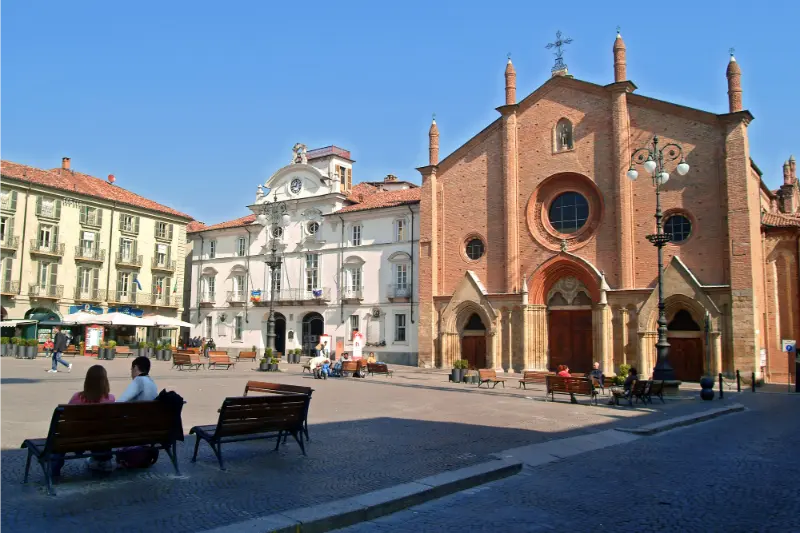
Four days is enough to experience the main personalities of Asti and Monferrato if you resist the temptation to visit every famous village. This itinerary begins with medieval Asti, moves into Canelli and the Moscato hills, gives Barbera its own day around Nizza Monferrato, then finishes in Casale and the UNESCO Infernot landscape. The route is designed to reduce backtracking and to leave room for the things that make Piedmont enjoyable: a long lunch, an unplanned viewpoint, a conversation in an enoteca and a cellar visit that lasts longer than expected. It works best with a car after the first city day.
Quick planning overview
| Day 1 | Asti historic centre and museums |
|---|---|
| Day 2 | Canelli, Underground Cathedrals and Moscato hills |
| Day 3 | Nizza Monferrato and Barbera country |
| Day 4 | Casale Monferrato and Infernot villages |
| Recommended bases | Asti first; Casale for final night |
Day 1: Medieval Asti
Begin in Piazza San Secondo, then follow the medieval core toward Torre Troyana and Corso Alfieri. Choose Palazzo Mazzetti or another museum from the Asti Smart Ticket circuit rather than trying to enter everything. Continue to the cathedral district in the afternoon when the streets are quieter and the brick architecture becomes more atmospheric.
Keep the first evening simple. Walk back through the centre, have an aperitivo and eat a traditional dinner without driving. This is the moment for agnolotti, vitello tonnato or another Piedmontese classic paired with a local wine. If you are collecting a rental car, doing it the next morning may save parking complications on day one.
If your trip coincides with the Palio or another major event, adjust the schedule around road closures and crowds. The city experience itself should take priority over forcing a museum checklist into a day when the streets are the main attraction.

Day 2: Canelli and the Moscato hills
Drive south to Canelli after breakfast. Book one Underground Cathedral visit in advance and build the morning around it. After the cellar, have lunch in town and spend the afternoon walking uphill through the historic quarter and Via degli Innamorati to the panoramic terrace.
Later, drive a short ridge route through the Moscato hills rather than booking another large cellar. A small producer visit can work if wine is your main interest, but leave at least two hours between appointments. The landscape around Calosso and Santo Stefano Belbo offers a strong contrast with the urban start in Asti.
Return to Asti for the night or stay in Canelli if you want to avoid driving after dinner. If you have tasted alcohol, do not treat the short distance back to Asti as a reason to drive; arrange transport or keep the designated driver fully sober.
Day 3: Nizza Monferrato and Barbera
Check out and head to Nizza Monferrato. Walk Via Maestra, see the civic centre and spend time at Palazzo Crova and the Regional Enoteca. This is the day to focus on Barbera and Nizza DOCG, so one booked winery outside town is enough to add a producer perspective.
Have lunch before the winery if the appointment includes several wines. In the afternoon, follow part of the Nizza wine route through nearby villages, stopping at legitimate viewpoints rather than trying to complete the entire 53-kilometre loop. The purpose is to see how vineyards sit in the landscape, not to maximise distance.
By late afternoon, drive north toward Casale Monferrato and check in. A change of base makes the final day much easier and gives the itinerary a new atmosphere. Have dinner in Casale and take a first walk around Piazza Mazzini if you still have energy.
Day 4: Casale and the Infernot
Start with Casale’s cathedral, then visit the synagogue if your timing matches its current opening or reservation arrangements. Add the Civic Museum if art is a priority, but do not spend the entire morning indoors if the weather is good.
After lunch, drive into the northern Monferrato villages for a scheduled infernot visit. Choose a location with confirmed access rather than improvising. The small underground chambers make most sense when a guide explains the local stone, wine storage and domestic context.
Return to Casale for the final evening or continue toward your next destination. If you are heading to Turin, Milan or Lake Maggiore, Casale is a logical departure point. If your next stop is Acqui Terme or Liguria, consider adding a fifth day instead of crossing the whole region after a full afternoon of sightseeing.
How to modify the itinerary
Wine-focused travellers can replace part of Asti’s museum time with another producer visit, but should then use a driver. Families may prefer to reduce formal tastings and add open-air village walks. Travellers without a car can keep Asti and Acqui as separate rail-friendly city breaks, but reproducing the full four-day route by public transport would require compromises.
If thermal wellness is important, add one night in Acqui Terme after Nizza and move Casale to a fifth day. If Langhe is next, do the opposite: finish at Canelli or Nizza and continue west toward Alba rather than driving north to Casale. The best itinerary is a logical line through the map, not an attempt to include every destination in one fixed sequence.
Reservations to make first
Book the Underground Cathedral visit first because it has a fixed time and often limited language options. Next, reserve any winery visit and the Casale synagogue if required. Restaurants matter most on weekends and during events; ordinary weekday lunches can often remain flexible.
Keep at least one half-day with no timed reservation. Piedmont is at its best when you can extend lunch, stop at a viewpoint or spend longer in a town that surprises you. A fully scheduled wine-country holiday can become stressful even when every individual booking is excellent.
How much time to allow
The plan is intentionally moderate: one major city or wine theme per half-day, with no more than two fixed reservations on any day. The mistake to avoid in Asti and Monferrato is counting only driving time between pins on a map. Historic centres invite slow walking, lunches are part of the experience, and cellar visits normally have fixed starting times. Build the day around one or two non-negotiable reservations, then leave enough unstructured time for a piazza, a viewpoint or a shop that catches your attention.
For a first visit, it is usually better to see fewer places properly than to collect village names. The hills of Monferrato look compact, but narrow roads, parking, agricultural traffic and short walks from car parks add time. If you are combining Asti and Monferrato with the Langhe, keep the two areas on separate days rather than zig-zagging across southern Piedmont.
Getting around and driving
A car is recommended from day two onward. You can arrive in Asti by train and collect a car there or nearby if your rental plan allows. Rail is useful for reaching some larger centres, especially Asti and several towns on the Alessandria side, but the rural UNESCO landscape is easiest with a car. If you drive, expect bends, farm vehicles and villages where the central street narrows abruptly. Use signed public parking instead of following navigation apps into restricted or resident-only lanes.
Wine tasting changes transport planning. Designate a driver, book a taxi or private transfer for tasting-heavy days, or choose accommodation within walking distance of dinner. Even small pours accumulate over several producers, and the safest itinerary is one that never relies on estimating whether you have had ”only a little”.
Best time to visit
This itinerary works best in spring and autumn. In summer, move outdoor walks to morning and late afternoon; in winter, verify cellar and infernot openings carefully. Spring is excellent for green vineyards and comfortable walking, while autumn brings harvest atmosphere, truffles and major food-and-wine events. Summer can be hot in exposed towns and vineyards, so start outdoor sightseeing early and reserve museums or cellars for the warmest hours. Winter is quiet and atmospheric, but some rural experiences reduce opening days and daylight is limited.
Event weekends can transform a normally calm town. The Palio in Asti, wine fairs, truffle events and local festivals are memorable reasons to travel, but they also increase demand for rooms, parking and restaurant tables. If an event is your main reason for visiting, book early; if it is not, check the calendar so you are not surprised by closures or crowds.
Where to stay
Use Asti for the first two nights, then move toward Casale Monferrato for the northern UNESCO landscape. This reduces backtracking and creates two distinct halves to the trip. A central base is useful if you value walking to dinner and cafés, while an agriturismo among vineyards gives you the classic countryside experience. The trade-off is simple: town stays reduce evening driving; rural stays provide views and silence but usually require a car for almost everything.
For a wider comparison, see our where to stay in Asti and Monferrato guide. When booking, check parking arrangements, air conditioning in summer, restaurant closing days and whether breakfast starts early enough for any reserved tour. Check accommodation options.
Food and wine without over-planning
Protect lunch and dinner time: Asti for classic Piedmontese city dining, Canelli for Moscato-country menus, Nizza for Barbera pairings and Casale for Krumiri and northern Monferrato dishes. Monferrato is a place where lunch can easily become the main event of the day, so do not schedule a museum or winery appointment immediately after a multi-course meal. Traditional menus often follow the season, and the most satisfying approach is to ask what is local now rather than arriving with a checklist of famous dishes.
If you are interested in wine, alternate technical tastings with normal meals and landscape time. A producer visit is more rewarding when you can listen, ask questions and compare styles, rather than rushing through three appointments. Drivers should spit or limit tastings and should never treat rural roads as forgiving simply because traffic is light.
Practical reservations and accessibility
Opening hours in small-town Piedmont can change by season, weekday and event calendar. Cellars, infernot and some historic interiors may be visitable only on guided tours or by appointment. Verify the official source shortly before travelling when a particular site is essential to your itinerary, especially in winter or on Mondays.
Historic centres frequently combine cobbles, steps and slopes. Travellers with reduced mobility should ask attractions about step-free entrances and parking before arrival rather than assuming a ground-floor doorway means the full visit is accessible. Families with strollers will usually find main squares easy but may prefer a carrier for steep old-town lanes or underground cellar visits.