
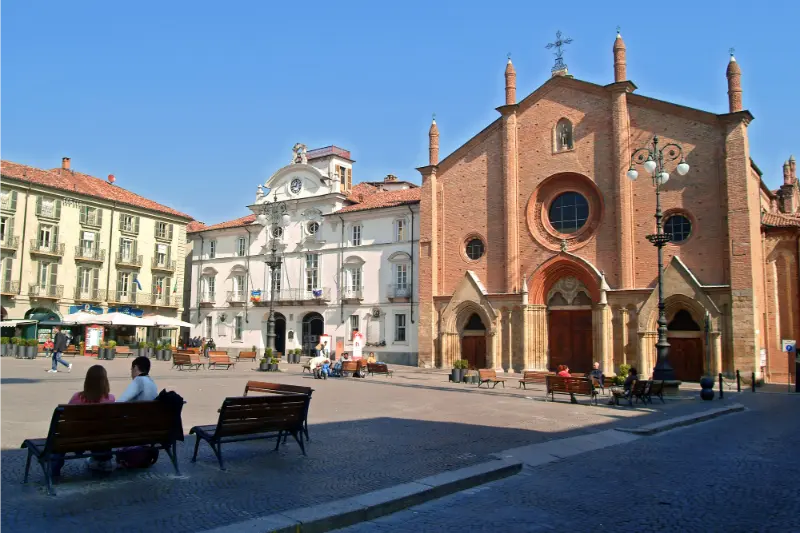
Choosing where to stay in Monferrato matters more than it first appears because the region is broad and travel times accumulate on rural roads. Asti, Canelli, Nizza Monferrato, Casale Monferrato and Acqui Terme each suit a different kind of trip. A vineyard hotel may look perfect in photographs but create unnecessary evening driving; a city hotel may seem less romantic but make restaurants, trains and museums effortless. The best base is therefore the one that matches your daily priorities, not simply the prettiest property. This guide compares the main options and explains when it makes sense to split your stay.
Quick planning overview
| Best all-round base | Asti |
|---|---|
| Best for Moscato | Canelli |
| Best for Barbera | Nizza Monferrato |
| Best for Infernot and culture | Casale Monferrato |
| Best for wellness | Acqui Terme |
Stay in Asti for transport and a real city centre
Asti is the easiest default choice for first-time visitors. You can arrive by train, walk to museums and restaurants, and rent or use a car only on countryside days. The historic centre has enough evening life to make a three-night stay comfortable, and you are not dependent on one hotel restaurant.
The downside is that Asti is not surrounded by vineyard views in the same immersive way as a rural agriturismo. If your dream trip is waking up among vines, use Asti for the first night or two and then move. If convenience, museums and a car-free evening matter more, Asti may be the better base for the entire Astigiano portion of your trip.
Stay in Canelli for sparkling-wine history
Canelli is the right choice when the Underground Cathedrals and Moscato hills are central to the itinerary. Sleeping in town lets you walk to some cellar appointments and restaurants, which is especially valuable if tastings are involved. Hillside properties outside the centre provide broader views but require more driving.

Canelli is smaller than Asti, so check restaurant closing days before booking several nights. It pairs naturally with Nizza Monferrato and the Moscato villages, making it one of the best bases for a dedicated two- or three-day wine segment.
Stay in Nizza Monferrato for Barbera
Nizza offers an excellent compromise between town services and immediate wine country. The regional enoteca, compact centre and restaurants can be reached on foot, while Nizza DOCG vineyards and nearby villages begin just beyond town. For travellers serious about Barbera, this location reduces unnecessary driving compared with staying in Asti and commuting south every day.
Choose central accommodation if you plan to dine in town. Rural estates can be ideal for couples and repeat visitors who already know the area, but first-time travellers should be realistic about evening transport after tastings.
Stay in Casale Monferrato for heritage and Infernot
Casale is the strongest base for the northern side of Monferrato. The cathedral, synagogue, museums and castle give you a full cultural day even before entering the countryside. From here, you can explore villages associated with the UNESCO Infernot component and return to a proper town for dinner.
This is also a useful choice for travellers arriving from Milan or continuing toward Turin and northern Piedmont. The landscape is different from the Canelli hills, so splitting a longer trip between Asti or Nizza and Casale creates more variety than using one southern base for every excursion.
Stay in Acqui Terme for wellness
Acqui Terme makes sense when thermal experiences are part of the holiday rather than an incidental stop. Staying overnight lets you separate sightseeing from spa time and enjoy dinner without immediately returning to another town. The centre is walkable, and rail access can work for a short city break.
For a larger Monferrato road trip, Acqui is best as the final one or two nights, especially if you are continuing toward Liguria. It is less convenient for the Infernot zone and northern Monferrato, so do not choose it as a universal base simply because a hotel rate is attractive.
Agriturismo or town hotel?
Agriturismi offer the landscape many travellers imagine: vineyards outside the window, breakfast with local products and quiet evenings. They can also create logistical complications. Ask whether the restaurant is open every night, how far the nearest village is, whether the access road is paved and whether late check-in is possible.
Town hotels sacrifice some rural atmosphere but simplify dining, parking and bad-weather days. For a first trip, a split stay often works best: two or three nights in a town, followed by one or two nights in the countryside once you understand the roads and distances.
How much time to allow
For four or more nights, consider splitting the trip between Astigiano and Casalese/Alessandria sides instead of using one base for every excursion. The mistake to avoid in Asti and Monferrato is counting only driving time between pins on a map. Historic centres invite slow walking, lunches are part of the experience, and cellar visits normally have fixed starting times. Build the day around one or two non-negotiable reservations, then leave enough unstructured time for a piazza, a viewpoint or a shop that catches your attention.
For a first visit, it is usually better to see fewer places properly than to collect village names. The hills of Monferrato look compact, but narrow roads, parking, agricultural traffic and short walks from car parks add time. If you are combining Asti and Monferrato with the Langhe, keep the two areas on separate days rather than zig-zagging across southern Piedmont.
Getting around and driving
Asti and Acqui are workable without a car for a city break; almost every countryside-based stay is much easier with one. Rail is useful for reaching some larger centres, especially Asti and several towns on the Alessandria side, but the rural UNESCO landscape is easiest with a car. If you drive, expect bends, farm vehicles and villages where the central street narrows abruptly. Use signed public parking instead of following navigation apps into restricted or resident-only lanes.
Wine tasting changes transport planning. Designate a driver, book a taxi or private transfer for tasting-heavy days, or choose accommodation within walking distance of dinner. Even small pours accumulate over several producers, and the safest itinerary is one that never relies on estimating whether you have had ”only a little”.
Best time to visit
Accommodation pressure rises around Palio, harvest weekends, wine fairs and autumn food events. Book earlier for September and October than for ordinary spring weekdays. Spring is excellent for green vineyards and comfortable walking, while autumn brings harvest atmosphere, truffles and major food-and-wine events. Summer can be hot in exposed towns and vineyards, so start outdoor sightseeing early and reserve museums or cellars for the warmest hours. Winter is quiet and atmospheric, but some rural experiences reduce opening days and daylight is limited.
Event weekends can transform a normally calm town. The Palio in Asti, wine fairs, truffle events and local festivals are memorable reasons to travel, but they also increase demand for rooms, parking and restaurant tables. If an event is your main reason for visiting, book early; if it is not, check the calendar so you are not surprised by closures or crowds.
Where to stay
Choose the base according to your itinerary: Asti for transport and city life, Canelli for Moscato and historic cellars, Nizza for Barbera, Casale for Infernot and culture, or Acqui for spa time. A central base is useful if you value walking to dinner and cafés, while an agriturismo among vineyards gives you the classic countryside experience. The trade-off is simple: town stays reduce evening driving; rural stays provide views and silence but usually require a car for almost everything.
For a wider comparison, see our where to stay in Asti and Monferrato guide. When booking, check parking arrangements, air conditioning in summer, restaurant closing days and whether breakfast starts early enough for any reserved tour. Check accommodation options.
Food and wine without over-planning
Staying in a town makes dinner easier and safer after wine tasting; rural hotels can be excellent if they have an on-site restaurant or you plan transfers. Monferrato is a place where lunch can easily become the main event of the day, so do not schedule a museum or winery appointment immediately after a multi-course meal. Traditional menus often follow the season, and the most satisfying approach is to ask what is local now rather than arriving with a checklist of famous dishes.
If you are interested in wine, alternate technical tastings with normal meals and landscape time. A producer visit is more rewarding when you can listen, ask questions and compare styles, rather than rushing through three appointments. Drivers should spit or limit tastings and should never treat rural roads as forgiving simply because traffic is light.
Practical reservations and accessibility
Opening hours in small-town Piedmont can change by season, weekday and event calendar. Cellars, infernot and some historic interiors may be visitable only on guided tours or by appointment. Verify the official source shortly before travelling when a particular site is essential to your itinerary, especially in winter or on Mondays.
Historic centres frequently combine cobbles, steps and slopes. Travellers with reduced mobility should ask attractions about step-free entrances and parking before arrival rather than assuming a ground-floor doorway means the full visit is accessible. Families with strollers will usually find main squares easy but may prefer a carrier for steep old-town lanes or underground cellar visits.