
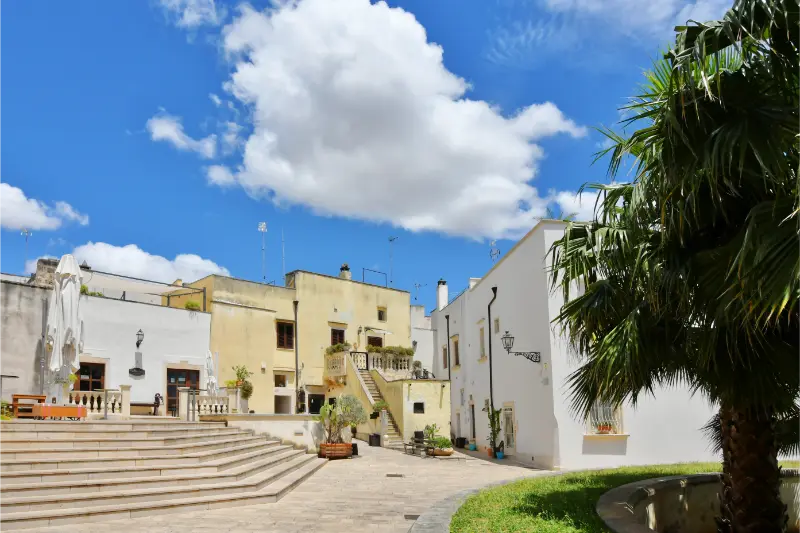
Galatina is one of inland Salento’s strongest cultural stops, thanks above all to the extraordinary fresco cycle inside the Basilica of Santa Caterina d’Alessandria. Add an elegant centre, Baroque details and the town’s association with the pasticciotto, and it becomes much more than a lunch stop between Lecce and the Ionian coast.
Choose Galatina if you want a town that rewards slow looking rather than beach hopping. It is especially good for art lovers, food-focused travellers and anyone building an inland Salento day away from the summer coast.
If Galatina Travel is part of a longer route through Puglia, our Puglia travel guide is a useful starting point for choosing the next stop.
This guide is designed to help you decide how Galatina fits into a wider Puglia trip, how much time to allow, which parts are genuinely worth prioritising and where the practical friction—parking, heat, distances or seasonal access—usually appears.
Quick planning summary
| Best for | Half-day for the cultural essentials; full day if you add a slow meal and nearby town. |
|---|---|
| Minimum time | Allow at least half a day; a full day or overnight is better when the destination includes coast, nature or several zones. |
| Car | Useful for the wider area even when the historic centre itself is walkable. |
| Best seasons | April–June and September–October for balance; summer for beach energy with earlier starts. |
| Planning priority | Decide the one non-negotiable experience first, then keep the rest of the day flexible. |
What to see and do
Basilica of Santa Caterina d’Alessandria
This is the essential sight. The interior is covered with major late-medieval frescoes depicting biblical scenes, saints and narrative cycles. Give yourself time to look carefully; rushing through in ten minutes misses the reason Galatina is worth the detour.
Allow enough time to experience this stop rather than photographing it and immediately moving on. If interior access, guided visits or protected-area rules matter, verify the current arrangement before departure because smaller Puglia attractions can change hours by season.
Piazza San Pietro and Chiesa Madre
The central square and mother church show a different, later face of Galatina, with the theatrical stonework associated with Salento’s Baroque period.
Allow enough time to experience this stop rather than photographing it and immediately moving on. If interior access, guided visits or protected-area rules matter, verify the current arrangement before departure because smaller Puglia attractions can change hours by season.
Historic palaces and courtyards
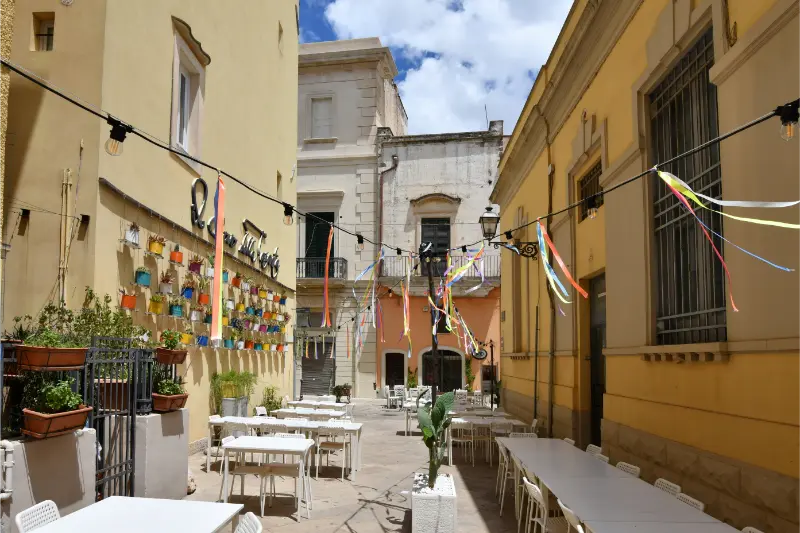
Walk beyond the main churches into lanes lined with carved portals and balconies. Galatina works best as a continuous town walk rather than a sequence of isolated monuments.
Allow enough time to experience this stop rather than photographing it and immediately moving on. If interior access, guided visits or protected-area rules matter, verify the current arrangement before departure because smaller Puglia attractions can change hours by season.
Pasticciotto tradition
Italia.it identifies Galatina as the birthplace of the famous custard-filled pastry. Rather than treating it as a social-media box to tick, stop for one with coffee and compare a classic version with seasonal variations if available.
Allow enough time to experience this stop rather than photographing it and immediately moving on. If interior access, guided visits or protected-area rules matter, verify the current arrangement before departure because smaller Puglia attractions can change hours by season.
Taranta and local traditions
The area is closely connected with the cultural history of tarantismo and the music traditions of the Salento. Local festivals can transform the town, but they also change parking and restaurant demand.
Allow enough time to experience this stop rather than photographing it and immediately moving on. If interior access, guided visits or protected-area rules matter, verify the current arrangement before departure because smaller Puglia attractions can change hours by season.
Easy links across Salento
Galatina is positioned well for Lecce, Nardò, Gallipoli and smaller inland villages. It can be a deliberate cultural counterpoint to several beach-heavy days.
Allow enough time to experience this stop rather than photographing it and immediately moving on. If interior access, guided visits or protected-area rules matter, verify the current arrangement before departure because smaller Puglia attractions can change hours by season.
How to plan the visit
A half-day is enough for the main sights, but a full day works if you pair Galatina with a meal and one nearby town. Visit Santa Caterina early or at a quieter hour, then use late afternoon for the historic centre when the light softens.
The most efficient Puglia itineraries group places by geography. A destination that looks only 25–30 kilometres away may still add substantial time once you include parking, coastal traffic, restricted streets and the walk from the car to the historic centre.
Build margin into lunch and late afternoon. In southern Italy, a good day is often improved by one fewer stop and a longer meal, swim or old-town walk. Protect the experience you are already enjoying instead of leaving simply because another pin is saved on the map.
Getting there and getting around
A car is easiest for a wider Salento itinerary. Galatina also has regional transport links, making it more realistic without a car than many small coastal villages. If driving, park outside the tightest historic streets and walk in.
Driving and parking
Do not follow navigation software blindly into historic streets. Look for official parking signs, ZTL restrictions and pedestrian zones before the final kilometre. In July and August, the first available legal parking space can be a better choice than circling for a perfect one near the centre.
Without a car
A car-free visit is possible when regional trains or buses serve the main town, but the wider coastline, countryside or protected areas can become much less flexible. Check the final return connection before dinner, especially on Sundays and outside the main summer period.
Where to stay
Stay in Galatina if you want lower-key evenings and central access to both coasts, especially for a road trip. Travellers who want to walk to the sea should choose a coastal base instead. Boutique stays in historic buildings can be atmospheric, but check stairs and parking before booking.
When comparing accommodation, check the actual walking route, parking arrangement, stairs, air conditioning and restaurant access rather than only the straight-line distance shown on a booking map. Historic buildings can be atmospheric but may involve steep steps and no lift.
A realistic itinerary
Morning
Start with the attraction that becomes difficult later because of heat, crowds or parking. If the destination includes a famous church, cave, beach or protected landscape, morning is usually the safest time to prioritise it.
Lunch
Choose one meal that reflects the place rather than eating only for speed. A reserved table can make sense in peak season, but avoid bookings so tight that a delayed parking search or longer museum visit creates stress.
Afternoon
Use the afternoon for the complementary side of the destination: old town after a beach morning, coast after an inland cultural visit, or a craft/food stop after outdoor walking. This creates variety without adding a long transfer.
Evening
If you are staying overnight, leave some of the historic centre for after the day-trippers depart. Evening light, dinner and a slow walk often explain why sleeping in a smaller Puglia town can be more rewarding than visiting it only at midday.
Food and local character
Pasticciotto is the obvious sweet, but the broader Salento kitchen matters just as much: vegetables, pulses, handmade pasta, rustic breads and local wines. Galatina is an excellent place for a meal that is not built around a sea view.
Look for seasonality and local sourcing rather than a generic list of “Puglian dishes.” The same region changes noticeably between Adriatic seafood towns, Ionian resorts, the Murgia plateau and inland Salento. Ask what the restaurant considers local to the immediate area.
Best time to visit
Spring
April to early June is usually the easiest period for walking, road trips and outdoor sightseeing. Coastal water may still feel cool, but the countryside is greener and parking pressure lower than midsummer.
Summer
June to August brings the fullest beach services and evening energy. In July and August, start early, expect slower parking and avoid exposed historic centres at the hottest point of the afternoon when possible.
Autumn
September often combines warm sea temperatures with a calmer rhythm. October can be excellent for inland towns, food and walking, though some beach services and boat schedules begin to reduce.
Winter
Winter is quiet and local, best for architecture, food and uncrowded streets. Coastal resort zones can feel very seasonal, and smaller attractions may have reduced opening, so verify the specific reasons you are visiting.
Families and accessibility
The town is manageable with children because the visit can be compact and broken up with food stops, but the art-rich basilica is more rewarding for older children who can engage with the images. Summer midday heat can make the stone centre tiring.
Accessibility varies sharply between modern promenades, medieval stone lanes, beaches, caves and natural paths. Travellers with limited mobility should check the exact attraction rather than relying on a general label such as “walkable.”
Mistakes to avoid
Do not visit only for a pastry and leave. Do not photograph the basilica without first checking the current rules. And do not pair Galatina with too many distant coastal stops simply because Salento looks small on a map.
Another common mistake is treating every famous nearby place as compulsory. Keep stops in the same direction and leave margin for traffic, lunch, a swim or an unscheduled viewpoint.
Key decisions
| Half-day or full day? | Half-day for the cultural essentials; full day if you add a slow meal and nearby town. |
|---|---|
| Galatina or Lecce? | Lecce for a major city experience; Galatina for a smaller, fresco-focused inland stop. |
| Stay overnight? | Useful for a central road-trip base, less necessary for a first coastal holiday. |
| Best reason to visit? | Santa Caterina’s frescoes, with food and old-town atmosphere as strong extras. |
Deeper planning notes
Pairing Galatina with Nardò
The combination works because one is inland and art-focused while the other opens toward the Ionian coast. Keep the day to these two rather than adding Gallipoli as a third major stop.
Build the choice around your actual travel style, not around what a generic checklist says should fit. The best base or itinerary is the one that reduces repeated driving and protects the experiences you care about most.
A slower food stop
Plan coffee and pasticciotto separately from lunch. It gives the town two pauses and prevents the visit from becoming a checklist.
Build the choice around your actual travel style, not around what a generic checklist says should fit. The best base or itinerary is the one that reduces repeated driving and protects the experiences you care about most.
Why inland Salento matters
After several beaches, towns like Galatina reveal the artistic and domestic side of the peninsula: churches, palaces, courtyards and food traditions that are easy to miss on a coast-only itinerary.
Build the choice around your actual travel style, not around what a generic checklist says should fit. The best base or itinerary is the one that reduces repeated driving and protects the experiences you care about most.
Extra planning advice
How to fit this stop into a seven- to ten-day Puglia trip
Two or three accommodation bases are usually enough for a one-week to ten-day Puglia trip. Constant hotel changes create more luggage, parking and check-in time than travellers expect. Use this destination either as a real base or as a deliberate day trip; avoid moving bags for one night unless the evening atmosphere is part of the reason to come.
What to book in advance
Book only the elements that can genuinely sell out or determine the day: a special guided visit, a boat trip, a high-demand restaurant, a lido in peak season or accommodation with scarce parking. Keep ordinary town walking and flexible meal stops unscheduled so the trip can adapt to weather and traffic.
Heat, water and footwear
Summer heat changes what feels realistic. Carry water, use sun protection and choose footwear for the actual terrain. Limestone paving can become slippery, while ravine paths, rocky coves and cliff viewpoints require more support than a city promenade.
Frequently asked questions
Is Galatina worth visiting?
Yes when its main experience matches your interests and route. It is strongest as part of a coherent geographic cluster rather than as a forced detour across the region.
How long should you allow?
A focused half-day works for the essentials in the compactest destinations, but a full day or overnight is better when beach time, nature, multiple zones or evening atmosphere are part of the appeal.
Do you need a car?
Not always for the centre itself, but a car substantially improves flexibility for the wider Puglia itinerary. If travelling without one, build the day around confirmed public-transport times rather than assumed connections.
Is it suitable for children?
Usually yes with an age-appropriate plan. Reduce the number of stops, protect the hottest hours and prioritise one attraction or beach that gives children a clear reason to enjoy the day.
How to fit this stop into a longer Puglia trip
Think in geographic clusters. Combine this destination with places already on the same side of the region and avoid crossing Puglia for one extra name. If the next stop requires a long transfer, make that move after breakfast rather than sacrificing the best hours of the day to traffic.
If you have only a week, choose depth over coverage. Puglia is longer than many first-time visitors expect, and the Gargano, Bari area, Valle d’Itria and Salento each deserve real time. A well-paced route will feel richer even if it includes fewer towns.
Small choices that improve the visit
Build margin around the least flexible element of the day: a ferry departure, cave booking, reserved lido, museum entry, restaurant reservation or long mountain road. Everything else should be allowed to move. Weather, traffic and parking can change the value of a plan within an hour.
Also decide in advance what you are willing to skip. If the sea is perfect, stay longer; if the town is at its best near sunset, cancel the unnecessary extra transfer. Protecting the experience you are already enjoying is often the smartest planning decision.
Useful related guides
Continue planning with Lecce travel guide, Gallipoli travel guide, Nardò travel guide, Puglia itinerary 10 days.
Official information to check before travel
Opening hours, access rules, parking, protected-area restrictions and seasonal services can change. Before travelling, check the official or primary destination information and verify any ticket, transport or attraction that is essential to your day.
Last updated: October 17, 2026
Leave a Reply