
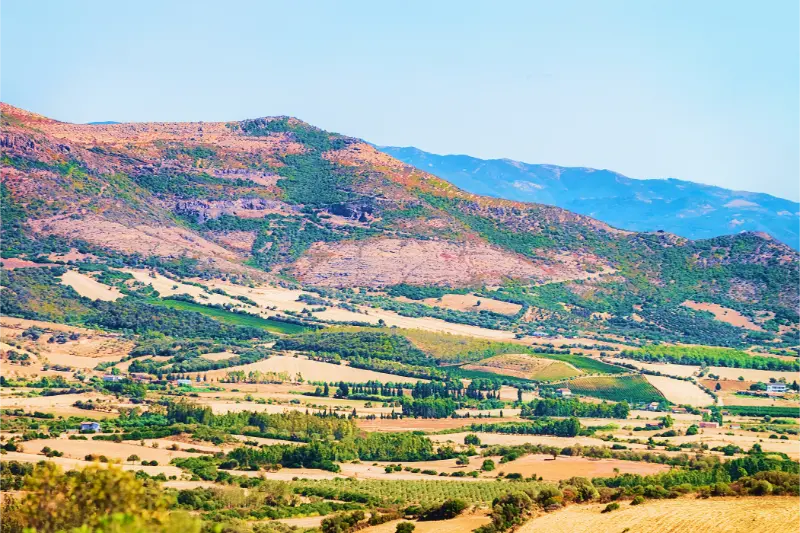
Iglesias is one of Sardinia’s most surprising inland cities: medieval lanes and Gothic-Catalan churches sit beside the memory of an industrial mining region that once made the Iglesiente one of Italy’s great extraction districts.
Italia.it emphasizes the city’s Pisan importance, the Cathedral of Santa Chiara, San Francesco and the mining heritage protected through Sardinia’s geomining park. Monteponi and Pozzo Sella are among the major industrial sites associated with this past. This guide is designed to show what makes the destination distinctive, how long it deserves and how to fit it into a realistic Sardinia route.
For a broader Sardinia itinerary, see the Sardinia travel guide before deciding which destinations to combine with Iglesias.
Quick planning summary
| Best for | mining heritage, medieval architecture, industrial archaeology and travellers exploring Sardinia’s quieter south-west |
|---|---|
| Time needed | One full day for city and one mining site; two nights allow the Iglesiente coast and deeper geomining heritage. |
| Car | Recommended because the strongest mining and coastal sites lie outside the historic centre. |
| Main planning rule | Give the historic centre and mining story equal weight. Iglesias makes more sense when you understand how medieval city, mineral wealth and the dramatic south-west coast belong to the same regional history. |
What gives this place its character
Iglesias is not a polished beach resort, and that is precisely why it adds value to a Sardinia itinerary. Stone streets, church façades and industrial memory create a city whose identity comes from work and history rather than tourism alone.
The nearby Iglesiente coast is one of Sardinia’s most dramatic, where mining infrastructure, high cliffs and offshore Pan di Zucchero turn industrial archaeology into landscape. Staying in Iglesias connects those coastal monuments with the communities that depended on them.
Is it worth adding to your Sardinia itinerary?
Yes, especially for mining heritage, medieval architecture, industrial archaeology and travellers exploring Sardinia’s quieter south-west. Give the historic centre and mining story equal weight. Iglesias makes more sense when you understand how medieval city, mineral wealth and the dramatic south-west coast belong to the same regional history.
The best reason to add this stop is that it changes the rhythm or story of the trip. Sardinia becomes more memorable when each base contributes something different—archaeology, mountains, ritual culture, industrial history or a new type of coast—rather than repeating the same beach day in another postcode.
What to see and experience
Historic centre
Narrow streets and squares preserve the scale of a medieval mining city shaped by Pisan and later Aragonese influence.
Give this stop enough time to register. Where access, weather, guided entry, protected-area rules or seasonal services matter, verify current information close to travel rather than relying on an old itinerary.
Cathedral of Santa Chiara
The cathedral anchors the historic centre and reflects several architectural phases tied to the city’s long importance.
Give this stop enough time to register. Where access, weather, guided entry, protected-area rules or seasonal services matter, verify current information close to travel rather than relying on an old itinerary.
San Francesco
One of Sardinia’s significant Gothic-Catalan churches and a key stop for understanding Iglesias beyond mining.
Give this stop enough time to register. Where access, weather, guided entry, protected-area rules or seasonal services matter, verify current information close to travel rather than relying on an old itinerary.
Monteponi
The former mining complex represents the region’s industrial history and includes important surviving structures.
Give this stop enough time to register. Where access, weather, guided entry, protected-area rules or seasonal services matter, verify current information close to travel rather than relying on an old itinerary.
Pozzo Sella
A restored mining building that preserves machinery and helps interpret the technical side of extraction.
Give this stop enough time to register. Where access, weather, guided entry, protected-area rules or seasonal services matter, verify current information close to travel rather than relying on an old itinerary.
Geomining heritage
The broader region forms part of Sardinia’s historical and environmental mining landscape, with sites requiring current access checks.
Give this stop enough time to register. Where access, weather, guided entry, protected-area rules or seasonal services matter, verify current information close to travel rather than relying on an old itinerary.
Medieval walls and civic history
Fragments and urban structure reveal Iglesias as an important city before modern industrial expansion.
Give this stop enough time to register. Where access, weather, guided entry, protected-area rules or seasonal services matter, verify current information close to travel rather than relying on an old itinerary.
Gateway to Masua and Nebida
The coast west of Iglesias offers some of Sardinia’s most dramatic cliffs and mining-related viewpoints.
Give this stop enough time to register. Where access, weather, guided entry, protected-area rules or seasonal services matter, verify current information close to travel rather than relying on an old itinerary.
How to plan the visit well
Use the first half of the day for the most important outdoor or cultural experience, then let lunch create a real pause. Sardinia is easier to enjoy when the afternoon is lighter and geographically close rather than another major drive.
In July and August, heat and parking can change the value of an itinerary. Archaeology, exposed viewpoints and village walking belong earlier or later; midday is better for lunch, swimming or shaded interiors.
Wind also matters on the coast. Keep one nearby alternative that faces a different direction, and do not force a fixed boat or beach plan simply because it looked perfect when you booked.
Getting there and getting around
Drive and keep the city centre largely on foot. Mining areas may require guided access or specific opening arrangements, so check before departure.
Driving and parking
Sardinian roads often take longer than kilometres suggest. Coastal bends, mountain gradients, town approaches and summer parking add real time. Build a buffer and avoid timed reservations immediately after the day’s longest transfer.
When to leave the car parked
Historic centres, ferry days and harbour evenings are usually better on foot. A good base reduces daily driving rather than simply placing you in the middle of a map.
Where to stay around Iglesias
Iglesias is a practical inland base for two nights if mining heritage and the south-west coast are priorities. Coastal stays work better for pure beach trips.
Check parking, stairs, evening restaurants and the final road to the property before booking. A beautiful remote stay works only when its logistics fit the next morning’s plan.
A realistic itinerary
Morning / Day 1
Walk the historic centre and churches in the morning.
Midday / Day 2
Have lunch in Iglesias rather than driving straight to the coast.
Afternoon / Day 3
Use the afternoon for one confirmed mining site such as Monteponi/Pozzo Sella.
Evening / Extra time
Keep Nebida, Masua and Pan di Zucchero for a separate coastal day.
Food and local character
Sulcis and Iglesiente cooking combines inland meats, cheeses, breads and coastal seafood. A local dinner after a mining day fits the destination well.
Regional food is one of the best ways to make each part of Sardinia feel different. Keep at least one meal slow enough to understand local products instead of treating lunch as a gap between parking spaces.
Best time to visit
April to June
Spring and early summer are excellent for archaeology, mountain villages and road trips. The landscape is greener, temperatures are easier and beach access is usually less stressful.
July and August
Peak summer gives the strongest beach and excursion schedule but also brings heat, parking pressure and higher accommodation prices. Start early and reserve anything with controlled capacity.
September and October
Early autumn is one of the best periods for mixing sea, culture and food. Mountain and inland days become especially pleasant as temperatures fall.
Winter
Inland culture, cities and archaeology can be deeply rewarding, while small coastal services and mountain conditions need more checking.
Costs, reservations and what deserves your budget
Spend first on the experience that defines the destination: a quality guide, a boat day, a well-located room, archaeological access or a safe mountain excursion. Save by reducing unnecessary hotel changes and repeated long drives.
When access is regulated or guided, reserve early in peak season. For ordinary town walking, meals and viewpoints, keep enough flexibility to react to weather and energy.
Families and accessibility
Older children may enjoy industrial archaeology and tunnels more than a long church sequence, but guided-site age/safety rules should be checked.
Historic streets and mining sites vary significantly. Confirm tunnel, lift, surface and restroom access individually.
Families and travellers with mobility needs benefit most from fewer bases, exact parking research and realistic terrain checks. The last 500 metres often matter more than the headline driving distance.
Common mistakes to avoid
- Treating Iglesias only as a road to the coast.
- Arriving at mines without checking guided access.
- Trying to see multiple mining complexes plus beaches in one day.
- Skipping Gothic architecture.
- Underestimating the emotional value of industrial heritage.
How to fit this into a wider Sardinia route
For one week, use two bases. For ten days, two or three. Add this destination when it strengthens the regional story rather than forcing a return drive across the island.
On transfer days, choose one substantial stop only. Reaching the next hotel before dinner usually creates more value than adding a second famous place and arriving tired after dark.
What to protect if the day becomes too full
Keep the experience unique to this destination. Remove the second beach, optional viewpoint or extra village first. If the day still feels rushed, move the important stop to the following morning rather than compressing it.
What to verify shortly before travel
Recheck opening hours, protected-area rules, parking systems, ferry or boat schedules, hiking access, wildfire restrictions and weather. Save the essential confirmation and a backup plan offline.
Why slower usually feels more beautiful
The most memorable hour is often the one no itinerary can guarantee: an almost-empty street before dinner, late light on a harbour, a quiet archaeological site after a tour group leaves, or a mountain village where lunch simply takes longer than expected.
Leaving room for that hour is not poor planning. It is the planning choice that lets Sardinia feel like a place rather than a sequence of coordinates.
A deeper way to experience this destination
If Iglesias is one of the places you are most excited about, give it more than the minimum. The destination often becomes most distinctive before the main attraction opens, during a long local lunch, or in the last hour of light when there is no practical reason to move on.
I would also separate the main experience from a long transfer whenever possible. Arriving the evening before a protected beach, archaeological visit, ferry or mountain day gives you control of the start time and protects the plan from parking, traffic or rental-car delays.
Accommodation should be judged by the next morning as much as by the room. A property that saves thirty minutes of driving, gives legal parking and lets you walk to dinner can improve every day of the stay more than a slightly better view.
A practical backup plan
Keep one nearby alternative that uses different conditions: a museum for a windy beach day, a village for rough sea, a short archaeological site for a mountain forecast that turns poor. The backup should stay in the same region so it does not create a new long drive.
If the day starts late, remove the least distinctive activity first. Protect the reason you came to this place rather than trying to preserve every line of the original schedule.
What I would add if you have more time
The centre of Iglesias is worth seeing before the mines because it explains the political and commercial city that existed before industrial extraction reached its modern scale. Gothic-Catalan architecture and the Pisan legacy make the later mining boom feel like another chapter rather than the beginning of the story.
Industrial archaeology is most powerful when you hear how water, ventilation, transport and ore processing actually worked. A guided site can transform abandoned machinery from photogenic objects into evidence of dangerous labour, engineering and the economic dependence of entire communities.
After that context, the coast around Nebida and Masua reads differently. Mining structures sit against cliffs and blue water in a landscape that is both beautiful and scarred. That tension is exactly what makes the Iglesiente more memorable than a standard beach region.
A final route test
Before adding another stop, compare how much of the day will be spent moving with how much will be spent experiencing the place. If parking, transfer and return driving dominate, move the destination to another day or stay closer. A coherent regional route almost always feels richer than a longer checklist.
I also keep the final part of the afternoon flexible. Sardinia often becomes more beautiful when the light softens and the crowds thin, so it makes little sense to leave a place you are enjoying simply because an optional viewpoint remains on the schedule.
Why I would not rush the final hours
If the core visit is going well, stay with it. Sardinia often rewards the moment when the formal sightseeing is finished and you can simply walk, sit down for a drink or return to the coast after the busiest period. That slower ending usually contributes more to the memory of the place than an extra stop added only because it appeared on a list.
I would also avoid a long evening transfer after a demanding day. Reaching the next base before dinner, understanding the parking and being able to walk to a restaurant creates a much better rhythm for the following morning. Route quality matters as much as the number of destinations.
Related Sardinia guides
Sant’Antioco — useful for extending the route with content already public by this article’s publication date.
Carloforte & San Pietro Island — useful for extending the route with content already public by this article’s publication date.
Chia & the South Coast — useful for extending the route with content already public by this article’s publication date.
Official information to verify before travel
Access rules, opening hours, transport and seasonal conditions can change. Check the official or primary information source close to your travel date.
Last updated: October 17, 2026
Leave a Reply