
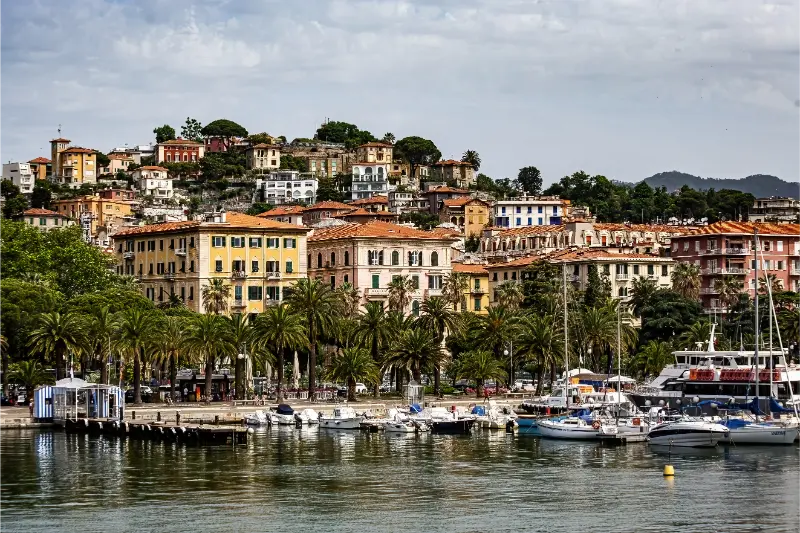
La Spezia Beyond the Station: Museums, Waterfront and the Gulf of Poets. La Spezia is too often reduced to a platform change on the way to the Cinque Terre. Stay long enough to leave the station and it becomes a different proposition: a working port with elegant shopping streets, serious museums, tree-lined public spaces and an astonishing amphitheatre of hills around its gulf. It is an honest city rather than a preserved fishing village, and that is precisely why it can make a thoughtful base for a longer stay.
This practical guide focuses on what actually changes a visit: how to navigate La Spezia, what is worth making time for, which nearby places work as excursions and how to avoid unrealistic plans. Official transport, admission and trail information can change by season. Details verified in October 2026 should be checked again for later journeys.
For a broader Liguria itinerary, see the Liguria travel guide before deciding which destinations to combine with La Spezia Beyond the Station.
At a glance
| Location | the eastern Riviera, at the heart of the Gulf of Poets |
|---|---|
| How to arrive | La Spezia Centrale is the practical rail hub for the Cinque Terre and the wider Italian network; the waterfront and museum quarter are further downhill |
| Where to stay | near the central station for rail-heavy days, or around the pedestrian centre for a more atmospheric evening |
| Best for | independent travellers, culture, coastal scenery and a measured pace |
| Recommended time | one full day for highlights; two or more days with excursions |
| Planning priority | verify transport, opening arrangements, trail status and beach facilities for the exact date |
Contents of this guide
- The character of La Spezia
- Essential places and experiences
- A walk that makes sense
- What and where to eat
- Beach and sea expectations
- Day trips from La Spezia
- Getting around and accessibility
- One-, two- and three-day ideas
- Booking, seasons and mistakes
- Useful official information
- Frequently asked questions
The character of La Spezia
The setting matters: La Spezia lies in the eastern Riviera, at the heart of the Gulf of Poets. Unlike a generic list of the Riviera’s famous names, this visit works best when you understand the local scale. The town centre, nearby shore and surrounding hills are not necessarily a single level pedestrian zone. A leisurely plan lets you notice architecture, food traditions and ordinary streets in between the best-known sights.
When choosing accommodation, consider near the central station for rail-heavy days, or around the pedestrian centre for a more atmospheric evening. This decision determines how easy it is to return for a rest, how much luggage handling you face and whether an evening meal feels like part of the holiday or one more transport connection. A map showing a short straight-line distance can conceal a hill, a busy road, a railway underpass or a detour around a harbour.
Essential places and experiences
Via del Prione and the old commercial streets
Start with the pedestrian Via del Prione, where shopfronts, narrow connecting lanes and everyday errands give a useful sense of the city's scale. Look beyond the main axis into quieter side streets rather than racing straight to the harbour. The network is compact, but it rewards a slow circuit with occasional stops for coffee, a bakery or a small exhibition.
Amedeo Lia Museum
The Museo Amedeo Lia brings a major collection of paintings, sculpture and decorative art into the historic centre. It makes an especially valuable counterweight to boat-and-beach itineraries, with rooms that need time rather than a hurried glance. Check the museum's own admissions and temporary closures before building your day around it.
Castello di San Giorgio
The castle above the centre offers a change of perspective on the modern port city. Its archaeological museum helps connect La Spezia with the deeper history of Lunigiana and the surrounding territory. Even if your priority is the panorama, treat the climb and the museum as one excursion instead of a photo stop squeezed between train departures.
Naval Museum and the city's maritime identity
La Spezia's naval heritage is not decorative background: the arsenal has helped shape the city for generations. The technical naval museum introduces visitors to seafaring and military technology. Access rules can differ from those of a municipal museum, so review current visiting arrangements and avoid assuming the entire naval complex is open to tourists.
Passeggiata Morin and the waterfront
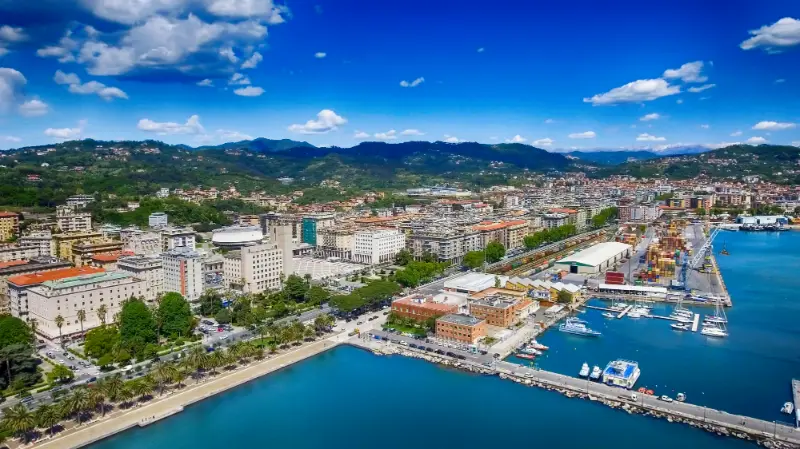
The palm-lined promenade is one of the simplest pleasures in town, with changing views across boats, docks and the gulf's enclosing slopes. It is well suited to an early evening walk when the museum doors have closed. If a boat departure is part of the plan, verify the exact embarkation quay rather than relying on an approximate map pin.
Thaon di Revel bridge and the marina
The pedestrian bridge links parts of the waterfront and opens views that make the gulf's geography easier to read. The marina setting feels very different from the narrow old-town streets, so crossing between the two gives the walk variety. It also provides a pleasant option when a planned coastal excursion is cancelled.
The market and a Ligurian lunch
A city used by residents is a good place to learn what local people buy, not merely what visitors photograph. Look for a market visit, bakery counters and small restaurants serving vegetable pies, focaccia and seafood. Opening days and stall availability change, so avoid treating the market as a guaranteed attraction on every morning of the week.
Gulf of Poets excursions
Portovenere and Lerici are different experiences, both worthwhile in their own right. Boats can provide a memorable approach in suitable weather, while local roads and buses offer alternatives. Pair just one destination with a proper La Spezia day if you want to avoid spending your trip rushing between quays and bus stops.
A walk that makes sense
For a first visit, go downhill from La Spezia Centrale into the pedestrian centre, then loop through Via del Prione and a museum before continuing to the waterfront. This route reveals how the city works: commercial streets become civic spaces, then a harbour promenade, then maritime infrastructure. If you prefer a slower pace, split the museum and castle portions across separate mornings. The uphill segments around the castle can be tiring in hot weather; the seaside section is generally simpler to manage.
If you prefer a gentle schedule, choose two or three close sights as an anchor and leave space for a café, a viewpoint or an unexpected open doorway. A longer itinerary should group places by district rather than bounce between the beach and the highest landmark. Taking a little time to read local signs also makes it easier to distinguish public routes from private property, a practical concern in tightly built Ligurian towns.
What and where to eat
A useful food plan here is a small breakfast near the railway station, a focaccia or savoury pie when sightseeing, and a seated evening meal away from the busiest ferry approaches. Ligurian flavours often rely on olive oil, vegetables, herbs and seafood; portions and price levels vary greatly with location. Try not to assume every restaurant advertising pesto is equally local. Seasonal menus and a visible neighbourhood clientele are better clues than a large photograph-heavy tourist menu.
Menus change with the season, and prices vary by view, location and service style. When comparing options, read the current menu outside rather than relying on old published prices. A small bakery or neighbourhood café often makes a useful midday stop; a restaurant with outdoor seating is best when the pace of the day allows you to enjoy it. If a food experience is an important part of the trip, check opening days and book where required.
Beach and sea expectations
This is not primarily a resort-beach city. If a full swimming day matters, choose a suitable coastal destination elsewhere in the gulf or along the regional railway, rather than planning to swim beside the commercial port. Boat trips are weather-dependent and routes differ by season. Keep one flexible afternoon in the itinerary so a windy day can become a museum-and-food day without feeling like a wasted holiday.
For any Ligurian coastal outing, examine the nature of the shoreline rather than assuming every blue-water photograph means sand. Shoes that cope with pebbles, sensible sun protection and enough drinking water are small investments with a large effect on comfort. Sea state can change quickly; follow local beach safety notices and do not rely on a forecast copied from an older article. Travelling outside peak summer brings different services as well as different crowd levels.
Day trips from La Spezia
Lerici is a particularly rewarding option for a beach-and-harbour atmosphere, while Portovenere puts dramatic rocks and historic buildings at the forefront. A Cinque Terre outing is feasible by regional train, but each village deserves more time than a stop-and-go picture. If you have only two nights, decide whether your priority is a full eastern Riviera excursion or discovering the gulf itself; attempting both in one day usually means neglecting the town where you are staying.
A useful rule is to choose one principal excursion each day and keep the second stop optional. Regional trains are excellent for many coastal corridors, but not every historic village or trailhead is on the railway. Ferries provide scenery but operate subject to weather, demand and seasonal changes. If you have a non-refundable onward ticket, select the most dependable return route first and arrange optional activities around it.
Getting around and accessibility
The centre's pedestrian shopping streets are relatively manageable compared with Liguria's steeper hill villages, but kerbs, cobbles and the climb to the castle remain relevant. Choose accommodation based on walking distance from the station or waterfront rather than on a vague 'central' label. If travelling with a stroller or mobility aid, inspect the actual access route to museums and to the departure quay. Passenger boats may have boarding limitations in rough weather or at individual stops.
Before departure, check the final leg carefully: La Spezia Centrale is the practical rail hub for the Cinque Terre and the wider Italian network; the waterfront and museum quarter are further downhill. When two options look equally convenient, compare real walking routes, gradients, journey frequency, luggage constraints and your return time. Visitors who require accessible routes should contact operators and attractions directly because historic streets and maritime facilities cannot be assumed to provide the same level of access throughout.
One-, two- and three-day ideas
With one day, combine the pedestrian quarter, one substantial museum and Passeggiata Morin. With two days, add a Gulf of Poets excursion or the castle museum without abandoning La Spezia's own character. Three days make sense for visitors using the city as a regional rail base. The key is grouping activities by geography: station and centre first, hill and castle together, then quay and harbour. That reduces needless backtracking and makes meal breaks feel intentional.
A short itinerary should never be a list of places disconnected from opening hours and human energy. Keep meal times realistic, allow for the possibility of a missed bus or train, and avoid promising a summit walk, museum tour and long beach afternoon in the same few hours. Travelling with children, older relatives or anyone who needs frequent rests is usually more enjoyable when one substantial activity defines the day.
Booking, seasons and mistakes
The most common disappointment is expecting the railway station to deposit you directly on a Cinque Terre-style waterfront. La Spezia is larger and more functional, with a considerable port and several different districts. The second mistake is booking a tight connection after a summer boat trip: seas, passenger demand and timetables are not as predictable as regional rail. When an excursion has a hard deadline, put rail or road alternatives into your planning before departure.
Late spring and early autumn often balance moderate temperatures with enjoyable walking, while summer is best for people who actively want swimming and a lively waterfront. Winter may be peaceful but comes with shorter days and reduced seasonal services. These are broad patterns rather than a promise for a particular date. Check live information for closures, ferry services, public transport, museum admission and any protected-area access rules before committing to the trip.
Explore more of Liguria
- Portovenere and the Gulf of Poets: Cliffs, Churches and Palmaria
- Cinque Terre, Village by Village: Trains, Trails and a Better Plan
- Where to Stay in Liguria: Choose Your Riviera Base Wisely
- Liguria Beyond the Postcards: A First-Timer's Guide to Italy's Riviera
Official information and accommodation
Consult the official tourism information before your visit, including notices for the specific sites you plan to see. A useful additional reference is this local operator or tourism resource. This guide was researched in October 2026. Verify all opening, transport and access details again if you are travelling at a later date.
Frequently asked questions
Is La Spezia worth visiting in its own right?
Yes, particularly for museum lovers and visitors curious about a lived-in Ligurian port. A historic-centre walk and one museum can fill a satisfying day even without a boat trip.
Is it a good base for Cinque Terre?
Yes. Frequent regional rail links make it practical, but compare ticket products and train schedules for your specific travel dates.
Can I swim in central La Spezia?
The commercial-port waterfront is not the obvious choice for a beach day. Travel to an appropriate beach area elsewhere in the gulf or on the coast.
How long should I stay?
One day covers highlights; two or three days work well if you want museums plus a nearby coastal excursion.
Last updated: October 17, 2026