
Cinque Terre, Village by Village: plan a rewarding trip by understanding how the destination actually works. The heart of the experience is five villages shaped by narrow valleys, dry-stone terraces, fishing and vineyards rather than a continuous resort promenade. This English-language guide has been designed for travellers who prefer useful details over a rushed checklist. It distinguishes lasting geographical and cultural features from seasonal rules that should be checked again before departure.
Where you base yourself and how much time you give the area matter as much as the main attraction. Five villages on liguria’s eastern coast between levanto and la spezia offers very different experiences depending on whether you arrive by train, use local services or want to go beyond the most photographed streets. The sections below explain realistic routes, what deserves attention, accommodation choices, food, access needs and alternatives when weather changes your plan.
Planning more than Cinque Terre, Village by Village? The Liguria travel guide compares the main areas and helps you put this stop into a manageable route.
At a glance: how to plan your visit
| Area | five villages on Liguria's eastern coast between Levanto and La Spezia |
|---|---|
| Suggested accommodation | Levanto or La Spezia for flexible train-based stays; Monterosso for beach time and an overnight village atmosphere |
| Public transport strategy | Regional trains are generally the simplest inter-village connection; seasonal boats and authorised walking trails provide alternatives when conditions allow |
| When to go | weekdays in spring or early autumn for active visits; summer offers warm water but heavier crowds and hotter uphill walks |
| Common mistake to avoid | assuming Via dell'Amore and all hiking paths are always open, that every train is quiet, or that Corniglia sits at sea level |
Contents of this guide
- The five villages are not five copies
- Monterosso: the most beach-friendly starting point
- Vernazza: a harbour, a church and steep views
- Corniglia: the village above the water
- Manarola and Riomaggiore: terraces and steep lanes
- Cinque Terre cards: know what you actually need
- Walk only trails that are open on the day
- Boat views and smarter crowd management
- Sample itinerary and practical planning
- Common questions
The five villages are not five copies
Monterosso has a notable bathing shore, Vernazza wraps around its small harbour, Corniglia stands above the sea, Manarola rises between terraces and Riomaggiore descends steeply towards its waterfront. Understanding those differences lets you choose stops according to interests and stamina. A traveller who loves swimming may linger in Monterosso, while someone interested in dry-stone agricultural landscapes may give more time to the higher paths around Manarola and Corniglia.
Before choosing this stop, decide whether you want time for interiors, an open-air walk or simply an unhurried look at the surroundings. Those are different experiences; the latter is not necessarily inferior. Keeping a little flexibility helps when local opening hours or congestion do not match your original plan.
Monterosso: the most beach-friendly starting point
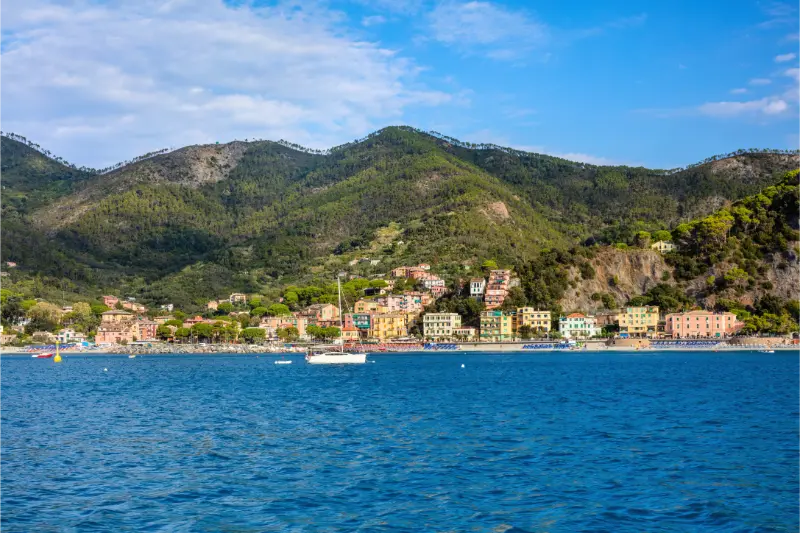
Monterosso is the largest of the five villages and has a more accessible beach scene than its neighbours. It has both a newer seaside district and an older historic part connected by a coastal route. Beaches vary between managed establishments and available public sections. In high season, train arrivals create congestion, so begin with a beach walk or coffee and leave exploration of narrow lanes for a quieter hour.
Look beyond the first viewpoint for the everyday character of the place: working streets, quieter approaches, food shops and changing light often provide the memory that lasts. Remain on public routes, check signs and resist shortcuts through private areas even when they seem popular with other visitors.
Vernazza: a harbour, a church and steep views
Vernazza’s harbour is beautifully enclosed by houses, with the Church of Santa Margherita d’Antiochia standing close to the water. To understand its shape, walk uphill only on open permitted routes; the best views may require a little effort and proper footwear. The waterfront is small, and one cluster of visitors can transform the atmosphere. Spending an hour longer here may be more rewarding than trying to catch another train immediately.
A sensible visit accounts for the return journey as well as the arrival. Check when the next train, bus or boat operates, and do not rely exclusively on map estimates for stairs, waiting time or hills. Staying closer to the main connections may be more valuable than staying in a slightly cheaper but isolated room.
Corniglia: the village above the water
Unlike its neighbours, Corniglia is perched high above the sea and involves stairs or a local shuttle from the station area. This makes it a poor choice for visitors who assume every station opens directly onto a harbour promenade. The compensation is a village with lanes and wider-looking perspectives across vineyards and cliffs. The climb can be uncomfortable in midday heat, so plan water, shade and an alternative if mobility is limited.
For a relaxed experience, pick one major sight and one optional addition. Trying to complete several ticketed attractions, a full meal, a hike and a long transfer on the same day rarely leaves time to enjoy the destination. Use the optional activity only if weather, energy and local conditions cooperate.
Manarola and Riomaggiore: terraces and steep lanes
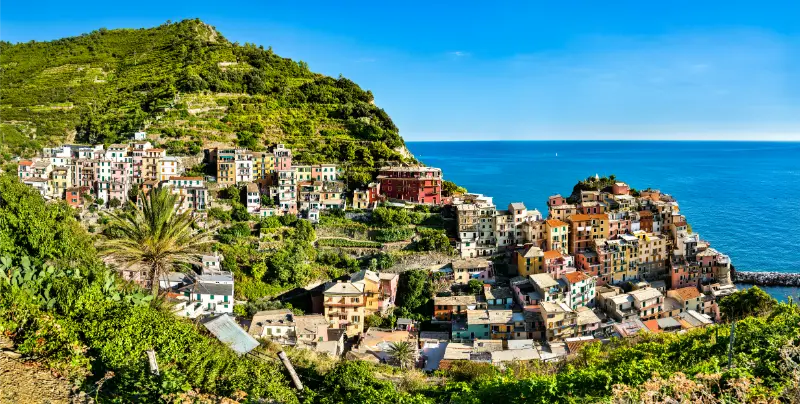
Manarola’s houses and sea-facing paths are especially compelling when seen against the hillside vineyards. Riomaggiore has a dramatic little harbour and narrow streets rising from the water. Both contain sharp gradients and photo spots that become crowded quickly. Leave space to observe everyday life away from the main lookout, and never climb barriers or enter private terraces for photographs.
If you travel in a group, make sure everyone understands what this stop involves. Differences in gradient, steps, exposed paths and available shade can turn a delightful detour into hard work for someone with mobility limits or small children. It is fine to choose a gentler alternative without missing the essence of Liguria.
Cinque Terre cards: know what you actually need
The national park distinguishes the Trekking Card and Train Card, with inclusions that can change by season. The Train Card includes eligible local rail travel within its terms, while individual train tickets may be better for some visitors. The park also publishes rules for trail access and the controlled Via dell’Amore. Compare the official card conditions for your date instead of assuming one product is automatically good value for everyone.
What appears effortless in peak-season photographs may depend on a short period of settled weather. Coastal boats, beaches and paths can be affected by wind, rain or swell. Keep another destination nearby in mind, and check authoritative notices before heading for an exposed route.
Walk only trails that are open on the day
The coastal paths are vulnerable to erosion, rockfall and weather-related closures. Some popular stretches require paid access or controlled entry, and higher alternatives may be longer and steeper than the photographs suggest. A route that is easy in cool weather can be demanding in August heat. Check official park updates, wear suitable shoes, carry water and never treat a closure as an invitation to cross a barrier.
Small-scale local businesses shape the character of this region. A lunch in an ordinary trattoria, a bakery purchase or a respectful conversation in a shop can add context that packaged sightseeing misses. Restaurants have different opening days and meal times, so avoid making a single venue the only workable plan.
Boat views and smarter crowd management
Seasonal boats can reveal the colourful village facades from sea level, but not all villages have the same docking arrangements and services are affected by wind and wave conditions. Use the railway as the most resilient backbone of your visit. Staying overnight in Levanto, La Spezia or one village can help you enjoy early mornings and evenings after busy day-trip waves. Never build a tight onward connection around the last possible boat.
Treat the landscape as something shared with residents and future travellers. The most convincing way to travel responsibly is practical: avoid blocking narrow lanes, carry away litter, respect maintained paths, and favour public transport where it replaces stressful coastal driving.
An itinerary that leaves room to enjoy the place
The following is a flexible sequence, not a timetable or a promise of service frequency. You can use it as a single long visit or separate the steps across two days. The best plan often changes with the season, the opening hours of individual attractions and your appetite for walking.
Day one, morning
Choose Monterosso and Vernazza, combining a beach or old-town stroll with a relaxed harbour visit. Allow a little time to orient yourself, check the next transport connection and step away from the busiest part of the destination before deciding what comes next.
Day one, afternoon
Move to Manarola for terraces and viewpoints without racing between every station. Allow a little time to orient yourself, check the next transport connection and step away from the busiest part of the destination before deciding what comes next.
Day two, morning
Explore Riomaggiore’s steep streets and, if currently authorised, plan Via dell’Amore separately. Allow a little time to orient yourself, check the next transport connection and step away from the busiest part of the destination before deciding what comes next.
Day two, afternoon
Reach Corniglia for a quieter village above the water, or replace it with a properly researched park hike. Allow a little time to orient yourself, check the next transport connection and step away from the busiest part of the destination before deciding what comes next.
How to arrive and get around
Regional trains are generally the simplest inter-village connection; seasonal boats and authorised walking trails provide alternatives when conditions allow. Before departure, check a current train or bus timetable and determine whether the final approach to your address involves hills, steps or an unmarked walking route. A journey that looks short on the map may be tiring with luggage or in midsummer heat. Keep transit tickets and service conditions separate from attraction admission: buying one rarely guarantees the other.
For longer itineraries, cluster nearby visits together rather than returning repeatedly to the same rail junction. Regional rail generally works well along much of the Ligurian coast, but inland excursions can require fewer or slower buses. If using a car, verify parking and traffic restrictions before driving, especially around historic centres and villages where the streets were never designed for modern visitor volumes.
Where to stay and how long to allow
A useful base depends on the shape of your holiday: Levanto or La Spezia for flexible train-based stays; Monterosso for beach time and an overnight village atmosphere. For a short break, convenience can outweigh an impressive sea view. Check the real distance to the station, stairs to the property, the availability of evening food and whether air-conditioning or a lift matters for your group. For a longer holiday, it may be sensible to divide nights between two regional bases rather than travelling across the entire Riviera every day.
Avoid allocating a precise number of minutes to every lane, museum or coastline viewpoint. A half-day is plenty for one compact highlight, while a full day is easier for a town with museums, a proper meal and an optional nearby excursion. Families, hikers and travellers with reduced mobility may need very different time budgets. Allow a margin before the last train or ferry, even when the return journey seems simple.
When to visit and what to pack
The most useful seasonal pattern is weekdays in spring or early autumn for active visits; summer offers warm water but heavier crowds and hotter uphill walks. Even in pleasant weather, the coast can be windy and exposed hillsides may feel much hotter than shaded streets. Pack comfortable shoes with grip, drinking water, sun protection and a light layer for changing conditions. If a hike or ferry is central to the trip, check current alerts and weather the evening before, then reassess again on the day.
Weekends, festivals and school holidays can change the atmosphere markedly. Choose early arrival times if you want photographs or a quiet breakfast by the harbour, while accepting that local life is not arranged around tourism. Winter can be excellent for cities and walking in settled weather, but some coastal boat routes, beach services and seasonal restaurants may operate differently. Do not assume an attraction described as open in one season is open year-round.
What to eat, and how to keep the budget sensible
The food is part of the reason to visit: anchovies from the coast, pesto, focaccia, local white wines and the dessert wine Sciacchetrà. Choose a bakery for a low-key lunch or book a restaurant when you specifically want seafood or a longer meal. Menu prices, beach-club fees and transport tariffs change; compare current prices directly rather than budgeting from an old screenshot. Busy harbour-front locations may charge a premium for a view, and a few streets farther back can reveal a different atmosphere.
A cost-conscious trip need not mean rushing. Use regional trains where practical, select accommodation near the connections you will actually use and buy attraction tickets only when they match your interests. Give yourself free time for a panorama or public promenade instead of adding a paid stop to every hour. If accommodation looks unusually cheap, check whether parking, luggage transport, access stairs or repeated taxis erase the savings.
Family travel, accessibility and responsible tourism
Accessibility in Liguria varies sharply because steep land meets the sea. Historic paving, steps, cliff paths and tightly packed railway platforms can be significant barriers. Before booking, ask individual properties about step-free routes and lift dimensions, and check attractions rather than assuming an accessible entrance exists. Parents travelling with strollers should prefer well-connected bases and treat long hillside walks as optional rather than essential.
A good visit also protects the places that make the Riviera attractive. Respect public and private spaces, keep to designated trails, do not climb sea walls or vineyard terraces for photos, and carry waste away. Consider travelling by rail instead of driving into congested small villages. In protected areas, follow the latest official rules; permits, closures and limits may change even when the underlying scenery remains unchanged.
One mistake to avoid
The most common planning trap here is assuming Via dell’Amore and all hiking paths are always open, that every train is quiet, or that Corniglia sits at sea level. A better approach is to prioritise what the landscape and local connections can support that day, keep a nearby backup and leave one unscheduled period. This makes the experience enjoyable even if there is a delayed train, temporary trail closure or unexpected queue.
Useful nearby guides on My Italy Experience
- Liguria Beyond the Postcards: A First-Timer's Guide to Italy's Riviera
- Where to Stay in Liguria: Choose Your Riviera Base Wisely
- Seven Days in Liguria: A Train-Friendly Riviera Itinerary
- Portovenere and the Gulf of Poets: Cliffs, Churches and Palmaria
Frequently asked questions
How many villages should I see in one day?
Two or three is a comfortable target when you want to enjoy lanes, a meal and viewpoints. All five are possible by train but often feel hurried.
Is the Cinque Terre Train Card compulsory?
Not for every possible visit. Its usefulness depends on the number of rail journeys and any park services or routes you plan to use. Check the official conditions.
Can I walk Via dell'Amore without booking?
Controlled access and reservations apply under current arrangements. Check the national park’s official booking page before setting your date.
Which village has the best beach?
Monterosso is usually the most straightforward option for a traditional beach day, though public space and beach-club rules vary by season.
Is a car useful here?
Usually not for village-hopping. Trains avoid difficult parking and limited vehicle access, while luggage and stairs remain important when choosing accommodation.
Official information and places to stay
Recheck local access rules, trail conditions, ticket conditions and timetables before leaving. Start with the official tourism or attraction information. Information in this article describes the situation researched in October 2026; future travel dates require fresh confirmation.
Last updated: October 17, 2026